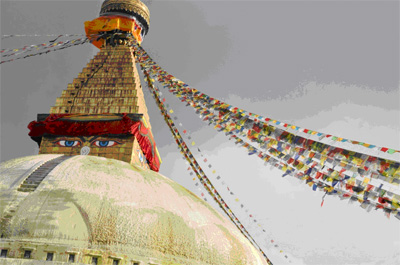
Stanfords proudly sponsored UCL student Krzysztof Przetacznik on his expedition into Nepal’s culture, and provided him with maps and products from our store. Here’s his report.
The ethnic mosaic
A monarchy throughout most of its history, Nepal is now the world’s youngest republic and its official name is the Federal Democratic Republic of Nepal. It is well known for its highly diverse geography and boasts eight of the world’s ten highest mountains. There is, however, yet another reason for the country’s exceptional uniqueness – its remarkably rich culture. Nepal lies in South East Asia and is bordered to the west, south, and east by the Republic of India, and to the north by the Tibet region of the People’s Republic of China. This means Nepal is interposed between the centres of two major Asiatic civilisations and has consequently become a genuine ethnic mosaic. As a person passionate about studying human societies I decided to carry out an ethnographic research of various ethnic, tribal and social groups in this extraordinary country.
According to the most up-to-date estimate Nepal’s population is now just below the thirty million mark and has grown by more than a half since the early nineties. The country, occupying the central section of the Himalayas, became the theatre of numerous historical human migrations. Both geographical factors as well as historical processes contributed to its cultural wealth. According to the 2001 census there are 103 distinct castes and ethnic groups of which the main ones are: Chetri, Bahun, Magar, Tharu, Tamang, Newar, Muslim, Kami, Rai, and Gurung. Faced with such complex ethnic composition of population I had to focus on a small number of specific groups for my research to be anything more than superficial.
Fieldwork
My expedition to Nepal lasted a month and throughout that time I have managed to cover, however briskly, three out of four major geographical regions: the Himalayan highlands (the Annapurna and Khumbu, also known as Everest, regions), the hill region (the Kathmandu Valley), and finally the forest areas of the inner Terai (Chitwan). I have only missed out the flat and fertile land of Terai known as the Outer Terai, the north edge of the Gangetic Plain. During my travels I have always sought to maximise my interaction with the local communities in order to gather as much information as possible. It is important to emphasise at this point that most of the Nepali population is spread around the country in a quite distinct manner where different ethnic groups occupy their own regions. Although one can find occasional Nepali people whose ethnic origins do not quite match their characteristic and conventional geographical coordinates (especially in the Kathmandu Valley), it is absolutely essential to travel throughout the country to reach specific social groups.
Whilst the differences between most groups are very significant, others diverge in a very minor way. In order for me to present my research data in a factual manner I will try to use a similar platform of evaluation while examining each of the ethnic groups I researched. I will thus concentrate on aspects such as: language, religion, ethnicity, customs and geographic division. Moreover, along with the raw information about each caste or ethnic group, I will be throwing in brief accounts of the people I have met and who delivered me somehow informal yet intriguing and profound facts.
Newar
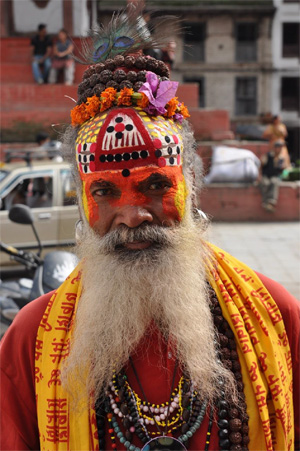 The first peoples that I came into contact with were the indigenous inhabitants of the valley of Kathmandu – the Newar. They constitute neither a caste nor an ethnic group. Rather, they form a ‘nation’ with their own distinctive space, speech and society. The Newar account for 5.48% of the whole population, which makes them the sixth largest social group in the country.
At present the term ‘Newar’ describes a fairly complex group of people. It is not really fair to discuss them under just one title but after all they consititute a distinct cultural entity, albeit not one single ethnic group.
Today the term ‘Newar’ embraces people of both Mongoloid and Mediterranean physical types who speak both Nepali, and Indo-Aryan language, and Newari, a Tibeto-Burman language that includes some half a dozen dialects.
During the course of history a considerable amount of cultural influence has been exerted on the Newar culture by various immigrant groups. These immigrants were ultimately absorbed into the Newar community.
Today, the bulk of the Newar population is concentrated inside the Valley in the large cities of Kathmandu, Patan, Bhaktapur, Kirtipur and half a dozen smaller towns. In addition, a fair number of Newars have settled in villages and markets outside the Kathmandu Valley during the course of the last two centuries.
Subdivisions within Newar society are at the same time unique and involved. One’s religion is either Hindu or Buddhist or even both; and furthermore, one belongs to a particular subgroup, which is ranked by the rules of the caste hierarchy.
Newars are known for many festivals that commemorate a large pantheon of deities. They also maintain some distinctive cultural practices. One of these is ihi, the mock marriage ceremony of virgin girls. This and many more are only a few among numerous fascinating customs and traditions that I have encountered during my time in the Kathmandu Valley.
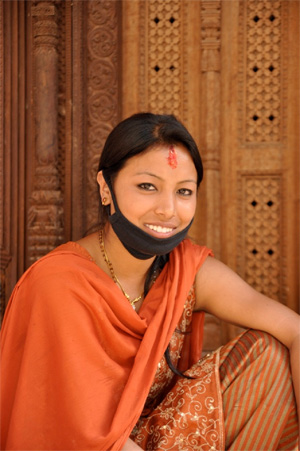 On my way to Bhaktapur, a charming ancient Newar town in the east corner of Kathmandu Valley I met Ramita. An 18-year-old girl, dreaming of becoming a doctor and one day going to Europe, she is a pupil at a high school in Kathmandu where she goes at five o’clock in the morning seven days a week.
She gives me a better insight into a Newar culture and tells me quite a few interesting stories.
She watches me, amused, drinking water from a bottle and she declares that no Nepali person touches a bottleneck with his lips.
We are on an extremely packed bus going from Kathmandu to Bhaktapur and I constantly see people crossing themselves. Ramita, seeing how intrigued I am, explains that a Nepali person, after unintentionally trampling another person, has to cross himself.
Sherpa
After spending a couple of days in the Kathmandu Valley I flew to Lukla, possibly one of the most thrilling airports in the world, to start my Gokyo trek. During the following week I would be discovering how incredibly colourful the famous Sherpa people are – the natural inhabitants of the Solu-Khumbu region.
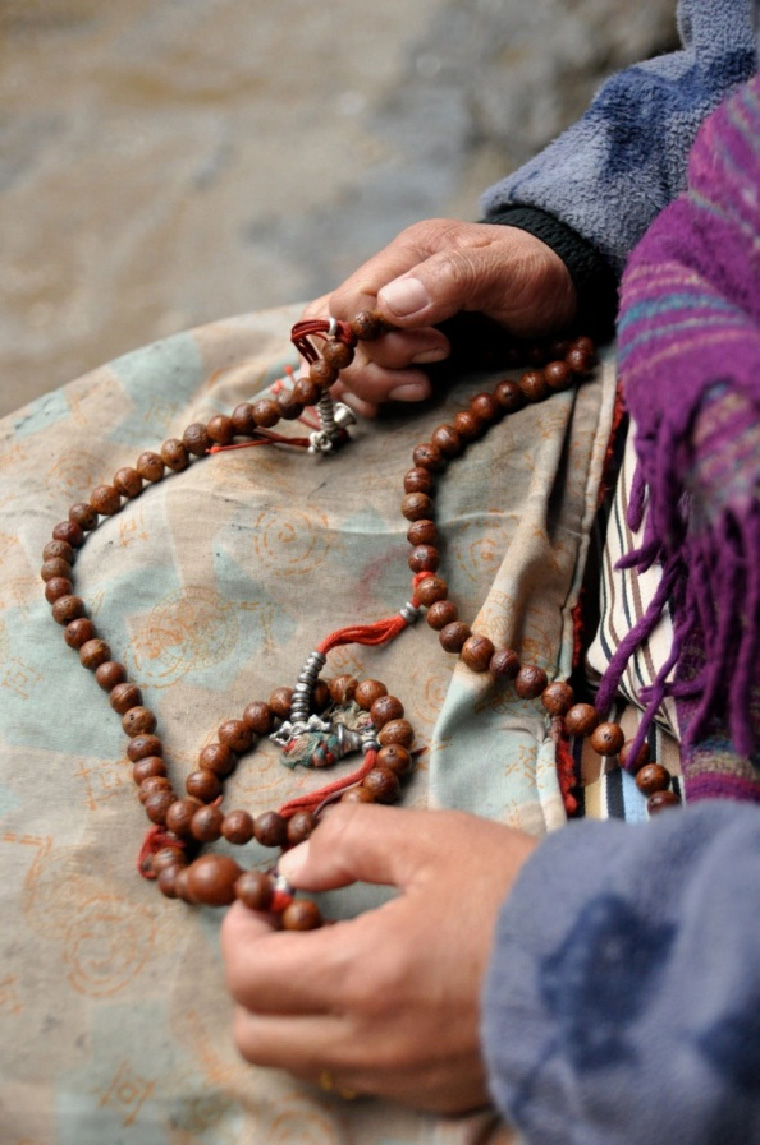 Sherpa, ‘people of the east’, migrated from eastern Tibet and now live in eastern Nepal. Despite their close affinity with the Tibetan language, culture, and religion, Sherpas feel as much Nepali as any other people. Through the course of time the name Sherpa has gained so much currency that it almost acts as a tribal name, and it does in fact define a specific group of people.
Sherpa society is divided into a number of exogamous clans. The various clans are in turn placed in two endogamous groups, khadev and khamendu, the former ranking higher in status. The Sherpa are devout Buddhists and have gompas in their villages.
The traditional Sherpa economy depends upon agriculture, livestock and trade. Sherpas live in the shadow of some of the highest mountains in the world. However, this shadow turned into substance when the Sherpa discovered mountain tourism, which substituted for their declining trade with Tibet
Sherpas are extremely strong and resilient people. The load a porter can carry for days can weigh up to 100 kilos! He can expect 20 rupees remuneration for each kilogram carried which is equal to 16 pence. Bundles they carry are not only extremely heavy but also enormous in size (as seen on the picture).
In Namche Bazaar, the Sherpa capital, I was lucky enough to meet Chime, a broad-minded and educated Sherpa engineer and manager. He told me of the incredible economic growth that Khumbu region has been enjoying since 1953. In that year Sir Edmund Hillary was the first man in history to climb Mount Everest, which proved to be the catalyst for an inflow of tourists on a previously unknown scale. Development of the tourist industry was further boosted during the late ‘80s when more airlines launched the Kathmandu-Lukla route. The number of lodges in Namche has gone up to 48 from a mere five a decade-and-a-half ago.
Chime, an owner of the Yak Hotel, educated in Kathmandu, Austria and Switzerland, is quite a figure in this place. Three years ago he installed a telegraph tower and hence Namche is the first and at the same time last stop on the trail where there is mobile reception. He is also in charge of the whole water system in the village and in case of any technical emergency he is always the one to deal with it.
Chime turned out to be a truly enlightened man, who extended my knowledge about the Sherpa peoples, their habits, as well as domestic politics. Thanks to him I had a chance to interview a headmaster at a local school and learn that, although local communities face a lot of obstacles, they do a great job providing education to the young. Funds come mainly from Hillary foundation as well as from entry permits into the national park (once again it is Chime who deserves praise for this source of revenue).
Chhetri and Brahmin
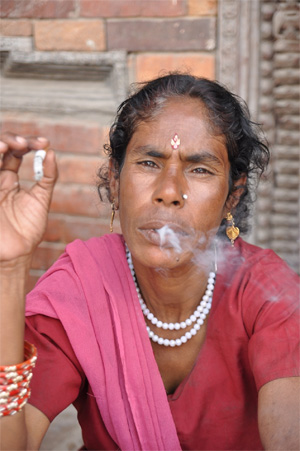 Chhetri and Brahmin are the two main Hindu castes in Nepal and at the same time the two largest social groups, forming 15.5% and 12.5% of the population respectively.
The term Chhetri is a vernacular rendering of the Sanskrit kshatriya, for warrior caste. The caste comes second to the priestly Brahman caste in the Hindu caste hierarchy. However it is Chhetri that is the culturally, politically, and socially dominant ethnic or caste group in Nepal.
The core of the Chhetri group is made up of the original Khasa people of early residence in the western and central Himalaya. The Chhetri population has been augmented by diverse sources. One is through co-option of the offspring of the Bahun male and the Khasa female. Another is the Nepalese practice of allowing the son of a ‘higher caste’ man in union with a ‘lower caste’ spouse to retain his father’s caste.
Their mother-tongue, initially Khasa-Kura, is now known as Nepali. The religion followed by the Chhetri today is very much patterned after Hinduism. The festivals they celebrate are the same as those of Bahuns; the life cycle rites of birth, initiation, marriage, and death are all according to Brahmanic prescription.
The Chhetri are divided into numerous descent groups and their names are either associated with place-names in the western hills or represent functional titles. Of almost 4,500,000 Chhetris reported in the 2009 estimate, a quarter remain in the western hills, their native area; the majority of the rest inhabit mountain and hill districts.
Bahun is the hill caste group of Nepal and divides into two broad segments: the superior known as tagadhari (those wearing sacred-thread) or Khasa-Bahun (including high caste Bahun and Chhetri), and inferior segment made up of kamsel castes.
Bahun is the colloquial Nepali version of the Sanskrit term for Brahma, the priestly caste that ranks highest in the Hindu varna system. The migration of Bahuns into Nepal had a significant influence on the transformation of Nepalese society. The foremost of these was on the Hinduisation process whereby the diverse people were brought under one social framework of hierarchical order based on the Hindu caste model. Nepali gradually replaced both Sanskrit at the court and Persian in diplomacy, subsequently becoming the lingua franca and state language of Nepal.
Bahuns are the standard-bearer of Hindu tradition in Nepal. They officiate at religious ceremonies and worship the various gods of the Hindu pantheon. While their main occupation is farming, they also keep dairy cattle. They are considered native to the western hills, although the majority are today concentrated in the central hills.
For me, the main difference between these two main Hindu castes within the Nepali society was the fact that the Chhetri women, as opposed to the ones from the Brahmin caste, wear nose rings. I found it remarkable how obvious it was for most Nepali people to tell which ethnic or caste group other people represent. I would often ‘question’ the Nepali friends I met on my way the ethnicity of random people. Each time I would get the answer straight away, with no hint of hesitation, and I could only believe that they were right.
Many more
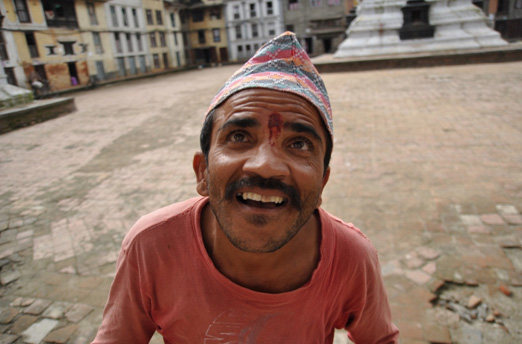 Having lived in London for three years now I have always thought of myself as a European, if not global, citizen surrounded 24/7 by hundreds (300 to be precise) of languages and numerous ethnic groups.
I was going to Nepal expecting to see a highly diverse and unique society but the reality I have witnessed was beyond my belief. It is pointless to relate it in any way with the multicultural nature of London for example, as the processes that led to the social wealth in the two places have been carried out on completely different levels.
The mixture of ethnic groups in Nepal is truly inspiring and yes, trying to describe it in a short expedition coverage was always condemned to be two-dimensional. I have only managed to casually present four ethnic and caste groups but I was lucky enough to interact with many, many more: Thakuris, Magars, Gurungs, Tamangs, Gurkhas to name but a few. I cannot wait to return and discover much more.
Each of the mentioned ethnic groups account for at least 2% of the whole population. They are stated in a respective size order Chhetri being the largest social group, Bahun being the second largest, and so on. All statistics come from CIA – The World Factbook.
Bibliography:
Faces of Nepal: Jan Salter, Harka Gurung: Himal Books: 2nd Edition 1999
People of Nepal: Dor Bahadur Bista: Ratna Pustak Bhandar: 4th Edition 1980
See all our Nepal books, maps, guides and other information.
Author: Krzysztof Przetacznik
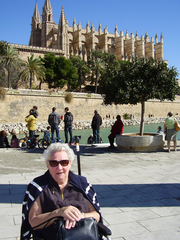 I recently took my grandmother, who is unable to walk unaided and who is heavily dependent on her wheelchair, to Palma, Mallorca. A friend had advised me that Palma was a suitably wheelchair-friendly destination. Unfortunately, my friend had no experience of pushing and navigating a grandmother and a wheelchair around and her advice proved to be ill-informed.
 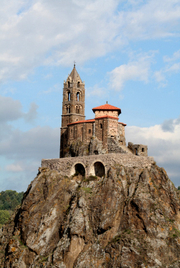 Returning to the Auvergne: Eight years ago, I spent a year as an English language assistant in Le Puy-en-Velay, a small, historic city in the south of the volcanic Auvergne region, deep in the heart of rural France – la France profonde, as they say.

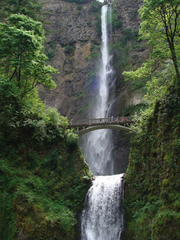 Portland The Spectacular
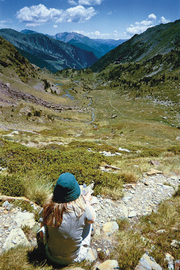 Conquer a summit close to home: Cicerone’s new trekking guide by Carl McKeating and Rachel Crolla showcases the best peaks to bag on the continent.



 How is it celebrated round the world?