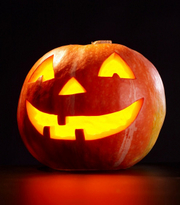
 Find out how Halloween and its traditions first started, how the jack o’ lantern came about, and how the festival is celebrated in other parts of the world…
How did Halloween start?
Halloween has its roots in an ancient Celtic celebration associated with All Saints’ Day, which falls on 1 November, so the night before became known as “All Hallows’ Eve”, eventually contracting to Hallowe’en. (Hallow is old English for ‘holy person’ or ‘saint’.)
How did we start celebrating it like we do today?
Irish migrants carried versions of the tradition to North America during Ireland’s Great Famine of the 1840s. They had established Halloween activities such as bobbing for apples, as the festival was also a celebration of the end of harvest.
How did the pumpkin head come about?
The ancient Celts would place a skeleton on their windowsill to represent the departed. These lanterns were first carved from a turnip. Believing that the head was the most powerful part of the body, containing the spirit and the knowledge, the Celts used the “head” of the vegetable to frighten off the embodiment of superstitions.
The jack-o’-lantern can be traced back to the Irish legend of Stingy Jack, a farmer who tricked the devil into climbing a tree and trapped him by carving a cross into the tree trunk. In revenge, the devil placed a curse on Jack, condemning him to forever wander the earth at night with just a candle in a hollowed turnip. The use of pumpkins began in North America as pumpkins are more readily available and much larger, making them easier to carve than turnips.
 How is it celebrated round the world?
‘Halloween’ on 31 October is celebrated predominantly in North America and the British Isles, with ‘trick or treating’, jack-o’-lanterns, fancy-dress costumes and so on. In Roman Catholic countries throughout Europe, and the Philippines and Mexico, All Saints’ Day is observed instead. On this day offerings are made, and people light candles in cemeteries in honour of the dead.