Warsaw

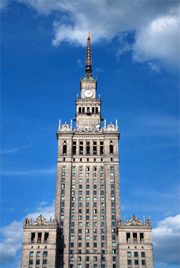
I don’t like Warsaw, the city where I was born just three months before the most calamitous event in its history, the Warsaw Uprising, and where I lived until I came to London in 1965. To me Warsaw is ugly and characterless, but then what else can you expect from a city with such a horrendous past.

For my generation, and that of my parents, that uprising and the preceding years of wartime occupation still dominate the city, not just in the shrines and plaques on buildings, always well looked after and often decorated with fresh flowers, or in the numerous monuments, big and small, many of which have been erected since the political changes of the early 1990s, but in the very fabric of the city. The uprising, ruthlessly suppressed, gave rise to an order, equally ruthlessly executed in the central parts of the city, to have Warsaw wiped off the map, and the post-war decades have not been kind to it. Left with so many buildings destroyed and so many empty spaces to fill, urban planners and architects could exercise their meagre talents just as unsuccessfully as they did everywhere else worldwide, but simply on a greater scale. Continue reading Warsaw

Tanzania

East Africa: Home to the Big Five, the African wilderness and African snow. And it’s all in Tanzania.

I arrived here having crossed the world’s largest tropical lake, and indeed the second largest fresh water lake, Lake Victoria, to camp at Speke Bay – named after John Hanning Speke the British explorer who first sighted the lake in 1858, believing it to be the source to the Nile. Driving to nearby Mwanza takes you past some strange granite formations that seem to have been balanced by a giant in times past.

From there we headed into the Serengeti in an effort to spot the Big Five. And we weren’t disappointed. A pride of lionesses rested mid-attack as a wounded buffalo staggered around – these were true ladies that lunch. Elsewhere giraffe, with their long gait, seemed to glide around, while baboons, jackals and antelope frolicked at their feet. One of our party proved her amazing eyesight as we headed out of the park when she spotted a cheetah among the long grasses several hundred metres away. It would remain the only one we’d see in the wild over the next three months. The endless savannah, with the odd rocky outcrop offering a smattering of shade in the sun, is a sight that will never leave me.

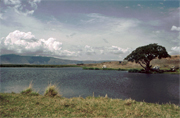
Next stop: Ngorongoro Crater. The caldera that remains from a long-extinct volcano provides fantastic protection to the wildlife inside – and it is teeming. The only animals you won’t find here are giraffe, whose legs can’t cope with the steep crater walls, but flamingos and other birdlife are plentiful, as are hyenas, warthogs, and elephants. You even get the chance to leave your vehicle, but be careful because you can still be attacked, as I was. But it was only a bird swooping down to steal my sandwich; even so it was quite a whack to the head!

We wended our way towards Dar-es-Salaam, in the shadow of Mount Kilimanjaro, and stopped off at the small town of Arusha. Like many towns in this region street vendors sell everything from machetes to decorative spears, from necklaces to batiks.

Lonely Planet’s East Africa edition is chockfull of interesting items and suggestions, but if you want a guide to the wildlife – and trust me, you do – Insight Guides’ East African Wildlife gives clear information on seemingly everything. And if you’re feeling more energetic than I was, you may want to do more than just pass by the foot of Mount Kilimanjaro, in which case Kilimanjaro Trekkers Guide by Stanfords’ Alexander Stewart will be invaluable. Reise Know-How Verlag’s Tanzania map gives good detail.

Browse our collection of Tanzania Maps and Guide books here >

Tanzania travel information >

Author: James Innes Williams

USA – San Francisco, California

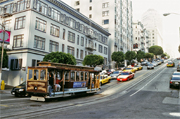
San Francisco, like New York, is an un-American city. They’re different from the rest. And while New York is characterised by its hurly-burly and take-no-prisoners population, San Fran has gone completely the other way.

Downtown is, of course, reaching for the sky, but elsewhere building heights are limited to only a few storeys – meaning that from almost any hill you have a view stretching right out to the city limits.

Continue reading USA – San Francisco, California

Canada – Northwest Territories

Canada

I first came to Canada to paddle down the Nahanni River in the Northwest Territories. We flew into our starting point, just south of the Arctic Circle, in a DeHavilland Single Otter sea-plane. Landing at Moose Ponds was almost the end of the trip, however, as the pilot nearly ran out of lake…

A three-week trip takes you past glacial lakes, hot springs, and numerous rapids. Hiking opportunities are plentiful, and it’s definitely worth taking a day to climb the mountain peak at Virginia Falls – an unspoilt waterfall twice the height of Niagara.

While the pilot nearly killed me on day one, I had a go myself while clambering over Virginia Falls, but the closest we came was in the middle of the night when our river island flooded – we clambered into our canoes only once the water had reached knee-height.

Eventually you pass through Hell’s Gate whose walls tower 460m above, and then the river becomes calmer (well, ok, you do have Deadman Valley and Headless Creek to negotiate too). But it’s well worth taking the trip to spot all sorts of truly wild wildlife including moose, beaver and the odd grizzly bear if you’re (un)lucky. And you may also see the Northern Lights.

A few years later I came back to western Canada on a tour of North America. Following a quick couple of days in a rainy Vancouver we headed east to Banff National Park. So much snow set in that we could not even leave the campsite, and so spent a few days in the public sauna and around an old Space Invaders table.

Once the sun had been out long enough to free our truck we headed north to a frozen Lake Louise. The lake and its surroundings are quite magnificent, but if you want to come in from the cold you can enjoy the views from the warmth of the lavish Fairmont Chateau on the edge of the shore.

Any trip to this area requires a visit to the world’s biggest mall in Edmonton, complete with rollercoaster, ice rink, and waterslides all under one roof. If that sounds a bit tame however, head to Calgary, the host of the Winter Olympics in 1988, and, with your heart in your mouth, slide down the luge.

It’s a vast area, but to mark out my various destinations the Canada: The West road atlas by Hildebrand was indispensable, but now out-of-print, along with the North Canada Bradt Guide, which provided excellent detail on the Northwest Territories. Now instead try and the Moon. Robert Twigger’s book, Voyageur provides plenty of tales and adventure as he journeyed across the Rocky Mountains in a birchbark canoe.

Browse our collection of Canada Maps and Guide books here >

Author: James Innes Williams
I think I fell in love with Bolivia

BoliviaI think I fell in love with Bolivia as I watched the bus I’d been travelling on from Peru being ferried across Lake Titicaca on what amounted to a glorified raft. Bolivia’s landscape may initially appear harsh and its people stand-offish, but a scratch beneath the surface soon reveals these impressions untrue and this landlocked Andean country inevitably weaves its spell.
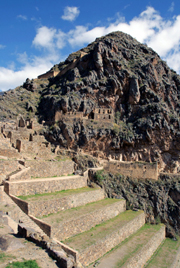
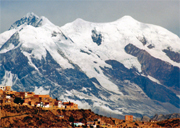
La Paz provides a good jumping off point for any Bolivian adventure. Although its traffic-choked streets may not be to everyone’s tastes, the city has a real energy about it, with its bright buses, ever-insistent street vendors and lively nightlife (check out the Sopocachi district). Make sure you take the time to look skywards after nightfall, as La Paz’s altitude and relatively low light pollution from its ramshackle street lamps combine to give a spectacular view of the stars. A trip to see one of La Paz’s football teams is well worth the entry fee, if only to contrast your altitude sickness while climbing to take a seat with the frenetic fare on the pitch… easy to see why the beach-boy Brazilians fear their visits to Bolivia!

Moving away from the capital, my personal highlight was the now legendary bike ride on, “the world’s most dangerous road.” A short bus ride from La Paz plus a bit of strenuous high altitude cycling takes you up into the clouds at just under 5,000m; from here it’s only a few hours (and 70km) in the saddle to the subtropical climes of Coroico, dropping around 3,500m on the way and giving one of the biggest legal adrenaline rushes imaginable!

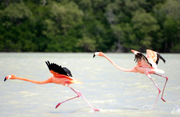
If you feel you can face a tortuous overnight bone-shaking bus ride from La Paz to Uyuni, accompanied predominantly by bags of poultry, you’ll be rewarded with arguably Latin America’s most captivating landscapes. The Bolivian Altiplano is a vast high altitude plateau dotted with technicolour lakes, surreal rock shapes, giant cacti and seemingly endless salt plains. Throw a few geysers, flamingoes, llamas and volcanoes into the mix and it can feel like you’ve arrived in another world.

Whether Bolivia is your sole destination, or part of a bigger South American journey, you can’t go far wrong with a Footprint South American Handbook and a Reise Know-How map to Bolivia. For reading material, try to pick up an old copy of the now out of print Bolivian Diary by Ernesto Che Guevara, which tells the story of his ill-fated guerilla campaign of the late ’60s.

Browse all our guide books and maps of Bolivia here >

Author: Dan Weston

Peru

Images of Peru, more often than not Machu Picchu, adorn countless travel publications and newspaper supplements. Consequently, deepest darkest Peru has become readily accessible, and the track so well beaten that it can be difficult to get off of. Such popularity however, is not without good reason, and the jewels in Peru’s tourism crown live up their reputation spectacularly whether you want to climb them, or just walk around them in awe, mountain-junkies should head for Huaraz.
Around 200km north of Lima and nestled amongst the Cordilleras Blanca & Negra, Huaraz is a hive of adventure sport activity. It’s probably worth spending a few days in the town, if only to acclimatize to the thin Andean air. You could do a lot worse than staying at Jo’s Place, run by an ex-pat from Southampton who’s even been known to video Champions’ League games while football-obsessed Englishmen are away trekking in the mountains! The trails that criss-cross the Cordilleras are easy to follow, but take in passes around the 5000m mark and so can be quite tough. Treks of up to a week can easily be organized on Huaraz’s main drag with one of numerous activity agencies (I’d highly recommend Monttrek, but there are plenty to choose from). Continue reading Peru

Fuerteventura

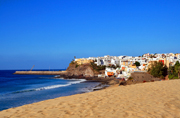
Fuerteventura is different from all the other islands in the Canaries. It’s beautiful barren landscapes and sparse population (only 60,000 people) make it an ideal choice for sun-searchers looking for something a little quieter. Sadly the island isn’t a complete haven of solitude, as there are also “touristy” areas; the towns of Corralejo and Morro Jable in particular are popular destinations for British and German tourists. Taking that into account it is easy enough to escape these areas thanks to the cheap reliable bus services and abundant car hire shops. Continue reading Fuerteventura

City Break To Marrakech

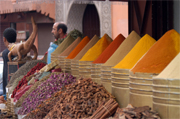
For those wanting a city break with a little more spice Marrakech is perfect. It is a vibrant, tantalizing blend of North African, Middle Eastern and European cultures which arouses all the senses. Stroll through the souqs to find craftsmen making traditional silver jewellery, ornate leather slippers and wooden toys. Then for the brave (and carnivorous) tourist, a visit to the traditional street tanneries to see animal skins drying in the scorching sun is a must (if you can stand the smell!). Continue reading City Break To Marrakech
Venice

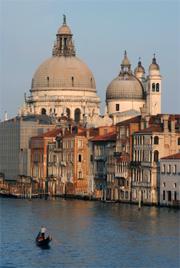
With the millions of tourists that flood Venice each year it is easy to think that all of its attractions are overwhelmed by the crowds, but even at high season it is surprising how few venture to some of the most rewarding sights.

My personal favourites include the Scuola Grande di San Rocco for Tintoretto’s monumental series of paintings, including especially his Crocifissione; incredibly there were no more than half a dozen people there when we went in June. Likewise, there were very few who had sought out Bellini’s Madonna and Child in the Frari church, which in its original frame is one of the most luminous paintings in the city (also a favourite of Henry James).

We were lucky enough to catch a guided tour of the restored monastery at San Giorgio Maggiore (only on weekend mornings – check at the main tourist information centre in town), where we felt especially fortunate to see Palladio’s elegant cloister and refectory, as well as the stunning 128-metre long dormitory and the original library.

Continue reading Venice