USA – Gettysburg, Pennsylvania

Ranulph FiennesOur trip started in Toronto, Canada, and it was to be a two day car journey through New York State and Pennsylvania to the town of Gettysburg, just north of the Maryland border. The drive down takes you through some fantastic countryside including the Allegheny National Forest.

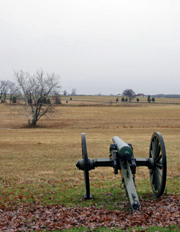
Gettysburg town itself has changed little over the years and some buildings still bear the scars of the battle. Surrounding the town is the battlefield and this is protected by the Gettysburg National Military Park.

There are a number of hotels in Gettysburg but we chose to stay at one of the country inns that are dotted around the Gettysburg area. The Baladerry Inn just south of Gettysburg was constructed in 1812 and was used during the battle as an Army of the Potomac field hospital, and evidence of this can still be seen in the house. A stay at this inn is definitely recommended. Continue reading USA – Gettysburg, Pennsylvania

Athens and Greek Islands

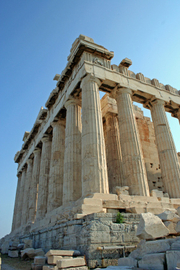
Athens has become the starting point for all of my visits to the Greek Islands. Although frequently castigated for its air pollution and congestion, there is something undeniably appealing about this bustling, vibrant city.

Its incredible historical and cultural legacy means there is plenty to see and with a little careful pre-planning, many areas and sites can be packed into a short stay. Bar and places to eat abound, and the Plaka district (among the oldest and most charming parts of the city), houses some of the best candle-lit garden tavernas. If visiting the city between June and September, check out the Athens festival. A concert at the ancient Theatre of Herodes Atticus, just below the Acropolis, provides a magical setting for a memorable evening of opera and classical music.

The city’s fame rests with the Acropolis; this magnificent ancient monument with the Parthenon sitting resplendently on top, never fails to make an impact. An early viewing is highly recommended, as in the summer months the number of visitors combined with the intense heat can be overwhelming. I would also recommend devoting some time to the National Archaeological Museum, which houses an impressive collection of Greek artefacts.

After a few days of high-paced life in Athens, what could be more inviting than the idyll of the islands? Piraeus is the main departure point for ferry connections, but a number of islands can also be accessed by air. Each unique, the Greek Islands have much to offer: fabulous beaches, nightlife and stunning scenery, much of it steeped in history. A guidebook is invaluable, particularly when dealing with the ferry network and choosing locations.

In terms of landscape and history, there are few areas more dramatic than Santorini, its physical makeup shaped by a massive volcanic eruption thousands of years go. We stayed in the small town of Oia, constructed on the steep inclines of the cliff face; home for the next ten days. Meanwhile, an overnight break in Naxos turned into a four-day stopover, followed by a slight detour to the island of Antiparos. Exuding a quiet air of warmth and charm, it was the perfect place to unwind before heading for home.

Greece continues to be an inspiration for travellers, and for me, Athens and the Greek Islands provided an ideal combination of vibrant city life and idyllic escape.

Browse our collection of maps, guides and travel literature:
> Athens travel guides
> Athens road maps and atlases

Author: Paul Harniess

Bibendum – The 'Michelin Man' Revealed

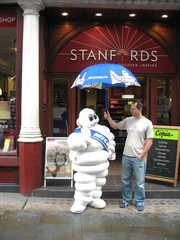
Following a recent store promotion involving prominent map and book publishers Michelin, and the antics of a certain member of staff who (rather enthusiastically) volunteered to brave the streets of London dressed as the ‘Michelin Man’ (or ‘Bibendum’ as he is known in his native France), we at Stanfords decided to look into the story behind this iconic character…and came across some surprising facts in the process…

Did you know…

Bibendum was first introduced in 1898 on a poster commissioned by André Michelin after his brother Édouard noticed that a stack of tyres displayed at a Michelin exhibition stand resembled a person. Édouard Michelin is said to have remarked “Give it some arms and legs and it would look like a man!”

 The name Bibendum first appears on the original 1898 poster with the slogan ‘The Michelin tyre drinks up obstacles’, which depicts Bibendum toasting his competitors with the Latin verse ‘Nunc est bibendum’ or ‘Now is the time to drink!’

Michelin Poster - Bibendum in 1898Bibendum’s career as a mascot began when he appeared as a cardboard cut-out on the Michelin stand at the Paris Motor Show. Visitors were so taken aback by his imposing silhouette – again shown toasting – that for a period he was known as the “road drunkard”.

The names associated with this iconic character have entered popular language to describe someone who is large or obese. In Spanish, the word ‘Michelin’ is associated with having a “spare tyre” – or roll of fat – around the waist.

The swanky Bibendum restaurant in South Kensington is housed in the original Michelin London headquarters that opened in 1911. The design of the restaurant refers directly to the building’s association with the Bibendum logo, and if you go there today you will see him adorning the floors, walls and windows!

In 1985 Bibendum shared the limelight with James Bond in the film ‘A view to a kill’. In a scene where Bond is trapped in a Rolls Royce pushed into a lake, he manages to escape by breathing air from the car’s Michelin tyres.

Bibendum also made a brief appearance in the popular Asterix comic-book series as a chariot-wheel dealer, and French reggae band Tryo have even written a song about him, with the lyrics ‘Mr Bibendum, he is truly enormous, Mr Bibendum; happiness in person’!

Did you know - Bibendum through the years

Bibendum is one of the world’s oldest and most iconic trademarks, representing Michelin in over 150 countries.

In 1998 Bibendum celebrated his 100th birthday, with the year being declared ‘The Year of Bibendum’. Bibendum has evolved a lot over the years – the original logo was based on bicycle tyres and was shown wearing glasses and smoking a cigar! He has since slimmed down to reflect the smaller tyres of modern cars, has given up the cigar, and has even been seen running!

England – Brighton

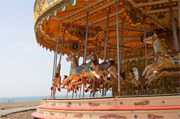
BrightonLast summer I went to Brighton, with the wholesome intentions of going on many cultural expeditions and walking along the South Downs, saturating myself in the idyllic scenery. Unfortunately I was to find myself distracted by the allure of shots of toffee schnapps for a pound and the onset of liver failure.

With the aid of my trusty A-Z and badly titled yet fantastic ‘Cheeky’ guide book, I had the time of my life savouring the best of British culture. Continue reading England – Brighton

Kobe, Japan

Kobe is a city most people have heard of because of the devastating earthquake that hit it in 1995. It was rebuilt with astonishing speed and is back to being one of Japan’s most pleasant cities. Hemmed in by mountains to the north, it spreads for miles along the shores of the inland sea, joining the urban sprawl of Osaka to the east.

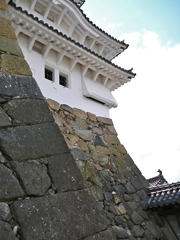
To the west is the ‘White Egret Castle’ of Himeji-jo, the ultimate samurai castle and one of the few genuine ones left. Next door is a museum where you can dress up as a samurai and sit on a stuffed horse to have your photo taken…

All Japanese cities have some local culinary delight. For Kobe it’s sake, tako-yaki (octopus balls), and the most expensive beef in the world. Kobe beef cattle live a life of luxury, feed on milk and beer, and are massaged regularly throughout their short lives.

Lonely Planet guide to Japan and the Rough Guide to Japan both give a comprehensive run-down on the country. Japanese publishers Kodansha International produce a mini-atlas of Japan. Written in both English and Kanji-script, it is invaluable to the confused gaijin (foreigners).

Browse our collection of maps, guides and travel literature:
> Japan travel guides
> Japan road maps and atlases

Author: Guy Bristow

Thailand

As Beethoven once said, ‘When a man is tired of Khao San Road, he is tired of backpackers’, but the truth of this misses the point about the oft maligned and more oft frequented road in question, which is the first stop in Thailand for the majority of Western visitors.

There is, quite simply, nowhere else on Earth like the Khao San Road. It would be wrong to claim it is a mix of cultures since it is a souvenir shop-style imitation of culture that is represented on both sides of the proverbial street. It’s not Eastern enough to be not-quite-East and not Western enough to be not-quite-West. Yet to deny the place has a very real soul would be to deny that you watched at least one action movie there after haggling over a pair of flip-flops worth 75p. The energy of the place is irresistible.

Obviously I had to get out of the place as soon as possible and go and find a beach to sit on. With my usual unerring instinct in such matters, I chose Koh Chang, which was enjoying the best of a season of tropical storms at the time. I did the only sensible thing and embarked on a gruelling journey to the remote town of Pai, minding its own business in the mountains of the north. It seems incongruous to me that places like Pai and Khao San Road can exist on the same planet, but then I do suffer from a startling lack of imagination – I have, for instance, eaten nothing but toast for the past five weeks.

Pai is beautiful, relaxing and welcoming. Unfortunately, being landlocked, it lacks diving opportunities and so before long I was once again compelled to gruel myself with various Thai means of transport. This time the destination was Koh Tao, diving capital of Thailand and possibly my favourite island in the world (and I’ve seen at least three). You can find whatever you want on Koh Tao; nightlife, peace and quiet, vegetables, and lots of divers.

I had, of course, forgotten about the tropical storms I’d been sitting through the fortnight before and found the sea conditions to be very much like diving in gravy, only with less to see.

Don’t forget your Lonely Planet South-East Asia on a Shoestring, which goes very well with the Lonely Planet Diving and Snorkelling guide to Thailand, which I ignored at my peril. And typically, the Rough Guides map of Thailand is both excellent and waterproof, but should not be used as a raft in an emergency.

Browse our collection of Thailand Maps and Guide books here >

Thailand travel information >

Author: Rob Hunt

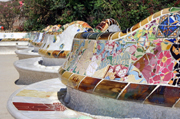
Top 3 Things to Do in Barcelona

The famous attractions of Barcelona are well known. My three personal favourites are: the interior of the church of Santa Maria del Mar in the Barri Gotic. It’s stunningly beautiful, the simple lines and soaring light appealing to our contemporary aesthetic values. I was lucky enough to visit when a family wedding was in progress – moving and exhilarating.

Secondly, I recommend wandering the quiet residential streets of the Eixample. The Time Out guide to Barcelona is a comprehensive, informed, up-to-date view of all aspects of the city, and contains useful maps. It also gives directions for a walking tour that points out some of the wonderful, eccentric details of the Modernista architecture. Soon you’ll find yourself looking at buildings differently.

Finally, when you find yourself flagging after miles of ambling the streets, seek out a granissats (I think that’s what they’re called!) – a long cool drink of intense fruit poured through crushed ice. Heaven in the heat!

Browse our collection of maps, guides and travel literature:
> Barcelona travel guides
> Barcelona road maps and atlases
> Travel literature inspired by Barcelona

Author: Douglas Schatz

Douglas Schatz worked at Stanfords for more than 20 years, and was the company’s managing director until April 2009. He is now pursuing several exciting ideas in the world of books and digital publishing.

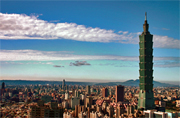
Taiwan

We’ve all got something with “Made in Taiwan” on it, but what about the country? You may be surprised by the modern, hi-tech society, fast catching up with Japan, and the rich, sophisticated Chinese culture, unaffected by the Cultural Revolution.

Twenty million people live on this not-so-large island. The cities are large, dirty and confusing, so it’s a blessing that the people are so friendly and helpful to a dumb foreigner like me. When the cities get too much, do what the locals do and head for the hills. The island’s interior has some 4,000-metre peaks and some lovely hot-spring resorts just a bus ride away from the chaos of Taipei city.

By the way, you haven’t experienced Taiwan if you haven’t tried ‘stinky tofu’.

The Lonely Planet guide to Taiwan is the best of only a few guidebooks to the island, essential for ex-pats and English teachers who make up the bulk of foreign visitors, while a Insight Guide to Taiwan have a beautiful pictorial guidebook that helps you plan ahead, or keep as a souvenir. a Nelle’s map of Taiwan publish, perhaps, the most useful map of the island. A word of warning about Taiwanese maps: the spelling of place names, particularly street names, is rarely the same twice, due to rival systems of translating Chinese into English.

Browse our collection of maps, guides and travel literature:
>Taiwan travel guides
> Taiwan road maps and atlases

Author: Guy Bristow

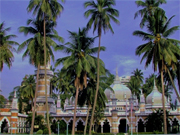
Malaysia

First of all, let me reassure you that my gran’s ideas about what visiting a country like Malaysia would be like turned out to be entirely unfounded.

Admittedly, upon arrival luck was on my side and I was greeted at the airport by an old friend, Nic. He saw I was in serious danger of developing a hangover and immediately took me to a physician who specialised in such problems, (locally known as a ‘bartender’). Whilst partaking in the cure, we resolved to take a cheap flight north to the Perhentian islands. We made several other resolutions that evening as well, many of them clearly revolutionary, but lamentably these were stolen by the Ideas Police during the night, along with much of our money, dignity, and capacity for logical thought.

Fortunately, as is the case with most things in Malaysia, passage to the Perhentian islands was easily negotiated. It wasn’t, however, so easy to find a resort that wasn’t flooded with backpackers without spending more than Bill Gates earns in a second. Still, listening to people talk for a week about what the nightlife is like in Bristol, is a small price to pay for stunning beaches betwixt rainforests and frighteningly clear turquoise water, dedicated to the business of enticing you in to provide the fishes with entertainment.

The danger of losing my ghostly pallor quickly became a bit too clear and present, and so we were forced to return to Kuala Lumpur to continue our important work of ensuring the bars in Bangsar were up to government standards. Coincidentally, this sort of work tends to coincide with Happy Hour.

We were up again at the first light of dawn (six days later), this time to head for Tioman Island, a day’s travel almost due east from Kuala Lumpur by bus (you might like to try the boat as well for the last stretch of the journey, which can get a bit watery). This time, finding deserted beaches was spectacularly easy, specifically in Juara on the eastern side of the island. In fact, I’d say it was a bit too remote and idyllic; Nic’s girlfriend was accompanying us and I had to keep going on spectacular dives with the local unqualified lunatic in order to find respite from the sight of them nibbling on each other’s earlobes. They spent the evenings locked in their wooden hut. I think they were playing very noisy chess, but it was hard to tell for sure – like I say, they kept locking the door.

And so my gran’s ideas about my trip turned out to be quite far off the mark as well. Mind you, I did tell her I was going to Leeds.

You can’t go far wrong with the Malaysia, Singapore & Brunei Rough Guide, and of course Lonely Planet’s South-East Asia on a Shoestring set the precedent for backpacker’s guides. For mapping, the Rough Guide Map to Malaysia is, as ever, excellent.

Browse our collection of Malaysia Maps and Guide books here >

Malaysia travel information >

Author: Rob Hunt
Stanfords restores glory to flagship store

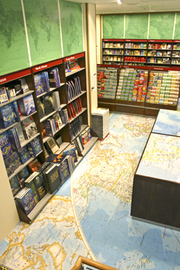
Stanfords is looking forward to the highlight of our 150th anniversary year: the 2003 re-launch of our flagship store on Long Acre, Covent Garden, at the end of our £1 million-pound refurbishment programme.


Already the world’s largest specialist map and travel bookshop, our refurbished store will be 50% larger than before, allowing Stanfords to offer an expanded range of both maps and books, which will be merchandised together by region for extra convenience. Large graphic displays will guide you to each area, and other original features include lectern browsers with map index information.

Starting in September 2002, exterior building work has been undertaken in parallel with the interior refurbishment and our store has remained open throughout. Continue reading Stanfords restores glory to flagship store