 The Independent on Sunday/ Bradt Travel Writing Competition 2008 awards ceremony is soon to be held at Stanfords’ store in London. Below are the six finalists’ entries.
The theme this year is “The Heart of the City” and more than 200 entries were submitted for the competition. Douglas Schatz, managing director of Stanfords, will choose the winner out of these final six. At the same time Jon Lorie, of Travellers’ Tales, will reveal his award to the best unpublished writer.
The Commute
Lucy Clark, unpublished writer
It was rush hour. The city reverberated with a cacophony of sounds quite unlike those heard in any other on the planet. The noisy squawk of three green parrots flying overhead, the prehistoric roar of howler monkeys, the morning call of the motmot, the aracari, the flycatcher. The undergrowth buzzed and hummed with activity.
Still only six-thirty and it was already unpleasantly warm. The sun crept up over the jungle canopy menacingly, promising more heat to come. The city steamed. I sweated in my cotton shirt and a dazzlingly blue butterfly landed briefly on my arm to enjoy the salty skin. Breakfast on the run. The sunlight filtered through giant ceiba trees, casting sky-scraper shadows on the rainforest floor.
Still in the outskirts, Rafa, a young archaeologist, began his daily commute, only this time he was taking me along with him. We picked our way through the morning jungle traffic, stopping for an industrious troop of leaf-cutting ants, making our way over and around the detritus of fallen branches, enormous leaves brown with decay and neat little heaps of coati droppings. Limestone rubble entwined with tree roots hinted at the city’s past life. This was Rafa’s territory and as we walked he pointed out his favourite haunts. We stopped beneath a mahogany tree and he picked up a stick and began prodding at the earth. Before long, a cross-looking tarantula emerged from a hole in the ground, wondering who had disturbed his lie-in.
We moved on. Pathways widened and strange mounds of earth appeared between the trees, just a few of the countless unexcavated buildings in this lost city. A tree grew from the top of one of these mounds, its greedy roots swallowing the stone beneath. It was hot now; my shirt clung to my back behind my rucksack and even Rafa looked a little uncomfortable in the morning heat. Not that the other locals seemed to mind. Rafa pointed to a thicket of jungle vegetation to our right and we saw what looked like a leggy guinea pig rummaging busily in the undergrowth. An agouti, he smiled, looking for her breakfast.
People left this city a thousand years ago, but it seemed more alive than ever, bustling with activity while eerily absent of the swarm of human life that populated my London commute. It began to rain, a drizzly shower of tepid water that barely cooled us. I breathed in the smell of damp earth and decay. We sat in the shelter of a tropical cedar, which rustled above our heads. Craning our necks, we saw two spider monkeys enjoying a morning workout in branches that obscured a former royal palace. The rainforest noise was practically deafening now, yet this felt like the most peaceful place on earth. A woodpecker hammered away with little concern for his neighbours, toucans squabbled and the machine-gun call of the ocellated turkey erupted nearby. Rafa pointed to a small clearing on the other side of the path just in time for us to see the turkey’s brilliant blue plumage disappear behind a strangler fig tree, which was busy devouring its host. I was glad we had stopped here. A London corner offered a fraction of the sights, smells and sounds.
The rain stopped and we continued. Through the trees ahead appeared the Great Plaza, downtown Tikal, a complex of ruined temples, palaces and ball courts, structures symbolising ancient ideologies and belief systems I could never understand. Turning a corner, a vast temple appeared, framed by overhanging trees and lianas, monument to a great civilisation reclaimed by Mother Nature. Sunlight hit the fifty or so stone steps while the canopy swallowed up the summit. Approaching the temple, we stepped into the shadows at its flank and pressed our foreheads to the cool stone, damp with moss and lichens. A moment’s respite from the unrelenting city heat.
We began climbing the temple, shallow steps on a horribly steep incline kept us looking up, clambering with hands and feet, already anxious about the descent. My neck burned in the unforgiving Guatemalan sun and I inwardly cursed Rafa for making me do this “must”. Then we reached the top. A couple in khaki shorts and Atlanta Braves baseball caps sat in silent awe and we joined them on the disconcertingly narrow ledge. Hot, cross, and a little bit frightened, I found my seat and looked. Before us, in the morning sunshine, the forest stretched for miles, punctured with ancient temple tops that jutted through the blanket of green. A harpy eagle soared effortlessly over the trees some way in the distance, surveying his kingdom. Rafa smiled. Welcome to my office.
Memories in Blue
Neil Matthews, unpublished writer
I stepped out of the hotel, into silence. The late afternoon light had a blue, almost medical tinge. There was no traffic. There were no dogs and no people – apart from one still human shape, swathed in dark coat and hat, standing by a crossing, not moving a muscle despite the absence of any vehicle.
The man finally shambled into motion, crossing the road. I arrived at the place where he had been standing and then it made sense. In this part of the world, the traffic signals command total obedience. Crossing the road without their explicit permission, in any circumstances, is blasphemy. So I stood there like my predecessor, waiting, admiring the tidy way in which the authorities had swept the road clear of snow. If only they didn’t have to leave it in a two-foot-high pile at the roadside, where it overwhelmed my new boots.
After a cold eternity, I received the blessing of the signals and moved on. The gradual onset of evening blurred the blue light into something more comforting and the snow was deep enough to soften harsh urban edges. But my fellow pedestrian had disappeared and there were no others. Yet this was a city centre. Puzzled but dogged, I peered at my map, observed by darkened office blocks and empty parked cars. I reached the end of a street and turned right, knowing that the Park must now be on the left. A mass of tall trees loomed. The silence was, if anything, more powerful than before. Not even a note of birdsong pierced it.
At such moments, life is a time loop. One foot follows another. The snow never varies in its depth. Nothing, nobody passes in either direction. There is no sound at all apart from your own breathing.
Then the road curved to the left and someone turned the mute button off. There was traffic: a line of slow-moving cars, stretching back to who knew where. Their lights were suddenly, terribly bright, as they advanced along with the night. Somewhere in the distance was the Brandenburg Gate, at the centre of Berlin, at the centre of Europe. With renewed purpose, I trudged on through the snow. As the traffic came into view, so did other people, black dots moving at random.
Then I saw something else. On a patch of ground on the right, in front of bleak modern tower blocks, stood a clutch of oblong slabs of varying heights and widths, each with a topping of snow. Intrigued, I walked between the slabs, taking several turnings. The light and sound of the traffic faded, as if the city had disappeared and the silent community of slabs had replaced it.
This was the Holocaust memorial, a remembrance of millions of victims through 1,500 pieces of concrete. I thought of my mother, who had been evacuated from London in 1940 at the age of six. Her host family out in the country, where they had never met a Jew, had examined the top of her head. They had been looking for horns. My mother once told me that she could never set foot in Germany. It would be too difficult, looking at people of a certain age and wondering where they had been; what they had done; which box they had ticked in the secrecy of the ballot booth. Some of those people who were now black dots in the distance, perhaps, or faces behind the wheels of the cars, advancing slowly and relentlessly.
From one of the gaps between the slabs, there came a flash of blue. On a primal intuition, I glanced in the opposite direction and saw a snatch of red from something small and fast on its feet. A small boy and girl in woolly hats and mittens, no more than five years old, were playing hide and seek, or kiss-chase, or peep-bo, or some other game, calling to each other and giggling.
Momentarily, the sounds of the children annoyed me. Why couldn’t they play somewhere else? Didn’t they know this was a memorial? Where were their parents?
Irritation gave way to reflection. Perhaps it was better that these children didn’t appreciate what their playground represented. They could play here until they were ready to look and learn. Others could remember, and understand, in the meantime. A young couple huddled companionably at the edge of the city of slabs. Their children’s scampering, laughing vitality brought gentle smiles to their faces.
I walked back to the road, towards the black dots and the lights of the cars and the city: leaving a memorial, a playground and the heart of Berlin behind.
At the Rialto
Liz Sillars, unpublished writer
Just for a few days I want to pretend that I live here.
I take my string bag and enough money and head to the market like the other Italian housewives who nod to their acquaintances in the street. I need to be there early to get my pick of the freshest vegetables and the choicest fish. And I don’t want to be mistaken for a digital-camera-wielding tourist either, because I am on my way to the Rialto.
Venice was a great city-state whose wealth was founded on commerce between east and west. Whilst St Mark’s was about pomp and power and politics, the Rialto was about trade. The doge has gone and the Council of Ten disbanded but every weekday morning you can go to the market and hand over coin in return for goods from the orient.
When Shylock asks, in the Merchant of Venice, “what news on the Rialto?” he is asking for a business update of the world markets. The Rialto was the trading floor and exchange of the empire with the Banco di Giro housed in a building near the bridge. Today the high finance may have been replaced by low tourist tat but it is still the mercantile centre. If we don’t buy the fake replica football shirts or glass gondolas then the traders will supply us with something else that we need: perhaps a chic leather handbag with a logo a little like Prada’s.
But I am here for the serious business of food. Offloaded before dawn at the evocatively-named Fondamenta dell’Olio from a fleet of jostling barges, the goods are now ready for my inspection beneath the stone arches of the Erberia. I am helped in my role-playing by the fact that most items are labelled, albeit in the Venetian dialect, but a little pointing and smiling goes a long way for a non-Italian speaker. The artichoke man, almost a caricature of his produce in a green jumper offset with a lot of chunky gold jewellery, is offering purplish Romani as well as the green Bari types. With universal gestures, he recommends the tiny Castravre, but I can only wonder at what their name might mean.
My next stop is at the flower stall where a matronly woman sits like a sunflower in a vase surrounded by colour. My halting efforts in Italian to ask for a bunch of ink-blue irises are rewarded when she sneaks in some extra blooms and ties them with an exuberant bow.
At a brightly-lit stall in the fish market, clams from the lagoon are sold in a net bag but some have escaped and every now and then one jumps in a futile bid for freedom. The eels too are unhappy at their confinement and attempt to slither out of their trays. The cuttlefish, thankfully, have already expired or they could be a menace with their two-foot long tentacles. Overseeing them all, the fishmonger sings out the praises of his merchandise whilst keeping them husbanded within the confines of his stall. He uses his green watering-can to keep the fish looking fresh and tempting.
Round the corner is a traditional butcher’s shop, with a white-aproned proprietor behind the counter. He greets his customers, guides them in their selections and wraps their purchases with an operatic air of bonhomie. The lettering above the door spells out Marcellena Equina. Most of the trays on display in the window contain variations on the theme of mince but there are also joints of meat including ‘fianchetto di puledro’. I have to look that up surreptitiously in my dictionary and when I learn that ‘puledro’ means ‘foal’ I decide I don’t need to research any further.
Almost next door is the cheese shop. Ah, this is better! The enticing interior has Pirelli tyres of grana padano, soft white curds in china bowls and a fragrance that makes me want to rush out and eat pizza. Never mind that most of the produce is from Emilia Romagna; it’s unlikely that most visitors to Venice will be progressing on a grand tour so why not pick up the parmesan from a proper cheesemonger? They won’t be taking home much liver, sour onion or other Venetian specialities in any case.
The market is winding down now; skinny cats scavenge for fishy off-cuts, cabbage leaves are brushed into the gutters and metal tables hosed down with workaday efficiency. I’m also getting a bit tired, clutching my bouquet like a diva. I think it may be time to call it a day and head home. But first I must do what the Venetians do; go to the supermarket and do my shopping.
Black Waters under Dublin
Emily Sharratt, published writer
Black waters coursing stealthily beneath the city.
Having risen as the Tymon in Cookstown, Tallaght, and descended through Greenhills, the dregs of the River Poddle flow through Kimmage and on towards the city. Only to be divided cruelly by the medieval ‘Tongue’ into two streams and forced into the dripping dark, beneath the fast-growing city and into obscurity.
Since the middle ages the Poddle’s waters have been swelled with those of the Dodder from Balrothery. Variously known over the years as the Sallagh, Solough, Sologh, like salach or slough, meaning muddy or soiled; yet, for all this, it remained the main source of drinking water for the settlement built around the tidal Liffey until the eighteenth century.
Black waters after the Tongue, one part seeping under the bench at the Grand Canal where Kavanagh sat watching barges go by. O, commemorate me where there is water. Past the dolphin-less Dolphin’s Barn, named for a family long forgotten. The river reveals itself briefly among the houses and schools at Donore Avenue and Warrenmount before subterraneously rejoining its sister stream at Harold’s Cross. (This section having travelled via the incongruously named Rialto, which commemorates a grander canal as it runs alongside the abandoned extension of Dublin’s own to St James’ Basin).
A pause here at Harold’s Cross to remember how a few years ago, the Poddle took its revenge for Dubliners’ short memories. A resident looking out of his back window (perhaps doing the dishes or boiling the kettle?) would have watched in some surprise as the gardens of the street sank from view, down 10 feet into the Poddle tunnel he had never known was there.
On again now to St Patrick’s Cathedral, where the hidden river frequently caused flooding in the nineteenth century. Indeed, so damp was its influence that the graves of Dean Jonathan Swift and his Stella had to be moved to a different part of the cathedral. Even before his death the Poddle had been a source of vexation to Swift – its willow-lined banks bordered and frequently flooded his idyllic garden in the Liberties, in which it is said he wandered among peaches, pears, nectarines, paradise apples and roses.
And on now to the Castle, in whose tourist-filled gardens wave-shaped paths seem to echo the lines of the dubh linn – the black pool – fed by the waters of the Poddle, that gave this city its name. Forming a natural harbour where it met the Liffey, the Poddle already marked an important meeting of roads, even before the northern invaders arrived in their creaking longships, and settled here.
Black waters forming a natural boundary, a forbidding moat, around the castle that was built here, protecting it from attack from the south. But one icy January many years later – in 1592 – it also supplied an escape route for the rebels Red Hugh O’Donnell and Art O’Neill who fled the castle for the Wicklow mountains through a drain into the Poddle. Did they hesitate before they dropped softly into that rat-infested tunnel, splashing through the pitchy damp to freedom?
Later again the river was the assembly area for elements of the 1798 Rebellion against the British, and once more during the bloody wars that marked the foundation of the state.
From here as the black waters trickle beneath the city, below Dame Street, their dank passageways – still seeming to echo with the wet tramp of those boots – are mostly undisturbed these days. Save for the occasional rat, bank robber or the man from Dublin Corporation Drainage Department. Under the Olympia theatre, through the darkness just beneath the feet of hen night holidays in Temple Bar, and finally through an iron grate at Wellington Quay into the Liffey.
Black waters carried steadily towards the grey sea.
Under the Casinos
Tom Bird, unpublished writer
The rain collapsed on Macau in thick, round drops. It sent them diving into doorways, and under the porticoes of hotels and casinos where, oblivious and sheltered, the dice went on rolling. The pink sugar-sweet beats of cantopop had to compete with the speckled rhythm of raindrops hitting the black-and-white tiles of Largo do Senado square. Out on the South China Sea, where the storm was going, they would be heading below deck. Marooned in Macau’s drenched centre, among the scattering crowds and unsure where to go, I ran into a tiny whitewashed chapel embarrassedly set in a corner of a city park, dwarfed by the casinos that pushed upward, disregarding the downpour. A small apologetic man came past me as I stood in the doorway of the church. It had a plain interior, even at what the poet Philip Larkin called ‘the holy end’. The man nodded and passed back out into the rain.
On the fresh white walls of the chapel there were clip frames containing stories of how Christianity came to China. I didn’t care about the missionaries described, and wanted to disapprove of their attempted imposition of beliefs on a people so far away. Nor was I particularly impressed by the hardships they had encountered following this course. One was prominent, so I moved towards its glassy sheen, which masked an etching of an 18th century European and a computer print-out recounting his life. This weedy notice, though, was the real, missed, hearty thing itself: it was home, reading right back at me through the clip frame. In Macau – yellow, green, black city of noodles and sweet custard pasteis de nata, here was the drizzle, wind and mince pies of north-east England, so long away. The little church was called the Morrison Chapel, after Robert Morrison, the first Protestant missionary in China, who came here and translated the Bible into Chinese. He came not just from the same county, nor the same town, but the same exact spot as me – from the set of three houses set around what is now a tiny car park that my parents parked in when they brought me back from the hospital. To see this in a strange, gambling, Portuguese corner of Asia brought all that sluicing back into memory, like the storm water that now filled the plastic gutters at the top of the chapel’s walls. Robert Morrison looked at me different now: I considered and celebrated him, and wondered how his gruff Northumbrian was understood by the other missionaries. He seemed, now, a holy man – and the walls of the chapel (when you looked closely) weren’t that dull, matt white, but crystalline and radiant, like the walls of an ice cave.
Outside, under the dripping trees, I walked to Morrison’s grave, close to the church in the Old Protestant Cemetery. It said he slept sweetly in Jesus. With the rain gone I felt less and less for this determined and remarkable man with his origins so close to my own: reverence for him and home had been a passing throb. The high-rollers of Macau were over there, where the oscillating neon was becoming more prominent in the evening gloom. The Cantonese of Macau started to sound above the muted chink of china spoons in the restaurants in the Rua Vieira, and above the wistful Geordie that Robert Morrison had begun to speak in my head. Bacalao was dropped into furious pans. Guards, standing sentinel in front of the golden casinos, forbade entry to those in flip-flops. Up above were the ruins of São Paulo – the front of a church without a church behind, and the dark grey sky filled each hole in the decayed stone.
The Perfection of Improvisation
Kate Megeary, unpublished writer
A small brown dog wearing a faded pink t-shirt jogged down a dirt street. I decided to follow him. He seemed as good a guide as any. He was in no rush, stopping to sniff the flip-flopped feet of the fat brown girls who sat gossiping on doorsteps, rocking babies, their tight, skimpy vests revealing cleavage you could lose an arm in.
The dog took me down the narrow back streets of Old Havana, where faded pastel paint peeled from the façades of elderly buildings. White sheets and blue shirts were strung up to dry over the twisted stumps of wrought iron balconies; women leant over crumbling carved stone balustrades and shouted to their children in the street. These once pristine and exclusive colonial mansions quietly decay whilst life inside them thrives. Here lies the beauty of Habana Vieja, evident in her decline.
My guide stopped, his ears pricked, as he spotted a man in torn denim shorts with a thick gold chain around his neck. The man wiped sweat from his armpits with a handkerchief and shouted up at a window high above the street. A woman with curlers in her hair leant out of the window and lowered a wicker basket on a piece of rope. The man took his pizza out of the basket, replaced it with a bank note and the basket was raised again.
A gang of kids with skinny legs and grubby t-shirts had set up a baseball pitch at a crossroads, each pavement corner representing a base. I stopped to let them pitch. “Hey beautiful lady,” called a small boy, smiling mischievously at me as he threw a small coconut. Another boy hit the makeshift ball expertly with a stick. The dog caught the ball in its mouth. The children shouted. The dog ran. I was guideless once again.
The uneven dirt streets gave way abruptly to newly laid cobbles and opened out onto Plaza Catedral. The limestone cathedral was weathered by centuries of hurricanes. Fossilised sea-creatures were embedded in its walls, as though the building itself had risen, fully formed, from the sea. Waist-coated waiters served over-priced mojitos to tourists wearing Che Guevara t-shirts, expensive cameras slung around their necks. A brass band played Guantanamera. Ancient black ladies with their life stories etched on their faces wore gaudy satin flamenco dresses and flowers in their hair. They posed for the tourists, huge Cuban cigars dangling, unlit, from their lips.
I bought an ice cream from the ground floor window of someone’s house and rested on a bench. A good-looking young man sat down next to me and asked where I was from. We talked, he in broken English, I in tentative Spanish. Suddenly, he stood up. I turned and saw a policeman standing silently nearby, arms across his chest, staring at the man as he walked away.
The Caribbean sun began to lose its heat. I sat outside on the terrace of a hotel bar. The staff looked bored and tired. The bar was empty, except for Yamila. She was a beautiful mulatta with waist length hair and daring eyes. She told me she was learning English. That she wanted to travel. An overweight tourist with grey hair and a pink silk shirt sat down at the bar and ordered a cocktail. Yamila excused herself and went over to him.
I gazed at the ferries crossing Havana bay while the sea turned orange, then grey. When I could no longer make out the white star of the Cuban flag that fluttered above the ferry terminal, Yamila reappeared with flushed cheeks and tousled hair. “Vamos,” she said, offering me her hand.
She took me to the Malecón. Sweeping around the northern edge of the city, the Malecón’s protective wall shelters Havana from the sea. Locals sat hip to hip along the wall, playing music, fishing, dancing, swapping stories, sharing worries, selling peanuts, looking north across the sea.
Yamila’s friends were waiting. We drank rum and watched the lights of Havana rippling in the stinking black water below the wall.
“You must be hungry,” said Yamila.
A boy was sitting on the wall next to us, his pole in the water, two unidentifiable fish by his side. Yamila gave the boy a peso and walked away with the fish. She returned ten minutes later carrying freshly fried fish and some rice on the lid of a cardboard box.
She took her ID card from her purse and showed it to me, proudly pointing out her photo, her name, her date of birth, explaining that Cubans must carry this card with them at all times. Laughing, she cut a slice of fish with the edge of the card and scooped it up along with some rice. Nodding encouragement and grinning, she offered it to me.
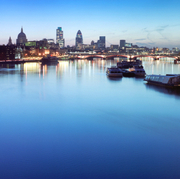 Our guide was very changeable, even capricious, taking us in one direction and then another. Our guide was the River Thames and led us from the docklands of east London to the leafy settlements of Buckinghamshire.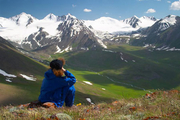


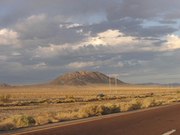 Driving across America is one of those things which you have to try at least once in your lifetime. Our trip started in Orlando. After three months’ work in Disney World, five of us were sick of Mickey Mouse and decided to go west.
 On the next day, after a short drive, we reached New Orleans; The Big Easy. It wasn’t really on my list of priorities, but I was positively surprised. The city centre is very compact and the best way to explore it is simply by walking. The French Quarter still has a strong European feel: French street names, tables on the sidewalks opposite the cafés, horse carriages for tourists, and generally the atmosphere. But to me, the best thing was the architecture. New Orleans is full of one- or two-storey buildings with beautiful wrought-iron balconies. They look great, even if some of them are not really in the best condition. In fact the shabby ones look even better. And they look absolutely fantastic on a rainy day. We had to hide under one of these balconies, from the afternoon thunderstorm. It was one of those small and quiet side streets and we had an amazing time watching the rain.
 Time. Time was our limitation. The same evening, after quick showers, we left Grand Canyon heading west of course. It took us four-and-a-half hours of desert driving to get to our next destination: Las Vegas. It was a great drive, the highway was almost empty and the sky was full of stars. Some good hours before Las Vegas we spotted some brightness on the horizon. It got bigger and shinier with every minute. At the beginning we didn’t know what it was – some small town, factory, or maybe a prison? Then we figured it out, they were the lights of Las Vegas. It is astonishing how far away you can see them across the dark and empty Arizona and Nevada deserts, and despite Vegas itself being hidden behind the mountains.
 We spent the following night in Muir Woods National Monument. We knew there was a free campground, but before we got there, we got lost in a network of small, narrow, curvy country roads. But on the plus side, this meant we got to explore Marin County. It is a great place, houses are hidden in dense forest, little towns are full of cool cafes, and all this in commuting distance from San Francisco. The only problem is the high prices of everything (it is, after all, one of the richest and most expensive counties in America).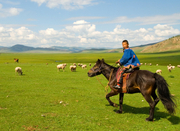
 “It’s just a floating caravan!”
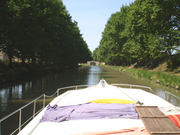
 One of the first lessons we learned on the canal was that everything is best done slowly. The maximum cruising speed is 8km an hour – we only covered 120km in total in the whole week. The locks do not open until 9 in the morning and close at 7 in the evening, with an extra hour’s rest in the middle of the day to allow the keeper to have his lunch. You couldn’t get anywhere fast even if you wanted to. And the leisurely routine of life on the water is the whole point. A slow wakening and breakfast on board before the first lock opened, when we would be ready to navigate a few miles. Mid-morning we’d stop for re-fuelling; topping up our water supplies and cycling along the tow paths to the local villages in search of provisions. We lunched and read while the lockkeepers did the same, and then cruised through the afternoon. My favourite time of day was the last hour’s cruising in the early evening, when the rich sunlight softens the landscape and the milky waters of the canal are peacefully still.
 We enjoyed a pleasant lunch in one of the myriad tourist restaurants that now line the narrow streets of the cite, and wandered around the cobbled lanes and battlements, browsing in the souvenir shops. My son was captivated by the countless medieval knights for sale, but I confess that – overwhelmed by the crush of summer tourists and knowing that much of what you see today is a fanciful 19th-century reconstruction – I found it difficult to conjure up the city’s dramatic history. We were pleased to return to the quiet of our boat and the unpopulated canal.
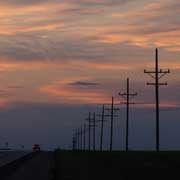 Kansas is one of the states I always wanted to visit. Maybe it’s not a place full of well-known world-class attractions but its name and image evokes classic pictures of America. The idea of going there was chasing me for the last few years, so planning my US trip for 2011 I decided to include it in my itinerary.
 West of Topeka, settlements become smaller and distances between them get longer. This is Kansas how I have always imagined it. And I was absolutely loving it. After leaving the major freeway (I-70 to be precise) at Manhattan (yes there is a Manhattan in Kansas), I took Kansas Hwy 177 south. Called Flint Hills Scenic Byway, it is a really great drive. The road is winding between and on top of the gently rolling hills covered with natural pastures. Due to cherty soil, the land is better suited to ranching than farming. Because of this, the Flint Hills is still largely native prairie grassland, one of the last great preserves of tall-grass prairie in the country. Lack of trees allows for some amazing uninterrupted vistas which for me are an important part of the American experience. Tallgrass Prairie National Preserve near the Strong City shouldn’t be missed. Offering self-guided walking trails, which let you get close to this amazing environment, as well as historic 1881 ranch, it is run by the National park Service and a charity called Nature Conservancy. From there, a scenic stretch of Hwy 177 continues to the outskirts of Wichita, which being the largest city in Kansas was convenient place for an overnight stop.

 Oklahoma is greener than Texas and less flat. I recommend going off the main freeway and enjoy driving its peaceful state highways. For example Oklahoma Hwy 152 is a great alternative to busy interstate 40. Probably the most unexpected attraction in the state is Wichita Mountains. With a maximum of 750m elevation, they are not true mountains but the granite peaks are still rather unexpected and dominant in the gently rolling state. A big part of the region is protected by the Wichita Mountains Wildlife Refuge which, covered by the remnants of mixed grass prairie, is host to herds of bison and longhorn cattle as well as a colony of super-cute prairie dogs. Kids will love them. One place not to miss is definitely Mount Scott. From its rocky 751m peak you will get probably one of the best views in the Great Plains. Absolutely spectacular, especially just before the sunset. You can drive all the way to the top and the mountain road drive is fun in itself.
 September 2004, after three months spent at a mountain camp in the wilderness of Sequoia National Forest, California, we were ready to hit the open road. Our camp was situated at 7,500ft above sea level and no less than two hours by car (which we didn’t have) to get to any civilisation. So we were eager for a change. The coast was our destination.
 In a moment of craziness we decided to explore the wild beaches and coastal dunes. In some parts they are open for cars, but we realised very fast (after 100 yards or so) that an economy-size saloon car with two-wheel drive is not the best for sand driving. Fortunately most locals drive pick-up trucks able to tow a tank, so one of them helped us get out of the sand. We decided to walk the remaining stretch until the beach. The beach was wide and wild, with tree trunks that could have arrived all the way from Siberia. It is the kind of coast I like. Not like the beaches of Florida or Mediterranean, crowded with tourists desperately getting tanned.
 It was too late to go back. We turned right (if I remember) and after some time on a very steep and narrow road, with a very poor surface and with no sign of civilisation (apart from signs mentioning the shooting of strangers), we managed to get to the main highway. By chance it happened to be the highway which we were looking for. I’m not such a bad navigator after all.
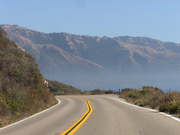
 After Portland we drove straight back south to San Francisco. It was the starting point of the last part of our coastal trip, the Big Sur. Some say it is the best scenic road in the world. In San Francisco we slept in Green Tortoise Hostel located right on the Broadway between clubs, bars and restaurants. It was Saturday night, so we didn’t sleep that much. This hostel, similar to his brother where we stayed in Seattle, was a bit crappy, noisy and full of cool dudes. Generally a great option for someone looking for fun but not for some sleep.