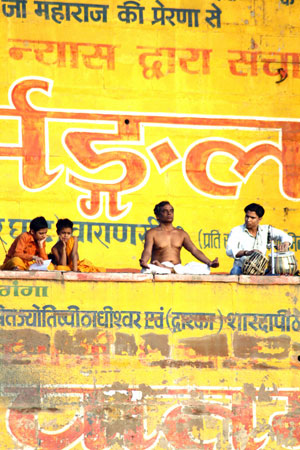
What’s it like to go on holiday with your mum? Charlie Gilbert travelled to northern India with his to find out.
Destination: northern India. Travel companion: my mum. Why India? Why my mum? Well, my granny was born and schooled on the subcontinent, so the pair of us wanted to explore our recent family ancestry first-hand. Thanks to a well-timed grouping of bank holidays, we jumped on a plane to Delhi to begin our adventure.
Now, I’m quite an unlucky traveller. During my last few holidays I’ve missed flights, been robbed by child gangsters and snowed in at train stations. Last time I was in India, I was hospitalised for five days with amoebic dysentery and run over by a motorbike. It’s fair to say my mum was a little nervous before any butter chicken had graced her palate.
Delhi
First stop Delhi, a somewhat curious city. Curious because the Indian capital has a remarkable ability to function on a day-to-day basis despite the relentless mayhem of energy-sapping heat, traffic horns, scam artists, lung-clogging pollution and a superbug-infested water supply (which, fortunately, has long since cleared up). It’s genuinely fascinating, but after two days the insides of your nasal passages turn black, you can drink a two-litre bottle of water in five seconds without your thirst being quenched and, most infuriatingly, you begin to lose faith in humanity. But that’s what India does to you – by the time you crawl into your hotel bed that night, you’re already reminiscing about how fantastic the day was.
Agra
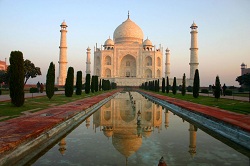
Armed with an India travel guide, it was onwards to Agra, which is essentially a miniature, industrial version of Delhi – but one that’s home to the world’s most impressive building. The Taj Mahal is an architectural marvel – tear-inducing, almost. It’s just a shame its interior is a bit smelly. After being moved by watching the early-morning sun reflect off centuries-old translucent marble adorned with Mughal scripture, I found myself sniffing the air and grimacing as I walked closer to the building. After taking a few steps back and whipping out the camera, normal service was resumed. Phewff.
A train journey
Our adventure began in earnest on the overnight train to Varanasi. If you’re not familiar with Indian trains, they usually have the following classes:
- Chair car: Avoid like the plague unless you like sitting on upright slatted benches for 13 hours and have a perverse attraction to insomnia.
- Sleeper class: Where passengers are presented with a plastic padded horizontal bench and a curtain. It sounds basic, but it’s remarkably comfortable – and one of those genuine ‘travel experiences’.
- AC 2-tier: The same as sleeper, but with more bedding and thicker curtains.
- AC 3-tier: Identical to AC-2 but with one more person squeezed in per berth – something of a lottery, let me tell you.
- First class: Which essentially involves being locked inside a moving box with two strangers, one of whom will most likely have a snoring problem that urgently requires the attention of an ear, nose and throat specialist. Unless you know the people you’re sharing a compartment with, I’d avoid.
We chose AC 2-tier – my mum wasn’t too impressed with the on-board facilities and was gripped by an unwelcome bout of claustrophobia. Being a gentleman, I let her have the bottom bunk – the one with the window and enough space to accommodate an average-sized badger set.
The upper bunk was so close to the train’s roof that I couldn’t sit up without banging my head on the grilled metal air conditioning vent. Using all the common sense I could muster, I decided to lie down. I was immediately transfixed by a big red handle on the end of a short chain, which dangled invitingly close to my right hand. Above it were the words ‘Pull to stop train. Penalty for use without reasonable and sufficient cause – fine of up to Rs. 1000 and/or imprisonment up to one year’.
Pulling this handle seriously tempted me – it would have generated enough excitement to justify a £15 fine, but I didn’t fancy being harangued by my fellow passengers or spending 12 months wasting away in an Indian prison cell with curried lentils as my only company.
After dilly-dallying for longer than I should have, I realised the train had been moving for 20 minutes and that I had no idea which way it was travelling. I glanced down at the bottom bunk – the curtains were closed and my mum was asleep. It was the same story over at the adjacent bunks. I spent the next 13 hours wondering whether my head was following my backside, or my backside following my head.
Varanasi
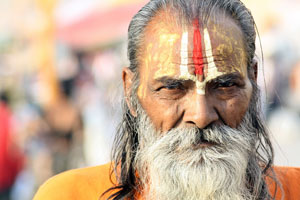
I had heard mixed reviews of Varanasi from friends of mine who had already visited. On the one hand, it was India’s oldest and holiest city, crammed full of temples, the Ghats, the River Ganga and bucket loads of religious and spiritual significance. On the other, it was an over-populated sprawl of decrepit buildings – its growth has been unstoppable, and the intensity of an around-the-clock sensory assault coupled with an unforgiving climate has driven tourists to more peaceful surroundings after only a few hours. Just as well my mum decided to book a five-night stay, then.
This is the city my great-great grandparents are from. Wilmot Charles Dover – easily the most handsome man who ever lived in Varanasi, then Benares – and his wife, Alice Maud, resided in a bungalow complex in the city until the late 40s. My granny, whose parents’ wedding reception was held there, remembers almost everything about it – from the mango tree at the front to the well at the back, even sleeping outside on the veranda when it got a bit hot at night. Armed with a few old photographs and a trusty Varanasi street map, my mum and I decided to pay the bungalow a visit – the first members of our family to do so in 60-odd years.
We were welcomed by the Guptas, the bungalow’s residents, with open arms. A family of 14, they told us the history of the house and we in turn showed them our old photographs. It was all rather pleasant – we were treated to a huge, all-you-can eat meal and a grand tour of the complex, which by Indian standards is pretty bloomin’ big. With a little help, we subsequently tracked down Wilmot’s grave, unmarked apart from a number ’46’ and covered in scrub and ants. It was a genuinely moving moment and felt like quite an achievement. I may have even hugged my mum, but I can’t remember.
Nainital
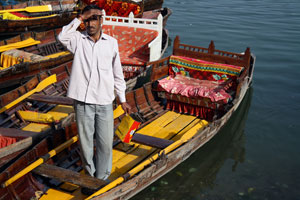
From Varanasi we returned to Delhi and headed north-east to Nainital, a picturesque hill station in the Himalayan foothills and the town where my granny went to school. This was the ‘holiday’ part of the trip. Up in the mountains it’s a much cooler 25 degrees, which basically means you can go out and have a nice time without fear of melting into a large puddle.
It was here where I met the Indian Mr Burns – his appearance and gait unquestionably similar to that of Springfield Nuclear Power Plant’s owner. He was fascinated by two things in particular: British coins and William and Kate’s royal wedding. His enthusiasm for both was insatiable and he couldn’t be calmed down – every time I opened my mouth to speak he looked at me like an eight year-old boy about to receive a Lego pirate ship for his birthday.
“You have English coin?!”
“Um, let me check. Yep, um, only about 20p though, sorry.”
“Wow! I shall keep this and treasure it! You have more?!”
I replied in the negative and his face dropped. “You sure, maybe check again?!”
Return to Delhi
A remarkably uneventful return train journey from Kathgodam back to the Indian capital signalled the end of our journey. Apparently the crew from the BBC’s Who Do You Think You Are lost the tape, so you’ll have to settle for this blog. Sorry about that.
Recommended reading
- Great Indian Railway Atlas: An excellent record of the Indian rail network, and very useful when you make up in the middle of your sleeper train journey wondering where you are.
- Lonely Planet Rajasthan, Delhi & Agra: A succinct, detailed guide to the most popular northern India destinations – an absolute must.
- Uttarakhand Road Guide: While in Nainital, this state map was vital when planning days out in the Himalayan mountain region of Uttarakhand.



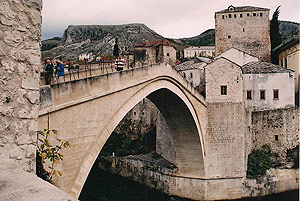 Mostar, synonymous with that beautiful bridge, the Stari Most, was high on my list of places I wanted to visit – but at the same time I wasn’t looking forward to it. The Balkan wars may have come to an end in the mid 90s, but Mostar in 2010 was still very much under repair. Ruins of any period, modern to ancient, fascinate me but the ruins of a comparatively recent war have not yet had the tragedy weathered away.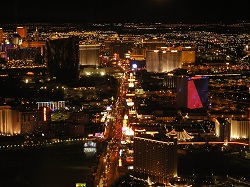
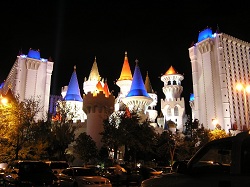 The best way of getting good first impression is a leisurely drive along The Strip. Here you will see all the major casinos, bars and shows. You’ll also see all the flashy cars you can imagine: sports cars, muscle cars, stretch limousines and big pick-up trucks.
 It’s true;