It is advisable to be good at ascending and descending in this part of West Cork, whether on foot or in a car (or, if you are masochistic, by bicycle) as almost nothing is on the level. The small fishing village of Castletownshend is a case in point. The narrow main street is ridiculously steep – walking up it requires a sort of 45 degree lean forward – and even driving up and down it can be a tad challenging. There are the twin trees that grow in the centre of the road, about half-way down in their own large raised stone-walled plot, that drive all but the smallest of cars onto the pavement going down the hill. Coming up requires careful navigation both to get round the trees and to avoid hitting anybody coming out of a side street at that point. Any failure to stop at the bottom of the main street will take you either off the quayside into the sea or into the castle… Continue reading Castletownshend Travel Guide: West Cork, Ireland
Category: We’ve Been There
Stanford’s travel tales from our in-house travel experts.
Top 5 European City Breaks
Paris
The magical city of Paris leaves a lasting impression on visitors. Often described as the most romantic city in the world, it’s hard not to fall in love with its breath taking architecture, bohemian cafes, trendy bars and finest cuisine. Visit the iconic Eiffel Tower and famous Mussee du Louvre or simply wander the streets of the cosmopolitan capital soaking up the atmosphere.
> Browse our collection of travel guides and maps to Paris Continue reading Top 5 European City Breaks
Sarajevo: A Travel Guide
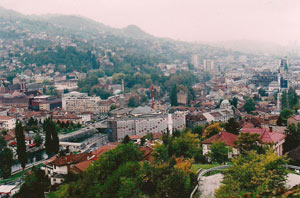 I arrived in Sarajevo, off a overnight bus from Montenegro, early on a Sunday morning. Having had to catch a taxi from the bus station on the outskirts into central Sarajevo, I was dropped off at the Latin Bridge, just near the spot where Franz Ferdinand and Sofia, his wife, were assassinated in 1914 – the infamous event that set off the hell on earth that was to be the First World War.
I went in search of the place I wanted to stay at. In the heart of the old town, Kod Keme is a guesthouse carefully fashioned from two old apartments (amazingly still within the budget section of places to stay) and run by an overtly cheerful lady with an Australian accent, though there seemed something sad about her. My room was enchanting – great thick walls with a curved window that looked out onto one of the narrow cobbled streets of the old Turkish quarter. I booked in for a whole two nights (as opposed to my usual one), as I wanted to spend some time in Sarajevo. Having published an academic book on post-war urban redevelopment and heritage conservation, Sarajevo was of definite interest to me. So, I dumped my bag and set off to explore.
Sarajevo is still under repair. It takes a long time for a city and its people to recover from war; the physical rebuilding will take at very least a decade, most usually several, and the collective psychological recovery will take at least a generation, especially in the case of internecine war. As is well known, when Yugoslavia viciously tore itself apart in the early 1990s, Bosnia i Herzegovina had the misfortune to be sandwiched between two ethno-nationalistic aggressors – Croatia and Serbia – who planned to divide up Bosnia between them. Sarajevo, as Bosnia i Herzegovina’s capital, was high on the hit list. Furthermore, Sarajevo is the kind of place ethno-nationalists hate – a city that is historically cosmopolitan to its core and home to people of a variety of religious persuasions and ethnicities and all getting on together, including intermarrying. It’s no coincidence that during the long and horrific Siege of Sarajevo between April 1992 and February 1996, the longest running siege of a city in modern times, that the Serbian forces surrounding the city deliberately shelled both the National Museum and the National Library in an attempt to destroy the historical evidence of such co-existence. There is quite a famous story regarding the BBC reporter Kate Adie. In September 1992, she interviewed Serbian gunners on the hillside overlooking that part of Sarajevo, wanting to know why they kept shelling the Holiday Inn when they knew all the foreign correspondents where holed up there. Apparently the commanding officer apologised profusely and explained they were aiming at the National Museum behind it.
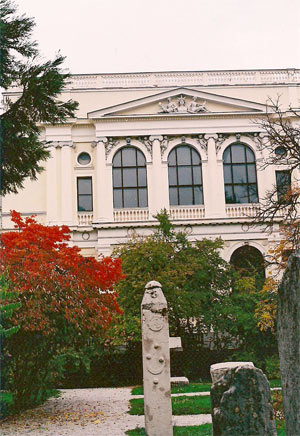 My first stop (after breakfast and coffee) was then the National Museum, a lovely old purpose-built building surrounding a peaceful garden and full of fascinating classical material – Roman and Illyrain – amongst other things. In the ethnographic wing the interior of a nineteenth century Ottoman family house has been reconstructed. Those wooden fronted-buildings usually with a screened first-floor balcony that you see surviving in the Balkans, Syria and Lebanon, and Turkey, though quite often dilapidated, are from the Ottoman era. Having seen them from the outside, it was quite a treat to see what one may have looked like on the inside – much of the material was salvaged from original houses. Despite the meticulous post-war restoration, the museum is now strapped for cash so if you are in Sarajevo, go and visit it, it’s well worth it.
In comparison to the love and care put into the National Museum’s restoration, across the road the History Museum of Bosnia i Herzegovina is another story altogether. Before visiting that, however, I couldn’t possibly miss the Tito Café underneath the museum, so stopped for an espresso. This café is entirely dedicated to Marshall Tito – full of photographs and other memorabilia but strangely dark with an intellectual, faux or otherwise I couldn’t say, feel about the place. I half expected the pair at the neighbouring table to start up a conversation on existentialism or something.
Fortified by my coffee, I made my way into the History Museum, buying a ticket from a pair squashed into a glass ticket booth drinking tea. The History Museum is housed in a very run down 1970s flat-roofed building. It is run down both due to lack of funding and because it was shelled during the Siege and has therefore been deliberately kept like that as a reminder. Unlike the National Museum’s traditionally neutral portrayal of the glorious past, the History Museum is much more political. Firstly it presents a clear case for Bosnia’s existence since medieval times at least – it is important for a nation so recently threatened with annihilation to demonstrate the historical evidence of existence. Over half of the exhibition space was, however, given over to the Siege of Sarajevo. Some 12,000 people, including 1500 children were killed or went missing, and 56,000 people including about 15,000 children were injured, out of a pre-war population of about 435,000. The Siege was only lifted with the signing of the Dayton Agreement. While neutrally presented, the photographs, the blood-stained and personal belongings, the detailing of the horrors of it and how people survived, were enough to bring tears to the eyes on occasion. On the other hand, people’s resistance and acts of heroism in such situations is truly inspiring, and there were plenty of examples of these as well.
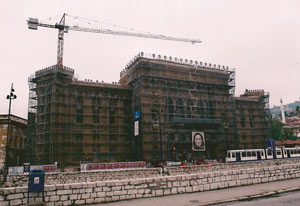 Of course the consequences of the Siege are still very much in evidence all over Sarajevo: there are large cemeteries across the city full of white headstones, all with tell-tale similar dates of death and many so young; the National Library is still being repaired, along with other buildings and there are some buildings that are still derelict. Abandoned properties in the Balkans take on a whole different air when one realises that they may be abandoned because their owners were killed or had to flee, never to return, during the wars of the 1990s and no one has since laid claim to them. Many buildings in Sarajevo still bear those characteristic pock-mark scars caused by shelling and bullets.
In need of some light relief, and because I’d forgotten to have lunch, I wandered back towards the carefully restored and very lovely old Turkish quarter for some coffee and cake. The range and deliciousness of cakes and pastries available throughout the Balkans is mind-boggling, but particularly so in the old Turkish quarter of Sarajevo; it was all I could do to randomly point at a chocolate concoction and wait until the waitress delivered a larger-than-life slice of it to my table. Delicious!
The other thing that needed to be done was discovering how I was going to get to Mostar, where I planned to go next. I wandered over to the bus and train station but ran into difficulties as my phrase book, in its wisdom, had failed to include the vital ‘Departures’/ ‘Departures To’ and ‘Arrivals’ / ‘Arrivals From’ in Serbo-Croat. I could decipher the train timetable, not so with the bus timetable. Thankfully a helpful person at the information desk spoke enough English to tell me that there was a daily 9am bus to Mostar with no need to get a ticket in advance.
Sarajevo is built in a valley – on the military defence front, a disaster as it is easily surrounded, but otherwise a beautiful location. Its long history – there is evidence for settlement here since prehistoric times –its occupation and development, in particular by the Ottomans and the Austrians, and co-existing Jewish, Christian and Islamic traditions mean it has some wonderful architecture and even a handful of conserved archaeological sites to peer into. As someone who has a particular fondness for random bits of odd information, I was interested to learn that Sarajevo was in fact the first European city to have a full-time, dawn-to-dusk, tram line and only the second city in the world to have an electric tramline when it began operation in 1885. The Austrians built it as a trial in advance of putting one into Vienna. Sarajevo still has trams but preferring to walk, I didn’t take one, and set out to climb up one of the streets that took me above the city and up to towards the city gates. There was an exhibition in one of the towers on Alija Izetbegović, Bosnia’s first president when the country separated from Yugoslavia, who struggled valiantly to keep his country together during the wars that engulfed the region, remaining in Sarajevo throughout the siege. A security guard had to unlock the room for me and then paced around the creaky wooden floorboards impatiently but I wasn’t going to be deterred from going through the small but fascinating exhibition that finished with Izetbegović’s huge and sad funeral in 2003.
From there, the security guard let me out through a side gate so I could carry on up and along to the Yellow Tower from where there is a splendid view west across Sarajevo. While I was up there admiring the view but also contemplating the horrors the city had suffered, a call to prayer went out from some of the mosques, giving the city a brief but almost unbearable air of poignancy.
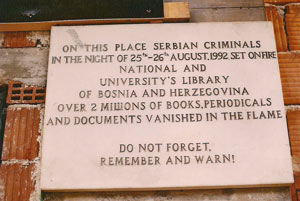 From my viewpoint, the roof of the National Library was obvious, and it was clear that work on its restoration had restarted, funded in part by Turkey, Austria and the EU. Amazingly, despite the fact that it is a building site, there was also an exhibition on in there and I was able to get in and wander round the ground floor at least, stepping over fallen columns and lose stone, and getting out of the way of the builders, while looking up to watch them working on the new glass dome. It was originally built during the period of the Austrian-Hungarian empire in the 1890s as the City Hall and is a curious combination of architectural styles, predominantly a kind of neo-Moorish style. On the night of the 25-26th August 1992, it was shelled with heavy artillery and incendiary bombs by Serbian forces, resulting in the building being completely burnt out, sustaining serious structural damage, and destroying virtually all of the primary archive of Bosnia’s history. Restoration is slow – it is a major undertaking for an historical building so extensively damaged – and costly, predicted to be €13 million. There is a firmly worded plaque in English on the outside that says it all.
By this time it was drizzling and it seemed fitting that I pay a visit to a large bookshop I’d noticed near where I was staying. I should have known better, of course, because while I have an almost pathological hatred of shopping, bookshops are another matter and it is hard for me not to come out with something. They had a good range of English language books and in the end I came out clutching ‘Sarajevo Throughout The History’ (yes, a Bosnian book translated as evident straight away by the European-wide problem with the English definite article), justifying the purchase as being for my research, but wondering how an earth I was going to get it into my bag.
Next day I was departing for Mostar; for all the repair and recovery still going on in Sarajevo, the city was to seem positively healed compared to Mostar, as I was to discover.
> Browse our collection of travel guides and maps to Bosnia-Herzegovina
Author: Caroline Sandes
Another Side to the US's East Coast
When one mentions the East Coast of the US most people think of big cities like Boston, NYC, Philly and Washington DC or other busy places like Atlantic City or Cape Cod. But there is also another side to this region; small quiet towns, rural roads, dunes and lighthouses. And that’s where I was heading.
My adventure really started when I entered the state of Delaware, just 25 miles south of Philadelphia. Why did I come here in the first place? Well, in the last few years I’ve been trying to visit every single state of the US and Delaware was one of the few left on my list of unvisited ones. With another box ticked I started thinking, what on earth can I see now that I’m here? Let’s be honest, Delaware doesn’t really sound like the most exciting of destinations. So I checked myself into some random motel, bought a few beers and started browsing tourist brochures and maps. It was then that I realized that I was only a few miles away from the Dover Air Force base and its Air Mobility Command Museum. And that was where I headed for the following morning.
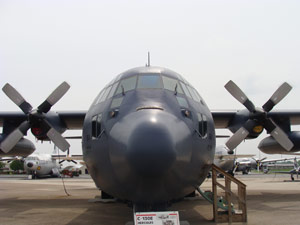
Boy, I really hit the jackpot as this is one of the best museums I have ever visited. It has a large collection of fully restored cargo and tanker aircraft, among them such beauties as the C-130 Hercules, C-141 Starlifter, KC-135E Stratotanker and even the B-17 Flying Fortress. What is the best thing is the fact that you can actually get inside some of the planes, for example the Hercules and Starlifter are both open to visitors. In the Hercules you can even get inside the cockpit! Wow! I had bucket-loads of fun out there and would recommend this place to anyone even remotely interested in aviation. And all this for free. Can you imagine? One word of warning, a visit here will make you feel and behave like you are small boy (or girl) again.
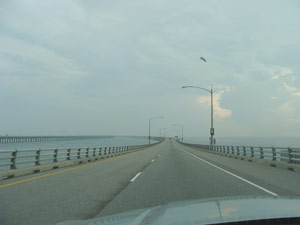
From Dover I drove south through the 270 km long Delmarva peninsula. Its name comes from the first letters of Delaware, Maryland and Virginia which all occupy parts of it. As I was getting further south across the flat landscape it was getting more and more rural. At the tip of the peninsula is located one of the greatest engineering marvels in the US, the Chesapeake Bay Bridge-Tunnel, a 37km long system of low bridges, tunnels, artificial islands and causeways. It is fun to drive, especially around sunset when the views are breathtaking. In some moments you can feel as if you are driving on the sea itself.
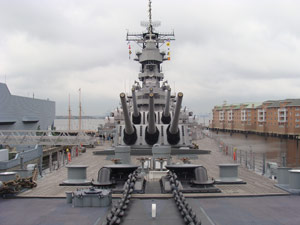
Across the bridge I entered the region of Hampton Roads, also called Tidewater, which includes a dozen or so cities, the biggest of them being Norfolk and Virginia Beach. It is a real suburban mess with potholed narrow highways choked full of traffic. Not fun at all. Still, the beaches are nice and there are some attractions. One of them, which I can definitely recommend, is the maritime-oriented science centre and museum, Nauticus. It is full of modern hands-on exhibits but the best part of it is the Iowa-class USS Wisconsin, one of the biggest battleships ever built. She served in WWII, the Korean War and the Gulf War and she is a real photogenic beauty. You can explore its deck through a self-guided tour but also ask questions of one of the volunteers on board as they are retired navy themselves and can share their stories.
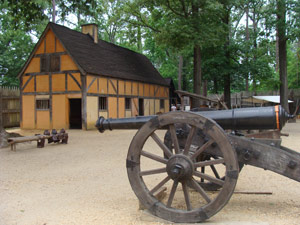
From Norfolk I headed 50 miles north to Jamestown. To get there I had to battle crazy busy suburban traffic, but it was well worth it. Jamestown is, in a way, a birthplace of America as we know it. Established in 1607, by the Virginia Company of London, it was the first permanent English settlement in North America. Nowadays there are actually two sites worth visiting there. First of them is Historic Jamestowne which is managed by the National Park Service and covers the location of the original Fort James. Here you can see archaeological remains of the original fort as well as a 17th century church tower and the site of the 17th century town. Thousands of artefacts found during the excavations are displayed in the museum on site, called Archearium. The second major attraction here is Jamestown Settlement which is actually a reconstruction of the original settlement. Located a few miles from the original site, it is a living history museum where costumed actors play roles of settlers and Indians. So you can join the town meeting or watch settlers cooking, firing muskets, blacksmithing, woodworking etc. Outside the fort you can also board replicas of the three ships which brought the colonists. What is really striking is how small the vessels are. It is hard to imagine how people survived the long transatlantic journey on these tiny wooden boats. Each boat is manned so you can ask “the captain” questions. Apparently, these boats are also fully functional and still do sail occasionally. I had a lot of fun in Jamestown as Americans are really good at organizing places like this. It is no coincidence that Hollywood and so much of the other entertainment industries are in the US; they just know how to have fun. And make money out of it.
From the Chesapeake region I continued further south into North Carolina. I got lost trying to avoid toll roads but I eventually made it to the Outer Banks, also known as OBX (don’t they love abbreviations out there?). The Outer Banks are a 320 km long chain of narrow barrier islands which cover most of the North Carolina coastline. It is a major tourist area but I was lucky enough to be there before the main season so it all felt positively windswept and wild. It was actually literally windswept as it was a windy, even stormy, day during my visit there. But I’m not complaining at all. In fact that’s precisely the way I like it. The beaches were empty (save for a few brave kite-surfers and fishermen), the waves were amazing and the air was crisp and salty.
After entering the Banks at the town of Kitty Hawk, towards their northern end, I headed south towards Cape Hatteras. While looking for accommodation, I accidentally ended up in the small town of Manteo, located on Roanoke Island, where the famous Lost Colony was located. Established in 1585 the colony of 108 disappeared before more settlers arrived in 1590. It is still a mystery as to what happened to them. There are a few theories but no conclusive evidence. Nowadays Manteo is a nice and quiet town of about 1000 souls.
Further south the Outer Banks get wilder and wilder, with only one road, the NC Hwy 12, to choose from. Low sand dunes border the highway in many places and on windy days sand is blown onto the road. It looks quite spectacular but it is a constant danger as well as a headache for the highway maintenance crews who have to clear it, sometimes daily. Long stretches of this part of the Banks are protected by Cape Hatteras National Seashore and Pea Island National Wildlife Refuge which means that beaches are wild and all the development is contained in a few relatively small communities. One of them is lovely Buxton, a small unincorporated place dominated by the Cape Hatteras Lighthouse, which at a height of 64m is the tallest lighthouse in America. Due to erosion it was relocated 870m inland in 1999 but views from the top are still spectacular.

Further south is another unincorporated community, Hatteras, where I found probably one of the smallest bookshops in the world. It resembles a cross between a garage, a beach shack and a garden shed but the staff was very friendly and they have a good selection of local titles. Great shop.
Even further south the road eventually ends and to continue the journey one has to take the ferry. I was tempted to board it and visit the remote Ocracoke Island but by then time was becoming an issue, so I had to turn back north and then head back into the mainland.
I think the Mid-coast of America is much more interesting than many people think. Because it was the first area to be settled by Europeans there are plenty of sites associated with the early colonial history. But it is also a relatively wild and sparsely populated region, especially compared to the megalopolis further north. If you add the military heritage and hardware on display it definitely makes a quirky and fascinating holiday destination.
- Browse our collection of maps, guides and travel literature:
- > USA travel guides
- > USA road maps and atlases
- > Travel literature inspired by the USA
Author: Gregor Swiderek
Top 5 UK Travel Trips
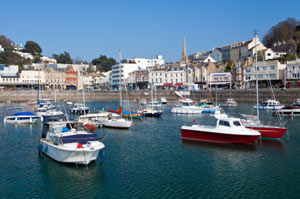
With the summer weather finally upon us, it’s the perfect time to getaway in the UK. Our top 5 UK Summer destinations for 2012 are; Cornwall, Devon, Yorkshire, the Cotswolds and Bristol.
Cornwall
Experience the beauty of Cornwall with it’s rugged coastline, quaint harbour villages and stunning beaches and sandy coves just waiting to be explored. Famous for its surfing and home some of the best beaches in the UK, Cornwall is the perfect place to escape to for a relaxing weekend. Continue reading Top 5 UK Travel Trips
Philadelphia Travel Guide
Philadelphia. The last big city of the east coast which I had yet to visit. In previous years I managed to visit the likes of Boston and New York to the north as well as Baltimore and Washington DC to the south, but somehow Philadelphia had always eluded me. That changed in May when I finally managed to get there. It is shame I waited so long as Philadelphia is a really interesting place: a great mix of history and a modern vibrant culture.
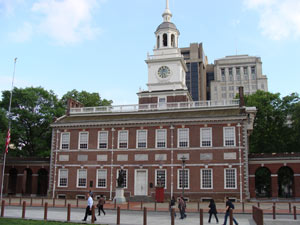
I started my visit from the touristic heart of the city, the Independence National Historical Park, which preserves several sites associated with the American Revolution. The most important of them is of course Independence Hall where both the Declaration of Independence and the the United States Constitution were debated and adopted. The red brick building, which was once the colonial legislature for the Province of Pennsylvania, was completed in 1753 in the Georgian style and is nowadays a UNESCO World Heritage Site. You can visit it for free but you still have to get a ticket and go through the airport-style security checks. Tickets are timed and go fast so if you really want to get inside, make the Independence Visitor Center your first port of call in Philadelphia. Continue reading Philadelphia Travel Guide
Where to Visit in Israel
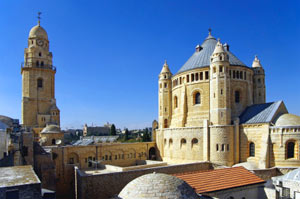
Israel is a small country that is characterised by variety. Its landscape, people, cultures, religions and history are a big mixture, making for some hugely interesting and rewarding travelling. Despite its small size, there is a lot to see and do in Israel – from its beautiful old cities to its nature and impressive landscape. Continue reading Where to Visit in Israel
Pittsburgh and Fallingwater
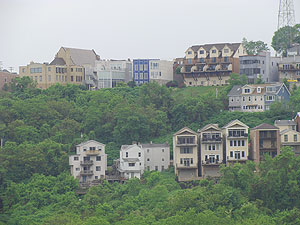 Pittsburgh is one of the cities I have wanted to visit for years. Why? Difficult to explain, but I guess it has a lot to do with me being a map geek. I often study maps of cities or, I would rather say, virtually travel on them. Pittsburgh’s layout looked interesting to me from the first glance at the map of Pennsylvania. Its compact downtown is located on a triangular patch of land at the confluence of Allegheny and Monongahela rivers, where they form the Ohio River, while its neighbourhoods and suburbs spread out over many steep and wooded hills. Also, as a person who has a mild obsession with bridges, I couldn’t miss the fact that Pittsburgh features over 440 of them. So, when I was planning my latest US adventure, I made sure the Steel City was on my itinerary. Continue reading Pittsburgh and Fallingwater
Podgorica, Montenegro, and onto Sarajevo, Bosnia i Herzegovina
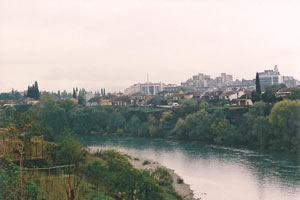 Given Montenegro’s beautiful mountainous scenery and historic coastal towns, it is not surprising that Podgorica, formally Titograd, Montenegro’s business-orientated capital city, is not usually on anyone’s itinerary. I wanted, however, to get to Sarajevo and this was a good midway point between Albania and Bosnia i Herzegovina.
I had come across from Albania to Ulcinj and had a couple of hours to wait until the midday bus to Podgorica. Since there was nowhere to leave luggage, added to which it kept raining, there was not much for me to do but wait at the bus station. Entertainment was soon provided by the arrival of a rather odd couple. They spilled out of a taxi in a fluster, luggage in all directions. She was English, thin, dyed black hair; he was Mediterranean, short, round, tanned, and bald. They wanted to go straight to Croatia and had some notion of needing to get to Herceg Novi, the last town on the Montenegrin coast before the Croatian border. The tall, quiet station supervisor kept trying to explain to them that the bus they kept thinking they should get on was in fact the Podgorica bus and not the one they needed; someone else tried suggesting that they should perhaps get a bus to Bar and go on from there. Advice and discussion in a variety of languages, including English, ensued while I and other waiting passengers watched with idle amusement. In a state of fluster and confusion the couple wanted to remain, or so it seemed, and everyone was still trying to sort them out as my bus pulled out half an hour later.
Montenegro is named as such for good reason and the journey to Podgorica passed through some stunning mountainous countryside. The bus made its way north along the Adriatic coast, before turning inland to take a road past the huge serene Lake Skadar, encircled by dense woods and stretching for miles. It was a grey old afternoon in Podgorica as the bus pulled into the huge communist-era bus station. I bought a ticket for the night bus to Sarajevo, dumped my bag in the left luggage place and headed out for a wander around the city.
I decided to visit the museum first, but nearly missed it. While it was a large and grand building, the entrance was an incongruous single modern aluminium and brown glass door looking more like a fire-escape than an entrance. I tentatively pushed it open to find a large and almost empty foyer. At one end the whole wall was occupied by an impressive painting entitled ‘Titograd’, dated to 1957 and at the other end was a ticket desk. When I asked for a ticket, the grey but youngish man behind the counter raised his hands in the air and rattled off something in Montenegrin, indicating, it would seem, that there were no tickets and therefore I didn’t need to pay. I was the only person there, and the place had a rather forlorn feel to it. Half of the first floor was occupied with what I hoped was only a temporary exhibition of truly awful paintings by a young artist who I won’t name. Then there was a small but interesting exhibition that focused on Podgorica’s Roman foundations, and a smattering of other material from different periods. They had lots of historic books on display, including ‘A Compendium for Travellers’ by Vićenco Vukovic, published in Venice in 1547. They were all in glass cases but with a complete lack of monitoring equipment, and there was even a dead fly on the page of one, causing great concern to my professional archaeological self.
After the museum, I took a wander round central Podgorica, passing a bee-keeping fair in the main square, then over the river and past an American embassy under construction and back round again past the Ottoman Clock Tower. By 4.30 it was starting to rain and there wasn’t much to do except head back to the bus station. By the time I got to the bus station, the rain had become a torrential downpour, so I settled down with my book for the long wait until my bus departed, breaking the time up by having a huge dinner in the café, which won me the approval of the friendly waiter, and a favourite pursuit, people-watching. The bus station slowly emptied out except for a couple of drunk homeless men whose antics provided some tragi-comic light relief until they both fell asleep, and some taxi drivers watching on the telly what appeared to be the Montenegrin version of Pop Idol while smoking cigarette after cigarette; evidently the prominent no-smoking signs were not to be taken seriously.
Midnight came and there was no sign of my bus. A smart coach pulled in, Eurolines blazoned along its sides with the bus company’s name, but no, this was not the bus to Sarajevo but the bus to Belgrade, as I discovered when I tried to get on it. Finally, a battered and coughing bus pulled in, driven by a rotund and slightly dishevelled driver. This was the bus to Sarajevo. Was it going to make it to Sarajevo was my initial thought, and secondly did Balkan politics run to such a deep level that it even affected the quality of the bus depending on where you were going…?
My only regret was that I had taken the journey at night because judging by the narrow, endlessly winding and climbing road we took, it must have been quite scenic, but all was pitch black. The driver had to dodge potholes and the occasional rock slide, but we reached the border without incident at about three in the morning. The Bosnian immigration officials were stern, stomping through the bus, peering at the everyone’s passport with a torch, and stamping them. With that the border was crossed and into Bosnia i Herzegovina we went (my fortieth country to travel in, for the record).
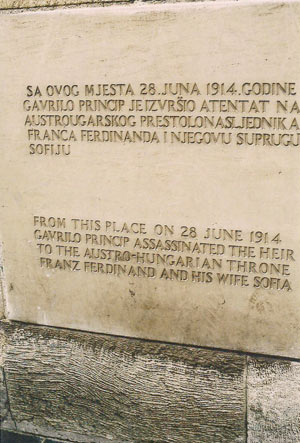
The bus then stopped briefly at a café that really felt like it was in the middle of nowhere but was open despite the ungodly hour, and then on again. We finally rolled into Sarajevo at about 6.30am, still in the dark. Naturally, the bus did not go to the main terminal in the centre of Sarajevo but pulled in at a one on the outskirts from which there was no public transport. Badly in need of an espresso but without any Bosnian currency, I hopefully proffered a €20 note to the man behind the counter in the station’s bar. Clearly he was used to this as he gave me back change half in euros and half in Bosnian currency. The lack of public transport meant my only option was to take a taxi so I found one and was soon standing on the Latin Bridge in the centre of Sarajevo, not far from the spot where the Archduke Franz Ferdinand and Sofia, his wife, were shot, precipitating the First World War. War has sadly been a trademark of this lovely city and I was to spend a fascinating if poignant couple of days here.
For my month-long Balkan trip, I used the Lonely Planet Western Balkans guide book, the Lonely Planet Eastern European phrase book, and the Freytag & Berndt Balkans/South-East Europe map.
- Browse our collection of maps, guides and travel literature:
- > Montenegro travel guides
- > Montenegro road maps and atlases
- > Travel literature inspired by Montenegro
Author: Caroline Sandes
The Travel, The Adventure, The Challenge!
We all love to travel and explore new places, soak up their culture, get lost in the city’s charm, or simply lay by a beach and enjoy some sunshine. These are all fantastic experiences to have while out exploring the world, I just like to do them with a little more intensity.
I’m Luke Tyburski, an up and coming Adventurer who will be writing Blog entries telling of my experiences, the locations, and the crazy things I plan to get up to, but first, a little about myself, and where I’ve been recently. Continue reading The Travel, The Adventure, The Challenge!