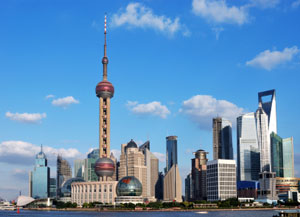
 Shanghai-based freelance journalist Tim Neesham gives a westerner’s perspective on living in one of the world’s most forward-thinking yet enigmatic cities.
I am standing on the platform as a Shanghai metro train gently rolls into the station. Elbows cocked, knees bent, I prepare myself for the inevitable battle that accompanies the boarding of every train. The doors open and I make my move, but like a salmon fighting its way upstream, progress is minimal, perhaps even backward.
The next thing I know I am facing the wrong direction and the train is gradually departing the station. I am still on the platform. I may as well have my pants around my ankles for good measure. Punk’d, merked, served, whatever – I’ve been had.
And such is life when 23 million people are all seemingly battling for the one empty seat. Snooze you lose, dog eat dog – figuratively speaking of course – all the old cliches come to mind. Shanghai is not just bustling, it’s booming, at times frantic; the fastest growing metropolis the modern world has ever seen.
The very name conjures up images of 19th century opium dens, porcelain poster girls and preposterous propaganda, but in reality the Shanghai of today is a cosmopolitan cocktail of forward movement, exploration and bucket loads of new money.
In 1990, the area of Pudong was little more than a swamp. Within 15 years it’s transformed into the oft-filmed and photographed Shanghai we recognise today. Skyscrapers which at one time were the largest in the world are now home to central offices for many of the world’s largest corporations. It even has its very own stock exchange. All have helped mould Shanghai into what is arguably the most influential financial centre of what is indisputably the world’s fastest-growing economy.
 Modern Shanghai is a unique mix of colonial architecture and 21st century Oriental innovation. Indeed, at times wandering through the area the foreigners know as the French Concession it’s easy to forget you’re even in China at all. As the name suggests, it’s perhaps more akin to a strolling down a Provencal boulevard. However, a quick duck down a side street or into the subway quickly reminds me that I’m far from home, far from western customs and traditions.
But as a westerner here, the creature comforts come thick and fast – bars that sell decent beer on draught, restaurants offering reasonably inexpensive pizza and takeaways that will deliver more or less anything to your door at more or less whatever time you choose.
Public drinking for example, although perhaps frowned upon or at the very least greeted with confused regard, is still perfectly legal and the whisper of the smoking ban remains exactly such.
The western bubble has expanded to the point that a real connection with Chinese culture is no longer a necessity. Locals view us with a certain wary curiosity, as one might look at an unexploded incendiary device.
This lax – some may even say liberal – attitude to the infusion of western culture combined with a reasonably fertile foreign employment market has seen expat numbers soar in recent years, but the division between foreigners and locals remains tangible.
 That said, if ever there was a place to epitomise where east meets west, where old grapples with new and innovation struggles to overcome tradition, then it is Shanghai. A fascinating city of startling contrasts, Shanghai’s biggest obstacle may yet turn out to be those who continue to sculpt it and drive it forward. Without the Chinese, Shanghai would be nothing like what it is, yet the speed at which it continues to develop is destined to leave many people far behind. It’s no secret that the labourers who work so hard to build the skyscrapers will probably never get the chance to actually set foot inside them.
Never ashamed to destroy or exploit images of cultural heritage in the name of progress, Shanghai follows the modern Chinese model that moving forward is of far greater importance than preserving what has already been.
Human nature has thus far shown that radical change takes time, but time is the one thing the Shanghainese are not willing to waste.
Want to discover more about Shanghai? Try one of these Shanghai travel guides and maps:
- Lonely Planet Shanghai City Guide – get 20% off!
- Shanghai Flexi Map – save 25%!
- Beijing & Shanghai Eyewitness Guide – save 25%!
The city is one of the most exciting destinations to visit in the world with millions of visitors passing through Changi Airport making it one of the busiest in the world.