Rachel Ricks discovers Ollantaytambo, a picturesque Peruvian village that serves as the gateway to Machu Picchu.
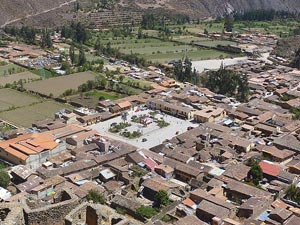 In Peru’s Sacred Valley is a small but picturesque village where it seems on any given day, the whole world has come to converge.
It doesn’t even have an easy name to pronounce for the nationalities of the world – Ollantaytambo. And the reason everyone visits this tiny pueblo? To get to and from one of the New Seven Wonders of the World: Machu Picchu.
I spent longer than most visitors do in Ollanta – as, thankfully, it’s called for short (I panicked originally at the thought of not being able to pronounce where I was staying) – and I knew I’d love to invest more time here after my first visit.
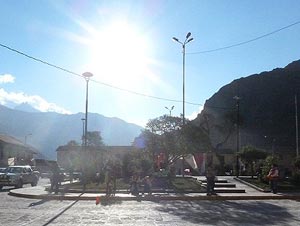 I remember my delight as the collectivo (public mini-bus) wound up from the main road on to a cobbled lane that then squeezed between low, terracotta-roofed honey-coloured houses, to emerge into the sun-filled Plaza de Armas, the main square, where I excitedly hopped off. I sat down on one of the plaza’s benches to absorb my surroundings as I hadn’t known what to expect.
Ollanta is a picture-postcard village, tucked in snugly between soaring mountains flanked by Inca ruins and terraces. Leading enticingly off from the plaza are narrow cobbled lanes that run with Inca irrigation canals, so wherever you wander there’s always the delicious relaxing sound of trickling water. I explored the lanes eagerly, not knowing which way to turn first and enjoying the peace after leaving the plaza.
Then I found the start of the trail up the mountain of Pinkuylluna where its Inca ruins are free to explore, unlike the ruins on the opposite mountain that require an entrance fee of 70 soles (£17), or as part of the Boleto Turistico (a tourist ticket that covers several sites in the area). The stepped path meant I ascended the mountainside rapidly, and I went up past the ruins as far as a visible path could take me, although by now I was scrambling up loose rocks. Then suddenly the view of even grander, snow-peaked mountains beyond those of Ollanta opened up. The town below me looked at my arm’s reach, and its grid layout made it look like a toy town.
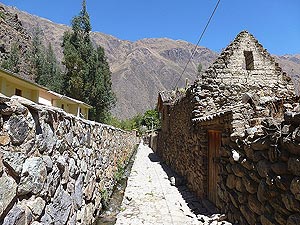 That day, I ended up arranging a job as a volunteer in a cafe that channels its profits into local projects, so I returned to Ollanta a couple of weeks later. This time I stayed in the exclamatory Casa de Wow!!! on one of the cobbled lanes on the edge of the town overlooking the mountains. My room was at the front, overhanging the street’s irrigation canal, so I fell asleep and woke up to the sound of water dancing over cobblestones. I was glad to have the opportunity to stay longer in this beautiful town than the tourists who passed through on either side of Machu Picchu visits.
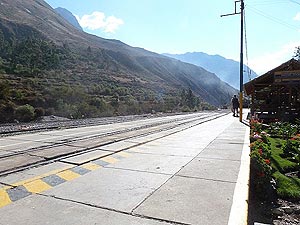 Ollanta is where the train for Machu Picchu stops, so at some point everyone who visits the legendary Inca ruins must pass through. Working in the cafe, I talked all day, every day with people from countries all over the globe who were heading to or from Machu Picchu. Japan to Germany, Poland to Kuwait; every nation is represented in Ollanta’s tourist cafes. And it’s a long time since it was just intrepid backpackers who came this way; now it’s everyone from hippies to super-luxury package tour groups who are escorted from the train station in blacked-out 4x4s. And they’re all talking Machu Picchu.
I haven’t been to Machu Picchu yet – I’m getting myself fit for a five-day trek that’s an alternative to the over-trodden Inca Trail. I’ve heard the whole world’s opinion on it though, and I’m glad I’ve given this little town some more of my time.
Browse our collection of Peru Maps and Guide books here >
You can read more about Rachel’s travels on her blog.