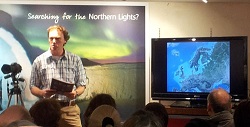
 Award-winning photographer and travel writer William Gray told an audience at Stanfords Covent Garden his 10 top tips for successfully photographing the Northern Lights, courtesy of Discover the World.
“The aurora borealis really is a celestial temptress – she might grace you with her presence for a few minutes or flaunt herself for hour after hour. The key to capturing her with your camera is to be prepared,” William explained.
“That means being in the right place at the right time, with the right gear and the right camera settings.”
With this is mind, the photographer revealed his top 10 Northern Lights photography tips:
1. Relax
“Don’t become obsessed with checking everything on your camera – take the time to pause, stop, wait and enjoy your surroundings.”
2. There’s no guarantee you’ll see the Northern Lights
“They should be looked on as a bonus to activities like husky sledging and staying in ice hotels. The polar destinations are fantastic are on their own.
“It took me half a dozen visits to northern polar regions until I saw a Northern Lights display I would rate as ‘blow your polar socks off’.”
3. Layers
“Whatever you do, don’t sprint into the night with your arctic pyjamas. Wear lots of layers and wrap up warm. A handy tip is silk-liner gloves underneath your thick thermal gloves, which will allow you to get at the camera settings and ward off frostbite for a few more precious seconds.”
4. Use a familiar camera
“The best camera is the one you’re familiar with. Whatever you do, don’t rush out before your Northern Lights holiday and buy a brand-new camera – you don’t want to be standing next to a frozen lake the next day flicking through an instruction manual.
“I would recommend a digital SLR camera as opposed to a compact. Don’t get too hung up over the camera body; it’s the lens that’s most important. The reason is that you need to channel as much light as possible through the lens onto the sensor – and to do that you need a lens with a fast maximum aperture, which refers to how large the hole at the back of the lens opens up.”
5. Invest in a tripod
“You really need one to keep the camera as still as possible in arctic conditions. You can stand up at your own height, so you won’t be in awkward positions – meaning more stability when taking photographs.”
6. Use a shutter cable release
“The shutter cable release, which simply slots clips into the side of the camera, stops you from having to physically hold the camera while taking a picture.
“If you have to hold the camera while taking a long exposure shot, even the slightest touch can result in camera shake.”
7. Keep a spare battery close by
“Keep a spare battery in your coat pocket – those long exposures can drain the camera battery.”
8. Avoid the automatic setting
“Don’t set your camera to fully automatic – the flash will fire and you’ll get a horrible glowing effect on the snow. You’ll also annoy others around you!”
9. Settings
“Set the ISO to at least 400; higher if you’re photographing fainter Northern Lights. Set the widest possible aperture your lens can go to, which is the smallest F stop – the bigger the hole, the more light will be let in. Shutter speed needs to be 30 seconds or BULB. Turn auto focus off and manual focus on.”
10. Focus
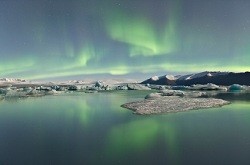
“When you use a wide aperture, the area in focus (depth of field) is very narrow, so you need to be quite accurate with your focusing. I’d suggest you focus on the moon, the lights of the log cabin or the silhouettes of a line of fur trees. Just make sure it’s on something – don’t set it to infinity.
In addition to his career as a travel writer and photographer, William Gray was the family travel presenter on the BBC’s Holiday programme. A contributing editor for Wanderlust, he was voted fourth by the Press Gazette in its Top 50 Travel Journalists list.
> If you’ve been inspired to discover more about the Northern Lights, browse our collection of Iceland maps and travel guides.