 Here’s a story which you won’t find in many guidebooks, and not even in the highly acclaimed history of Wroclaw, Microcosm by Norman Davies. I found it in a little guide available in the city’s numerous bookshops and pass it on, if in a somewhat enlarged format from the original brief comment!
Before the war, Breslau – as the city was then called – had a fine zoo, opened in 1865, with its first animals donated mainly by local burghers. One of its most important early additions was an elephant bought in 1875 from the London Zoo with funds organized through raffles.
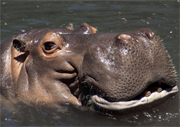
When, during the last war the eastern front started getting closer and the city began preparing itself to become Festung Breslau (Fortress Breslau – one of a string of cities which, it was hoped, would delay, if not prevent, the Russian Army reaching Berlin), some of the zoo’s animals were evacuated to the surrounding villages, among them its hippopotamuses. Whilst the animals which remained in the zoo were shot on the orders of the commandant of Festung Breslau, the hippopotamuses survived – the little guide does not mention just what the victorious Red Army soldiers thought of such fine examples of German livestock. And, sometime between the city’s final surrender on 6 May 1945 (three days after Berlin) and the reopening of the zoo in July 1948, the hippopotamuses returned to the place they had left, no longer Breslau but now Wroclaw.
So, thousands of Breslau’s citizens died, many of them having fled westwards to the neighbouring Saxony and its capital Dresden, only to perish there on that fateful night, and those who survived were eventually expelled from the city by the newly established Polish authorities. But the hippopotamuses not only survived, but also, presumably – because the little guide is silent on that point – successfully made the transition from being German hippopotamuses into pure Polish hippopotamhood.
Strange place, Mitteleuropa!
We recommend the Wroclaw Top 20 street plan published by Daunpol for a visit to the zoo and the surrounding area. The area includes many outstanding examples of early 20th century architecture – including the Hala Ludowa (People’s Hall), built in 1912 as Jahrhunderthalle to commemorate the defeat of Napoleon with, at that time, the largest reinforced concrete dome in the world. There is also the beautiful 1929 Bauhaus-style building designed as a model for flats for young singles or couples and now occupied by the Park Hotel, and the nearby Sepolno suburb built between 1919 and 1935 as one of the first ever “garden-city” projects –. For anyone particularly interested in the city’s history, a street plan of Wroclaw/Breslau from Höfer Verlag shows both the current and the pre-war German names.
Browse our collection of travel guides and maps to Warclaw >
Author: Malgorzata Ross
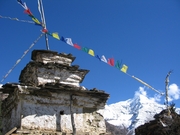
 Within the Conservation Area there’s scope for a huge variety of treks long and short. We opted for the Annapurna Circuit, a long distance trek of around 300km that usually takes two to three weeks. Providing you’re in reasonably good shape and kitted out with some good boots the circuit should really hold no fear for you. Despite two or three tough days, particularly the Thorung La pass at 5,416m, the real danger is that the duration of the trek means the daily grind of getting up early and walking all day can turn into a slog. Fortunately, the scenery is varied and breathtaking, and unless you’re in a mad dash to catch a flight there’s nothing to stop you having a few slack days along the way to boost energy levels – the trekkers’ fuel of choice in these parts is usually apple pie. I’d recommend the villages of Braga (cake), Marpha (cider) and Sikha (daal-bhat) as good locations for rest days!
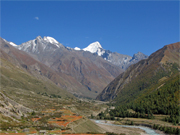 A week in Delhi is more than enough to make most people crave clean mountain air and I was no exception as four days of traffic-choked madness drove me in the direction of Himachal Pradesh.