The Jonathan Dimbleby Interview

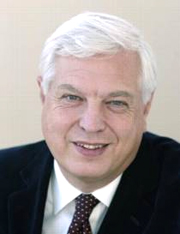
For his latest venture, broadcaster and writer Jonathan Dimbleby heads to Russia for a new book and BBC TV series. Dimbleby crosses eight time zones and covers 10,000 miles, from Murmansk in the Arctic Circle to the Asian City of Vladivostok, with the aim of getting under the skin of modern Russia.

He was the only British television journalist to interview President Gorbachev during the Cold War, and he returns to Russia for the first time since those days. For Jonathan, crossing Russia became as much an interior journey as an exterior one, with great turbulence in his personal life as well as on a stormy White Sea in a “tub of a boat” manned by a drunken skipper…

Could you sum up what your main aim was with the journey through Russia?
Everyone has an idea about Russia, lots of people have seen pictures of or have been to Moscow and St Petersburg, not many people have had the chance to get behind the headlines about Russia and get under the surface. So my ambition was to discover the Russia people don’t know about, because I believe that that’s the real Russia. It’s a very, very large country so it meant a long journey and I didn’t know what I’d find nor what I’d think about it. It was an exhilarating prospect but a very daunting one as well.

Because there was a combination of personal and professional reasons you decided to embark on the journey?
Yes, in order to do it I gave up my weekly political television programme on ITV and I was giving that up, partly for personal reasons, because I wanted to be home at the weekends with my wife, and partly because I felt I couldn’t miss this opportunity. You don’t often get an opportunity to make five films and write a big book about a very important country, and I thought if I turn it down, I’ll live to regret it, I’ll kick myself. It was a challenging journey, partly because I was under various very powerful emotions as well as the normal challenges of trying to understand a complicated place and people.

So what extra dimensions do you think your state of mind added to this journey?
I think it made me look more closely. It made me think about the psychology of Russia because I was dealing with my own psychological challenges. It in some ways made it much more difficult because you are taking long journeys, 15-, 20-, 30-hour train journeys, or in the back of an elderly van for hour after hour on not fantastically good roads. And sometimes in the morning I would wake up and think, “Do I really want to go on with this?” I’m envious of the Ranulph Fiennes’ of this world who go out of their way to seek adventure and danger. I’ve experienced both – reporting from dangerous places – but I don’t go out of my way to find it.

I’m a bit of a home bird, so it was a challenge because I had to tear myself away from home, and I think that because I was in quite a stressed state, it made the adventure more difficult than it might otherwise have been. But I think it meant that once I’d galvanised myself, I did really try and engage with the people I met and I found that the real delight – once you’d consumed rather more vodka than you would normally – you could really get beneath that carapace, and explore people’s feelings and thoughts.

People were very, very open. I’d been used to Russia before the fall – the soviet Russia where no one could speak openly or freely and people were very distrustful – and it was a great delight this time to know that you could have an open conversation.

So in general did you find it a welcoming reception from people?
It was very odd. A lot of the receptions were entirely indifferent. Because we were doing it with the film teams as well, people were quite indifferent to the presence of film cameras, which was interesting – I thought people would be more curious. There was a tendency to stare through you, not because they necessarily saw through you but as if you weren’t really there.

It was rather touching when I came across journalists who are in a very difficult situation in Russia – if they write freely, if they say what they want, they very easily lose their jobs, and some of them, at an alarming degree, suffer persecution and get killed. They all wanted to know what it was like to work in a society where journalism and reporters were free, and it was rather touching that people would ask me, “What do you think of our town?”, “What do you think of our city?”, everywhere I went, that was the question. They were much more interested to know what I thought of Russia than to ask me about the rest of the world. I think that’s a mixture of insecurity, vulnerability and huge patriotic pride. And strong sense of place: “This is our little bit of land”.

Did you notice a profound difference from one side of the country to the other?
On the surface, no, because one of the effects of the Russian expansion, followed by the Soviet expansion, is that many of the cities look very similar and actually rather dreary, with neo-classical buildings and ‘60s housing estates. And now, because it’s the free market, it’s rather like you can get in this country – an awful lot of the same shops in marginally different streets. So there isn’t that sense of diversity. But when you get beneath that surface, yes there is a real diversity.

The Caucasus is very different from Russia; the Altai Mountains, which are further east, are very different. In Siberia, there’s a completely different atmosphere in towns like Tomsk or Chita, further to the east, and Vladivostok seems to belong to a different world. And psychologically I think people there do – you can be easily misled into not detecting this, because everyone speaks Russian, and because everyone, with the exception of small pockets, are loyal, patriotic Russians first, but there was a big diversity in people’s approach to life. Nikita Khrushchev, the Russian soviet leader in the ‘50s, used to say that Vladivostok should be Russia’s San Francisco. It is built on hills – you can see how it might be.

But people in Vladivostok are not interested in Russia; here they say, “We have a real community, we really live together. We also see lots of people come in and out here through the centuries because we’re a big port on the Pacific Ocean. In Moscow, it’s nothing except a big, money-making marketplace”, and they have quite a lot of disdain for Moscow.

In the Caucasus, you have people who say very clearly, “We are not Russian, we come from Dagestan”, or Chechnya or any of the other republics, and I’d ask, “Well if people don’t know where these places are, Kabardino-Balkaria for instance, what do you say?” They’d say, “Well we say we’re from the Caucasus – we’re Caucasian people.”

“You never call yourself Russian?” I’d ask. “Absolutely not.” And in truth, they look with suspicion at Russia and very often avoid going into Russia, as they see it, because the Russians tend to regard them as inferior – in casual conversation, people refer to people of the Caucasus as ‘blacks’, in the same ways in America the whites in the south used to call black people ‘niggers’. There’s quite a lot of racism.

There’s a unifying church, but there’s diversity of religions as well – old animist faiths, sort of intriguing, like a strong belief in mysticism, in witchcraft, that there are elves and spirits in the forest. These beliefs go right back and they’ve survived everything that’s been thrown at Russia, not least Stalinism and soviet unionists who tried to destroy religion, in fact it was banned in Russia. Now it’s flourishing again.

There’s another diversity, which is between the rich and the poor. You have a huge gulf between the oligarchs who have more money than they need, and poverty in parts of the towns and cities and in the rural areas that makes Russia seem really backward, almost like a third world country. You have peasant farmers using horses and carts or bicycles to get about… who don’t have cars, don’t have running water – they draw their water from wells – who live without any form of gas heating, although Russia is the massive supplier of gas to Europe. So it’s diverse in a very unattractive way because of this huge gulf between the rich and poor.

It’s diverse in its landscape – you’ve got three layers of landscape really. And that means that the landscape and the topography are so different, you go for thousands of miles and it’s completely flat with forest, and elsewhere you can travel thousands of miles and it’s completely flat with bare landscape, and elsewhere you’ve got mountains and lakes, and that was a revelation to me as I’d never seen anything like this.

Do you think you showed some clichés about Russia now don’t exist?
I think some of the clichés – as often with clichés – are true. There is a tendency to be quite abrupt in a way that we would often find rude – people aren’t extensively open, they’re reserved. And there are good reasons for that. The clichés of Russia’s tendency to distrust, its tendency towards autocracy, which is a very deep and growing and very disconcerting tendency, its aversion to democratic principals, maybe clichés but are true. And I think it’s truer than people would like to accept outside Russia.

There is a deep authoritarian streak and a deep fatalistic streak that runs through the Russian psyche. And you can understand why – wars, turmoil, revolution, repression, unbelievable upheavals as communism gave way to a raw form of market capitalism. All of these and all of the insecurities and uncertainties and dangers that that created, means that people on the whole are not optimistic. They live for today; they don’t think long-term because they never know what’s going to be round the next corner, so there’s very little systematic planning.

I think more important than the clichés, there’s a truth in the characteristics that maybe haven’t been explored. The Russia we know – it’s always the great paradox – has produced some of the most wonderful literature, great philosophical writing, music to die for, and yet on the other hand there’s an image of a country where people have not ever experienced the enlightenment. Although Russians are completely free to go where they want around the world, if you say to them, “Do you travel very freely?” They say, “Of course I do, I can go wherever I want in the world. Yes, we live in a dictatorship but that doesn’t matter; I’m free to do what I want so long as I don’t cause a problem.”

Did you have fears yourself before setting off?
I didn’t really have fears that anything nasty would happen to me. Since writing the book, I’ve sometimes thought, “Am I going to get a cup of polonium in my coffee?”. But mostly I don’t think I count enough – I’m not a threat to the Russian state, even though I’m very, very critical of the state.

I felt more threatened by the everyday dangers that Russians ignore – we get much too hung up here on health and safety so we end up not being able to do anything – it’s exactly the opposite [in Russia]. There’s virtually no health and safety – whether you’re in the streets with people building above and potentially dropping concrete blocks on your head… driving on roads where the old adage ‘live today because tomorrow you might die’ has been turned on its head and drivers seem to say, “Let’s die today because we might have to live tomorrow”. Through to a feeling that “What they do, the people in charge, there’s nothing much we can do about that, we just get on with our own lives and look after our family”. So there’s quite a good sense of family cohesion but not much sense of what kind of society do they want to be.

So what was your most frightening moment?
My most frightening moment without question was on the White Sea in a storm. I could see the weather was bad on the way there, because I sail, and no sailor enjoys rough weather. We were going by a passenger boat in the region called Russian Karelia, across the notorious White Sea to an island called Solovki, which is both a holy site and was also the first prison of the Gulag system, so there were a lot of people going there to see it – both pilgrims and tourists. The weather was blowing up and the little boats weren’t able to go, therefore everyone got onto the bigger boat. It was terribly overloaded with people – it should’ve taken perhaps 100, 150 and there were 250 people onboard. This was a tub of a boat. Before long the wind had really got up, the sky had become black and there were big, bubbling, boiling seas, with waterspouts either side.

I got really scared, and when you’re really scared, you apply a kind of courage to say something must be done, so I went up to the wheelhouse skidding and sliding, with someone from my team to translate for me, opened the door, staggering – like in one of those war movies – into the wheelhouse. There was the skipper looking relentlessly to the front and all I could see was these great white waves breaking for eternity. He didn’t take any notice of me. I said, “We’re overloaded, this ship ought to turn back to port. It’s not safe.” He completely ignored me.

I looked across and there was the first mate who was the only other seaman on board, who was paralytic, clearly vodka-ed out of his mind and just stood there looking into the middle distance. I knew there would be no chance if we turned over of anyone getting into a life raft. Three times I tried to get this guy at the wheel to even respond and the third time he responded contemptuously, “I am staying on this course”.

I then left and by this time passengers were crossing themselves and singing what appeared to me to be Russian versions of ‘Abide with me’. Our film gear was sliding backwards and forwards across the decks, sprayed with water and rain. I was dressed in a white summer suit so I just froze. Everyone was sheltered to the leeside of the boat, so I said, “Look, we’re tipping at this angle, you must come up to the windward side!” some people moved for a bit but it was obviously too unpleasant and so back they went. So I, with about three other people, went up to the windward side in a forlorn attempt to balance this boat, which of course made no difference at all, I just got extremely cold and very wet and very frightened and thought, “I do not want to end my life on the White Sea.”

When I got to the other end, I was pretty drained and pretty cross about it and I thought, “Yeah, sometimes health and safety is not a bad thing!” But the worst part of it all was that some faithful woman from the monastery that was there, a Russian Orthodox believer, said to me, “You shouldn’t have worried you know, if God wanted your soul, he would’ve have taken it, and he hasn’t, so he doesn’t want it yet.” And I thought, “Thank you very much! That’s really encouraging. He may want my soul, but I don’t know if he’s even there, let alone whether I want to give it to him!”

So did you ever think, that’s it, I’m going to pack it in and go home?
There were occasions when I didn’t want to go back – because I did the journeys in sections – and there were times when I jolly nearly did pack it in, actually. And that may seem rather weak and feeble, but I now regard that I have enough strength at least to say, “I’m not going to succumb to this”, and I was supported by close friends and family and my wife saying, “Come on, it’ll be alright.” I found myself from time to time quite severely on the edge of a depression, which made it sometimes quite difficult to get out of bed in the morning.

That did colour my perspective, which is why I explained it, because I think in a book you have to be true to your reader. It’s somehow different in television, because you can’t moan your way through a television programme – I don’t, I hope, moan my way through this book, but because there’s so much more space you can have a paragraph here or there where I’m squaring with the reader: “This was a pretty rough day”. I think that if you don’t do that, in a way you’re slightly short-changing the reader about your journey…and I wanted the reader to know how I felt on that journey. I think readers quite like that really; they like to be able to feel that in that respect you can be trusted and you’re not pulling the wool over their eyes.

How do you balance writing for a book and presenting for the TV programme?
Well the writing of the book feels a much more private occupation, though of course you’re sharing it with readers. Probably a much more intense way of people [watching you] on the television. In the book you can explore so much more, you’ve got more time. I loved writing it because I was able to explore more, so it’s an absolute journey. I had reflections and thoughts about what I came across, and I pick up on things that people tell me and then explore them for myself, whether it’s history, culture, music, politics, literature…

I feel quite strongly that writers like Tolstoy and Lermontov really understood Russia and the Russia of today as well as they did the Russian psyche and the Russia of the 19th century, so it’s very helpful to me to read those 19th-century writers as a way of opening the door into the 21st century. I hope that in the book it’s a shared journey, which in some parts is a raw and painful journey for me.

But for the most part I hope it illuminates Russia and the people who make up Russia in a way that will give greater understanding. It may confirm prejudices, I hope however that it will also create an empathy for the people of Russia and that understanding I hope will encourage people to treat Russia not with a clichéd disdain on the one hand or a wild-eyed romanticism on the other, but a real sense of what a real place is like with real people in it.

And how would you rate Russia in general as a travel destination? How easy is it to travel round?
It’s not as difficult to travel in practical terms as I’d thought it would be. It is opening up, there are more roads, and some of the roads are better. The links as you go further away from Moscow are much more difficult. Planes are unreliable. I don’t mean that they fall out of the sky – although I’m always fearful that they will – I hate flying, they fall out of the sky now rather less than they used to, but they will somehow be arbitrarily cancelled. There’s great competition between the airlines but it doesn’t actually seem to improve the punctuality.

The trains are my favourite form of travel – I like the trundling along for long journeys, looking out on the often unchanging landscape, the trains leave on time and they arrive on time. They allow themselves plenty of time to get there, so you often stop in the middle of nowhere for half an hour because they’re getting there too early.

Russia is laced by waterways – you could actually do the whole of Russia – which would appeal to me, as long as I could avoid the White Sea! The network of rivers allows you to have the most wonderful journeys. If you’ve got time to make the journey, then most certainly travelling on the ground is very rarely boring. I would not advise anyone to just to stay on the Trans-Siberian; I think they’d be missing opportunities.

I actually enjoyed the process of travelling. And on the trains you can have lots of casual conversations, as you’re cocooned on a train and people can be quite friendly. And there are bar cars, where the vodka gets you a long way.

What would you say was the highlight of your trip?
I would have to say going to the estate where Leo Tolstoy was born and where he wrote ‘Anna Karenina’ and ‘War and Peace’, and other major works. The estate and house are still there, wonderfully preserved inside how it was when he lived there and died in 1910. You get a real spirit of the place when you walk into the fields and the forest. We visited his grave, just a simple mound of grass. I think he was one of the great men of all time.

There were other things that were somehow more exciting or more immediately wonderful, like seeing Lake Baikal for the first time, which is one of the wonders of the world, the deepest oldest lake in the world. Sitting in a natural sulphur spring bath, in my underpants which gave me the veneer of respectability, with elderly matrons and others who were sitting there turning into prunes because of the sulphur and coming out reeking of sulphur but having the most wonderful conversation in the meantime. And I did that because Lermontov, Tolstoy and Pushkin had all been in these baths.

By the time I got towards the end of the journey, I wanted it to go on. I’d reached the point of feeling at peace with Russia more or less and with myself, and I could have quite enjoyed going on. But I still don’t know whether that was because it was the end of the journey, or whether it was because I really wanted it to go on! And I would of course recommend people to see Russia, but don’t have your expectations too high. It’s difficult. It’s easy to get lonely and feel unloved and you have to make quite an effort. If you make the effort, it could be very rewarding.

Would you go back?
I wouldn’t do the same journey again, but I’m fantastically glad I’ve done the journey. I never say I wouldn’t go back anywhere. There are some places I would go back to before I went back to Russia. But yes, I’d go back.

You mention Africa at the end of this book, is that the next plan?
Well that was a sort of folly of the moment because on the airport TV screens, I was watching [Jeremy] Clarkson and his fellow boy racers driving spectacularly through a salt pan in Africa. In my mind, I’d already left Russia and I saw that – I love parts of Africa and have spent quite a lot of time there over the years – and I suddenly thought, what if I did the equivalent and travelled from Cairo to Cape Town, finding my way and doing a similar kind of project? The African continent that people don’t really know. We have all seen the headlines – and they’re pretty desperate headlines very often – but there’s much more to Africa than the headlines. So yes, if I could tear myself away from my darling wife and my darling little daughter, I think I would do that. But I’ve got to wait for someone to ask me to do it first!

The John Waller Interview

Ranulph FiennesJohn Waller is author of Greek Walls, Corfu Sunset, Corfu Sketches, and Corfu Town Walks. He spends much of his year in Corfu and here, in an interview with John McCarthy originally aired on BBC Radio, John entices us further with tales from this beautiful Greek island…
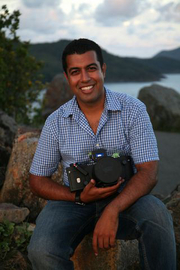
John Waller first arrived on Corfu in the 1960s and the island cast a spell on him; so much so that he built a house there. He has recently produced a book with local artist Theresa Nicholas called Corfu Sketches.

John, how much time do you spend in Corfu?

Spring and autumn. In the spring the flowers are unbelievable; in the autumn we have a second spring with cyclamen coming out. And of course the sea is warm for swimming…

You already paint a lovely picture; what was it that you really fell in love with on those early visits?

It must be the people – the Greeks are a wonderful people – they are very hospitable. Also the countryside; Edward Lear wrote about that wonderful countryside: something incredible with three million olive trees. The beaches in those days were empty, and being a keen swimmer, we went to many of them. Finally the villages; the villages are an unknown secret – there are 104 of them. They are quaint; they are lived in; and they are worth visiting.

You mentioned that when you first went there, the beaches were empty. How has the island changed in those 40 years?

With the beaches there is obviously development, but thank goodness, one of the laws is that no building can be over four storeys if it is commercial and three if it is private. There is not the major development as in other locations. On the beaches, the sand is still there and when the sun goes down, there are not so many people on the beach and when I am having my glass of white wine and my plate of fried fish, it is wonderful.

Tell me about the links with Britain and the British.

The British were on Corfu from 1814 to 1864. We built the roads and the waterworks. We also introduced cricket and ginger beer.

Ginger beer?

Yes, ginger beer. It is now the only place you will find real ginger beer made with just ginger, lemon, sugar and water; nothing else. It’s an excellent brew! I can really recommend it.

Edward Lear, you mentioned. In the front page of your book you have a limerick:

There was an Old Man of Corfu
Who never knew what he should do:
So he rushed up and down
Till the sun made him brown,
That bewildered Old Man of Corfu.
You have been giving us lots of things; you are not a bewildered nor old man from Corfu. Why was he there in the first place?

His health; he kept on talking about ‘that grey London’. From 1856 to 1863, just before the British left, he spent most winters there, wandering the island and painting the landscapes. We know him as a limerick writer, but he was also a wonderful landscape painter.

Was he involved with the cricket?

I’ll be honest with you – I read his letters and he never mentioned cricket once. He wasn’t into that side of things – he was into the countryside.

Is it a strong feature of Corfu life?

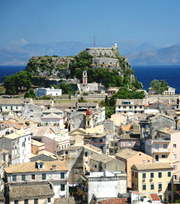
We were over there last month and the Lords and the Commons turned up to play cricket and I am proud to say we, that’s the Greeks, got a tie. It is still played in the square – the plateia – which is surrounded by the wonderful British Palace, the French Liston and the Venetian Fort. A gorgeous setting and a fair result.

And of course it’s a World Heritage Site?

Two years ago Corfu Old Town was made a World Heritage Site. And that, along with the European Union summit, has changed the town from a bit of a Balkan backwater to one of the most beautiful places to walk.

Thinking of the walks, your passion is for walking. Apart from walking around the Old Town, you have been up and down the length of the island. Describe a bit more of the island and one of the favourite villages you discovered.

We started right in the south, in Kavos, famous for the 18-30s. As soon as we left that town, we left civilisation. It was just like it was 50 or 60 years ago; even as though it was 100 years ago because it was as Lear wrote about it. We walked for eight days, up the west coast, then across the north. Throughout that time, we were measuring scenery, tranquillity – which always scored a high point – and development: of which there was almost none in that walk amongst three million olive trees, which, because we have passed a law, must NOT be cut down.

When you are walking along this tranquil landscape and you come to a little village, what is the atmosphere like?

You will always find a café bar for the men in the evening; and you will probably find a mini-store. It is very peaceful until the festivals – the panayiri – when they all come out and dance and music is played. The architecture is gorgeous: the archways and the narrow alleyways, with restricted access for cars as well.

Are the local Corfiots tolerant or resentful of the visitors and ex-pats that go there?

They are very proud if a foreigner moves to their village – they are welcomed.

Are you happy that tourists should keep going, should fewer or more go?

Everyone who has been, has got to go back to see the World Heritage Site and the countryside. They are so superb. You must go back. You will love it and you will go again and again.

Finally, what is your favourite Corfiot dish?

Bourdetto and Bianco are the two fish dishes: one red, one white; one hot, one garlic. Fantastic.

Corfu Sketches Cover  This interview is John Waller’s transcript of an interview that was originally broadcast on BBC Radio’s Excess Baggage.

Corfu Trail: Friends, Flowers and Food – from Kavos to Agni in 8 Days is due out in spring next year. Stanfords currently stock John Waller’s Greek Walls, Corfu Sunset, Corfu Sketches, and Corfu Town Walks.

The Jaspal Jandu Interview

Ranulph FiennesJaspal Jandu is an acclaimed British photographer who travels extensively around the world in search of the perfect combination of timing and light. With a renowned passion for natural conservation, his latest release – Natural Wonders: A Panoramic Vision – presents awe-inspiring photography from over 20 of the world’s precious natural wonders.

What is your background?

Through various studies and jobs, I have been involved in and surrounded by fine art and music throughout my life. Apparently, it is often said, that playing music creates new pathways in your brain that stimulate creativity.

More formally, I majored in economics and it’s something which I still enjoy to this day. There’s a great quote from Leonardo da Vinci which states that one should aim to “…study the science of art and the art of science”. I guess in this vein, it’s healthy keeping one part of my brain active with photography and the other with something completely different now and again.


Why did you choose to be a landscape photographer?

My father was a prominent architect and I clearly remember being fascinated by the bewildering blend of art and science in his study room. After contemplating a similar career myself, I eventually chose to pursue a different discipline which could provide me with an equally rewarding mix of art and craft.

Eventually, as I began to travel with my camera I started to mature, both personally and professionally. My previously embarrassing attempts at photography were soon crystallising into something more solid and the ratio of ‘keepers’ to ‘losers’ was increasing dramatically.

It was during this growth spurt that I began to realise how important and overlooked landscape photography is to the environmental debate. Returning to countries again and again, I would compile almost time-lapse images of, for example, glacial retreat and desertification. Given the resonance of such images with the general public and art editors alike, I eventually resolved myself to a career in landscape photography.

'Divine Light', Alaska, USA © Jaspal Jandu 2009

Why panoramic?

I have always been absorbed by the intrinsically epic panoramic format. For example, I’m sure if you watched Lawrence of Arabia or Lord of the Rings in a square aspect ratio, you would inevitably lose some of the sweeping cinematic experience contained within. The panoramic frame – especially when printed large and viewed close – requires the eye to scan from side-to-side and this perfectly complements the way the brain works in real life.

What is your current project?

My main focus at the moment is publication of a new book entitled ‘Natural Wonders: A Panoramic Vision’. It covers over 25 countries on earth and highlights the fragile state of the world’s ecosystem and our shared destiny within it. It has taken over four years to complete and all the images are presented in my preferred panoramic format.

Did you have to prepare yourself for this journey, if so for how long and how?

The journey itself has taken around four years with the single continuous stretch of around one-and-a-half years.

Being based in England, it has been relatively easy to take cheap flights to, say, Scotland or the Alps. Given that everything is so accessible in Europe, I often find that there is not really that much to prepare for.

Most of Africa was completed in one rather long and adventurous visit. Starting in Tanzania for Mount Kilimanjaro and the Ngorongoro Crater, the voyage went on to the Serengeti (Kenya), Drakensberg (South Africa), Sossesvlei (Namibia) and Victoria Falls and Mana Pools (Zimbabwe). As I was also shooting digitally by this stage, my main worry was battery power and memory storage. I was also concerned about camera safety and sand/dust but in the end both of these issues proved to be easily surmountable.

The long continuous trip of 18 months was much more difficult because of the geographies and climates involved. It took about two months to agree the schedule and organise the gear (packing swimming trunks alongside snow crampons was interesting). I ended up producing a huge hand-drawn map with all the natural wonders accompanied by the seasons, visa requirements, flight time tables and the like. By the time it was time to leave for the trip, I honestly felt equally exhausted as I did excited.

How did Stanfords help in the process?

Simple – whenever I needed my ‘fix’ of adventure and travel I would always go to Stanfords!

I always found it quite amazing that I could literally navigate the world amongst the bookshelves and displays of my local Stanfords in Covent Garden. On the aesthetic side, I purchased numerous volumes on specific locations and avidly noted the most favourable times for photography (Denali in autumn, for example). On a rather more technical note, the selection of detailed hiking and climbing maps proved to be literally life-saving purchases – whether I’m leading a group or out in the field myself, there are absolutely no compromises on the best quality, physical maps you can buy.

'Creation' Grand Canyon, USA © Jaspal Jandu 2009

What was the biggest catastrophe and what was the happiest moment on the trip?

The single biggest set-back occurred in Venezuela. As I was attempting to capture the grandeur of Angel Falls, a rumour began to spread that I was a journalist from National Geographic who was overtly photographing local people without the necessary permits. Needless to say, having the Minister for Indigenous Affairs and four armed guards pounding on my bedroom door at 4am in the morning wasn’t the most pleasant of experiences. After a fairly heated debate, I managed to get all of my camera gear back but by then I had lost crucial shooting time in my very short stay in the country.

My fondest memories are of touring the American Southwest. Hiring a camper van and traipsing though such awe-inspiring scenery such as Canyonlands and Monument Valley should be standard rites of passage for everyone. Not only did it yield some literally jaw-dropping pictures but it also convinced me that the best photographs are made when the connection with the land is at its strongest.

What are your expectations now?

Unfortunately, one of the burdens of being a perfectionist is that I always set my expectations impossibly high. I am striving to release a new book on London fairly soon and also embarking on the sequel to ‘Natural Wonders’; heading off again on another voyage to capture the world cloaked in beauty and fragility.

Separately, I am also cognisant of the relentless advances in photographic technology. Although I’m not sure if I’ll end up shooting the next volume in something ridiculous like holographic format, I do have hopes of remaining at the forefront of this wave.

What reaction would you like to receive from your viewers?

To have inspired others into both photography and environmental conservation would be an honour. More rudimentarily, given the sacrifice behind some of the pictures, a plain old-fashioned ‘wow’ would also be nice!

'Majestic Matterhorn' Switzerland © Jaspal Jandu 2009

What gear did you use, and film stock?

I’m not really a ‘gear-head’ and am always at pains to point out that a camera is ultimately a tool which helps us to communicate our hopes, thoughts and desires to others. However, having said this, I am also cognisant of the fact that photography is a craft and therefore relies heavily upon the tools of the trade.

To this end, my primary camera is the Linhof 617 SIII. In terms of ruggedness, usability and sharpness, I have found nothing comes close. Although I tend to favour the use of both the Super Angulon 90mm and 72mm lenses (~19/15mm in 35mm terms), I also use the 180mm lens for more telephot
o / abstract work. Fuji Velvia 50 (both 120 and 220 formats) is the colour film of choice with Tmax 100 used for black and whites. I have tried the new Velvia 100 Professional and found it not to my liking (particularly its handling of the red spectrum), so I am currently using the new Velvia 50 II. A Sekonic light meter, Lee filter set and Manfrotto tripod round off the main tools.

Latterly, I have also begun using Canon digital cameras. A variety of lenses accompany me including the 14mm, 17-40mm, 24-105mm and 100-400m. Having both the Linhof and the Canon is really a dream combination. Whilst the former handles epic landscapes in its stride, the latter comes into its own with fast moving and/or variable ISO scenes. Covering every known biome – forest, aquatic, desert, grassland and tundra – in the course of my journey, I can personally vouch for how good modern cameras have become.

What is your favourite ingredient for a good photo?

Light is the most important ingredient for the good photo, period. In this regard, my most favoured condition is the fleeting glimpse of golden light which sometimes occurs through a slit in the clouds at sunset or sunrise. The resulting contrast of rich foreground with brooding blue and ochre clouds is pure photographic manna from heaven, in my opinion.

What future events can we expect?

I am currently promoting my work via exhibitions and corporate tie-ins (recently holding a collaborative with Porsche, AG) whilst continuing to shoot new material. The website – www.jaspaljandu.com – is doing extremely well and the ultimate aim is to tie this in with a dedicated gallery of my work in the not-too-distant future.

Natural Wonders: A Panoramic Vision, Jaspal Jandu

During the course of my journey, I have been blessed to encounter many like-minded individuals and organisations who are dedicated to the preservation of our areas of outstanding natural beauty. They are too numerous to mention, but World Heritage bodies, environmental organisations and National Park authorities all command my total respect for the work they undertake. Irrespective of where they are based, they have all highlighted to me that man has just as much power to solve problems as he does to create them.

Lastly, I am often asked about the genesis of this project. Why would one commence the long journey to document the natural wonders of the world? In a twist on Mallory’s famous quote, my instinctive answer is: “…because in the future, they may not be there”. I hope this can serve as the salutary ethos behind my body of work.

'First Light' Mount Fuji, Japan © Jaspal Jandu 2009

The John Simpson Interview

Ranulph FiennesJohn Simpson, the renowned BBC world affairs editor, visited Stanfords in London to discuss his latest book – Not Quite World’s End. John has graced our screens for 40 years in a career that saw him shelled in Afghanistan, attacked with poisonous gas in the Gulf, dodging bullets at the 1989 Tiananmen Square massacre in Beijing, and injured in a friendly-fire incident in Iraq. He discusses these incidents and more in his lively new book.
John spoke with Stanfords’ web editor Rachel Ricks at the Covent Garden store about books, the BBC, Nelson Mandela, and travelling with tinned oysters…

Continue reading The John Simpson Interview

The Mark Ellingham Interview – Rough Guides' founder

Ranulph Fiennes

Rough Guides are celebrating their 25th anniversary so it seemed like a good time to catch up with founder Mark Ellingham. He began the series with his friends having travelled around Greece in 1981, shortly after graduating from Bristol University. Today, aside from his role at Rough Guides, he also finds time to work with Songlines, the world music magazine, Wanderlust magazine, and Sort Of Books – publishers of travel writing and other works.

When did you first begin travelling and where did you go?

When I was a kid, in the 1960s and early 1970s, British people didn’t travel a whole lot – and my family didn’t have much money to do so. My first trip abroad was to Normandy, in France, aged ten. That seemed pretty exotic. In those days there was very little globalization of products, and I’d not seen things like mussels before, or even yogurt. I had a few holidays in Ireland as a kid, too, which I loved. Then when I was sixteen I bought an InterRail European rail pass with some friends and we headed off to Paris, Rome, Florence and on to Greece. That was fantastic – a revelation. I had itchy feet from that time onwards and dashed off to Greece each summer at university.

What prompted you to write the first guidebook and was the trip undertaken with the book in mind? Continue reading The Mark Ellingham Interview – Rough Guides' founder

The William Dalrymple Interview

William Dalrymple, the prize-winning author of travel and historical books on India, came to our Covent Garden store to sign copies of The Last Mughal
Dalrymple has written and presented for television and radio, and he and his family divide their time between London and Delhi. While at Stanfords in London, he had time for a quick chat with James Innes Williams about his travelling exploits – sometimes taken with his artist wife Olivia Fraser – his life in India, his children’s editorial suggestions and future projects.

Childhood and writing influences

Your travel writing career started at the very young age of 22 with In Xanadu, so had this been something you’d been longing to do, was a love for travelling instilled in you as a child?

We went nowhere as children, actually, which may well be where the love of this comes from. My parents lived in a very beautiful hut of the borders southeast of Edinburgh, near the beach, and they said to me nowhere was going to be more beautiful than this so we should stay at home – and we literally never went on a foreign holiday.

Did you travel much around Scotland then?

We had an Easter holiday each year, I don’t know why Easter because it’s a miserable time. And they would travel themselves – they were always off to Senegal or some place.

But you never went with them?

They never took us with them…

But surely your first trip wasn’t forIn Xanadu?

Not quite as bad as that. I remember at prep school pressuring my mum to take me to Paris because I was the only kid in my class who had never been abroad. I always remember as a child being regarded as un-travelled and was aware there was a problem and I used to read lots so it always made it… I was always very keen to travel.

So as well as being keen to travel, did you have the desire to write when you were young?

I used to be very keen on Anglo-Saxon and regal history at school. I used to go round on my bicycle looking at churches and before that I was into barrows and megaliths as a kid – and digging from the age of about 12 as an archaeologist. I remember in my primary school the ‘What do you want to do when you grow up?’ question and I wanted to be an author and an archaeologist. Tutankhamun and all that stuff I was heavily into as a small kid. And before I ever went to India I tried to get a job to dig near Nineveh in Iraq, so rather than going to India I would have ended up in Iraq…

Imagine that! When you went out to do the In Xanadu trip was that something you had planned from the start to write a book for?

Yes. It was very consciously a literary thing.

How long did it take you to make that decision?

The year before I had done a similar trip following the English crusades. I was heavily into Bruce Chatwin, Patrick Leigh Fermor and Robert Byron.

So you had some travel experience beforehand which you didn’t write up on?

Exactly. I went on a mini-trip in a year off backpacking round India and then did this trip following the route of the crusades and kept a diary with a view to writing a book for that trip and it was a disaster. I’d just read Robert Byron and it was pure bleach pastiche of Robert Byron with a bit of Leigh Fermore over the top of it, thrown in. It taught me in a sense how not to do it and suddenly when I did the In Xanadu diary it was a far better diary and far more usable [as notes and research].

So, now you teach with Travellers’ Tales, what tips do you have for budding travel writers?

A simple one is the notes, the key to writing a decent piece of travel writing is keeping very, very, full notes, full of everything, and I think it’s extremely important.

Living in Delhi

So when you’re living out in Delhi, are you part of community or viewed as an outsider?

I’ve been there so long. I think I’m in a similar situation to a lot of Indian writers living here in that I have been there forever now, about 20 years, and know the place very well and have very, very, old friends – and half my friends are there – but you can never be too… and whenever a book comes out there’s always some reviews that say how amazing that a foreigner, an outsider, can…

Do you get those reviews a lot?

Over and over and over and have done for 20 years and at some level. I don’t think you can ever be completely regarded as something other than English, it’s the same for VS Naipul, who’s been living here for 10 years but he’s always going to be an Indian writer, however long he has lived in Wiltshire.

Travelling with family

And when you’re taking these long trips for your books are you able to bring your wife and family?

Yes, quite often. Not, obviously, when it’s tricky stuff like war zones and so on. For From the Holy Mountain Olive was pregnant and came to the safer bits like Istanbul, Beirut, ha ha… she was heavily pregnant and got tear gassed in Bethlehem which is never a wise thing to do, but my son is quite normal despite it! And then she had a sushi craving in Beirut and we had to go all round, we did actually find a sushi restaurant in Beirut, this was just after the civil war when there weren’t many fancy restaurants around. Another thing that happened, she had this kind of mammary problem and there was nowhere in Jerusalem that had a bra big enough, so we tried a shop for Russian immigrants until we found one big enough to take the Fraser cup!

Have your children shown an interest in following you two down an artistic or writing route?

The children are too small really to wonder about that, the oldest one is eleven. They do write and my daughter speaks very good Hindi and writes a really very, very, nice Hindi Devanagari script and learns Hindi and enjoys Hindi music…

And is a fan of your wife’s books I would imagine?

Olive’s books are aimed at younger children than they are, really. But she was the editor-in-chief, my eleven year old, of The Last Mughal and was amazingly good at saying when I was blagging on too long. There are very few things in the arts that can’t be put clearly, that even an 11-year-old understands and if you’re saying it unclearly and an 11-year-old can’t understand it, then try and say it a bit more clearly. I once asked a writer who produces these gorgeous short sentences, incredibly clear and beautiful, who the most beautiful writer in history was and I expected him to say Hemingway or someone like that and he said Beatrix Potter and I know what he means, there is a beautiful clarity in that kind of writing.

The Last Mughal

Moving back to the The Last Mughal, why do you think the Brits are so interested in India so long after the Raj?

I’ve never written about the Raj proper, the Raj proper begins in 1858 which is when The Last Mughal left and my kind of interest in British India ends there. What I’m interested in is the period when the British had this much more intimate relationship with India in the 18th and earl
y 19th century. And how that ends and why that ends, why one moves from the world of white mughals to the hatred and racialism and lack of interest in India evident during the High Raj. And I think it’s very interesting why and how that happened.

And are you drawing parallels to the current events now?

Yeah, very clearly. I was interested in this before the parallels became apparent.

Future travel

Have you travelled away from Asia, at all? To Africa or the Americas? And if not, do you have plans to?

No I haven’t. What I’m discovering at the moment, which is exciting, is south-east Asia… a long trip to Angkor and Cambodia, Burma…

What is that grabbed you about Asia and India?

It’s where I went first. If I ended up in Africa first time round, who knows, I could have written six books about it…

But you just kept going until you discovered more and more about that area?

For a long time I thought Cairo to Calcutta was my sort of ballpark and recently, it actually says I got very excited by Bali, Cambodia and Burma but I haven’t worked out a way to write it yet.

Have you got copious notes then?

So far I’ve been very much on holiday rather than my other work. If you go on holiday you leave your notebook. Cambodia is full of amazing things. On the other hand, the core area of central Asia is so hot as a subject compared to 20 years ago.

Do you now have a lot of competition coming your way?

You have many people now writing about the Middle East who clearly know absolutely bugger all about it. People who have probably never ever been to any of these places and know nothing about these countries sell terrible books with Islamaphobic sentiments and many of them are taken very seriously. Yet this country is full of people who have experiences and understand the culture and it’s tragic that we’ve been guided by a group of people who know nothing of belief.

Has anybody ever asked your advice?

David Cameron has. I wrote one of his speeches when he came to India.

And finally, what will be the next Dalrymple work stocked at Stanfords?

A little compilation called The Blind Man and the Elephant, which are essays on Islam, Hinduism, Christianity… so Holy Mountain territory and other stuff all together.

Dalrymple is the author of In Xanadu, City of Djinns, From the Holy Mountain, The Age of Kali, White Mughals and The Last Mughal.

Author: James Innes Williams

Uzbekistan

The Hotel Uzbekistan was Tashkent’s sanctioned ‘foreigner’ hotel during the Soviet Union, when – for a considerable donation – tourist parties were permitted to visit this most hermetic part of the USSR. Now that Central Asia is as free and easy as the rest of the world, The Uzbekistan still stands, an enormous hulking monolith on the edge of Independence Square, which has at its centre a statue of Timurlane, or Tamurlane, or Timur Leng depending on how keen you are to publicise his lameness (Timur Leng means Timur the Lame). Having stayed before at behemoth hotels throughout the former Soviet Union, I was surprised to discover that the staff at The Uzbekistan were pleasant, normal people. In true Uzbek style though, the cavernous hotel restaurant doubled up as a ballroom. This meant that having witnessed wedding-guests from as far afield as Afghanistan and India partying the night away, the hotel’s 30 or so overnight guests – mostly European tourists and Iranians – would sit the following morning at silk and flower-bedecked tables eating their cereal.

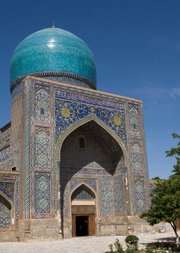
Stalin’s gerrymandering of Turkestan’s borders had few positive aspects – the Tajik Civil War, interethnic violence in the Ferghana Valley, etc. However, there has been one definite winner in the aftermath of the USSR – the Uzbek Tourist Board, which finds itself with three of the Silk Road’s greatest surviving cities on its territory. The names Khiva, Bukhara and Samarqand resonate with the most overblown and romantic images of camel caravans passing through the desert, laden with cargoes of oriental treasures bound for Istanbul and Venice. Khiva is a spectacular, but controversial museum town. The ‘Hotel Khiva’ is located in a medieval madrassah, with views from each of the rooms over the perfectly preserved and restored city. In fact, Khiva is almost too perfect; Unesco’s decision several years ago to make Khiva into a world heritage site led to the Uzbek’s government’s decision to throw all the local population out of the city and to proclaim the foundation of Khiva as a ‘museum ensemble’.

The cities of Bukhara and Samarqand are by contrast large and thriving metropolises – Samarqand, with its population of 500,000, is Uzbekistan’s second largest city. Both cities contain some of the finest Persian architecture in existence, most famously the Registan of Samarqand, which Lord Curzon called the world’s most “majestic” square, and the Gur-Emir, or Timurlane’s mausoleum, which almost quite literally drips with gold leaf.

The Khanate of Bukhara was the most bloodthirsty of the Central Asian states during the ‘Great Game’ of the 19th century, when the British and the Russians vied for power in Central Asia. Today you can visit the Zindan, or prison, in Bukhara’s citadel, where the young British officers Stoddart and Connolly were kept prisoner for several years before being executed on the orders of the Emir. After having my own battle with several hornets the size of small aircraft carriers – which, incidentally, are ubiquitous in Uzbekistan (hornets, not aircraft carriers) – I visited the Kayon minaret, also called the Tower of Death because prisoners were supposedly hurled 47m to their deaths from its top on market days during the time of the Khanate.

Uzbekistan is generally branded as a destination for those interested solely in blue majolica tiles. Whilst there is an awful lot of blue majolica about, I would argue that it is an adventurous enough place in itself, and full of enough incredible sights, to warrant a visit from anyone with a sense of curiosity.

The Odyssey Guide The Golden Road to Samarkand is the most comprehensive guide available dedicated exclusively to Uzbekistan. It combines well with the Roskartografia 1:1,500,000 map of Uzbekistan. Author: James White

Four Ways to Find Your Perfect Gap Year

You’ve decided to take a gap year. Maybe you want a career break, or you’ve just finished university. Perhaps you’ve just been made redundant or you’ve retired. Whatever your reasons for deciding to take a gap year, well done you!

Now for the fun part: where to go and what to do. I’ve put together four issues to consider, helping you pick the perfect gap year.


1. What is your budget?

If you live by one gap year rule and one gap year rule only, it should be this: do not go into debt. Sorry to be blunt, but there’s no point in dreaming of a luxury cruise around the world when your bank balance is telling you to spend a year as a chalet cleaner. Either get saving or get real.

Budget: minimal

Don’t worry. A limited fund is not a sure-fire way to a rubbish gap year. Find a year out that pays, or at least covers your expenses. Try teaching English abroad – you’ll get to know a destination in depth, gain a new qualification and your new CV will help you land that job when you get back. Money issues solved.

Check out Dave’s ESL Café to learn more on teaching English around the world.

Budget: moderate

Set yourself a budget and stick to it. Religiously. You want to return from your gap year refreshed and raring to go, not broke and desperate. Consider volunteering. You’ll spend less and the experience will stay with you even longer than a bad credit rating.

Read How to volunteer to find out more.

Budget: substantial

Lucky you. You’re in a position to do something really different. Set yourself a travel theme, such as ‘World’s Most Beautiful Beaches’ or ‘Top Art Galleries of the World’ and jet off to see each and every one.

Read 1000 Places To See Before You Die for inspiration. Luxury tour operators can help you arrange the trip of a lifetime too.

2. What is your travel attitude?


Emma cycling on Bocas del Toro, Panama © Craig FastBefore you head off on that luxury beach break to make you the envy of all your friends and give you a to-die-for tan (bleak pun intended), think carefully about what kind of things you really enjoy doing. If you force yourself to visit museums only because you think you should but actually prefer to shop, don’t be afraid to incorporate your real interests into your gap year.

Travel attitude: urban enthusiast

Whether it’s shopping, dancing or soaking up the culture, you need some bright lights in your gap year. That’s not necessarily to the exclusion of everything else of course. Cities such as Sydney and Rio de Janeiro offer everything associated with city life with the added bonus of world-class beaches. Likewise, Vancouver and Geneva are minutes away from beautiful mountain ranges perfect for skiing or trekking.

Check out guides to Sydney, Rio de Janeiro, Vancouver and Geneva, as well as Edinburgh, Bangkok, Singapore, San Franciscoand Mexico City for multi-purpose city breaks.

Travel attitude: adrenaline junkie

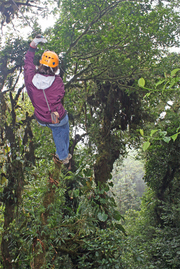
Whether you get that travel buzz at 13,000ft leaping out of an aeroplane or soaring through a jungle canopy on a zipline, you travel to challenge yourself. Sitting around in quaint little plazas just won’t do it for you. Turn your gap year into one long-term adventure by joining a global race such as the Mongol Rally and, in the words of the organisers of this 10,000-mile banger race, “Do a little poo on health and safety this summer…”

Brace yourself for adventure overload and check out The Adventurists’ inspirational, if slightly scary, website.

Travel attitude: spa addict

It’s all “Me, me, me” with you when it comes to travel, isn’t it? And why not? For a truly rewarding gap year, combine your love of luxury with some first-class wildlife watching, or challenge yourself to achieving new levels of nirvana on a retreat. You don’t have to blow your budget either. Whilst not exactly luxurious, a meditation course will give you relaxation skills for life and still give you that blessed-out glow. Plus, if you do it in an exotic location, such as Thailand or India, you can explore the country afterwards too.

Check out www.dhamma.org for free meditation courses around the world.


3. What travel experience do you have?


Callan takes a leap, Lost City trek, Colombia © Craig Fast   The kind of travelling you’ve already done should help you decide what you want to do now. You have two options: stick with what you know or try something new. I highly recommend the latter.

Experience: package holidays

If your travel experience to date has mostly been ‘call travel agent, get on plane, lie in sun, fly home,’ don’t panic at the prospect of arranging a whole year of travel. A gap year is the perfect opportunity to experience the joy of taking matters into your own hands, by researching and booking your own, tailor-made trip.

Plan your own itinerary around a continent that intrigues you.

Experience: UK only

If you’ve never left your home country you’re in for a treat! The world out there ain’t so big and scary; you just need to experience it to believe it.

Start with English-speaking Australia and New Zealand if a language barrier feels too intimidating. You can easily extend your trip in to Southeast Asia.

Experience: off the beaten track

Well done you for visiting places that most people only dream of. Traipsing around the usual sights really isn’t your thing, but have you ever thought that you might be missing out? After all, the world’s top destinations are popular for a reason.

Leave your comfort zone by joining a tour group for a week or so. You’ll glean plenty of information from the guide that you might otherwise have overlooked and will get to meet like-minded people.


4. Who are your travel buddies?


Your gap year experience will partly depend on whom you share it with, so choose your travel companion(s) carefully.
Travel buddy: friends and family

A year in each others pockets will test your friendship so make sure you discuss everything fully beforehand. You must want to do the same things and see the same places. Often overlooked, you need to be on a similar budget. Choose someone you can share comfortable silences with and, most importantly, someone who won’t take offence when you want to explore alone for a day or two.

Travel buddy: romantically involved

Aha. The make-or-break trip! Be sure it’s more make than break by budgeting for private rooms (with en suite), taking the time to go off and do your own things and packing ear plugs for those times when traveller’s tummy strikes in rooms with wafer-thin walls!

Travel buddy: me, myself and I

Everyone should travel solo at least once. It’s daunting but incredibly rewarding. Live by three rules: always carry a book; never be afraid to ask for help; and smile. More practically, stay in hostels when you want to meet people and pack a padlock and chain for those times when you absolutely have to leave your bag somewhere or you don’t trust a hotel/cabin door.

So there you have it. If these questions haven’t helped you pick your perfect gap year, may I suggest you spend your gap year taking a course in decisiveness? And remember, above all else, enjoy yourself. A gap year is an incredible opportunity to expand your horizons so make the most of what will surely be one of the most amazing years of your life.
About Emma
In July 2009 I left my job as editor of a large, commercial travel website to spend a year exploring India’s border regions and taking on an epic, strictly overland journey from Rio de Janeiro to Winnipeg, Canada. In 2004 I travelled overland from Holland to Singapore. I am, you see, the queen of the themed gap year, my chosen theme being, of course, overland travel. Nowadays I am a freelance travel writer and editor, running my own website, www.overlandtraveller.com, and ranting about the little niggles of life on the road at www.overlandtraveller.wordpress.com.

Author: Emma Field

Belgium – Brussels

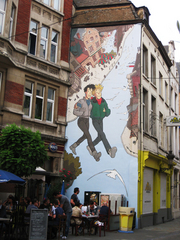
BrusselsLast year, I went to Brussels for six months to undertake an internship in a publishing house. I really enjoyed living in this European city and I would like to share my experience and feelings about that place.
Brussels is often described as a boring, untidy and dirty place, but if you take the time you will discover a really amazing and vibrant place. Here are the things that I enjoyed the most about this city…

Firstly, Brussels is a really dynamic place: The universities and the European commission attract a lot of students from the entire world, coming here to study or to do internships in the European institutions. On Fridays and Saturdays, going to the Delirium Café – a famous bier bar located in the medieval Rue des Bouchers – will allow you to feel the craziness of the student nights in Brussels! During the summer, there are also a lot of festivals and events organised by the city, like les Apéros Urbains or the famous Brussels Summer Festival, an entire week of concerts bringing together the best artists of the moment. Continue reading Belgium – Brussels

Scale Europe in a weekend

Conquer a summit close to home: Cicerone’s new trekking guide by Carl McKeating and Rachel Crolla showcases the best peaks to bag on the continent.

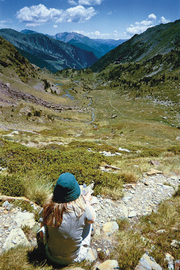
 Pic de Coma Pedrosa

Western Andorra

Why? To peak-bag in the Pyrenees.
Height: 2942m.
How long? 3-4 nights. Climb: 4.5 hours ascent 3 hours descent.

Tucked into the heart of the Pyrenees, Pic de Coma Pedrosa is a picturesque mountain which rewards hikers with a variety of terrain from meadows and hanging valleys to the arid rock and mineral-rich lakes of its upper reaches. Views from the summit are spectacular. While Andorra’s streets bustle with French and Spanish day-trippers in search of tax-free goods, Coma Pedrosa provides a fitting counterpoint to all that by lifting you above the throng into a serene tranquillity. The mountain is popular but not swarming with people; we encountered few hikers after passing beyond the chairlift area of the Refugi Coma Pedrosa. In summer Coma Pedrosa can be climbed as a good day hike and provides no technical difficulties beyond very easy scrambling and a short section of snow walking.

Getting there:
Several airlines fly to Barcelona and Toulouse. There are good coach links from these cities to La Vella. Regular buses run La Vella-Arinsal.

Romania Web

Moldoveanu
Romania

Why? To travel back in time.
Height: 2544m.
How long? 4 nights. Climb: 4.5-6.5 hours ascent, 4-6 hours descent.

The Fagaras range (Transylvanian Alps) in Romania is one that rewards wayfarers with stunning vampire-toothed ridges, sweeping hillsides and cold ancient tarns. Moldoveanu, the highest point of the range, is justifiably popular with Romanian and Eastern European climbers but is far quieter than other national high points in the region. The mountain’s massive proportions and remote setting make it a challenging hike which keeps the number of summiteers down and trekkers will be delighted to find plenty of space to explore the wealth of different trail-marked routes available (if you can get hold of a decent map). Unless you have a four wheel drive vehicle, there is no quick and easy way up and this is most certainly a good thing because like a fine wine, Moldoveanu should be savoured. While much of Romania was subjected to a Stalinist-style industrialisation during the twentieth century, ravaged by Ceausescu’s regime and now clambers towards the unrestrained capitalism of the EU, these Transylvanian mountains are still characterised by ancient rural traditions and hallmarks such as scythe carrying locals who stop to stare at the traffic and who could quite easily fit into 7th century life without causing a murmur. The area, with its occasional gothic castle, will send chills up the spine. We found it an absolute delight.

Getting there:
Fly to Bucharest. It is easiest to take the northern route up the mountain from Victoria if arriving by public transport. To get there go to the train station at Ucea de Jos on the Sibiu – Brasov line. Continue to Victoria by bus.

Vaalserberg
Dutch, German and Belgian border near Aachan, south Holland

Why? To prove that Holland has hills.
Height: 321m.
How long? 20 minutes.

Holland is well known for being as flat as the proverbial pancake, but in fact its high point is far loftier than those of some other European countries such as Denmark and Lithuania. Vaalserberg, a busy hill with a road up it, is not without interest as an oddity. On its summit is Drielandenpunt’ (Three Countries Point) where Holland, Belgium and Germany’s borders all touch. This was once Four Countries Point as the tiny neutral country of Moresnet (1815-1919) also used to converge here. Moresnet is now part of Belgium. We describe the route up from the Dutch side. The highest maze in Holland is to be found on the summit along with cafes, restaurants, a playground and a viewing tower.

Getting there:
Aachen is well served by bus and train links. From here it is possible to catch a trans-border bus to Vaals to begin your ascent.

Spain Web

And the rest…

Europe’s summits come in varied shapes and sizes – here’s a list to get your feet itching…

Peaks List

Disputed high points
Azores – Mt Pico (2351m): not mainland
Canary Islands – Mt Teide (3718m): not on mainland
Faroe Islands – Slaettararindur (882m): dependency of Denmark
Turkey – Mt Ararat (5,137m): in Asia.

For full details on the climbs, see Europe’s High Places.