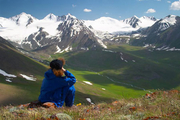
 The winner of the Independent on Sunday/ Bradt Travel Writing Competition was announced at the awards ceremony at our store in London last night (22 July). Kate Megeary, an as yet unpublished writer, wowed the judges with ‘The Perfection of Improvisation’ and won the grand prize of a trip to Kyrgyzstan and a commission from The Independent.
The theme this year was “The Heart of the City” and more than 200 entries were submitted for the competition.
Douglas Schatz, managing director of Stanfords, chose the winner and said, “The sharp and lively descriptions of the people the author observes as she wanders the streets of Havana create a sense of vibrant life in the heart of the city, despite its familiar decay and constraints. And in the end the moment of improvisation that arises from a spontaneous human connection is one of those uplifting events that make travel so rewarding.”
The Independent on Sunday will publish Kate Megeary’s winning entry and offer her a commission for a 1,200-word article based on the prize holiday. The prize is a seven-night holiday for two in Kyrgyzstan. Flights have been donated by flybmi, while Regent Holidaysis arranging the itinerary, including tours of Bishkek and Karakol, and visits to the alpine Altyn-Arasham Valley and the red cliffs of Jety-Oguz Gorge.
And here is the winning piece:
The Perfection of Improvisation
Kate Megeary, unpublished writer
A small brown dog wearing a faded pink t-shirt jogged down a dirt street. I decided to follow him. He seemed as good a guide as any. He was in no rush, stopping to sniff the flip-flopped feet of the fat brown girls who sat gossiping on doorsteps, rocking babies, their tight, skimpy vests revealing cleavage you could lose an arm in.
The dog took me down the narrow back streets of Old Havana, where faded pastel paint peeled from the façades of elderly buildings. White sheets and blue shirts were strung up to dry over the twisted stumps of wrought iron balconies; women leant over crumbling carved stone balustrades and shouted to their children in the street. These once pristine and exclusive colonial mansions quietly decay whilst life inside them thrives. Here lies the beauty of Habana Vieja, evident in her decline.
My guide stopped, his ears pricked, as he spotted a man in torn denim shorts with a thick gold chain around his neck. The man wiped sweat from his armpits with a handkerchief and shouted up at a window high above the street. A woman with curlers in her hair leant out of the window and lowered a wicker basket on a piece of rope. The man took his pizza out of the basket, replaced it with a bank note and the basket was raised again.
A gang of kids with skinny legs and grubby t-shirts had set up a baseball pitch at a crossroads, each pavement corner representing a base. I stopped to let them pitch. “Hey beautiful lady,” called a small boy, smiling mischievously at me as he threw a small coconut. Another boy hit the makeshift ball expertly with a stick. The dog caught the ball in its mouth. The children shouted. The dog ran. I was guideless once again.
The uneven dirt streets gave way abruptly to newly laid cobbles and opened out onto Plaza Catedral. The limestone cathedral was weathered by centuries of hurricanes. Fossilised sea-creatures were embedded in its walls, as though the building itself had risen, fully formed, from the sea. Waist-coated waiters served over-priced mojitos to tourists wearing Che Guevara t-shirts, expensive cameras slung around their necks. A brass band played Guantanamera. Ancient black ladies with their life stories etched on their faces wore gaudy satin flamenco dresses and flowers in their hair. They posed for the tourists, huge Cuban cigars dangling, unlit, from their lips.
I bought an ice cream from the ground floor window of someone’s house and rested on a bench. A good-looking young man sat down next to me and asked where I was from. We talked, he in broken English, I in tentative Spanish. Suddenly, he stood up. I turned and saw a policeman standing silently nearby, arms across his chest, staring at the man as he walked away.
The Caribbean sun began to lose its heat. I sat outside on the terrace of a hotel bar. The staff looked bored and tired. The bar was empty, except for Yamila. She was a beautiful mulatta with waist length hair and daring eyes. She told me she was learning English. That she wanted to travel. An overweight tourist with grey hair and a pink silk shirt sat down at the bar and ordered a cocktail. Yamila excused herself and went over to him.
I gazed at the ferries crossing Havana bay while the sea turned orange, then grey. When I could no longer make out the white star of the Cuban flag that fluttered above the ferry terminal, Yamila reappeared with flushed cheeks and tousled hair. “Vamos,” she said, offering me her hand.
She took me to the Malecón. Sweeping around the northern edge of the city, the Malecón’s protective wall shelters Havana from the sea. Locals sat hip to hip along the wall, playing music, fishing, dancing, swapping stories, sharing worries, selling peanuts, looking north across the sea.
Yamila’s friends were waiting. We drank rum and watched the lights of Havana rippling in the stinking black water below the wall.
“You must be hungry,” said Yamila.
A boy was sitting on the wall next to us, his pole in the water, two unidentifiable fish by his side. Yamila gave the boy a peso and walked away with the fish. She returned ten minutes later carrying freshly fried fish and some rice on the lid of a cardboard box.
She took her ID card from her purse and showed it to me, proudly pointing out her photo, her name, her date of birth, explaining that Cubans must carry this card with them at all times. Laughing, she cut a slice of fish with the edge of the card and scooped it up along with some rice. Nodding encouragement and grinning, she offered it to me.



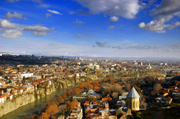
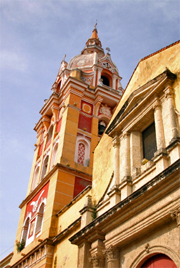 Why do you want to go to Colombia?”, asked everybody incredulously. Apart from the fact that I want to go everywhere which is reason enough for me (“because it’s there”, as they say), there are more than enough reasons to single out Colombia. Great coffee is a rather convincing one. Vast jungle, beautiful palm-lined beaches with beautiful snow-capped peaks visible in the distance, some of South America’s most beautiful Spanish colonial towns and very lively, interesting and very beautiful people are a few other reasons that come to mind. And no, not every Colombian is a drug baron. In fact, I did not meet a single one.