Category: Uncategorised
Paris's Top 5 Hidden Gems
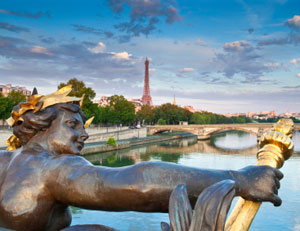
Planning a festive break to Paris? Ronny Lavie looks beyond the Eiffel Tower and Notre Dame to reveal five of the French capital’s hidden gems.
There have been more clichés written about Paris than there are gargoyles on the Notre Dame, and while a lot of them are based on truth, there is more to the French capital than the pretty lights of the Eiffel Tower and the designer shops on the Champs-Élysées. Paris is quirky, intelligent and romantic – due in part to these five sparkling gems.
1. Shakespeare and Co bookshop
37 Rue de la Bûcherie, 75005
If the whole of Paris was a bookshop Continue reading Paris's Top 5 Hidden Gems
Christmas in Bruges: Top 5 Tips
Stuck for a Christmas break idea? Let Tessa Edmonson be your guide to Bruges, the magical Belgian city that’s only a train ride away.
There are few places that can compete with Bruges when it comes to festive cheer. Swans canoodle in the frosty canals, lights twinkle in the misty winter air and bells chime through the cobbled streets. Continue reading Christmas in Bruges: Top 5 Tips
A Guide to Dim Sum in Hong Kong
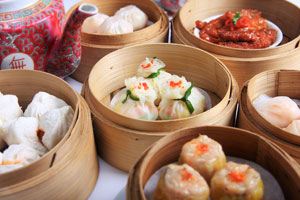 Luke McCormick reveals his favourite three restaurants in Hong Kong to sample dim sum.
Dim sum is a relative newcomer in the Chinese culinary tradition – a mere 1,000 years old, in that time almost 2,000 varieties of these small dishes have been developed.
In Hong Kong dim sum is eaten at yum cha – a Cantonese-style morning and lunchtime meal. Literally meaning ‘drink tea’, the meal consists of many small dim sum dishes served with tea.
Larger yum cha restaurants in Hong Kong serve up to 100 items on any given day and there are normally no menus. Instead, waitresses push around steel trolleys stacked high with steaming baskets of dim sum, and customers select those that appeal. The experience is quite something – the bustle and boisterous conversation is something to behold, and the food is fabulous.
Among the best yum cha houses in Hong Kong are:
- U-Banquet
1F, Pioneer Centre, 750 Nathan Road, Prince Edward, Kowloon
U-Banquet was awarded the King of Shrimp Dumpling and Gold with Distinction titles in the dim sum category in 2011’s Best of the Best Culinary awards.
- West Villa Restaurant
Room 101-102, 1F, Lee Gardens Two, 28 Yun Ping Road, Causeway Bay, Hong Kong Island
A favourite of local food critic and author William Mark, this Hong Kong hangout specialises in oyster sauce roast pork steamed bun. A popular local celebrity haunt, its exceptional quality was recognised by the Michelin guide in 2009.
- Rouge, Regal Airport Hotel
1/F, Regal Airport hotel, 9 Cheong Tat Road, Chep Lap Kok, Lantau Island
If you’re passing through Hong Kong on a short stopover, this place could be just the ticket to try some local specialities. With a silver award for dim sum in the 2011 Best of the Best Culinary awards, the yum cha here is about as good as it gets.
Luke McCormick is the founder of Edge Retreats, a site dedicated to uncovering the world’s best design, boutique and luxury hotels.
> For more Hong Kong travel trips, browse our collection of Hong Kong maps and travel guides.
Devon and Cornwall Travel Guide
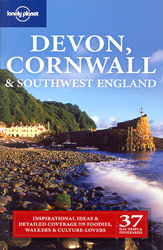
Click here to buy the
Lonely Planet guide to Britain >
Looking for a nifty getaway? Torquay has been billed the ‘English Riviera’ thanks to its mild microclimate and exotic plants, but there’s way more to Devon’s coast than that. Think Art deco houses, fishing ports and the bigger-city attractions of Plymouth and Exeter.
What to see
Torbay has no fewer than 20 beaches – locals opt for the sand and shingle below the 240ft red-clay cliffs at Babbacombe. These can be accessed by a 1920s funicular railway.
Magnificent in warm, honey-coloured stone, Exeter’s Cathedral Church of St Peter is framed by lawns and wonky half-timbered buildings. Begun in Norman times, the cathedral has the longest unbroken stretch of Gothic vaulting in the world.
The South West Coast Path spans the whole South Devon coast. One stretch that is doable in an afternoon takes in the South Point Lighthouse, overlooking the crescent of Start Bay. Continue reading Devon and Cornwall Travel Guide
Chocolate and Cheese!
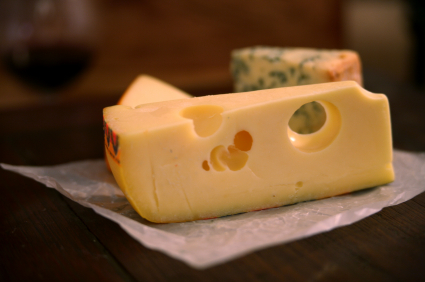
Join us tomorrow for our final chocolate & cheese sampling at our Covent Garden store between 12-2pm.
This month we were delighted to welcome The Switzerland Travel Centre to our themed area in the basement of our Covent Garden store to bring our customers a taste of Switzerland with weekly chocolate and cheese samplings. The space was transformed into a mini Switzerland with decorative flags, furnishings and posters while a paper gondola lift allowed customers to add their personal experiences and impressions of this beautiful country to our walls. STC are also giving away an amazing Experience Package holiday to Switzerland for 2 people to discover the beauty of Switzerland for themselves! To enter the competition, customers have to guess how many delicious Lindt chocolate balls are in the jar! Now you can enter online, check out the picture of the jar here.
Share Your Impressions of Switzerland

Customers are invited to share their personal experiences and impressions of Switzerland on a paper Gondola
Joining a Book Club
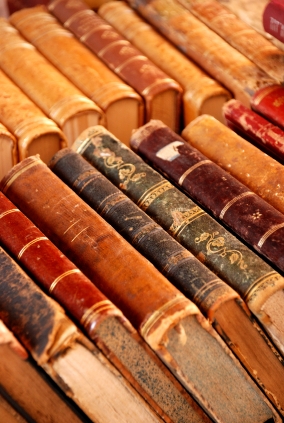 Joining a book club can be a very rewarding experience introducing you to a world of literature that you normally wouldn’t select for yourself. Its a great way to start reading more, gain a deeper perspective on your reading material and allows you to meet other people with common interests to yours.
Book Club Tips:
It’s always tempting to select a classic or a book that you loved so much that you are sure the group will enjoy it too. However book club is also about getting out of your own literary comfort zone as much as it is about reading more. Picking something you haven’t read will mean the story is as exciting for you as for everyone else.
A great way to select a book is to check for online recommendations or ask friends outside the club for their top suggestions. Sometimes it’s also a good idea to suggest that book that you have been meaning to read for years but have never gotten around to due to its size/language or style. This is what book club is all about!
Although a book per month sounds manageable, sometimes things get in the way and suddenly it’s the week before book club and you haven’t even opened the front cover yet. Designating specific evenings for reading makes a habit of it or setting aside some time during the weekend is a great way to unwind after a busy day.
Generally its a good idea to plan a specific day to meet each month so that people can keep it free. It’s also a good idea to plan ahead for summer holidays and the Christmas period to ensure you have enough reading materials and that people can attend on certain dates.
Creating a group for your club on social media is a great way to stay in touch and allows changes to dates/times to be made with a lot less hassle than texting or phoning. Here you can officially state the book for that month for anyone who has missed it and is a really nice way to keep each updated and motivated with your progress and thoughts on the book as you are reading it. It also makes adding members an easy task. This group can be set to be completely private so that only members can see the page or interact with members.
Finally book club is a really great way to meet people and to gain a fresh perspective on the books you read. Moving to a new city can be daunting and book clubs are a great way to start meeting people as well as fueling your passion for reading.
Need some inspirations? Browse our huge range of fiction and travel writing
Wales – Pembrokeshire Coast
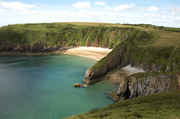 The Pembrokeshire coastline on the far western tip of Wales (the pig’s nose bit) is Britain’s only coastal national park. Noted for its sandy beaches, sheer cliffs and cosy little villages tucked into cwms and coves, it provides some of the finest coastal walking in the country.
Following the coastline from Amroth in the south to St Dogmael’s in the north, the Pembrokeshire Coast Path is a 186-mile rollercoaster trail that takes in the best that the National Park has to offer. Continue reading Wales – Pembrokeshire Coast
France – Lyon
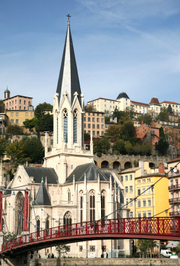 Thomas Morvan has come from France for an internship with us at Stanfords in London. Here, he shares the highlights of Lyon, where he is studying Business.
Bonjour! When I arrived in Lyon the first thing that I thought is this city is a little Paris, without the inconvenience of transport or the stress. Its location in France means it is a really great mix between north and south, a beautiful city with really good weather and friendly people. Lyon is the second largest French city after Paris, and the third is Marseille.
The Saint-Jean and the Croix-Rousse areas, which are noted for their narrow passageways (traboules) that pass through buildings and link the streets either side, were designated Unesco World Heritage Sites in 1998.
The best event in the city’s calendar is on 8 December, each year at this date is marked by la Fête des lumières (the Festival of Lights), a celebration of thanks to the Virgin Mary, who purportedly saved the city from a deadly plague in the middle ages. During the event, the local population places candles (lumignons) at their windows, and the city of Lyon organises impressive large-scale light shows onto the sides of important Lyonnais monuments, such as the medieval Cathédrale St-Jean.
If you want to find refreshment you absolutely must go to Old Lyon, between St Jean and St Paul, to find everything your heart desires. You could eat in one of the Bouchons – typical Lyonnais restaurants that are usually convivial and serve local dishes and wines. Or just drink a beer near the Saone River.
In Lyon you will find everything you could want – culture, sport, partying or just relaxation in the Parc de la Tete d’Or. A visit to Lyon is guaranteed a success!
You can find really good information on Rhône-Alpes by Cadogan Guides, in Lyon City Spots by Thomas Cook or with maps IGN 3031 OT and Lyon by Michelin.
Author: Thomas Morvan
The Michael Palin Interview
 It’s no wonder Michael Palin has been named as a national treasure – he is equally loved for his acting in such classics as comedy TV show Monty Python, and for his fascinating travelogues from all over the globe, from the Poles to the Sahara.
His latest adventures, in eastern Europe, were screened on TV to much acclaim, and with the release of New Europe, Michael came to Stanfords to tell us more about his thrilling travels…
About New Europe
Which was the favourite place you visited on this trip?
It’s really difficult – being asked any favourite place you immediately miss one of the others, and you think, “Oh yeh, I’ve forgotten that…” and there are favourites for different reasons. Romania I think – in terms of stumbling across undiscovered gorgeous scenery – was the winner. Northern Romania, by the Ukrainian border, the Carpathians, and also further south in Transylvania – very, very beautiful. But then so was Bulgaria – the Rhodope Mountains, and the Rila Mountains – very, very beautiful.
In terms of cities, I suppose – although we didn’t show a lot in the series – some of the Polish cities like Krakow, which was a great city, and Budapest too, so they would be two of my favourite cities.
But an undiscovered little country is definitely Moldova, tucked away there, not much going for it, two parts of it already split (seceded), and yet it has certain charm to it. The capital is rather leafy and pleasant, nice little avenues. And the people there are strongly determined to make their way and things aren’t going particularly well for them – it’s the poorest country in Europe. But there was a definite feeling that people cared about the place, and I found it a really, really lovely place to be.
And which place do you predict might really take off as a hot travel destination in the next few years?
A lot of places we went to are already getting quite popular, like Tallinn and Riga. I think Gdansk in Poland, which is near to the Baltic States and is a very fine city with a lot of history around it; I think that could become very popular. I think and I hope that some of the mountain areas such as the Carpathians could become a big destination and the cities of east Germany like Dresden and Leipzig. Leipzig had a lot going for it. It’s less pretty than Dresden; it’s a very good strong working city.
And my final tip would be Sarajevo in Bosnia. People are going to find when they go there that’s it’s got a lot of drama, just associated with the recent history. That the city there isn’t all smartened up in the traditional fashion and it’s a really bruised and battered city but with a great deal of spirit to it, good working city. So Sarajevo for the more curious and enterprising traveller!
What was the funniest experience you had?
Well I guess things that were completely unexpected like interviewing the belly dancers in Turkey and then being auditioned for belly dancing, and driving a tank on the Polish-German border. Both things which are funny to others, not to me particularly – it was rather humiliating – but looking back on them they look very funny.
And people are generally good at laughing – we had some nice rather brandy-fuelled occasions with some of the people – especially in northern Romania, we had a party there and they can’t drink without music, they can’t have music without a drink, and they can’t drink and have music without some laughter and some ribbing of the foreigners and all that! So there was a rather jolly time up in the village in northern Romania – Ieud – yes, a lot of laughter there.
And the most annoying?
Well it was probably the same – I was annoyed I couldn’t drive the tank more easily!
There wasn’t really a great deal of annoyance because we were able to see an awful lot of Eastern Europe, and given access fairly freely, so there wasn’t really a great deal of frustration in it. There were times when the mood was fairly dark – going to Auschwitz, and talking to the lady in Prague – Lisa Mikova – who was the concentration camp survivor – when you really realise the awful history of Europe over the last hundred years – the depths of brutality, cruelty to which people can sink. That wasn’t annoying, that was shattering to hear that that went on.
I suppose sometimes I was quite dispirited to hear people talk about how their city centres got trashed at weekends by British stag parties or hen parties. I thought that was a bit of a shame because these are beautiful cities and put under a lot of pressure by people who didn’t really care where they were so long as they were having a good party.
But on the whole, it wasn’t really a frustrating journey. It was revealing more than anything else – everywhere I went I was seeing things I didn’t expect.
Who was the most fascinating person you met or interviewed?
I suppose Lech Walesa would be, in terms of his role in history, the Polish president – the man who changed the course of history of Europe in the 1980s with the solidarity strikes – it was great privilege really to meet him. He was a little bit formal though, I felt, and he didn’t speak any English, or appeared not to speak any English. But when he relaxed – I asked him a question about his daughter being on ‘Celebrity Come Dancing’ – and suddenly he relaxed. I think then we saw the real guy who’s just been a working man, working in the shipyards, had a great deal of ability to relate to all his fellow workers, wasn’t particularly comfortable being…well he enjoyed being the statesman but the real man I think was someone who was a man of the people and when we got that…that was pretty interesting.
I met a German anthropologist in Turkey who showed me round Cappadocia with those extraordinary geographical, geological formations, these towers they lived in of volcanic rock that had solidified and he was a fascinating guide to that area. There was any number of people who helped us on our way.
How did these travels compare to your others, such as Himalaya or Sahara?
They were a little more cerebral – more about people, many more people, along the route, unlike Himalaya or Sahara where you could go for days without seeing anybody. In Europe there’s always someone to meet, to talk to. Twenty countries, which are more than Himalaya and Sahara put together, so you had to get your brain around a lot of different histories, languages, currencies, hopes, expectations…
Also I think that the fact it’s much closer to home, you kept feeling your own history of the last 50, 100 years, is very closely interwoven with the history of all Europe. Going to Eastern Europe is a bit like meeting a branch of the family that you knew existed but no-one had been able to meet for years. It’s the kind of uniting of one side of Europe with the other.
So these travels were less escapist, but more down to earth, with the real problems that face our continent. And stimulating – I like meeting people – they are really the raw material for these series. So that was the difference. Some of the landscapes were as striking – the Carpathians, the Danube Delta, the Curonian Spit (the great sandbar that runs south of the Baltics) – extraordinary places, the like of which I have never seen anywhere else. But I would say it was people rather than landscape that were the main attraction on this one.
About Michael 
A question from a member of Stanfords’ staff who is a budding film-maker: With all this travelling, do you harbour any desire to act again?
It’s always there in the back of my mind, and if a good script and a group of good people to work with could be put together, I guess I might think of doing it. I rather went off films because it became quite unwieldy if you were part of 60, 70 people working on it. Even when you’d finished your film, however good it might be, you were really dependent on distributors to screen it, and very often they completely let you down.
Whereas doing these travel programmes, you work with about six or seven people and we make most of the decisions for each programme and we know the BBC will show them, so that’s why I have sort of steered away from films and did more of this. But I never say never!
What career might you have followed otherwise? [Michael studied Modern History at Oxford].
Oh I don’t know, my parents were just keen that I should do something for the future. They knew I liked writing. I tried to get a job at the BBC, in administration there and that didn’t work out. So probably I might have ended up in advertising, something like that, possibly journalism.
Do you still really enjoy travelling or does it feel like work?
It is work, but I enjoy it. It’s very, very nice work to do. And there are times when I do feel desperately tired and inadequate to the task, because you set yourself up, it’s a big thing to do – to bring back an entire series – in this case seven hours of television, on which you will be judged in a pretty sort of harsh world now. So it’s hard work, but that’s part of it – I quite like being extended.
I quite like having to do something that’s difficult, it’s good for the brain, it keeps you reading things, taking things in, noticing things and also it’s reasonably good for you physically – you have to keep reasonably fit to do this sort of stuff. So I do enjoy it and I would never take on a series if I had any doubts at all.
Do you go on ‘normal’ holidays with your family? What sort of trips?
Yes I do. All my three children are now grown up – they’re in their 30s, so they do their own thing – but my wife and I go on holidays. We go down to France where my sister-in-law has a house in the Lot Valley and that’s very nice and quiet and we all muck in and help look after the place and cut the grass and all that sort of stuff – that’s good fun.
Or else we might go for four or five days to a city in Europe like Barcelona, or to Marrakesh. This year we went to one of the Italian Lakes. Somewhere reasonably quiet where we can wander around – we don’t look for a lot more than that. It’s quite nice to have a number of short holidays rather than one long holiday away. I can’t remember when last had a really long, in the hot sun holiday. I feel like I’d quite like it at the moment actually – lying by some hotel pool for a week doing absolutely bugger-all, it seems rather tempting at the moment!
And what’s your ideal sort of holiday – cities, countryside…?
I quite like walking so I wouldn’t mind a holiday somewhere where the weather was reasonably temperate and cool that I could do some walking about – Scotland is particularly good for that. My wife doesn’t like walking too much, so if I’m going with her, we tend to go somewhere warm for a start, we do like the sunshine.
We like somewhere where you can find things to do – it’s nice to have two or three days just sitting doing nothing and reading but I do want to get out and have a look at places. So somewhere like Marrakesh in Morocco is great because we stay in a hotel just outside of Marrakesh, with scenery all around you, but then you can go into the city that’s busy and has lots of life, and that is ideal for the two of us. I like somewhere that’s alive. I like art galleries too – I like somewhere where there’s a good station and a good art gallery.
But I could equally well go off to somewhere like Oman and hang around for a week. It’s very much who you’re with, what your mood is, what you’ve got to do, if you want to read or write. I do find cities quite stimulating.
What do you never travel without?
I never travel without my notebook – I always, always take my little black Alwych notebook. And pens. And a map of wherever I’m going. And a torch. And I used to take a Swiss Army Knife, but I’ve had so many confiscated at the airport – the war on terror has reduced my number of Swiss Army knives. And a book to read, either a good guidebook or a novel, written by someone in the country I’m going to – I find it’s quite good to feel you’re getting a voice of people who live there. And that’s about it really.
What’s the strangest place you’ve ever slept?
The South Pole – it has to be. We were at the base of the South Pole administered by the Americans, which is under the ground – it’s all dug in beneath the snow – and there they have controlled temperature, they have showers, heaters, movies, cinemas, music, all under the South Pole.
We got to the South Pole and we were not allowed to sleep there because it’s contravening international convention – only scientists could stay there – if you’re just a sort of tourist at the South Pole, you’ve got to look after yourself.
We were allowed to go and have a shower, thanks to some very nice Americans – under the South Pole – then we had to go out and sleep, in minus 50 degrees, in a tent. There were about six of us and I was the last person to get in the tent so I was across the door. There was one older man who must’ve been about 80 – probably as old as you can fly out to the Pole – he did have to get up rather often in the night and he had a heavy boot, so I kept getting this boot in my neck three or four times a night. I had to keep saying to myself, “I’m at the South Pole, this is exciting, this is where Scott and Hamilton came, Scott gave his life to get here…remember where you are!”
So I think that was a pretty amazing experience – utter misery, but at the same time an inspirational place to be. And at the same time knowing that underneath were people listening to music and taking baths and showers and eating blueberry pie! All very weird.
Do you bring back souvenirs from your travels?
Occasionally I bring back things. I don’t bring back a lot because I like to travel to light. I’m very aware that a lot of places I’ve been that a lot of their treasures have been sold off and I think they should stay with the people. I’ve been offered things every now and then which are rather wonderful, but I just think they’re better off with the people there …my house is cluttered enough anyway. However, I do have some wonderfully decorated boots from south Yunnan in China that somebody gave me and they were just too good to miss so I brought those back.
Is there anywhere you haven’t been that you’d really like to?
Oh yes, yes – there are heaps of places. I haven’t really been to anywhere in the Middle East. I’d love to go to Syria; I’d love to go to Iran. I’d very much like to go up to southern Russia – the Caucasus there, Georgia, Azerbaijan, Kazakhstan, Turkmenistan, and Brazil, Argentina, I’d love to go there. Yeh, there’s an awful lot of the Earth I haven’t covered. Some parts of the Earth I covered so fast that I’d like to go back and take a bit more time.
 What – or where – is next?
At the moment, no plans. I’m going to Ireland at the weekend and then I’m going to Holland the weekend after that – both to talk about ‘New Europe’ and sign copies of the book and all that.
And I shall, over the next two or three months, just begin to think what to do next. I’m very happy to be at home now for a while. Eighteen months it takes – minimum – to get a series like this done from the filming to the actual writing of the book, then writing the commentary , then the editing of the film, and then the publicity, which goes on for three or four months. And until you’ve been right through that process, you can’t really have any clear idea what you want to do next – you just want to stop and to be at home and potter around London and enjoy living here and then an idea will come.
Buy New Europe by Michael Palin >>
Author: Rachel Ricks