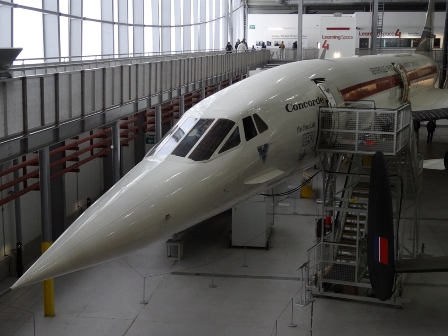
 Gregor Swiderek visits the Imperial War Museum at Duxford with some fellow military history enthusiasts from Stanfords.
The idea of a day trip to the Imperial War Museum at Duxford was floating amongst a few of us for a while. We decided to take a train to Whittlesford Parkway station which is located less than two miles from the museum, and walk from there. Otherwise there is a bus route from Cambridge serving the museums on Sunday. If you drive, Duxford is located just beside junction 10 on the M11.
What struck me first was the size of the museum. There is number of hangars, some of them quite enormous, located next to grass and hard runways. It was all bigger and more than I expected.
 We started our tour from the largest hangar of the complex, the AirSpace. It displays mostly British and Commonwealth-built aircraft and the absolute highlight is of course Concorde. It was one of the first to be built and it was used for the test flights. In fact it has the distinction of having flown the fastest of any Concorde during the flight trials in which it was involved. What’s most amazing is how low-tech everything looks, especially the cockpit, and how tiny the windows are. Still it is a spectacular machine, the only supersonic passenger jet ever.
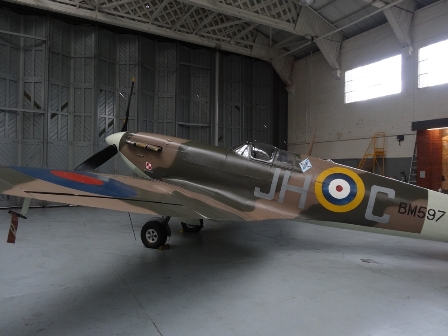
Other great machines in this section include such icons as the Spitfire, Hurricane or Harrier as well as lesser known but impressive beasts like an Avro Vulcan strategic bomber (a huge delta-shaped plane which was used to carry the UK’s atomic warheads), an Avro Lancaster heavy bomber from WWII and a Short Sunderland flying boat (used for hunting U-boats). There are many smaller or less known aircraft in this huge space, we could have probably spent a few hours in this one hangar alone but we decided to move on as there was so much more to see. Continue reading Geeks' Day Out – Imperial War Museum, Duxford

 In fact Hermann turned out to be a real gem. Located about 80 miles west of St Louis it was established in 1837 by the Deutsche Ansiedlungs-Gesellschaft zu Philadelphia (
 by Barbara Tognini
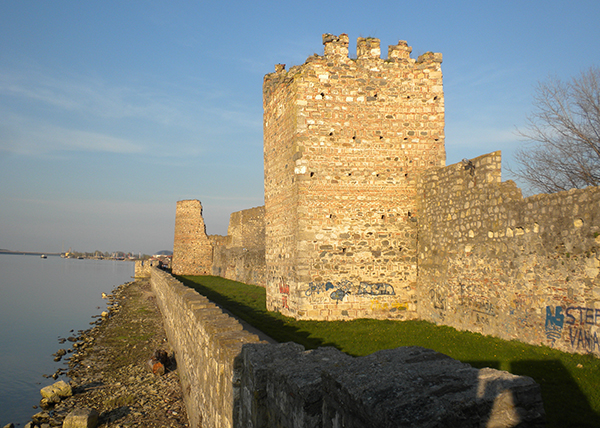
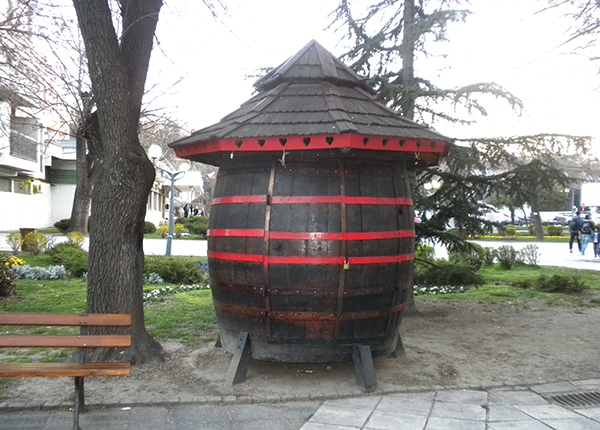 As soon as we reached the town we headed to the fortress. It is indeed very large (it’s the largest inSerbia) and very photogenic; its construction was completed in 1430 and resisted the Turks’ siege for 20 years. From an informative panel attached to the wall at the entrance of the fortress, one learns that it was heavily damaged in 1941, when a German train loaded with ammunition exploded killing about 2,000 people.
 by
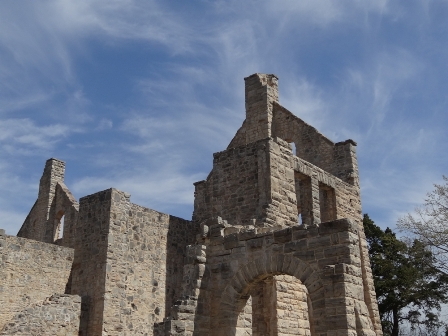
by 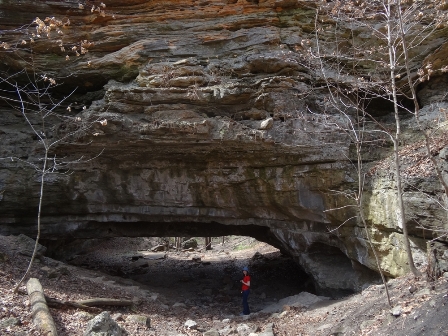 A wealthy Kansas City businessman, one Robert M. Snyder, wanted an European-style castle as his country retreat. Construction started in 1905 but when Snyder died the next year in a car accident his sons finished it and subsequently leased it as a hotel. Eventually it burned down in 1942. Since then only the picturesque ruins remain. They are located on top of a steep rock visible from across the valley and offering stunning views of the karst landscape of central Missouri. A great place for a lunch stop and a walk.
 by
by  As we say farewell to our American intern
 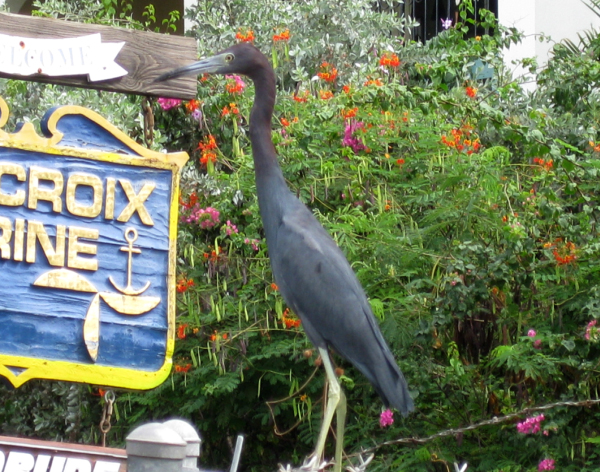 This trip to the Virgin Islands was organised by my partner’s family to celebrate the New Year in a different way, in a hot place. The US Virgin Islands comprise the islands of Saint Thomas, Saint John, Saint Croix and Water Island, and they constitute an unincorporated territory of the United States. During our sailing we touched only the first three, visiting mainly Saint Thomas and Saint Croix.
 The Pacific Coast Highway (PCH in short) is one of the world’s most scenic roads, if not the most scenic one. As the name suggest it hugs the Pacific Coast, often perched on top of the very steep ledges. It runs from the southern tip of Baja California in Mexico all the way to the top of the Olympic Peninsula in Washington state, but the most scenic, and famous, part stretches between Morro Bay in the south and Carmel in the north (both in California).