Pathways to Pleasure – Part 2

by Charles Davis 

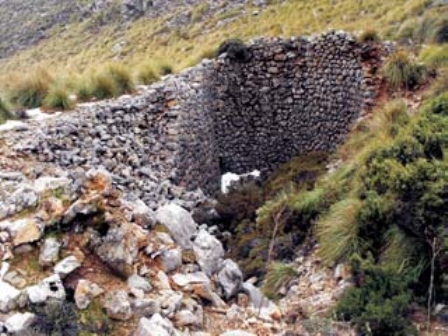
In a previous blog, I spoke about the charcoal-burning and lime-firing that furnished many of the paths still in use in Mallorca, but these cottage industries were far from being the only activities opening up what has since become the leisure walking landscape in Spain.

Snow gathering for the purposes of preparing medicines and for refrigeration was still in operation as late as the 1920s. Trampled into ice and packed between protective layers of diss grass or straw, the snow was stored in deep pits variously known as casas or pozos de nieve in Spanish and casa neu in Catalan (literally snow ‘houses’ or ‘wells’), then transported down to the lowlands piecemeal on mules during the summer nights. Like the activities of charcoal-burning and lime-firing, the trails left by snow gatherers provide some great walking experiences, and some of the surrounding cabins are still used for shelter. The trade in ice was so definitive of the mountain environment that the culminating point of the Axarquia, which was originally called Tejeda because of the surrounding forests of yew (tejos), is now uniformly known as ‘La Maroma’ after the thick rope used to access the ice pits on the summit. Continue reading Pathways to Pleasure – Part 2

Book of the Month – A Sense of Direction

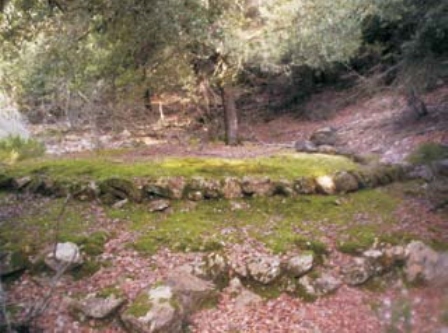
Our Book of the Month for March is A Sense of Direction by American writer Gideon Lewis-Kraus. After a recent visit to our Long Acre store, he kindly agreed to share some of his photos from his travels on our blog:

My book begins in Berlin, a place many young people had long been moving to for the general lack of authority that obtained there; in the book, I liken it to a variety of anti-gravity chamber. When you’re young and have creative aspirations and have been working hard, as I was, in an expensive city – in my case, San Francisco – just to pay your rent, it’s easy to fall victim to the fantasy that if only you didn’t have to work so hard for the basic necessities, you’d find yourself in full creative flower. But one of the things I discovered in Berlin was that the mere absence of external authority did not usher in a new era of internal authority, and after a few years at loose ends there I took up my friend Tom’s larkish suggestion that I accompany him on a trip along the Camino de Santiago, a medieval pilgrimage route across northern Spain that has, over the last few decades, become tremendously, a historically popular with a young crowd of secular drifters.

As we set off one morning from our hostel in the Pyrenees, I took immediate comfort in the fact that we were just following signs; all authority had, at least superficially, been successfully externalized. One of the arcs of the book has something to do with how we all relate to authority – how, for some of us, and for me at that moment in my life, we need to externalize desire in order to feel it as authority. We need to hear our wants as foreign needs. So a lot of the book becomes about how one relates to signposts and guidebooks along the way. (I reserve a special ire for guidebook-author irresponsibility.) Continue reading Book of the Month – A Sense of Direction

Jordan-Israel Border Crossing

Crossing the border between Jordan and Israel by land can often be portrayed as a stressful process. Stanfords’ Barbara Tognini shares her experience of crossing at the King Hussein/Allenby Bridge.

From what I could read on travel guides or on the internet before leaving, the process seemed to me quite long, complex and stressful, and I was expecting to spend most of the day in queues on either side of the border. Luckily for us everything went very smoothly and we reached Jerusalem in very good time! Our trip to Jordan and Israel took place in March 2013 – for anyone planning a similar trip I’ve outlined our experience below.

 We returned our rented car at Queen Alia airport, and took public transport to Amman (the airport is located about 35 km to the south South of from Amman): a Jett (Jordan Express Tourist Transportation) coach which takes about one hour to reach to Tabarbour bus station and costs about 4 dinars. Continue reading Jordan-Israel Border Crossing

Pathways to Pleasure

In the first of a three part blog series, author Charles Davis refelects on how many walks we enjoy today were created for originally created out of necessity.

It’s one of the curiosities of outward bound activities like walking that, while one of the principal motives is to seek out wild places and explore the natural world, the means of achieving this are often quite contrary to wildness and nature. I’m not talking about the whole elaborate business of Goretexing, Thinsulating, Vibraming, and Garmining oneself up to the eyebrows, though I’ve had my doubts about that, too. Don’t get me wrong. When I go into the mountains I’m bedecked with every brand name I can afford and very glad of it, too. But I do have slight misgivings about the monetizing of a leisure activity that ought to be freely accessible to anyone with a lungful of air and a legful of muscle. Coleridge used to set out for a week’s walking simply wearing a greatcoat and carrying a pair of spare socks in his pocket. You wouldn’t have wanted to get too close to the socks come the end of the week, but I do have a sneaking admiration for a man able to engage with the great outdoors without a lot of expensive equipment. Continue reading Pathways to Pleasure

London Bridge in Arizona

by Gregor Swiderek

I can’t even remember when I heard for the first time the story about the sale and reconstruction of the old London Bridge in the deserts of Arizona. I guess it must have been ages ago, probably soon after I moved to London. Let’s face it, it is one of those fascinating stories which locals love to tell to tourists and newcomers to city over a pint or two.

So, I was aware that there is a London landmark relocated stateside but that was it, I never really thought much about it. But then, last year, I came across an interesting book about the whole thing. It is called: London Bridge in America: The Tall Story of a Transatlantic Crossingby Travis Elborough. Now, the book is a bit hipsterish, but it is also is a fascinating mix of social and architectural history. As I’m mildly obsessed with bridges and civil engineering there was no need to tell me twice about it, and I read it in two days (well, maybe three). But even if you don’t share my weird passion I strongly recommend this book as it is simply fun to read. Then during the planning of our latest American road trip my girlfriend and I realised that we would be passing not far from the current location of London Bridge. As we both share a passion for architecture, history and whacky trivia we just had to go there. Continue reading London Bridge in Arizona

Shiraz

by Caroline Sandes

It was a six hour bus journey to Shiraz from Yazd, broken by a couple of entertaining moments.The woman sitting next to me couldn’t work her seatbelt (the police are very strict about the wearing of seatbelts, even in coaches), so I helped her sort that out without an intelligible word between us, not sharing a language. At some point in the journey, as is common on long-distance bus journeys in Iran, we were given a snack of cake in a packet and juice in a pouch. The problem was that there was no way to pierce the pouch with the blunt-ended straw – the pointless stabbing at it caused the woman sitting next to me and me to get the giggles. A guy sitting across the aisle came to the rescue with a biro, demonstrating that it was easier to pierce the base. The landscapes we passed through were spectacular – mountains, some snow-capped; and rugged desert. I happened to be reading Herodotus’s description of Darius chasing the Scythians across a vast space of nothingness during the journey, which seemed appropriate. As we neared Shiraz, the landscape got greener – in fact there was even some rain. Continue reading Shiraz

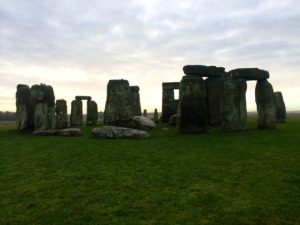
A Trip to Stonehenge and a Day in Bath

by Olivia Schroeder

Being new to the UK I had to do my touristy duties and check off some of the things on my to do list. For this particular trip my friends and I got out of London and headed to Stonehenge.

That Saturday we arrived and joined the other Stonehenge patrons in taking pictures and learning about the history of the giant rocks. The claims as to how and why the rocks were there was one of the most interesting parts of the trip. I guarantee, however you think they got there, there is someone that believes it with you or believes something much more far fetched. Some people think that it was just a group of really strong people, but that idea is not as much fun.

I like the suggestion that it was wizards and magic or maybe giants. But the particular and specific way the rocks line up with each other and the sun, enforce the notion that this cluster of massive rocks was not placed together by accident. As interesting as Stonehenge was, there is only so much time you can spend staring at rocks. We took our pictures and headed to our next destination, Bath. Continue reading A Trip to Stonehenge and a Day in Bath

Yazd, Iran

by Caroline Sandes

From Esfahan I travelled south to Yazd. Yazd is one of the oldest towns in existence in the world. Settled into the desert, it is built almost entirely of mudbrick. Its old core is a warren of narrow streets, covered alleys and high walls with only the old wooden doors suggesting there might be houses behind them. I had two missions in Yazd – the first to explore the town, including to visit the Zorastrian fire temple, and the second, to get a ticket to get me out of Iran and back to Ankara in time to catch my flight home in about 10 days’ time.

Yazd was, of course, hot – a balmy 25 degrees centigrade during the day (it gets to over forty in the summer); clearly this was considered cool as the heating was still on in the hotel I was staying in. The hotel was once an old traditional house, in the old town and with a small rectangular pool in the centre of its covered courtyard. I was allowed up onto the roof to look out over Yazd – its coffee-coloured roof-line punctuated by minarets and domes, as might be expected, but also by wind towers. Wind towers are ingenious – a natural form of air conditioning. They are designed to catch the passing wind and funnel it down into the rooms below. I had a vent in the ceiling of my hotel room from one such tower that delivered a waft of cool air every so often. Continue reading Yazd, Iran

Route 66

by Gregor Swiderek

Let me start by saying that I never really understood the obsession surrounding the historic U.S. Route 66. It is well known all around the world as one of the America’s icons. You can buy countless books, posters, calendars, magnets and whatever else you can imagine branded with the Route 66 shield. Somehow I never got too fascinated by it. A couple of years ago I did manage to see and drive some bits of it in Texas and Oklahoma but, to be honest, those stretches didn’t blow my mind away. As I already wrote on this blog, there are so many more interesting and scenic roads in the US. For me the only truly fascinating aspect of this famous route were the small ghost towns along it. One of them was the town of Texola located on the border of (where else) Texas and Oklahoma which I visited in 2011. With only 36 inhabitants (according to a 2010 census) it was practically a ghost town. Many buildings (including a gas station which once served Route 66) were falling apart or were completely overgrown; usually both. A great photo opportunity, but I seriously wondered where these 36 people lived. It was a fascinating little place but scarcely a reason to specifically follow the Route 66. Continue reading Route 66

Arizona Strip

Gregor Swiderek heads to the Grand Canyon National Park, enjoying the stunning Arizona scenery along the way…

What is the Arizona Strip? No, it is not a type of poker game or a nude club. It is a small (only roughly the size of Wales) but fascinating part of the state of Arizona. Cut off from the rest of state, by the mighty Colorado and its famous canyon, it is not just a marketing gimmick. It is a distinctive region, physically separated from its mother state and it has more physical and cultural connections with the neighbouring Utah, including a sizeable Mormon population, than with the mother state. And it was from Utah that we entered the strip. We were heading directly to its (and in fact the whole state’s) biggest attraction, the Grand Canyon.

It must be one of the most popular attractions in the whole USA and I did visit it during my first visit across the pond, good 12 years ago. This time we decided to skip the overcrowded south rim and head to the much less visited north rim. I know it sounds strange that place as huge as Grand Canyon National Park can get crowded but it is worth remembering that most of its millions of visitors access it only in a few places, majority of them at the south rim which offers, among other things, an IMAX cinema and a shopping mall. Continue reading Arizona Strip