 In the first of a three part blog series, author Charles Davis refelects on how many walks we enjoy today were created for originally created out of necessity.
It’s one of the curiosities of outward bound activities like walking that, while one of the principal motives is to seek out wild places and explore the natural world, the means of achieving this are often quite contrary to wildness and nature. I’m not talking about the whole elaborate business of Goretexing, Thinsulating, Vibraming, and Garmining oneself up to the eyebrows, though I’ve had my doubts about that, too. Don’t get me wrong. When I go into the mountains I’m bedecked with every brand name I can afford and very glad of it, too. But I do have slight misgivings about the monetizing of a leisure activity that ought to be freely accessible to anyone with a lungful of air and a legful of muscle. Coleridge used to set out for a week’s walking simply wearing a greatcoat and carrying a pair of spare socks in his pocket. You wouldn’t have wanted to get too close to the socks come the end of the week, but I do have a sneaking admiration for a man able to engage with the great outdoors without a lot of expensive equipment.
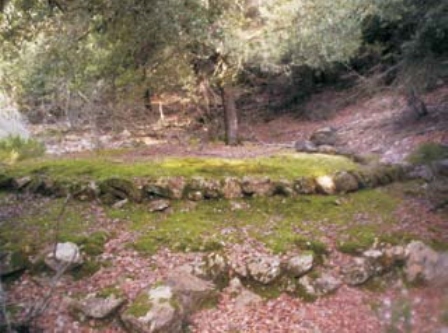
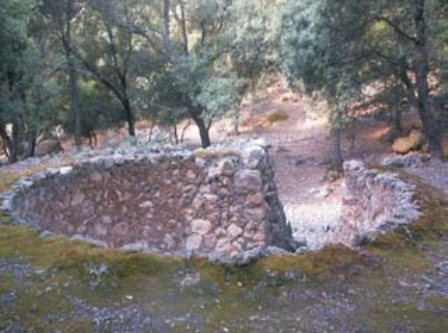
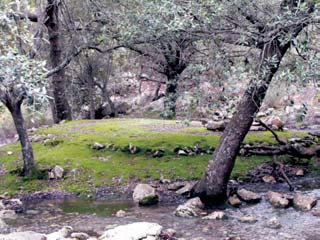 What interests me here though is that the ways we use to get into nature and wild places were generally conceived in a spirit that was quite antagonistic to those things.All those trails and paths we delight in were no delight at all to the people who made them. They were hard work. And one didn’t embark upon them in a spirit of romantic adventure. The motivation was more mercenary, governed by the dictates of survival. The people who first explored mountains didn’t want wildness and nature. They wanted something they could domesticate and turn to profit, preferably with as little labour as possible. The less wild it was the better. Doubtless there were those who learned to love the environment they worked in, who saw beyond the processes of extraction and transformation, glimpsing beauty and perhaps the odd moment of transcendence, but I suspect the majority were just overwhelmed by the drudgery and danger of their daily lives. Go for a walk in the woods pretty much anywhere in the Catalan speaking lands and sooner or later you will stumble upon a manmade glade at the heart of which you will find a flat moss frosted circle of dense, dark soil ringed with a line of stones. This is a pit-stead or charcoal burning hearth, known in Catalan as a sitja, the plural of which, sitjes, lends its name to the popular resort south of Barcelona. However, the place where sitjes are most predominant is unquestionably Mallorca.
 Until the last century, charcoal was the principal cooking fuel on the island, and much of the countryside is nowadays accessed by the old charcoal-burners’ paths linking the low lying villages with the remote sitjes in the mountains, where the charcoal burners and their families camped throughout the spring and summer. For modern walkers, this network of paths is a boon. Moreover, the sitjes and the family’s beehive bread ovens provide useful staging posts for directions. But what we exploit as a source of pleasure has its origins in a tough, unrewarding life.
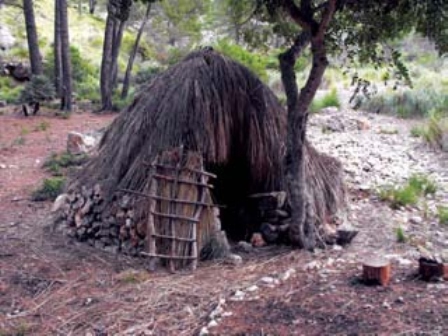
Charcoal burners were notoriously poor, living in thatched dry stone huts furnished only with a bed made of a heap of stones with a pile of straw for a mattress. They earned barely enough to buy the necessities, yet great skill was required for this delicate and dangerous task. Imagine stoking a stonking great fire at the height of summer then clambering all over it for anything up to a fortnight feeding the core through a central chimney to keep it smouldering at just the right temperature without incinerating the wood inside or the surrounding forest – and that with only a shovelful of soil to control the flames!
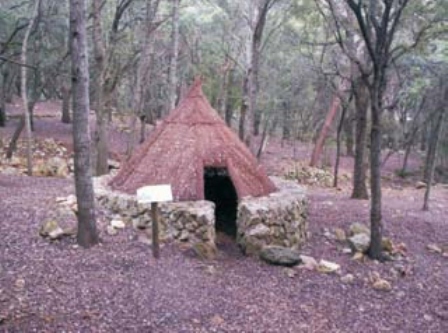 Worse, the temporary ‘ovens’ of gravel and clay in which the wood was clad were never very stable and could collapse under the weight of the charcoal-burner. The other even poorer rural industry that lead to the making of these paths was lime-firing to extract mortar and a wash for whitening houses. The lime kilns or hornos de calç take theform of stone-lined pits occasionally still capped with a conical cupola. In another hugely unenviable job, limestone was manually crushed then interleaved with wood and fired to a temperature of around 900º to produce the quicklime that was scraped out of the furnace after the conflagration had cooled down.
I suppose you could say that when we’re out hiking in the mountains we are participating in this long standing tradition of extraction and transformation, extracting ourselves from the constraints that trammel our daily lives and transforming the experience into a sense of well being. But it would be pushing it a bit! So when you’re next barrelling along having a whale of a time on a lovely woodland trail, spare a thought for the people who made it.
In future blogs, we will look at the mark made on the mountains by snow-gathering, shepherding, irrigation, and surveying. In the meantime, examples of the vestiges of the past cited above can be seen in Discovery Walking Guides’ new book about Mallorca, which features walks throughout the island, from Peguera and Calvia in the southwest to Alcudia and Pollenca in the northeast, including all the principal walking destinations in between.