Pamukkale – Turkey’s Cotton Castle

By Alice Bzowska

A soaring mountain that seemed to gently brush the edges of the wispy clouds loomed over the horizon as I drove through the Denizli Province located in South West Turkey last week. “Is that snow?” I thought to myself, ignoring the 30 degree Celsius heat that was relentless even with the windows down blowing my hair all over the place. As I stepped out onto the road leading up to this incredibly striking structure of natural beauty, it occurred to me that what appeared to be snow couldn’t possibly be in these sizzling temperatures, and as I walked up to the entrance of Pamukkale, I knew that this hidden gem of the ancient Ottoman empire was going to be a unique and surreal experience as the white mass steadily grew nearer.


A UNESCO World Heritage site and translated from Turkish into ‘Cotton Castle’, Pamukkale is the entrance to the ancient Roman and Byzantine city of Hierapolis, and is a limestone travertine with steamy thermal pools lining the pathway up to the city. I had never heard of it until a few days before visiting, and once I began to step through Pamukkale, struck by the uniqueness all around me, I was unsure as to why this remarkable place was virtually unknown to me previously.

Before stepping away from the gravel path and onto the cotton-like mass of white, it is required for everyone to take off their shoes and socks, which made the experience all the more enjoyable. Off came the Converse, and although I was nervous at first that the ground may be scorching from the searing sun, it had a surprisingly soft and cool touch, and made me want to leave the shoes off for longer than I probably should have. With a mixture of steamy pools and fresher, cooler ones which were a welcome relief in the heat, it was a natural impulse to dip my toes (or most of my leg) in the dusty calcium carbonate pools, and I felt that visiting Pamukkale was wonderful for being an interactive and immersive experience instead of one where you just stand back and admire, however great the view really was.


Higher and higher I walked on the delicate, creamy surface, making sure I took time to peer out at the vast landscape of south western Turkey stretching across the River Menderes Valley. Once the edges of the snowy ground were in sight and I had walked up over 500 feet, I was allowed to (reluctantly) slip my shoes back on and explore the crumbling grandeur of Hierapolis.

Hierapolis sits atop the white limestone mass of Pamukkale and forms part of the UNESCO World Heritage Site. Located on hot springs which have been enjoyed as a spa for over 2000 years, the ancient city is home to an impressive theatre, majestic thoroughfares, arches and gates and other relics. After the refreshing experience of walking through the Cotton Castle, exploring Hierapolis was entirely different, and the abandoned and discarded feel to the city as well as the relative lack of tourists enabled the sensation that I was discovering these ruins as if for the first time.


Once I had wandered through Hierapolis, soaking up the breath-taking beauty of my surroundings, it was time to take off my white Converse again which unsurprisingly didn’t look white anymore against the marble-like surface of the limestone at Pamukkale, and head back down. The descent didn’t take as long as going up since I didn’t feel inclined to dip my feet into every infinity-like pool I passed, but I still appreciated where I was. “How is it I hadn’t heard of it before?” I thought to myself over and over again, as I was reminded of my trip to the popular Salt Flats of Uyuni in Bolivia which are slightly similar in appearance to the Cotton Castle but entirely different by experience.

To walk bare foot on a unique and slightly surreal, not to mention outstandingly beautiful natural structure is the only way to appreciate this gleaming travertine. Turkey is famed for its succulent kebabs, sweet Turkish delight, opulent mosques and intricate carpets which you will see plenty of on any trip to the country, but no trip is complete without a visit to the truly awe-inspiring white heaven of Pamukkale.
Lighthouses of Wales

By Brian Finch

We went to Wales with an Italian friend, over the August Bank Holiday weekend, to look at lighthouses. I am not sure I ever imagined writing a sentence like that but lighthouses do have a particularly interesting characteristic: they are usually located in spectacular locations because, as a result of their purpose, you will find them on rugged sea coasts.

We drove from London on a Friday evening, stopped overnight outside Newport, and drove on another three hours the following morning to the Dale Peninsular near Milford Haven. Apparently this area at the far southern tip Wales is called ‘Little England Beyond Wales’ because the population has not been Welsh speaking for hundreds of years, possibly because of settlement by Flemish or Viking peoples. Despite being very close to a heavily industrialised area the views are magnificent and even the refinery chimneys of Milford Haven to the east are elegant in the distance.

For guidebooks, we used ‘Lighthouses of Wales’ which, for lighthouse enthusiasts, is just one in a series covering the UK, and also one of the ‘The Pembrokeshire Coastal Path’ series.

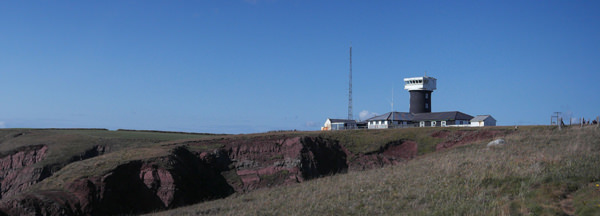
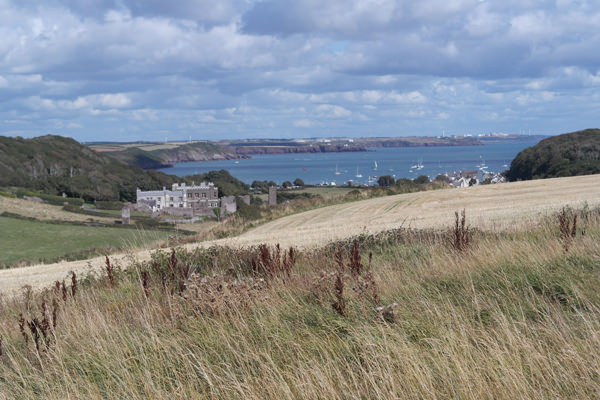
We dumped our gear at a superb guesthouse, Allenbrook, in the centre of the village of Dale and took advantage of a bright sunny day to head straight out in the afternoon for a 6 mile walk around the peninsular with the objective of St Anne’s Lighthouse, near the half way point of the journey. Given another day there we would have taken the walk north up the coast. Dale itself is set in an attractive bay and, as demonstrated by the presence of a castle, was once an important place. Today it is a small village and watersport centre.


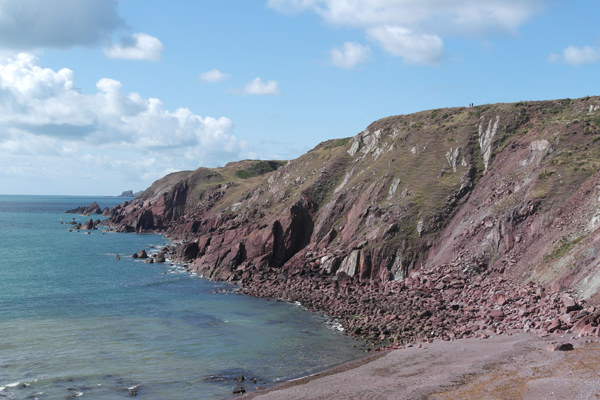
The coast, with its brightly coloured red rocks, indicates the high iron content and references the mining heritage of Wales. Just offshore you can see two small islands, Stokholm and Skomer, but a trip to their lighthouses was out of the question due to lack of time but also the absence of a regular boat service. I understand that it is possible to arrange trips, though.


A fairly easy walk past some cattle and pretty white ponies grazing on the path took us to St Anne’s Point where the lighthouse buildings have been converted into holiday cottages. It turns out that all lighthouses are automatic nowadays and no longer need a resident team to look after them.


Beyond the lighthouse we came to the small cove where the Duke of Richmond aka Shakespeare’s Bolingbroke landed on 7th August 1485, going on to fight King Richard III at Bosworth Field just three weeks later, emerging as victor and with a new name as King Henry VII. It really is a strange feeling to look at the stones underfoot and think that a man stepped there one day who went on to conquer a kingdom, transform the legal system of the country and father another man who would break with Rome and destroy the medieval church system. Quite appropriately we passed, on our way home from this trip, the skeletal remains of Tintern Abbey in the Forest of Dean, which was demolished by agents of that King Henry VIII.

In the meantime, further around the coast of the peninsular we passed a soaring modern shipping beacon that uses radio rather than light to alert shipping and finally we returned to Dale for a well earned dinner at The Griffin, a local pub restaurant that boasts the distinction of having its very own local fisherman to supply it. That’s one way to guarantee fresh fish.

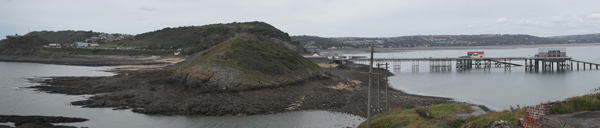
The next morning we set off down the coast for the Mumbles, just outside Swansea, which is a pretty seafront resort area close to the City. We were too pressed for time to spend be able to spend much of it looking around and had to focus on our objective, though the pier right next to the lighthouse is certainly worth a stroll. There are restaurants around the entrance to the pier but a rather better one next to the nearby carpark.


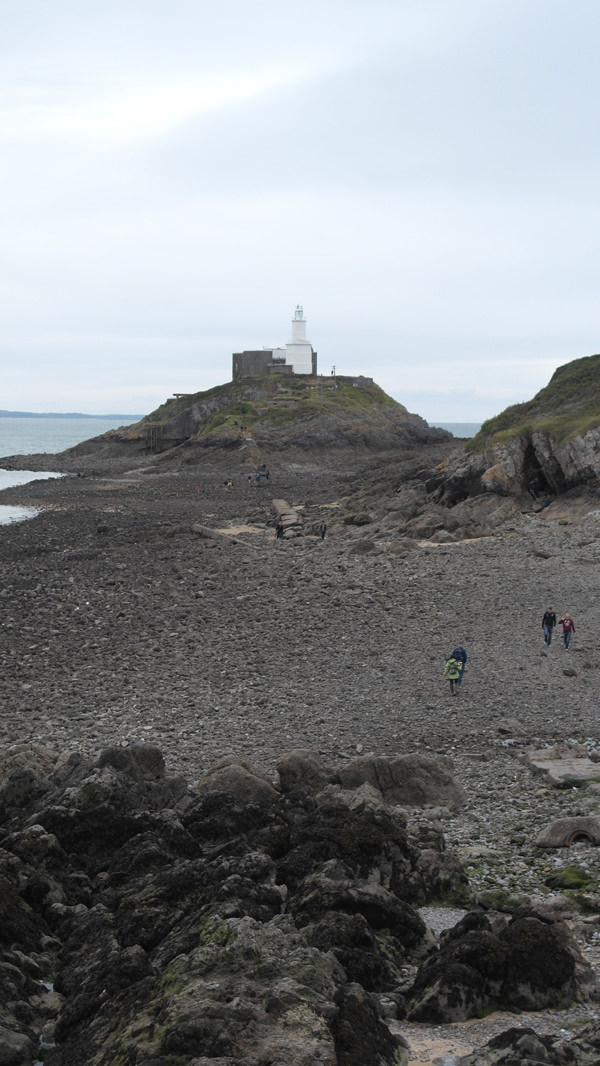
At low tide you can pick your way across to the rocks to the lighthouse, which is worth it for the view back to the pier, which also houses lifeboats and their launch ramps. Whilst looking the other way across the rocks you have the lighthouse, which is not a particularly beautiful building but is certainly in a striking location. There are clearly visible remains of a causeway that once linked the light to the mainland but its stones, scattered by the winter seas, now make the walk harder, having once made it easier.


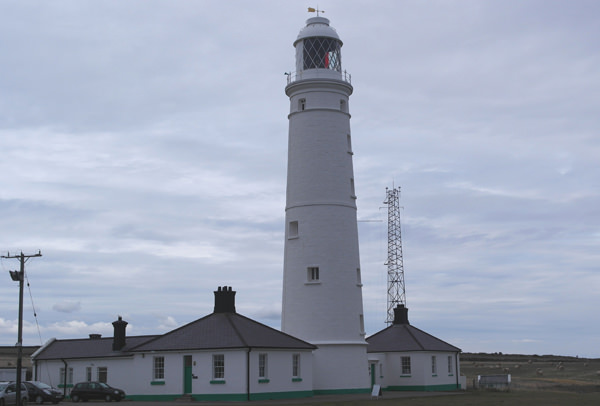
And so onward to our final lighthouse at Nash Point, the other side of Swansea. Down some narrow roads past residential areas you emerge into countryside and then suddenly out to the cliff top for a view of a classic looking lighthouse. We also arrived just as the huge foghorns at this site were being tested. A surprisingly large car park probably caters for walkers as well as pilgrims like us and is graced with a small café which provided well-timed and excellent Welsh Cakes together with a welcome cup of tea. On summer Sundays the lighthouse building is open to the public and we met a pair of lighthouse-men on site, climbed the tower, inspected the lamp and looked out to sea through binoculars, in the approved professional manner. 


And finally, back to overnight at a guesthouse near Tintern, in the Forest of Dean, overlooking the river Wye.

Visiting Persepolis’s contemporary: Susa, Western Iran

by Caroline Sandes


My room in the Apadana Hotel, Shush, was the scene of a massacre. When I got to it, the small fridge was swarming with ants. I pointed this out to the man from reception. He grunted and disappeared, reappearing about five minutes later with a large aerosol can. He rapidly dispatched the ants in jets of spray; I felt a little guilty.

Shush is a small town not very far away from the Iran-Iraq border. It’s not really on the tourist trail despite being the site of ancient Susa. The complex of 400 hectares includes the remains of the palace, the Apadana, of Susa, constructed by Persepolis’s principal builder, Darius the Great. With Persepolis Susa was once one of the great capitals of the Persian Empire.

I could see the site from my hotel room and as soon as I had sorted myself out and cleared up the ant carnage I set off to visit it. It was closed. A rather cross looking security guard shooed me away with the explanation of ‘not working’.

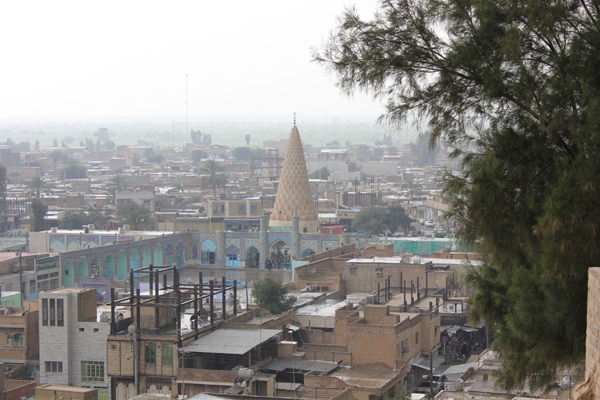
So I took up my favourite occupation of going for a wander. Shush, as with pretty much everywhere in Iran, has a very long history and was not always the comparatively small town that it is now. There is evidence of occupation from 5000 years ago and it was occupied more or less continuously until the Mongols destroyed the place in 1218 AD. It is also famous for having the Tomb of Daniel (of lion’s den fame) and so was a place of Jewish pilgrimage. The Mongol destruction put an end to that as well. Nowadays the Tomb of Daniel is a place of Islamic pilgrimage, though the complex with its curious pinecone-shaped tower was only built in the 1870s. I didn’t go in as the weather was very hot and clammy and the thought of wrapping myself up in a much-used black chador to visit it put me right off.
 

Continue reading Visiting Persepolis’s contemporary: Susa, Western Iran

Ahvaz to Shush by taxi

by Caroline Sandes

A taxi-journey isn’t normally worth writing about, but my journey from Ahvaz to Shush, sometimes better known as Susa, in western Iran was more entertaining than most.

I’d caught the overnight bus from Shiraz to Ahvaz. The bus was clearly much loved by its owner as it was carefully decked out in red lights, inside and out, even round the windscreen. Together with its red seats and all the other things it was festooned with, I felt a little like I was getting into a mobile bordello. That journey was uneventful and I arrived at 5am in Ahvaz. I had forgotten, for some reason, that arriving long-distance buses were prey for eager taxi drivers looking for a fare and naturally I being the tourist on board was an immediate target. Being rather tired, my resistance wasn’t very high and I was soon haggling with a particularly tenacious driver over the cost of him taking me the 100km or so north to Shush. I had been intending to take another bus but the rial was so low against my euros that the cost was far too tempting. In the end we settled on the equivalent of 11 euro (see what I mean), though I knew that even then I’d paid too much, judging by the raised eyebrow of the man in the taxi office who took the payment. Continue reading Ahvaz to Shush by taxi

Memphis

by Gregor Swiderek

Since my visit to Nashville, a few years ago, I was also keen to visit its musical Tennessee twin, Memphis. Finally I managed to do that earlier this year.

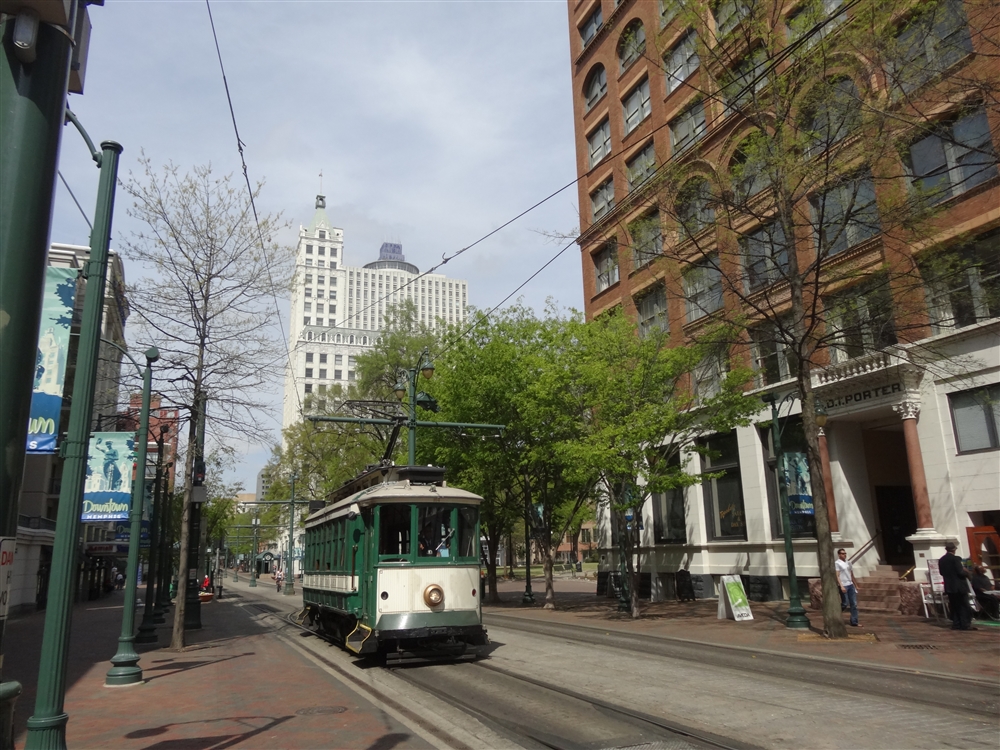
We entered Memphis in the most spectacular fashion by driving from the west and crossing Mississippi on the impressive Hernando de Soto Bridge which offers great views of the downtown.

Apart from the grand entry into the city, that route also offers an easy access to the Tennessee State Welcome Center located at the first exit after the bridge. Unusually for that sort of institutions it not only stocks a wealth of maps and brochures but also it is home to a giant statues of Elvis Presley  and BB King. Located in walking distance to the downtown (actually right on its edge), it also offers free parking. Well, according to the website you shouldn’t park there for more than 2 hours but the security guard on site told us that it was OK to stay for the most of the day. Although nothing comes free nowadays, it seems that parking sometimes does. Continue reading Memphis

Persepolis, Iran

by Caroline Sandes

Persepolis rises up on its plateau – tall classical columns keeping sentry above the walls. Up you go, trying to resist the urge to take two at a time of the shallow steps that lead up to Xerxes’ magnificent Gate of All Lands; the two colossal mythical guardian bulls between which you must pass making you feel insignificant. And then there it spreads out before you in all its ruined glory, the site of Persepolis, watched over by Artaxerxes II and III’s tombs cut into the rock above the site. And if you turn around, you can look down the long straight avenue and out to the mountains beyond with the blue sky behind, your fellow tourists looking some-what antlike below.

The earliest remains of Persepolis date to 518 BC, just four years after Darius the Great came to power. He is responsible for much of the building of Persepolis, one of the capitals of the Persian empire. Building continued on the site until the defeat of the Achaemenid dynasty by Alexander the Great in 331 BC. Whether Alexander ordered Persepolis to be burnt or it was an accident remains a mystery. Herodotus doesn’t mention Persepolis in his Histories, but he does detail all that history and mention all the people you come across depicted in the reliefs of the surviving ruins. So there on the Apadana Staircase you come face to face with all the peoples of the empire, including the Ethiopians, Greeks, Cappadocians, Bactrians with a two-humped camel, Elamites with a lioness and cubs, Indians, and the wonderfully unpronounceable Orthocorybantians with their pointy hats, to name just a few. In March every year, Iranians celebrate their national new year holiday, Na Ruz. This procession of stately people carved onto the Apadana Staircase had come from all parts of the Persian empire, stretching from East Africa to India, bearing gifts for the emperor to celebrate the same Na Ruz some 2500 years ago. Continue reading Persepolis, Iran
Côte d’Azur, Camping, 1989

by Tim Cleary

The late 80s were my formative years in terms of travel and holidays. In late July, six weeks of school holidays would begin and – like many other fortunate British families who had the opportunity to do such things – we would pack the boot of the car, load the roof rack and set out on a voyage of discovery to the Continent. 
“Are we there yet?”

Although this was over 25 years ago, I remember quite distinctly what was involved with our annual camping holidays in France. First, there was an early-morning wake-up call for a quick breakfast and a drive to Dover for the ferry to Calais, where car sickness or the ferry’s swaying from side to side might result in said breakfast rising again to where it came from. My siblings and I would irk our parents by repeating the inevitable “Are we there yet?” at various points along the way, ad nauseum.

My father would then attempt to drive us as far as possible along the French autoroutes before tiredness got the better of him somewhere in central France. Here, we would pitch our tent for the night, usually on a municipal campsite, and hunt for the nearest Géant Casino supermarket restaurant for its cheap, Gallic equivalent of Little Chef fare. My favourite was steak haché – cooked rare – with frites, an assortment of vegetables to make it seem slightly more healthy than it actually was, and some sort of chocolate mousse for pudding. My parents would also have a glass or two of French red table wine.

Songs for the middle of the road 

No road trip would be worth it if you didn’t have some tunes to keep the wheels turning. Thus began one of my enduring passions: music. During several hundred miles of travel through France, some time around 1988 or 1989, we would listen to French radio or the latest cassette albums purchased at home in England. The Gipsy Kings, Chris Rea (my favourite and most appropriate being On The Beach, the Travelling Wilburys supergroup, and the late-80s reincarnations of The Moody Blues (the Sur La Mer album in particular) and Fleetwood Mac became the soundtrack of these summer holidays. Middle-of-the-road music, in more ways than one. Occasionally, my more clued-up older teenage sister would get her way and my parents would reluctantly allow her to play albums by Morrissey, The Cure and other British alternative artists of the time. My tastes have changed, however, but my interest in music still remains. Whenever I travel now, I always try to use it as an opportunity to learn a bit more about the musical traditions around the world. Continue reading Côte d’Azur, Camping, 1989

Mughuls and markets in India’s capital

by Debbie Valentine

Delhi is an assault on your senses. However you arrive in the city, it smacks you around the face with its intensity. The flavours and smells of the markets and food stalls; the sounds of a bustling, busy city; the sights of the completely contrasting old and new cites sitting next to each other: there is nowhere in the world quite like it.
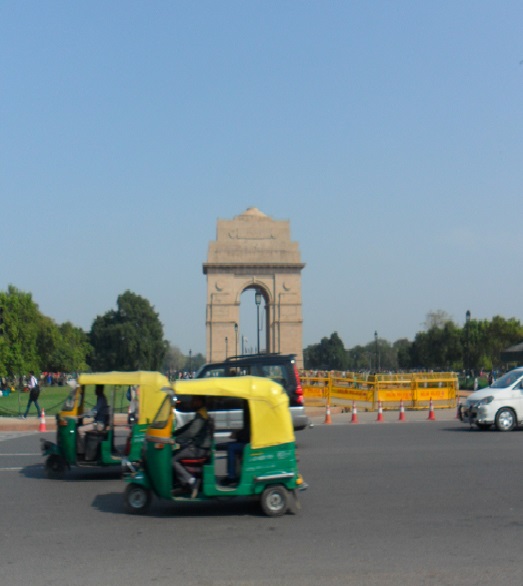
Delhi is probably the most popular destination for visitors to India. It’s an easy gateway to the country, and the capital is a fascinating, bustling place to visit. Whether jumping in a rickshaw or on the surprisingly comfortable Metro, Delhi is a city easily traversed, although I would recommend taking a rickshaw at least once and experience the idiosyncrasies of Delhi’s traffic: where there are two lanes marked, expect four; traffic lights don’t necessarily mean stop; honking is just a suggestion the driver is about to do something; and being a pedestrian can be quite terrifying.

The main road of Old Delhi, Chandni Chowk, is the best place from which to explore the old city. With the Red Fort at one end, and the peaceful Fatehpuri Masjid at the other, the street is packed with shops, stalls, people and the occasional cow. Stop at one of the many stalls selling chai and, for about 10p, indulge in a cup of the sweet, aromatic tea. You can buy pretty much anything in the market, from fabric and shoes to food and homewares, it’s an astonishing selection of goods and a great place to collect a souvenir. Continue reading Mughuls and markets in India’s capital

Sir Richard Burton's Mausoleum

by Annabel Barber, Editor of Blue Guides

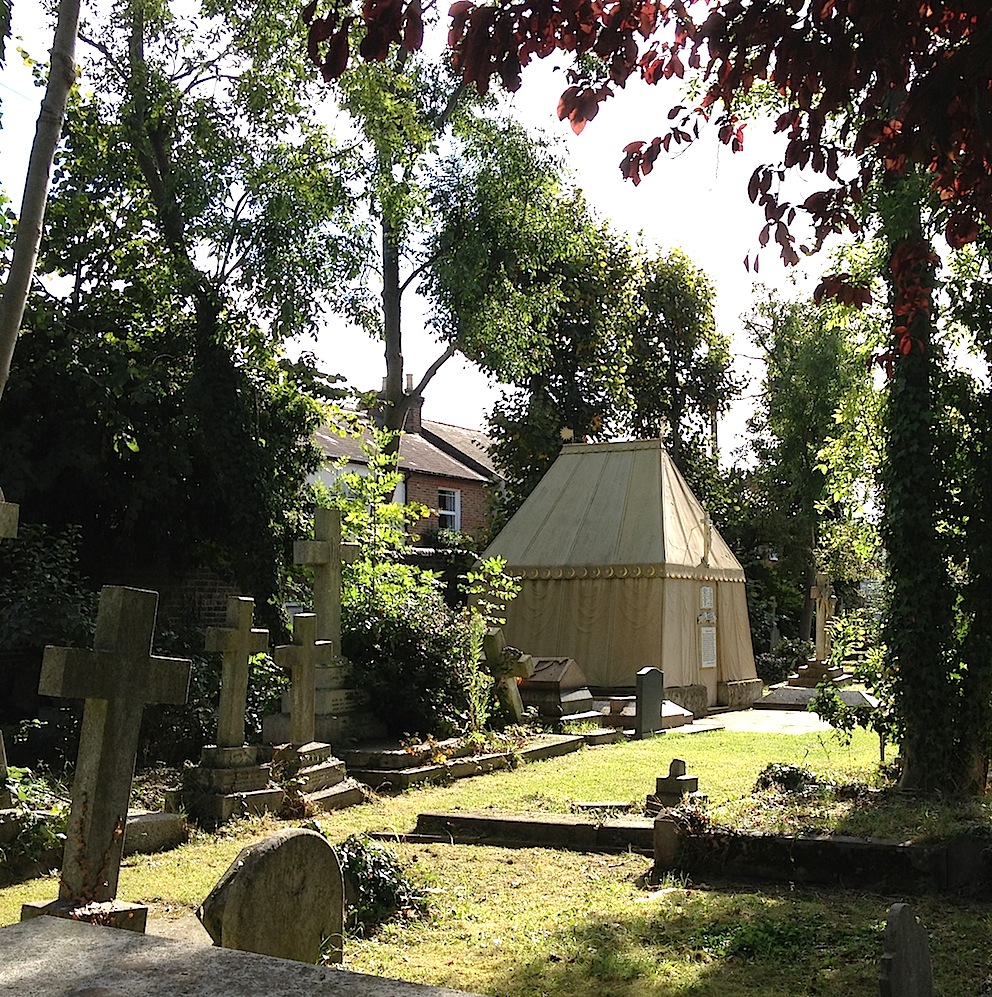
Sir Richard Burton packed a lot into his relatively brief life. He died in 1890 at the age of 69 having been variously an explorer, soldier, diplomat and writer; a pilgrim (in Islamic disguise) to Mecca and Medina; the first European to see Lake Tanganyika; translator of the Arabian Nights; and above all a loose cannon “ill-fitted,” according to one source, “to run in official harness”. It is true that he never rose particularly high in the diplomatic service. And he was frowned on in certain circles for his interest in sex and sexual practices and for his penchant for noting down the vital statistics of the tribesmen he encountered on his travels. He was fiercely defended by his wife Isabel in a two-volume biography written shortly after his death. She dedicated it “To my earthly master, who is waiting for me on Heaven’s frontiers. Meet me soon—I wait the signal!” Isabel was herself a devout Catholic. Her earthly master was not. He dabbled in many religions, including Sufism, and is credited with the aphorism, “The more I study religions the more I am convinced that man never worshipped anything but himself.” Continue reading Sir Richard Burton's Mausoleum

Istanbul – The Historic Centre

by Brian Finch

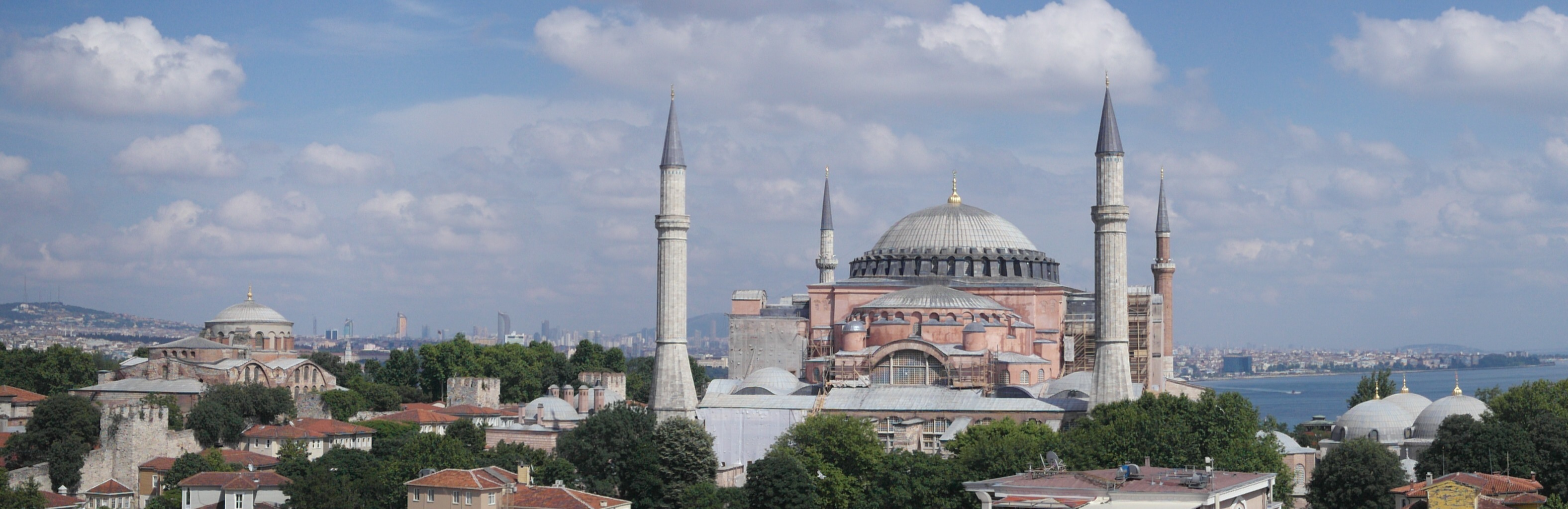
Istanbul is a city of views and surprises. The views arise firstly from its location on the hilly banks of two great bodies of water – the Golden Horn and the Bosphorus – and secondly from the elegant domes, minarets, spires and towers  throughout the historic centre . The surprises result from our misconceptions. I always thought of it as a Middle Eastern city, albeit spanning the border between Asia and Europe but found it a real synthesis and far more European than I expected.

We stayed in the historic centre which was ideal for walking to the main tourist sites whilst we took fast and reliable buses and trams to other areas. We did not try the underground system but it looks pretty impressive.  There are plentiful and pretty cheap taxis but the drivers do not always know the way and may not always speak English. Two other things to beware of, they may try to negotiate a fare rather than using  the meter, and the roads are pretty gridlocked during rush hour. Continue reading Istanbul – The Historic Centre