by Brian Finch
Istanbul is a city of views and surprises. The views arise firstly from its location on the hilly banks of two great bodies of water – the Golden Horn and the Bosphorus – and secondly from the elegant domes, minarets, spires and towers throughout the historic centre . The surprises result from our misconceptions. I always thought of it as a Middle Eastern city, albeit spanning the border between Asia and Europe but found it a real synthesis and far more European than I expected.
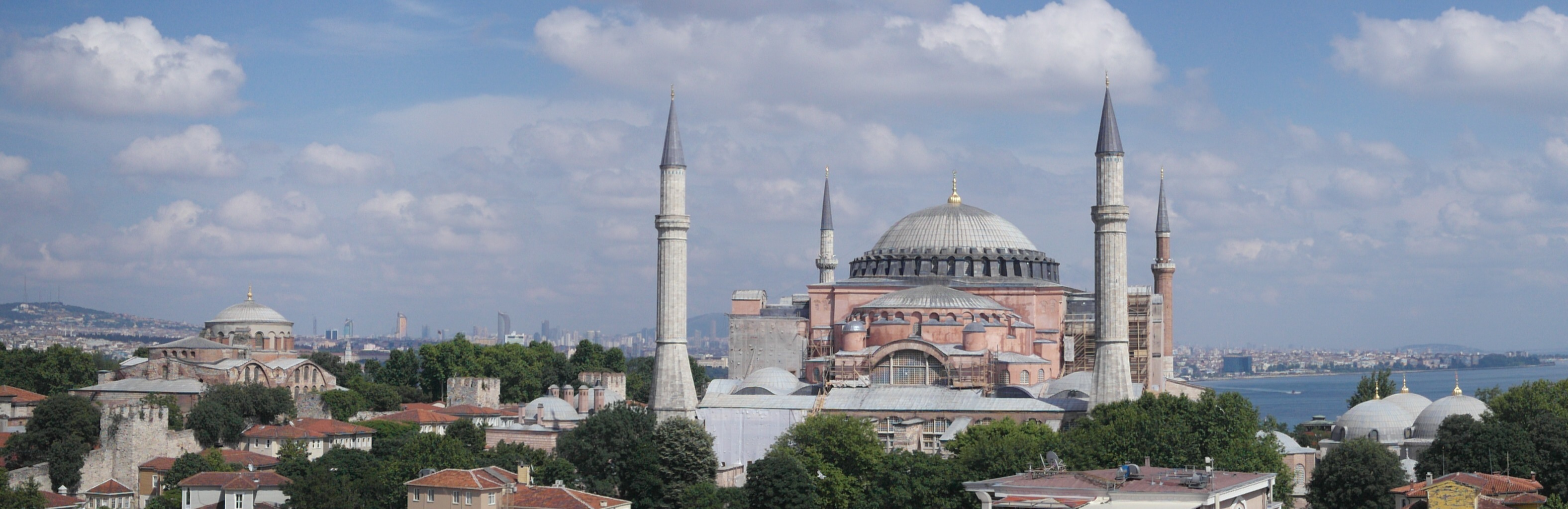 We stayed in the historic centre which was ideal for walking to the main tourist sites whilst we took fast and reliable buses and trams to other areas. We did not try the underground system but it looks pretty impressive. There are plentiful and pretty cheap taxis but the drivers do not always know the way and may not always speak English. Two other things to beware of, they may try to negotiate a fare rather than using the meter, and the roads are pretty gridlocked during rush hour.
Many restaurants are situated on rooftops with our hotel, for example, giving spectacular views. We used a Rick Steve Guide to Istanbul while planning our trip and saved 5% on our hotel bill by showing the guide at reception.
 Our first tourist visit was the Roman Cistern, just around the corner from the hotel, which may sound an odd destination, but this ancient water storage is the size of two football pitches and, with its 336 supporting columns (no I didn’t count), is extraordinary and surprisingly beautiful. Look for the koi carp that have been introduced to the waters there.
From there we went to the Topkapi palace of the Sultans and made an important discovery whilst avoiding the queues lining to buy tickets for the inner courtyards. Near the ticket offices there are ticket machines that sell a three day pass for a number of museums, some within the Topkapi itself, and the queues here were much shorter, while the pass itself was excellent value. Parts of the palace are closed for renovation, which is disappointing, but there is plenty left to see and, even if it means queuing again, don’t miss the treasury with its jewellery collection. It will save time by skipping the interior of the Hagia Irene church in the first courtyard, which is not worth paying extra to visit. The whole visit will take two or three hours so you may well want to investigate the café in the fourth courtyard which not only has good food but also those views I keep going on about.
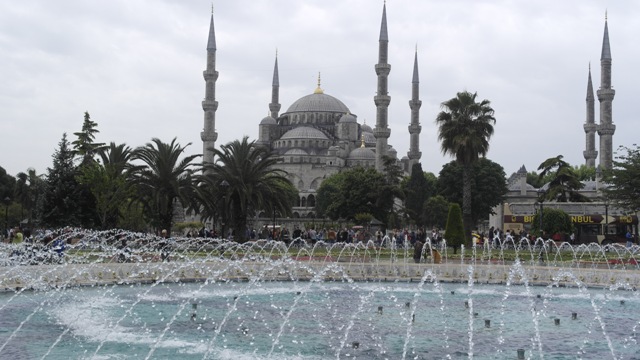 The archaeological museum beside the Topkapi is worth a visit but, leaving by the front entrance, we return to my overuse of superlatives as we reach the Hagia Sophia, first a church then a mosque and now a museum and follow this, a few hundred yards on, with the Blue Mosque, so called for the interior tiling not because of the tint of the stonework. Astonishingly beautiful structures! Be prepared for a smell of feet inside mosques frequented by tourists – we seem less inclined than worshippers to use the taps outside to wash. Do also be prepared for carpet sellers and freelance guides whose advice on opening and closing times may not be accurate: but all such took no for an answer far more readily than I expected.
Before moving on from the area a quick stroll around the area of the ancient Hippodrome is called for. It is right next to the Blue Mosque and, next to that, is the Museum of Islamic Arts. Sadly this last had not reopened from its renovation when we were there in early June 2014.
Plan your own visit to Istanbul here>