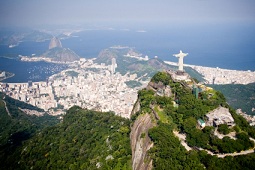
 Think Rio de Janeiro Carnival and you think costumes, dancing, rhythmic melodies, celebration and revelry. Since 1723 people have celebrated carnival in their own way, but now millions of people flock to the Rio Carnival to Samba the week away in their best sparkly attire. It’s the biggest carnival in the world and the week-long festival is televised globally too, so make sure to book your Rio Carnival accommodation as early as possible. The Carnival has a rich history and today’s parades, apart from being a huge amount of fun, are also seriously competitive with Samba schools nationwide competing for that number one spot. Continue reading Rio Carnival: History, Parades, Safety and Travel
A Beginners’ Guide to Surfing in Australia and Where to get the Best Waves
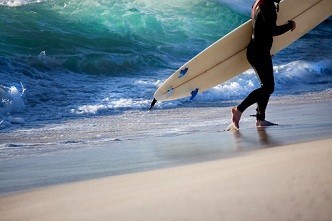 Aussies and surfing go together like beads on a bleach-blonde dreadlock, so if you want to master the art of riding the waves, you’re in the right country. Don’t know where to start? No worries! Oz has thousands of surf beaches, each with a school attached with instructors well-versed in getting people of all ages and fitness levels confidant on a surfboard. Continue reading A Beginners’ Guide to Surfing in Australia and Where to get the Best Waves
Culinary Delights of Asia
 A journey to Asia is not only a linguistic and geographical adventure but a gastronomic one as well. Boasting budget rates for accommodation and plenty of cheap food, travellers can spend years touring in Asia. The diversity of Asian culinary treats speaks to the variety of cultural heritages. Each country has its national dish, and each dish is different from the last in taste, structure and history. This is a short outline of some of the most popular Asian delights we know.
Japan: The flagship dish is that seaweed rice roll of seafood that we know globally as sushi. It might surprise you to learn that sushi originated not in Japan, but Southeast Asia. It began as a sour-tasting roll of fish that was fermented by a chemical reaction with the rice. Today it is a fresh roll of seaweed, rice and fish that’s eaten directly. There’s more to learn at the Japanese Food Culture Association.
Vietnam: The Vietnamese rice noodle soup known as Pho is that country’s national food icon. It is brewed with basil, mint, lime and beef. Unlike neighboring cuisines, this dish originated in Hanoi in the 20th century as a way to satisfy both Vietnamese and French palettes.
Cambodia: Loc Lac is one of the most loved dishes, which actually comes from the Vietnamese version of the same. It consists of cubes of meat stir fried with red onions. It’s served over a delicate bed of lettuce tomatoes and cucumbers, and a lime juice is poured over it.
Indonesia: Goreng is a delicious dish that evolved out of China’s chow mein. It is similar in that it has thin yellow noodles that are fried together with garlic, shallots and meat, but it is different in that it does not use pork, reflection the country’s Muslim roots.
Thailand: Pad Thai, literally meaning “fried Thai style” has spread across the globe, bringing those succulent rice noodles to mouths everywhere. The dish has existed since antiquity, but the 1930s Thai Prime Minister Luang Phibunsongkhram made it popular through his rice education campaigns. It is made of rice noodles, egg, tamarind and fish sauce, and chili pepper. Often it is crowned with crushed peanuts.
Malaysia: Chinese and Malay culinary cultures melded and created for the world a delectable dish called Laksa. It is a spicy soup made of rice noodles that expresses itself in two principal ways; the more sour asam laksa fish soup, and the coconut curry laksa soup.
China: Peking Duck takes its name from Beijing’s once westernized pronunciation of Peking. If you enjoy roast duck, this is a Chinese dish that will have your mouth watering. The Peking duck is slaughtered, skinned, soaked in boiling water and glazed with maltose syrup. Then it is roasted until the skin is thin and crisp. The duck is normally served with sweet bean sauce.
Hong Kong: Popularized throughout the world, Hong Kong’s “dim sum” refers to the way a meal is served; in small portions oftentimes delivered around a restaurant on carts. The tradition stems from the needs of travelers along the Silk Road to relax with tea and food. Today, you’ll find food including meat, hot buns, dumplings and vegetables served as dim sum.
Korea: Perhaps what speaks more to your appetite is barbeque. Korea’s national dish is called bulgogi. It is a grilled meat, which can be beef, pork or chicken, which is marinated in a delicious sauce of soy, garlic, sesame oil and sugar. The dish has been around for centuries.
Philippines: The Philippines adores her Sinigang stew. It is a savory froth of fish sauce, onion, siling mahaba and tomato. The base of the stew is tamarind, and its flavor is more often than not beef. It has a sour twinge to it, which makes it unique and delicious. Any way you swing it in Asia, you’re going to taste things you’ve never tasted before, and you’ll love it.
- See our selection of Cambodia maps and travel guides
- See our selection of Indonesia maps and travel guides
- See our selection of Thailand maps and travel guides
- See our selection of Malaysia maps and travel guides
- See our selection of Hong Kong maps and travel guides
- See our selection of Korea maps and travel guides
- See our selection of Philippines maps and travel guides
Everything You Need to Know About Spending a Year in Australia
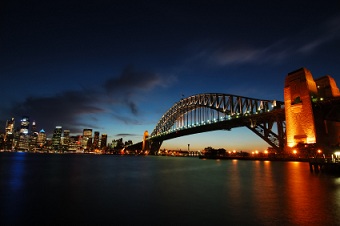 Australia is a great place to spend an extended amount of time abroad, what with its amazing beaches, superb nightlife and great accommodation options. A full year in Australia is a great idea, but keep in mind that costs can be high so cooking food from the supermarket rather than eating out and looking for great travel deals should become second nature to keep costs down. Because the country can be a bit on the expensive side, so you might consider working while you spend your year abroad. All the information you need to you’ll find here.
Visas Continue reading Everything You Need to Know About Spending a Year in Australia
The John Waller Interview
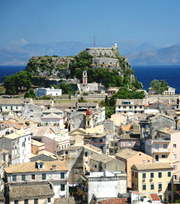 John Waller is author of Greek Walls, Corfu Sunset, Corfu Sketches, and Corfu Town Walks. He spends much of his year in Corfu and here, in an interview with John McCarthy originally aired on BBC Radio, John entices us further with tales from this beautiful Greek island…
John Waller first arrived on Corfu in the 1960s and the island cast a spell on him; so much so that he built a house there. He has recently produced a book with local artist Theresa Nicholas called Corfu Sketches.
John, how much time do you spend in Corfu?
Spring and autumn. In the spring the flowers are unbelievable; in the autumn we have a second spring with cyclamen coming out. And of course the sea is warm for swimming…
You already paint a lovely picture; what was it that you really fell in love with on those early visits?
It must be the people – the Greeks are a wonderful people – they are very hospitable. Also the countryside; Edward Lear wrote about that wonderful countryside: something incredible with three million olive trees. The beaches in those days were empty, and being a keen swimmer, we went to many of them. Finally the villages; the villages are an unknown secret – there are 104 of them. They are quaint; they are lived in; and they are worth visiting.
You mentioned that when you first went there, the beaches were empty. How has the island changed in those 40 years?
With the beaches there is obviously development, but thank goodness, one of the laws is that no building can be over four storeys if it is commercial and three if it is private. There is not the major development as in other locations. On the beaches, the sand is still there and when the sun goes down, there are not so many people on the beach and when I am having my glass of white wine and my plate of fried fish, it is wonderful.
Tell me about the links with Britain and the British.
The British were on Corfu from 1814 to 1864. We built the roads and the waterworks. We also introduced cricket and ginger beer.
Ginger beer?
Yes, ginger beer. It is now the only place you will find real ginger beer made with just ginger, lemon, sugar and water; nothing else. It’s an excellent brew! I can really recommend it.
Edward Lear, you mentioned. In the front page of your book you have a limerick:
There was an Old Man of Corfu
Who never knew what he should do:
So he rushed up and down
Till the sun made him brown,
That bewildered Old Man of Corfu.
You have been giving us lots of things; you are not a bewildered nor old man from Corfu. Why was he there in the first place?
His health; he kept on talking about ‘that grey London’. From 1856 to 1863, just before the British left, he spent most winters there, wandering the island and painting the landscapes. We know him as a limerick writer, but he was also a wonderful landscape painter.
Was he involved with the cricket?
I’ll be honest with you – I read his letters and he never mentioned cricket once. He wasn’t into that side of things – he was into the countryside.
Is it a strong feature of Corfu life?
We were over there last month and the Lords and the Commons turned up to play cricket and I am proud to say we, that’s the Greeks, got a tie. It is still played in the square – the plateia – which is surrounded by the wonderful British Palace, the French Liston and the Venetian Fort. A gorgeous setting and a fair result.
And of course it’s a World Heritage Site?
Two years ago Corfu Old Town was made a World Heritage Site. And that, along with the European Union summit, has changed the town from a bit of a Balkan backwater to one of the most beautiful places to walk.
Thinking of the walks, your passion is for walking. Apart from walking around the Old Town, you have been up and down the length of the island. Describe a bit more of the island and one of the favourite villages you discovered.
We started right in the south, in Kavos, famous for the 18-30s. As soon as we left that town, we left civilisation. It was just like it was 50 or 60 years ago; even as though it was 100 years ago because it was as Lear wrote about it. We walked for eight days, up the west coast, then across the north. Throughout that time, we were measuring scenery, tranquillity – which always scored a high point – and development: of which there was almost none in that walk amongst three million olive trees, which, because we have passed a law, must NOT be cut down.
When you are walking along this tranquil landscape and you come to a little village, what is the atmosphere like?
You will always find a café bar for the men in the evening; and you will probably find a mini-store. It is very peaceful until the festivals – the panayiri – when they all come out and dance and music is played. The architecture is gorgeous: the archways and the narrow alleyways, with restricted access for cars as well.
Are the local Corfiots tolerant or resentful of the visitors and ex-pats that go there?
They are very proud if a foreigner moves to their village – they are welcomed.
Are you happy that tourists should keep going, should fewer or more go?
Everyone who has been, has got to go back to see the World Heritage Site and the countryside. They are so superb. You must go back. You will love it and you will go again and again.
Finally, what is your favourite Corfiot dish?
Bourdetto and Bianco are the two fish dishes: one red, one white; one hot, one garlic. Fantastic.
 This interview is John Waller’s transcript of an interview that was originally broadcast on BBC Radio’s Excess Baggage.
Corfu Trail: Friends, Flowers and Food – from Kavos to Agni in 8 Days is due out in spring next year. Stanfords currently stock John Waller’s Greek Walls, Corfu Sunset, Corfu Sketches, and Corfu Town Walks.
The Jaspal Jandu Interview
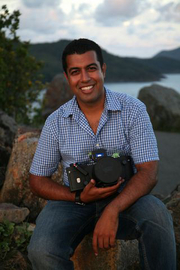 Jaspal Jandu is an acclaimed British photographer who travels extensively around the world in search of the perfect combination of timing and light. With a renowned passion for natural conservation, his latest release – Natural Wonders: A Panoramic Vision – presents awe-inspiring photography from over 20 of the world’s precious natural wonders.
What is your background?
Through various studies and jobs, I have been involved in and surrounded by fine art and music throughout my life. Apparently, it is often said, that playing music creates new pathways in your brain that stimulate creativity.
More formally, I majored in economics and it’s something which I still enjoy to this day. There’s a great quote from Leonardo da Vinci which states that one should aim to “…study the science of art and the art of science”. I guess in this vein, it’s healthy keeping one part of my brain active with photography and the other with something completely different now and again.
Why did you choose to be a landscape photographer?
My father was a prominent architect and I clearly remember being fascinated by the bewildering blend of art and science in his study room. After contemplating a similar career myself, I eventually chose to pursue a different discipline which could provide me with an equally rewarding mix of art and craft.
Eventually, as I began to travel with my camera I started to mature, both personally and professionally. My previously embarrassing attempts at photography were soon crystallising into something more solid and the ratio of ‘keepers’ to ‘losers’ was increasing dramatically.
It was during this growth spurt that I began to realise how important and overlooked landscape photography is to the environmental debate. Returning to countries again and again, I would compile almost time-lapse images of, for example, glacial retreat and desertification. Given the resonance of such images with the general public and art editors alike, I eventually resolved myself to a career in landscape photography.

Why panoramic?
I have always been absorbed by the intrinsically epic panoramic format. For example, I’m sure if you watched Lawrence of Arabia or Lord of the Rings in a square aspect ratio, you would inevitably lose some of the sweeping cinematic experience contained within. The panoramic frame – especially when printed large and viewed close – requires the eye to scan from side-to-side and this perfectly complements the way the brain works in real life.
What is your current project?
My main focus at the moment is publication of a new book entitled ‘Natural Wonders: A Panoramic Vision’. It covers over 25 countries on earth and highlights the fragile state of the world’s ecosystem and our shared destiny within it. It has taken over four years to complete and all the images are presented in my preferred panoramic format.
Did you have to prepare yourself for this journey, if so for how long and how?
The journey itself has taken around four years with the single continuous stretch of around one-and-a-half years.
Being based in England, it has been relatively easy to take cheap flights to, say, Scotland or the Alps. Given that everything is so accessible in Europe, I often find that there is not really that much to prepare for.
Most of Africa was completed in one rather long and adventurous visit. Starting in Tanzania for Mount Kilimanjaro and the Ngorongoro Crater, the voyage went on to the Serengeti (Kenya), Drakensberg (South Africa), Sossesvlei (Namibia) and Victoria Falls and Mana Pools (Zimbabwe). As I was also shooting digitally by this stage, my main worry was battery power and memory storage. I was also concerned about camera safety and sand/dust but in the end both of these issues proved to be easily surmountable.
The long continuous trip of 18 months was much more difficult because of the geographies and climates involved. It took about two months to agree the schedule and organise the gear (packing swimming trunks alongside snow crampons was interesting). I ended up producing a huge hand-drawn map with all the natural wonders accompanied by the seasons, visa requirements, flight time tables and the like. By the time it was time to leave for the trip, I honestly felt equally exhausted as I did excited.
How did Stanfords help in the process?
Simple – whenever I needed my ‘fix’ of adventure and travel I would always go to Stanfords!
I always found it quite amazing that I could literally navigate the world amongst the bookshelves and displays of my local Stanfords in Covent Garden. On the aesthetic side, I purchased numerous volumes on specific locations and avidly noted the most favourable times for photography (Denali in autumn, for example). On a rather more technical note, the selection of detailed hiking and climbing maps proved to be literally life-saving purchases – whether I’m leading a group or out in the field myself, there are absolutely no compromises on the best quality, physical maps you can buy.

What was the biggest catastrophe and what was the happiest moment on the trip?
The single biggest set-back occurred in Venezuela. As I was attempting to capture the grandeur of Angel Falls, a rumour began to spread that I was a journalist from National Geographic who was overtly photographing local people without the necessary permits. Needless to say, having the Minister for Indigenous Affairs and four armed guards pounding on my bedroom door at 4am in the morning wasn’t the most pleasant of experiences. After a fairly heated debate, I managed to get all of my camera gear back but by then I had lost crucial shooting time in my very short stay in the country.
My fondest memories are of touring the American Southwest. Hiring a camper van and traipsing though such awe-inspiring scenery such as Canyonlands and Monument Valley should be standard rites of passage for everyone. Not only did it yield some literally jaw-dropping pictures but it also convinced me that the best photographs are made when the connection with the land is at its strongest.
What are your expectations now?
Unfortunately, one of the burdens of being a perfectionist is that I always set my expectations impossibly high. I am striving to release a new book on London fairly soon and also embarking on the sequel to ‘Natural Wonders’; heading off again on another voyage to capture the world cloaked in beauty and fragility.
Separately, I am also cognisant of the relentless advances in photographic technology. Although I’m not sure if I’ll end up shooting the next volume in something ridiculous like holographic format, I do have hopes of remaining at the forefront of this wave.
What reaction would you like to receive from your viewers?
To have inspired others into both photography and environmental conservation would be an honour. More rudimentarily, given the sacrifice behind some of the pictures, a plain old-fashioned ‘wow’ would also be nice!

What gear did you use, and film stock?
I’m not really a ‘gear-head’ and am always at pains to point out that a camera is ultimately a tool which helps us to communicate our hopes, thoughts and desires to others. However, having said this, I am also cognisant of the fact that photography is a craft and therefore relies heavily upon the tools of the trade.
To this end, my primary camera is the Linhof 617 SIII. In terms of ruggedness, usability and sharpness, I have found nothing comes close. Although I tend to favour the use of both the Super Angulon 90mm and 72mm lenses (~19/15mm in 35mm terms), I also use the 180mm lens for more telephot
o / abstract work. Fuji Velvia 50 (both 120 and 220 formats) is the colour film of choice with Tmax 100 used for black and whites. I have tried the new Velvia 100 Professional and found it not to my liking (particularly its handling of the red spectrum), so I am currently using the new Velvia 50 II. A Sekonic light meter, Lee filter set and Manfrotto tripod round off the main tools.
Latterly, I have also begun using Canon digital cameras. A variety of lenses accompany me including the 14mm, 17-40mm, 24-105mm and 100-400m. Having both the Linhof and the Canon is really a dream combination. Whilst the former handles epic landscapes in its stride, the latter comes into its own with fast moving and/or variable ISO scenes. Covering every known biome – forest, aquatic, desert, grassland and tundra – in the course of my journey, I can personally vouch for how good modern cameras have become.
What is your favourite ingredient for a good photo?
Light is the most important ingredient for the good photo, period. In this regard, my most favoured condition is the fleeting glimpse of golden light which sometimes occurs through a slit in the clouds at sunset or sunrise. The resulting contrast of rich foreground with brooding blue and ochre clouds is pure photographic manna from heaven, in my opinion.
What future events can we expect?
I am currently promoting my work via exhibitions and corporate tie-ins (recently holding a collaborative with Porsche, AG) whilst continuing to shoot new material. The website – www.jaspaljandu.com – is doing extremely well and the ultimate aim is to tie this in with a dedicated gallery of my work in the not-too-distant future.

During the course of my journey, I have been blessed to encounter many like-minded individuals and organisations who are dedicated to the preservation of our areas of outstanding natural beauty. They are too numerous to mention, but World Heritage bodies, environmental organisations and National Park authorities all command my total respect for the work they undertake. Irrespective of where they are based, they have all highlighted to me that man has just as much power to solve problems as he does to create them.
Lastly, I am often asked about the genesis of this project. Why would one commence the long journey to document the natural wonders of the world? In a twist on Mallory’s famous quote, my instinctive answer is: “…because in the future, they may not be there”. I hope this can serve as the salutary ethos behind my body of work.

The Paddy Dillon Interview
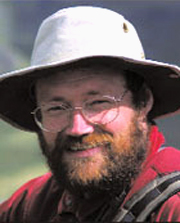 Paddy Dillon is one of Britain’s most prolific outdoor writers, with over 30 guidebooks to his name. He has walked and written about every county in England, Scotland, Ireland and Wales, and has hiked all 19 National Trails at least twice. His latest book, The National Trails, has just been published.
Paddy visited our stores in Bristol and London to give a fascinating slideshow and talk on the trails. He stopped for a chat with our web editor Rachel Ricks, revealing an enviable life of country walking, sunny isles and the value of a dinky, now-extinct computer…
How did it all begin – did you like hiking when you were a child?
When I was a kid, my Mum and Dad were always keen on walks in the park on a Sunday, but I was always keen to have an ice cream, and I wouldn’t go unless I could have an ice cream. They’d say, “You can have an ice cream when you’ve done some walking”, and it all ended up in tears.
I say I got into it later than that. I lived on the edge of Burnley in Lancashire and just one street away from where the fields started. Where the fields ended, that’s where the Pennines started, so it was easy enough for me to just walk over the fields into the Pennines and just wander around. But it’s only really when I was about 16 that I started using things like maps, compasses, and actually planning where I was to go.
In all that time I only lived six miles from the Pennine Way, and older family members were out walking it and coming back with tales of derring-do, so I felt I’d have to get out there and walk it one day. When I was 16 I just set off and I walked a big chunk of the Pennine Way, as a means to get into the Lake District. By the time I’d walked up the Pennines, across to the Lakes and back home again, carrying all the wrong gear, doing all the wrong things, making every mistake under the sun, I think I’d covered about 300 miles with the grand sum of £17.33 in my pocket, so I was starving and blistered and mildewed, everything – you name it, I got it. But somehow I didn’t put myself off, so from then on I thought, “long distance walking – that’s the thing”. Since that time I’ve been trying to do everything right and carry proper gear, but I’m still working on all that, even umpteen years hence!
How did you come to settle in Cumbria – is the Lake District your favourite place to walk?
Well put it this way, I first saw the Lake District when I was 16 and I thought, “I must move up here, pretty damn pronto”, but with no money, no house or anything like that up in the Lakes, I had to work at it. But I’d done it by the time I was 19 – I’d moved up there. Then by the time I was 20 I had a house – only on the grotty fringes of Cumbria, although I’m in a nice little town now. So obviously I must have had a very high regard for it to have done it so quickly. And done it so pennilessly as well!
What inspired you to write The National Trails?
I’ve always been more interested in walking long distance than just walking in a little circle from a car park; circular walks just make me dizzy. I can’t believe that people really want to park a car in the countryside and let it sit there as an eyesore all day long while they’re off enjoying the country, and then come back to the car. It seems that every single walk that people do is to their car. I’d sooner walk up the hill and down the other side and see what’s on the other side of the hill. And just keep keeping going ad infinitum until I’m worn out or just run out of days.
So I like long distance walking most of all, and it seems natural to me to go out and walk established long distance routes like the National Trails. I did them about 12-15 years ago when I was walking one after another for Trail magazine. By the time I’d done half a dozen trails, Trail were already talking to David & Charles publishers about re-using all my articles in a guidebook, so I continued on that basis. Within about two years of the guidebook being published, David & Charles had thrown in the towel as far as outdoor books were concerned, and even though it sold well, they didn’t want to reprint it because it just didn’t fit in with their future plans. So I said, “Can I have my guidebook back please and I’ll find someone else to publish it”, and as I’d done a couple of National Trail guides for Cicerone, I said, “Can I interest you in the whole lot in a single volume?” and they said “Yes”.
The only thing was I had walked them all years ago and there are three extra trails now and a fourth one still being developed. My original plan was just to walk the extra trails but then I thought, no – I’m doing myself a disservice and the readers a disservice if I do that – I should really get out and walk all of them again. So I’ve walked all the National Trails twice now, which is something I don’t think anyone else has ever done! And of course the book is bang up to date, because I spent two years doing it and it’s just been published, so it’s as up to date as it can be – I don’t think anyone else would go out there and do all that in that sort of time. I thoroughly enjoyed it and I was more than happy to walk them all again and do it properly, rather than just do an update of what I thought I could remember from 15 years ago!
What’s your routine when writing a guidebook?
 I suppose it depends on the guidebook because different areas I approach different ways. If I was working on a guidebook that was fairly close to home, and required 40 or 50 one-day walks in it, I may well split that over three different trips in a year. If it’s overseas or if it’s a long distance trail, I would more likely do the whole thing at once; so if it’s say, walking the South West Coast Path, I would go out, walk the whole thing for six weeks, finish, deliver the guidebook. If it was something overseas, like say GR20, Malta, or the Canary Islands, I would go out and do the whole thing at a time of year when I’d be more or less guaranteed good weather, because the last thing you want is to end up with three or four days where you’ve got absolutely zero picture coverage because it was lousy weather, and have to go back just to get the pictures – it could be horrendously expensive – I’d sooner just go and do the whole thing at once.
A day-to-day routine would involve me waking up in the morning, (I’d already have it in mind from the previous evening where I was intending to get to that day) and I will walk. While I’m walking, I use a tiny pocket computer – an obsolete Psion – I can do 25 words a minute on the Psion. All the formatting I do on a Psion can be done exactly the way my publisher intends receiving it by the time I finish, so I don’t need to do much work on it at home. What I write on the spot while I’m stood at the path junction, by the time the reader is there, with the book in their hands, they’re more or less guaranteed that when I say turn left, I was actually stood at that very point they’re standing at, writing the words ‘turn left’, and I don’t think I can get it any more detailed and accurate than that. With a guidebook that has a day-by-day, blow-by-blow description – that’s the sort of detail I’d give it.
But with The National Trails it’s a bit different because I had to get 3,100 miles in between two covers, so it’s not the same level of detail, but what I’m trying to do with that book is to say to people, here are 19 National Trails in England, Wales and Scotland, you can compare and contrast them, you get route profiles, overview maps, you get a suggested day-by-day breakdown. And once you’ve chosen a trail, it tells you what you need in the way of buying further maps and guidebooks to go out and follow the trail of your dreams. Ultimately, I’m sure somebody somewhere is going to work their way through all 19. They may not do it in two years like I did, but if they do it, fair play to them!
Do you have time to actually enjoy the walks when writing the guides? As you have said you write into your palm-top computer “every few steps”, sketch maps and take photos!
Oh yes. I always say the fun part is the walking part. If I was to walk day after day, week after week for a month at a stretch, then go home and start the writing from scratch, I would find the writing sheer drudgery – to have to go home, and sit there tied to the desk, wistfully remembering all the walks I had done!
Whereas if I write it as I’m going along, the writing takes care of itself. Perhaps for a total of one hour during the day’s walk, I may be writing, and maybe an hour editing in the evening – write a nice little intro to that day, measure the map, make sure the ascent and descent are all properly calculated… it saves me having to hunt for that map a month later, scratch my head and try and remember exactly where it was I went and what I did and still have to count all the contours and measure the route. And then I’ve done it all – the writing during the day, the measuring in the evening, I go to bed and I wake up and it’s a whole new day and a whole new chapter.
So I can just get on with enjoying the route without any stress or wondering “am I going to make this deadline” – the deadline will take care of itself.
When I come home I probably have a week’s work to do, sorting out the maps and the pictures, but the text is written. Probably the last thing I will write of all is the introduction – strangely enough that’s the first thing people will see in the book, but it’s the last thing I will write because at that point the entire project will crystallise itself in my mind – I know what the picture quality is like, I know which maps are going in there, I know what I’ve written. So it seems a good time to write the introduction to just pull it all together.
A month away doesn’t mean a month at home. It’s a month away and a week at home, and then delivery, much to my publishers’ annoyance, sometimes – I seem to come in rather quicker than they expect! My thing is always to beat the deadline – give me a deadline for six months hence and you’ll get it in five! So you see the computer actually gives me twice as much time out on the hills and half the time at home!
Do you mostly walk alone, or with people?
If I walk alone, I like to think I don’t miss anything, but I know for a fact if I’m walking with someone else and talking to them, things do just flash by and you can walk for 10 miles and then suddenly stop and think what on earth have I missed in those 10 miles because I’ve been having a great chat with someone and I’m sure I’ve missed something. You rack your brains and try and think, what we did we actually come down – what sort of terrain was it? I think you certainly do miss things like wildlife details. If you’re talking to someone, you may be looking at them occasionally so you’re not looking at the ground – you’re missing the flowers, you’re not looking at the sky – you’re missing whatever’s flying by, if you’re talking, you’re going to scare off very shy and sensitive creatures, that are susceptible to noise and disturbance.
Whereas if you’re just traipsing along nice and quietly through the short grass, you’ve got a good chance of catching the wildlife unawares and sneaking a picture of it before they suddenly realise you’re there and scarper. But if you’re with someone else you almost certainly miss those opportunities, so when I’m working on a guide, I’d say that 99.5% of the time I’m completely on my own and the other half a percent of the time, if I’m with someone else, I’m very conscious that I’m probably missing something.
But it’s also the case if I walk a route I can feel if I know it incredibly well, in great detail, but if I walk it again I’ll always spot something else I may have missed the first time so I always welcome the opportunity not only to go to new places, but to rediscover old places as well, and make sure I’ve got them right. When it’s time for an update to a guidebook, I’m usually quite happy to go out and do it all again. And it will be written differently the second time around, almost certainly!
What’s your ideal sort of scenery – coastal, river valleys or on top of mountains?
What I like most of all is variety, so while I’m quite happy if you give me a mountain trail, I’ll be 100% happy on it, and enjoying the mountain scenery, but if you then asked me to go and cover a coastal trail, I’ll be 100% enjoying the coast. And you cannot compare mountain and coast, you can’t compare fields and forest, a lake with a river, everything is different. I like the fact that in Britain you don’t have to go far to get immense variety. You can walk out of the city into the country, out of the country into the mountains, out of the mountains, down to the lake, along the river, through the forest, and you can do all that in a day and a half.
Whereas in some countries you would walk for a month and the scenery just does not change – you’re stuck in a desert, a mountain, by a huge big river and nothing much changes for weeks on end. What we have is variety and we have it in a very small, very easily managed area and I love that more than anything- the fact that I don’t have to restrict myself to enjoying one particular type of terrain – I can actually enjoy a whole wide variety of terrain in a very short distance. I like it when things change, I’m happy in mountains, on a cliff coast, but to get a cliff coast and a mountain, I’m twice as happy! [Laughs]
Which is your favourite walk of all time?
That’s almost impossible! You could have a really good day somewhere and then go back and it’s lashing with rain, it’s misty and you don’t get the views, and you get cold, wet tired and miserable. And then you fall headlong into a bog and all of a sudden what you once enjoyed is pure misery. I do have a soft spot for the Pennines and the Pennine Way because that was the first National Trail and it’s the first place I really got to know very, very well. But by the same token, when I saw the Lake District for the first time, I just wanted to move up, and I did, so I obviously hold it in high regard.
But again it’s the variety I like – if I want to walk in the Lakes, it’s on my doorstep, if I want to walk in the Pennines, I’ll be there in a couple of days’ time. But a lot does depend on the actual day and the conditions when you’re there. So even if I enjoy something immensely one time, there’s no guarantee that I’m going to get the right conditions to get maximum enjoyment out of it next time I’m there. So it all depends, especially in this country, on the weather.
I was over on crinkle crags just a few days ago with some people over from Northern Ireland and we went up in mist and I thought, they’re doing this because they’ve come all the way over from Northern Ireland, they’ll go up there in the mist, but I don’t need to! I can wait for a fine day – it’s on my doorstep. But then in the afternoon it cleared and I thought now this is what I call a walk! No thrashing around in the mist anymore, this is brilliant – we can get the long views.
But I can remember the times when I would have travelled a long way to do a walk and I would’ve taken the rain, the mist, the sleet and snow in my stride because if I came all the way to do something, I was damn well going to do it! Now, in the Lake District, I can pick and choose, if it doesn’t look a great day, I can stay at home and get on with something. If it looks a brilliant day, I can down tools and just get out there and enjoy that day. But I will often say to people, if it’s a sunny day, head for the fells, you’ll enjoy it immensely, and if it’s a lousy absolutely horrible day of lashing rain, go and look at waterfalls – because they’re going to be absolutely spectacular that day. You always get people in the height of summer going looking for waterfalls in the Lakes when they’ve dried up to a trickle. I say go out in the lashing rain to look at the waterfalls. You won’t regret it. You’ll get soaked to the skin but you won’t regret the power and the splendour of that water surging over some crag.
So my idea of a favourite walk depends entirely on the conditions and where I am and everything so it’s almost impossible to pin one down!
Which walk would you recommend to a beginner?
As a beginner, you’ve always got to walk within your capabilities, there’s no point if you’ve never done a long-distance walk before, taking on something high, wild and remote like the Pennine Way. But there’s nothing to stop you looking at say, a small section of the Pennine Way, preferably low level but with some great scenic merit in the area – potter around the Malham area or something like that. So I’d say keep it short, sweet and simple and something with good scenery. Do not try and do too much too early because there’s a chance you’ll probably burn yourself out and end up so covered in blisters you’ll never want to see another walk again for as long as you live!
Don’t go out in the pouring rain and expect to be wowed by the scenery – pick a nice day. And gradually build up, not only what you’re capable of doing, but your confidence with things like map and compass and using different guidebooks. Anyone can start anywhere, but start a little below what you’re capable of doing and then build up, find what your limits are and don’t push beyond them too much – give yourself a challenge every so often but don’t push it too far. In terms of long distance walking I wouldn’t say to go off and walk the Pennine Way or Offa’s Dyke or the South West Coast Path if you’ve never done long distance walking before, I’d say pick one of the trails that only measures five days and is in very gentle terrain like the Yorkshire Wolds Way or the Speyside Way in Scotland, nice gentle trails that you can’t really go wrong on. I say, start simple and build on that.
Is there any walk you haven’t done that you’d really like to?
I’ve a great big long list and it’s so depressing coming into a place like Stanfords and you see the whole world laid out there in bookshelves and maps. You think, if I had a hundred lifetimes I couldn’t even do a fraction of this! I’ve just been wandering round the shop floor now, unfolding maps and looking wistfully at them, thinking 100 lifetimes is just not enough! I need more time and I’m not going to get more time!
There’s all sorts of places I’d love to go to but by the same token I’m very happy going to places I already know very well. I tend to take a lot of things as they arise, so if all of a sudden, my publisher says an area needs an update, I’ll start thinking about it and enthusing myself and that will become my number one priority – to go there and do all those walks again. But if somebody says they’d like me to do a guidebook on an area I’d never been to before, I look on that as a great opportunity and I get enthused about that.
So there are places I’d love to go to but they never quite get to the top of the list, there are places that simply because someone asks me to do something there, they rocket to the top of the list and I’ll be as enthusiastic about that as anything else that’s likely to come my way. Once that’s done, dusted, parcelled up and delivered, I’m looking for the next great enthusiastic project.
I would love to be able to walk around a country like Tibet entirely on my own, but that just isn’t possible – when you go to Tibet, you must go as part of a group and you must do as you’re told – you can’t just go wandering off, willy-nilly anywhere, but to me it seems like ideal country for doing that.
I’d love to do some of the very, very long walks through America like the Appalachian Trail, the Continental Divide and the Pacific Crest Trail, but each one of those is going to take four, five, six months so I’m going to have to sort out time to do those. But they’re on my list!
So I’ve a wish list that’s infinitely long and wandering around a place like Stanfords just brings tears to my eyes because I just know I’m not going to get round them all! [He laughs] it’s sad but true!
What do you never travel without?
I always have my little computer with me because even if I’m not writing a guidebook it still has my little diary on. It’s always in my pocket wherever I go. If I’m outdoors, I will always have my rucksack with what I need for the particular area and conditions to make sure that whatever type of trouble could arise, I’m capable of heading it off. If I’m heading out into the wilds and I think it’s a very long day’s walk, it’s going to get dark early, it’s not a good weather forecast, I’ll make sure I’ve got a tent and sleeping bag and everything to survive the night if I have to.
I always feel naked if I’m in any place anywhere in the world without a map. Wherever I go in the world, even if I just end up in a city for a couple of hours between flights, the first thing I want is a city plan, I want to know where I am, where things are. To be in a place without any map or plan, I just feel I’m lacking something.
You can’t beat a good map, but the ability to read a map as well, it literally opens the whole world before you – you can be in any place, anywhere in the world, and if you have a map and the ability to read it is immense – it just gives you so many options that you can’t even dream of until you’re there and you’ve got it there in front of you. So I think a map is probably the most essential thing, always, wherever you go!
What’s next?
When I’m finished here, I’m going to visit some family in the Pennines, so I’ll almost certainly do a little walk in the Pennines. When I get back home, I have to complete some route research I did earlier this year – I have to update a guidebook of my own to walks in County Durham. The reason I’m doing that now rather than back in early summer when I did the walking is because I also did a 10-week, 1,000-mile walk through the Alps and that took precedence. So I got all the footwork done in Durham then had to go to the Alps and deliver the Alps to the publisher and now have to pick up the threads with the Durham guidebook and deliver that.
That will take me maybe a couple of weeks to knock into shape, then that’ll put me right in the depths of winter in Britain, so I’ll probably be looking at going somewhere nice and sunny. I’ll look at what’s due for an update and if there’s any sunny islands – the Mediterranean or Canaries – I’ll probably head out there. That’s always an option these days – if you get bad weather in Britain, go and get good weather somewhere else – and come home after a couple of weeks and hope things have changed for the better!
Apart from that, I’ll keep plugging away at my magazines – if they want something, I deliver, and they know when they phone me the answer is invariably yes, and I just put the phone down and do the work and deliver. And then I’ll just roll into next year and keep doing this for as long as I’m able to do it!
The John Simpson Interview
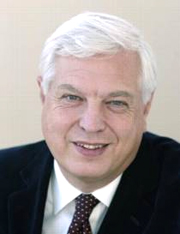 John Simpson, the renowned BBC world affairs editor, visited Stanfords in London to discuss his latest book – Not Quite World’s End. John has graced our screens for 40 years in a career that saw him shelled in Afghanistan, attacked with poisonous gas in the Gulf, dodging bullets at the 1989 Tiananmen Square massacre in Beijing, and injured in a friendly-fire incident in Iraq. He discusses these incidents and more in his lively new book.
John spoke with Stanfords’ web editor Rachel Ricks at the Covent Garden store about books, the BBC, Nelson Mandela, and travelling with tinned oysters…
The Nick Ward Interview – 1979 Fastnet Race survivor
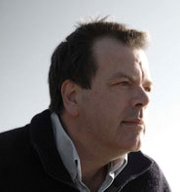
Ward remained silent on the events of that race, telling no one what he had been through – not Hollywood when they came knocking or even his family. After 27 years, he was finally able to lay down his story in the visceral account, Left for Dead.
He came to Stanfords to sign copies of his book and we caught up with him to talk about his life before and after the incident.
Your father introduced you to the world of sailing as a child. Why did you then fall in love with it and did you know it would play such an important role in your life?
I had no choice really because in Hamble you either played hockey or you went sailing. I did both but sailing was the major sport of mine. Until, of course, I had the brain haemorrhage.
Ward suffered a brain haemorrhage at the age of 15 that left him in hospital for months, long-term weakness to his left-side and epilepsy. Throughout the Fastnet disaster he had the continual worry that an epileptic attack was imminent – and no access to his medication. But we’ll return to this subject in a moment.
So, why choose sailing as your major sport?
Initially it was the social event. Mates growing up sailing various classes of dinghy, starting off with Optimist, Mirror, Merlin Rocket, and going sailing single handed. So it was a social group. Some of that group are now in the Merchant Navy as I wanted to join.
Is that something you regret not being able to join?
No, not at all because I wouldn’t have met Chris otherwise.
Chris is his wife, to whom the book is dedicated. They met on one of his visits to hospital, keeping a check on the damage done by the brain haemorrhage. She’s sitting here with us while we talk.
Do you think you drew strength from the brain haemorrhage that you wouldn’t have had otherwise?
Definitely, yes. It was something that I wouldn’t wish upon anybody but certainly being in surroundings dominated by machines and wonderful caring people gives you inspiration to recover. I had to go sailing again. I drew inspiration from the people around me. I kept an autograph book and got all of the doctors to sign it. Some of the inscriptions they wrote in it are really etched on my brain now. What was that saying? Never judge the height of a mountain ‘til you reach the top – and you know, that sticks in your brain. And I looked at it and it was signed by Sister Sampson and the other sister on the ward was Sister Jolly! I had a Sister Sampson and a Sister Jolly! One was Scottish and the other one was so beautiful. Had a lovely bottom.
So you simply lay there dreaming of sailing again?
Every waking moment and most sleeping moments too.
Finally you had the chance to enter the Fastnet Race when you were 23 – some years later than you’d first anticipated. How did you react?
Oh I was overjoyed. I knew I’d do it one day. Everything seemed to come together meshed at the right time.
When the race had begun it was quite early on that you saw this amazing red sky. Was that something you were expecting to see or did you recognise it as a bad omen?
Both. I’d been told about these sunsets you get in the junction between the western approaches, the Bristol Channel and the Irish Sea, so I was expecting some form of spectacular sunset but the combination of the colours was nothing I’d ever seen before – so it was a harbinger of something bad.
And have you ever seen anything like it since?
No. My son has just come back from a trip, he’s an oceanographer, and he’s come back from an Atlantic trench 300 miles into the Atlantic. He showed me a picture on his phone and it was similar, but not quite. It was scary, but my boy’s a man, he’s been further in the Atlantic than I have.
When the storm had reached its full force your crewmates wanted to abandon your yacht, The Grimalkin, and get in the life raft. You objected – in vain. What was your reasoning then?
It’s something again, like the red sky, it’s something of a tradition in the marine field that you stay with the boat rather than leave it and the life raft is rather like a parachute, it’s a last resort. But given the situation those guys were in I may have done the same. There’s no blame. I hope I wouldn’t have done, but…
Following the debate as to whether the crew should get in the life raft Ward found himself back in the sea. He pulled himself, and then his crewmate, Gerry back aboard. On looking around the yacht he saw the life raft had gone and the harnesses were empty. He had been left for dead. Shortly after this, Gerry died in his arms.
Seemingly, once they were in the life raft, they were rescued quite quickly. Do you know why and how that was?
I don’t know because I was unconscious. You’d have to ask them. I’ve spoken to one crew of 1979, the owner’s son, whilst we went back to revisit the boat and find out where she was. Not conclusive.
The two vessels must have become quite separated for you not to be seen?
Yeah, in a storm of that magnitude you get seas that are twice the length of the boat. The boat is 30ft long with squall coming from all directions – totally surrounded by water, both seaborne and airborne, it’s so disorientating.
So in fact they could have been quite close together, with nobody knowing it?
Absolutely. I mean I didn’t even know there was someone next to me in the water until I pulled myself onto the boat. So you can be inches away from somebody and not see them.
Ward spent the next 20 hours alone, bailing water to prevent the yacht from sinking, looking for food and drinking water, fearing an epileptic attack, talking to his now dead friend, Gerry, and hearing his father’s voice instruct him.
How lucid were you through all this?
You know the saying of the little boy with the finger in the dyke? I felt I had to do something to lessen the chances of the boat sinking, because unfortunately it was sinking. So therefore I was able to draw upon using Gerry to talk to – he died in my arms – and through Gerry I was able to access thoughts of my father who became a voice in my head – it’s difficult to explain. They were childhood memories that came back, things he used to tell me when he was gardening – ‘Get off the garden you white devil’, Churchill’s quotes, ‘When you’re going through hell keep going’ – that sort of thing – ‘Pull yourself together man!’ For me it was almost a revelation and I knew it was him because he called me Nicholas not Nick.
Eventually a helicopter arrived. You were the last man they reached still alive. What were your feelings?
I was crying my eyes out. I was pulled up second, after Gerry. Ironically tomorrow I’m going sailing on Grimalkin and I’m meeting the chap that actually pulled me up out of the water and the helicopter pilot, which is cool. I met them at the boat show in 1980, didn’t talk much, we were both guarded about the whole thing. It’s going to be quite a cathartic thing.
How long did it take you to return to the water and to sailing?
Once you’ve started sailing you never give it up. It’s like football or cricket or any sport you love, and being in close proximity to water I couldn’t get away from it. I was back sailing seriously the next year – I did a Solent race and a couple of Channel races. The owners son, Matthew, who was heavily traumatised [his father was lost at sea], was out dinghy sailing the next weekend. That’s how much of a draw sailing is. It’s better than sex! Sorry I didn’t mean to say that.
Having not spoken about it at all before the book, how are you finding the media interest?
It would be
easy for me to say, ‘Yes it’s been cathartic and I feel a much better person for it’, but that’s bollocks. Through the help of Sinead, the co-author, and through Chris, my family and Nicola, everyone at AC Black, has been very helpful. I feel now that I’ve got my demons out, well some of the demons, I can talk about it. I wouldn’t have been able to have this conversation a year ago, or three years ago, because that’s how long ago we started writing, because I was just too emotionally involved in it.
So how did your co-author, Sinead O’Brien, make the breakthrough?
Sinead’s mum knew the story of this boy, me, being left in the Irish Sea and being a documentary maker she sniffed a story. So I looked at her CV which a friend had sent me. She came to meet me and I think she calls it an organic relationship – Chris will call it something else – but she was able to draw things from me that I’d never spoken about. And we built up a friendship and that’s how it went on. As a writer and publisher at 3 o’clock in the morning sending attachments she’d say ‘This is rubbish, do it again’, so I’d do it again. Basically that’s the sort of environment we were working in – very professional.
I heard you’d turned Hollywood away once before. Is there a chance of having your story on screen now and how would you feel about that?
You’d have to ask my agent! It sounds pompous I know, but you’d have to ask her. But yes, I do believe it’s being talked about. I’d hate to see it being made as one of these out of context pieces which are sickening. I’d like to see it done realistically and true.
I imagine it would be compared to Touching the Void if it did come out.
These guys [his crewmates] were in a similar sort of situation, not an us or them situation, but a situation where you can’t imagine how high the seas were, you can’t imagine what you’d do in that situation, so they made a call and that’s fine. I hold nothing against them. Maybe I would have done the same. I hope not but maybe. Just one more thing – Joe Simpson is a cool guy, I’d like to be as cool as him!
Technology has improved immensely since your Fastnet Race, but what would happen if the weather changed without warning in today’s world?
That’s a two-pronged question. Because these days we have better weather forecasting facilities, we have GPS, we have weather facts, we have all sorts of satellite communication which predicts weather onboard. But the coastguard and the Royal Navy are very much understaffed and I was talking to a fairly senior guy in the navy yesterday, and this is unofficial, but he told me that no longer would they be able to call on the resources that this country called on at that time 30 years ago.
That’s shocking.
It is and it’s the fault of the government. I’m sorry it’s not political but it’s the government.
And there would, presumably, be more people out there now too?
I mean the Hamble River in 1979 had about 3,000 boats on, now the Hamble River has about 12,000 boats.
How have your family reacted now that they’ve finally heard the story behind your survival? What were their thoughts?
Well this is where I well up because, um, without Chris and the love of my family and Elizabeth, my daughter, and Sam, my son, I wouldn’t have been able to do it. I used them, as I did Gerry, as a sounding board and they’re very much alive. And Elizabeth who is quick, bright and sharp was a sounding board for me – her grammar is spot on.
[Chris Ward:] The family didn’t know what went on on the boat. And since we’ve read it and our daughter read it she cried because Nick had never spoken about it. And that goes for all the family really doesn’t it.
[Nick Ward:] Yeah my parents, my brother. In fact my brother told me things that I didn’t know, nobody knew, but Sinead was the catalyst for writing.
And now your son is doing things similar. How does that make you feel?
I bought him a Mirror dinghy years ago and I think because I’m used to boats I kind of hung it around and slightly frightened him but it’s what you do in dinghies. And now I’m really, really pleased that he’s discovered it for himself. And this is big time stuff, he’s testing out oceanographic equipment, he’s designing mini-submersibles, he’s designing all sorts of hi-tech equipment and I’m very proud of him – a good man. He’s got the opportunity to go to Antarctica next year to an underwater lake 250 metres below the ice cap. They’re going to drill into the lake – goodness knows what they’ll find. So he’s cool. He went out on that boat a boy and returned a man.
Browse sailing books and charts.
Author: James Innes Williams
The Mark Ellingham Interview – Rough Guides' founder
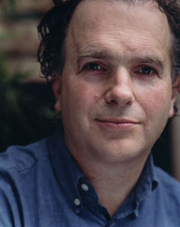
When did you first begin travelling and where did you go?
When I was a kid, in the 1960s and early 1970s, British people didn’t travel a whole lot – and my family didn’t have much money to do so. My first trip abroad was to Normandy, in France, aged ten. That seemed pretty exotic. In those days there was very little globalization of products, and I’d not seen things like mussels before, or even yogurt. I had a few holidays in Ireland as a kid, too, which I loved. Then when I was sixteen I bought an InterRail European rail pass with some friends and we headed off to Paris, Rome, Florence and on to Greece. That was fantastic – a revelation. I had itchy feet from that time onwards and dashed off to Greece each summer at university.
What prompted you to write the first guidebook and was the trip undertaken with the book in mind? Continue reading The Mark Ellingham Interview – Rough Guides' founder