Getmapping's groundbreaking project

GetmappingNot since William the Conqueror recorded England in the Domesday Book has there ever been such a record of the country. A record that is so detailed as to show every road, every house, and every tree – the first ever complete and continuous colour aerial photographic record.

To set about the collection of such a data set is no ordinary task. The flight planning alone was groundbreaking in its enormity. Four specially modified aircraft are on constant standby waiting clear weather and Air Traffic control permission, each one fitted with a large format forward motion compensating camera. To date over 800 hours of flying have been completed using some 54km of film!

Not content with simply photographing the whole country, Getmapping have used the Global Positioning Satellite (GPS) network to give them the accuracy to overlap each image by 60%. This process results in the production of stereo pairs of photographs, needed for certain types of photogrammetry and 3D viewing.

With the photography in the can, Getmapping then undertook to digitise and geo-correct the image, a process that removes all optical distortion from the images and ensures a perfect match to conventional mapping. To date some 200,000 man-hours have been invested in the project, resulting in a data set of over 20 terabytes. But a data set of this size brings its own problems. To understand the size, perhaps one should imagine that if one byte of information weighed a gram, then 20 terabytes would be equivalent to 8 fully loaded super tankers!

With these technical processes complete, there are of course the aesthetic issues to address, not least of which is ensuring a constant colour balance across the entire country. With the data collected over an extended period this is no mean feat but with the wonders of modern technology and the expertise of the Getmapping team the results are truly amazing. As you look through the pages of “England, the photographic atlas” you move seamlessly across the country from major city to secluded beauty spot, you trace journeys you have taken, and see the effect mankind has had on our landscape. You see the country as never before.

The Hilary Bradt Interview

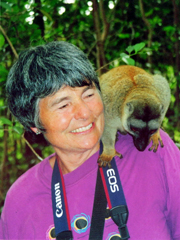
Hilary Bradt has been globetrotting for over 40 years, hitchhiking in every decade of her life except the first. Thirty-three years ago she began producing guides to the farther corners of the earth – the first one was written over three days on a river barge floating down a tributary to the Amazon. Today, as Hilary embarks on retirement, Bradt Travel Guides has over 100 titles to its name and in many cases is still the only guidebook publisher to certain countries. She spoke to James Innes Williams about the journey so far.

Beginnings

When you first began travelling where did you go?

I suppose the first adventurous holidays were going to Greece when I was a student between 1960 and 1963 with someone called Brian Hughes. He used to commandeer a whole train going from London to Athens. Most Oxford students in the ’60s went to Greece with him. It was like the developing world in those days. And then when we got there we hitchhiked and slept on flat roofs at hotels. You could live on less than £1 a day.

And that acted as motivation to continue to travel in your career?

Well, I didn’t think so at the time. I was an occupational therapist and went to OT college. But I really loved the open-endedness of travel. And I think that set me up – not knowing where we were going to stay or where we were going to go.

I love discovery and usually it’s in the natural world, because so much of my travel is now in Madagascar when I’ve been tour-leading or researching my Madagascar guide. Maybe the discovery is a new animal species or almost any scene that I haven’t seen before. I just love that, that’s what travel is all about, it’s discovery.

1963 was the first big trip – three months hitchhiking to the Middle East. We hitchhiked the whole way, determined not to take any public transport. And that was great, very adventurous. That’s where I learnt my street wisdom. I was very street-wise. These days there’s all this talk about sexual harassment of women, but in the ‘60s you just accepted it and you told men where to get off.

Dangers abroad

Have you had much trouble of that kind on your travels then?

I’ve been robbed fairly frequently but I haven’t been harmed even when I’ve been travelling alone. I travelled alone in Peru for three months in the 1960s, when there were very few gringos travelling, so that was quite often quite scary and I was going to Huancayo which is a very high, very cold place. The bus had broken down and it didn’t get there ‘til 1am. I was the only person left on the bus and the bus driver then made advances to me and said that my luggage was no longer on the roof, it had disappeared. I just started to cry. Then he got a bit disgusted and put me out with my luggage, which was wasn’t lost after all. In situations like this you feel very vulnerable and alone, because it’s not quick, there’s no sort of quick reaction, you just think, ‘Oh shit, I just don’t want this’.

So what do you think has kept you safe all that time?

I think actually it’s trust. I was probably quite naïve as a young traveller and I remember a time in San Francisco. I was waiting at a bus stop and this gang of black youths surrounded me and asked, “What’s the time?” and actually I’m sure they were setting me up for a mugging but I said, “Oh it’s half past ten” or whatever and they went away. And I think they were expecting me to look afraid and then it would be more fun for them. Since I actually wasn’t afraid I thought they were just a friendly group of young men. It wasn’t until I was mugged that I got more nervous. I think if you do trust people they are actually trustworthy, it’s when you show fear that they live up to expectations.

The first book

The story of writing your first guide on a river barge floating down a tributary of the Amazon is a great one. Did you make that trip in 1974 with the book in mind from the outset?

Not at all. I’d done a trip to South America before that. In 1969 I’d gone on my own through Central America and then Colombia and Ecuador, and met up with a girlfriend in Peru and went down the Amazon. I’d travelled on my own up until then. And so when I got married I knew I wanted to go back to there, George knew he wanted to go hiking, so we compromised. The first books were hiking guides because we’d been walking in the Andes, spending several days at a time in the mountains, and other travellers really didn’t know how to do this. So we wrote the book while we were on the barge in Bolivia for three days with nothing else to do, and when we arrived at our destination, a small town in the jungle, we went to a typing school and asked if we could use one of their typewriters when the students were not there.

Guidebook tips

What tips do you have for other budding guidebook writers? Should they do as you did – going out to a country before getting a commission?

Absolutely not that! It’s a bit of a catch-22. People say, “I want to travel for a living, can I write a guidebook?” You’ve got to have the knowledge before you’ll be accepted as a guidebook writer. The way to start is to get a job in the country that most interests you, whether as a volunteer or community work, then you can comeback and say, “I’ve spent two years in such and such a place and I’d like to write a guidebook”. So first get the commission and then go out there. But it never ever, ever works to comeback and say I want to do a guidebook.

I was very lucky to start a publishing company in the ‘70s, which was a time that anyone could do anything. Nowadays you couldn’t do what we did, publishing two books on £680 and selling them. These days you’ve got to have a lot of money to start a publishing company. And you also need a brilliant idea and if you’ve got a brilliant idea you’ve got to find the market for it. We just couldn’t have done it.

Becoming known

When you returned to England your book was rejected as the publisher wanted a normal guide to Peru as opposed to one focused on hiking so you decided to publish it yourself. How did you then get it distributed?

I remember George went to Stanfords and showed it to them and whoever was there asked, “What discount do you give?” and George didn’t know about discounts so he just said, “The usual”. And then they said, “35% then”.

Because we were doing all the books ourselves and we didn’t know anything better, we didn’t know about distributors. So in America we got a coast to coast Greyhound ticket and we got off at the main cities during the day and sold the books and slept on the bus at night. That was a very good experience. It was exhausting but it meant that we met all the bookshop buyers and what we were offering them was so unusual they were actually quite pleased to see us. And we sold some other publishers’ books we brought over from England so it wasn’t just our own. It actually worked very well. I think we did it two years running. So we still visited personally and tried to find new contacts. That was in 1978 and 1979.

Then in Europe I got a Eurail pass and did the same thing, sleeping on the train. I remember Hamburg to Munich was a nice night’s journey and I could sell at each end in two major cities. And I sold lots of books. About half our sales were to Germany and Scandinavia and we’ve still got some of those shops still buying from us, so that really set it up very well.

I also went around Britain with books in the boot of the car and in those days you could just go into a bookshop and say, “Do you want them?” And they say, “Yeah I’ll take a couple” and give you money from the till. It was all very neat. But of course you can’t do that now.

Tour leading tips

After your divorce you spent many years as a tour leader, while still producing two or three guides each year, so what makes for a good tour leader and passenger, for that matter?

A good leader has an air of authority and is an extrovert. It helps to be a raconteur, and tell stories. And of course you need knowledge, but when push comes to shove that’s probably less important.

For passengers, it’s something I quote in my Madagascar guide- a woman who said, “I’m going to give up thinking, it doesn’t work in Madagascar!” And she was right,it doesn’t work! If you’re in a group situation you must just go with the flow, it’s really no good questioning everything. Mostly everyone is doing their best to give you a good time.

Travel writing tips

And while you’re giving tips, following your recent talk with Travellers’ Tales on ‘How to win travel writing competitions’, what advice do you have for budding travel writers?

My tip, which is unusual, would be to write when you’re really tired, when you want to go to bed, because you’re much less constrained – it just all comes out. And the wonderful thing about the word processor is you can come back to it and correct it. In the old days you couldn’t do that. Don’t reread it, just keep going, and come back the next day.

Bradt takeoff

Ok, back to Bradt Travel Guides. Why did it blossom in the 1990s?

I suppose it was market driven, the books were starting to do well and we had a proper distributor. They started saying, “You need to publish on a schedule, you can’t just do it when you feel like it” and I realised I had to be more professional. I also started taking on more staff.

By the end of the 1980s we had about 25 titles on the list including those authored entirely by other people. I only wrote a couple myself. Then in the 1990s the list grew quite steadily. We were doing about 6 new ones a year and of course the growth of new editions is proportionate to the number of titles you do, so that snowballs.

The significant year was 1997 because that year our distributor went broke losing me a very large sum of money, plus we won the Small Publisher of the Year Award. I’m enormously proud of that because we were competing with much larger publishers. And an award like that makes such a difference. You think if we’re recognised not just by the readers but the trade – well that really feels very good.

Bradt bestsellers

Today you have over 100 titles published by Bradt. Are you aware which of those is the bestseller and why?

The steady bestseller is Ghana. There’s no other guide to Ghana but it’s actually absolute quality and we’ve never had a negative letter about it and people always say, even on the Lonely Planet thorntree website, about the Bradt guide to Ghana. So it’s earned its bestselling status and it’s the bestseller in the States, in the UK, the Netherlands, wherever we distribute it. Philip Briggs updates it every two or three years and he’s our top author, he knows how to write and he’s got the passion. I’m very proud of Philip and Ghana – actually a lot of Philips books are up there, Uganda sells well at the moment. Actually, interestingly, the bestseller at the moment is probably the Cape Verde islands and that is in its 3rd edition. When we first published it, it sold so slowly we said, “Should we publish a second edition?” We’d probably got there too early. And then they started direct flights and it was booming and we sold hundreds every month and that’s terrific. It’s just the patience paid off – we could have decided to ditch it.

But for a few months it was actually the Iraq guide that was out-selling everything else, is that right?

That was lovely actually. What attracted me to the proposal was that one of the contributors was working for the anti-sanctions movement when Iraq was crippled by sanctions and allied bombing after the first Gulf War. I hoped the sanctions would be lifted soon and that’s why we published the book. I was moved by the stories this woman wrote about the ordinary Iraqis and how they were suffering under sanctions. The manuscript was ready at the beginning of September and then 11 days later we had 9/11 and we just thought we can’t go ahead. But we’d printed the posters and took them to Frankfurt for the book fair and put them up and distributors said, “Oh Iraq, we could sell that!” and it was that feedback at Frankfurt that made us decide to do it – it was a whole new market. It sold pretty well in the run up to the war and then 3000 in America in April, the first month of the war. We had a phone call from the Pentagon enquiring about it.

Effects of 9/11

So had you seen any negative effect from 9/11 beforehand?

Almost everyone did. We had the tiniest blip because the bookshops lost confidence, Stanfords obviously not, but other bookshops took travel off their shelves. People were still buying our books, but there was a dip in sales for a few months and then for half the following year slightly slower. Then we sold a lot of Iraq in the lead up to the war, and we had USA by Rail and that did very well because Americans were all frightened of flying so all jumped on trains. Then we had Eccentric Britain and that went very well in Britain. So it was a
mixture of lucky and also our sort of readers are actually much more sensible than the mass market. They know if you’re flying to Burkina Faso the likelihood of having a bomb blow up on the plane is quite small.

Where next?

Where is Bradt Travel Guides heading as you step back from being MD and become Chairman?

The reason we didn’t suffer from 9/11 was that our niche was so specific that they weren’t the sort of books that would be affected. I strongly believe that the world needs these guides to the unusual places. So there’s no question of changing that, but we plan to make more use of colour and to try to spread the net a bit wider, moving into some new areas.

And what will you now turn your hand to, now that your weekends are your own again?

I’ll continue to write articles. Not only the usual destination pieces but I hope more opinion pieces where my 45 years travel experience will be useful. But sculpture, that’s what I want to do when I grow up. I do stone carving and I really want to spend more time doing that, and working with clay and wire mesh as well. I mostly do animals and have lots of ideas I want to try out.

What will you miss the most no longer running the company day to day?

I think it’s authors that were really my protégés. I’ll miss regular contact with them. I won’t miss the management but I’ll miss the people side of it – people whose careers I’ve sort of nurtured.

Living abroad

Not only have you travelled the globe so extensively, but you’ve also lived abroad for many years. Where are you most at home?

I’m most at home in England. I’ve lived in Scotland, but there I felt very English, so it’s England not Britain that I’m at home in. I actually love the area that I grew up in, the Chilterns. I love the bluebells and the beech trees and the whole package that’s the Chilterns. However, I shall be moving to East Devon next year and that’s a beautiful county.

I loved living in America. I was in Boston and San Francisco which are terrific cities. To be young, British, and living in America – three fantastic things. You could be really stupid but they would think you’re wonderful just because you have a British accent. Very helpful! I love the out-goingness of Americans. I was very shy as a child and young adult and it really brought me out. You can’t be shy living in San Francisco, not in the 1960s which is when I was there. It was a fantastic time to be there.

I also lived in Cape Town for a couple of years during the apartheid period and that’s interesting because it was actually probably the happiest year of my life. It was just brilliant, I mean the landscape is so beautiful, the people were terrific. I had a very rewarding job, I was an occupational therapist then, working with quadriplegics. But it was the height of apartheid, so you had the guilt about being so happy. But actually I had friends that were working within the law but against apartheid and they were very effective so that helped.

Favourite memories

You must have so many wonderful stories and memories – can you remember your best ever meal?

It was after George and I were lost in the jungle of Madagascar. It was a four day ordeal and it was extremely unpleasant. We had very little to eat. Afterwards we went back to this small town, Sambava, and checked into a little hotel. It was run by a grumpy Chinaman and we said, “Could we eat at the hotel tonight?” He said very crossly that he had a special guest but he supposed we could. He was cooking duck for the special guest and said he could cook some for us. We asked how much it was and it was $5 and that was too much, that was our budget for the two of us so we said we’d just have one meal. So we split this duck portion and it was absolutely fabulous and of course we wanted more. The special guest was eating on his own and left some of his meal in the serving dish. Fortunately the waiter put the dishes on the side table before clearing them away so we managed to nick it. I don’t remember any meal better than that.

And the worst?

On my trip to Madagascar last year I’d climbed a mountain and we had cooks and porters – it was the same mountain and jungle that I’d got lost on 30 years ago and I was sort of recreating that trip. Now it’s a national park so instead of backpacking and being lost for four days I went with porters and guides and friends and it was an absolutely super trip. And the food had been wonderful and the cook served up this stew and I thought there was something about that smell that I wasn’t sure about and I knew where I’d smelt it before. You know in third-world markets if you go through the fish market you know how the smell of dried fish catches your throat. It was a dried fish stew and I thought it can’t taste as bad as it smells but it did, and I just couldn’t swallow it.

And what about a favourite memory, a favourite moment?

Such a little moment, but it absolutely stands out, was when we were travelling in Africa and we were in Zaire, so what’s now The [Democratic Republic of] Congo. First of all the driver had been very unfriendly and we’d had the usual argument about money and how much the transport was going to cost and he settled for lower than he wanted. Then we were crossing some open bush country and he said we either had to pay him more or he would put us out there – and that there were lions in the area, which I think there probably were. We didn’t get out and we didn’t pay. We were in the back of his pick-up truck and it was really cold because we were driving through the night. There were quite a few Africans with us and we were all huddled together for warmth. And he stopped outside this café shop and we stayed on board, not wanting to get out because we didn’t trust anyone with our rucksacks and didn’t want to unload them. We waited a long time in the cold. And he came out of the café carrying two mugs of hot milk which he gave to us and it just tasted so good and the gesture meant so much. It was a very special moment.

And any funny stories from dealing with Stanfords?

When I was doing a lot of tour leading in Peru and Bolivia I realised you could buy Ordnance Survey-type geographical maps very cheaply. They were about 50c or so, and they could retail for £5.95 at Stanfords. So every time I went to South America I would go to the Instituto Geográfico Militar and buy the maps. I had these enormous rolls of maps, and boxes of smaller ones. I always used to pack my luggage in US mail sacks and I’d fill up these sacks with maps. The problem was I still had my regular luggage so to get it all home I’d go to Lima airport with two bags of maps, check them in, then come back an hour later with two more bags and I would say, “Here’s my ticket and I’m awfully sorry, I checked in earlier but I didn’t have my luggage with me and I’d explained to the lady at the desk and she said that was ok I could bring it back later.” And for a few years I got four bags on using this method. Until they introduced computers and I got caught. It took all my powers of persuasion to get out of it and I never did it again. But for a few years I provided a lot of maps to Stanfords!

Then there was the problem of getting books or maps from the UK to America. We’d go to Heathrow with our US mail sacks, go up to someone in the queue to check-in, and say, “Will you check-in
my bag?” I’d give them an addressed envelope for the luggage stub and say, “Mail it when you get to Boston.” So if I was in the UK and George was in America he could pick it up once he’d received the envelope with the stub in. The sacks would just go around on the carrousel, no one would pick them up, and they’d be stored until George arrived to claim them.

In those days we managed to get away with a lot of disreputable behaviour. Now, ironically, I’m very involved in ethical travel.


Author: James Innes Williams

The Steve Watkins Interview

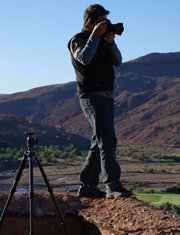
James Innes Williams went to Marrakech in the company of Travellers’ Tales, the travel writing and photography training company. Exploring the souks of the medina and the vibrant Jemaa El Fna, they then travelled up and over the High Atlas, and made in roads to the desert, all the time practising their writing and photography techniques.

At the end of the week James caught up with the three tutors, Jon Lorie the director and ex-editor of Traveller magazine; distinguished travel and history writer Anthony Sattin and the force behind the BBC Unforgettable series, photographer Steve Watkins.

Here, in the second of a series of interviews he talks with Steve Watkins.

How did you get into travel photography and what was the motivation to do it? Continue reading The Steve Watkins Interview

The William Dalrymple Interview

William Dalrymple, the prize-winning author of travel and historical books on India, came to our Covent Garden store to sign copies of The Last Mughal
Dalrymple has written and presented for television and radio, and he and his family divide their time between London and Delhi. While at Stanfords in London, he had time for a quick chat with James Innes Williams about his travelling exploits – sometimes taken with his artist wife Olivia Fraser – his life in India, his children’s editorial suggestions and future projects.

Childhood and writing influences

Your travel writing career started at the very young age of 22 with In Xanadu, so had this been something you’d been longing to do, was a love for travelling instilled in you as a child?

We went nowhere as children, actually, which may well be where the love of this comes from. My parents lived in a very beautiful hut of the borders southeast of Edinburgh, near the beach, and they said to me nowhere was going to be more beautiful than this so we should stay at home – and we literally never went on a foreign holiday.

Did you travel much around Scotland then?

We had an Easter holiday each year, I don’t know why Easter because it’s a miserable time. And they would travel themselves – they were always off to Senegal or some place.

But you never went with them?

They never took us with them…

But surely your first trip wasn’t forIn Xanadu?

Not quite as bad as that. I remember at prep school pressuring my mum to take me to Paris because I was the only kid in my class who had never been abroad. I always remember as a child being regarded as un-travelled and was aware there was a problem and I used to read lots so it always made it… I was always very keen to travel.

So as well as being keen to travel, did you have the desire to write when you were young?

I used to be very keen on Anglo-Saxon and regal history at school. I used to go round on my bicycle looking at churches and before that I was into barrows and megaliths as a kid – and digging from the age of about 12 as an archaeologist. I remember in my primary school the ‘What do you want to do when you grow up?’ question and I wanted to be an author and an archaeologist. Tutankhamun and all that stuff I was heavily into as a small kid. And before I ever went to India I tried to get a job to dig near Nineveh in Iraq, so rather than going to India I would have ended up in Iraq…

Imagine that! When you went out to do the In Xanadu trip was that something you had planned from the start to write a book for?

Yes. It was very consciously a literary thing.

How long did it take you to make that decision?

The year before I had done a similar trip following the English crusades. I was heavily into Bruce Chatwin, Patrick Leigh Fermor and Robert Byron.

So you had some travel experience beforehand which you didn’t write up on?

Exactly. I went on a mini-trip in a year off backpacking round India and then did this trip following the route of the crusades and kept a diary with a view to writing a book for that trip and it was a disaster. I’d just read Robert Byron and it was pure bleach pastiche of Robert Byron with a bit of Leigh Fermore over the top of it, thrown in. It taught me in a sense how not to do it and suddenly when I did the In Xanadu diary it was a far better diary and far more usable [as notes and research].

So, now you teach with Travellers’ Tales, what tips do you have for budding travel writers?

A simple one is the notes, the key to writing a decent piece of travel writing is keeping very, very, full notes, full of everything, and I think it’s extremely important.

Living in Delhi

So when you’re living out in Delhi, are you part of community or viewed as an outsider?

I’ve been there so long. I think I’m in a similar situation to a lot of Indian writers living here in that I have been there forever now, about 20 years, and know the place very well and have very, very, old friends – and half my friends are there – but you can never be too… and whenever a book comes out there’s always some reviews that say how amazing that a foreigner, an outsider, can…

Do you get those reviews a lot?

Over and over and over and have done for 20 years and at some level. I don’t think you can ever be completely regarded as something other than English, it’s the same for VS Naipul, who’s been living here for 10 years but he’s always going to be an Indian writer, however long he has lived in Wiltshire.

Travelling with family

And when you’re taking these long trips for your books are you able to bring your wife and family?

Yes, quite often. Not, obviously, when it’s tricky stuff like war zones and so on. For From the Holy Mountain Olive was pregnant and came to the safer bits like Istanbul, Beirut, ha ha… she was heavily pregnant and got tear gassed in Bethlehem which is never a wise thing to do, but my son is quite normal despite it! And then she had a sushi craving in Beirut and we had to go all round, we did actually find a sushi restaurant in Beirut, this was just after the civil war when there weren’t many fancy restaurants around. Another thing that happened, she had this kind of mammary problem and there was nowhere in Jerusalem that had a bra big enough, so we tried a shop for Russian immigrants until we found one big enough to take the Fraser cup!

Have your children shown an interest in following you two down an artistic or writing route?

The children are too small really to wonder about that, the oldest one is eleven. They do write and my daughter speaks very good Hindi and writes a really very, very, nice Hindi Devanagari script and learns Hindi and enjoys Hindi music…

And is a fan of your wife’s books I would imagine?

Olive’s books are aimed at younger children than they are, really. But she was the editor-in-chief, my eleven year old, of The Last Mughal and was amazingly good at saying when I was blagging on too long. There are very few things in the arts that can’t be put clearly, that even an 11-year-old understands and if you’re saying it unclearly and an 11-year-old can’t understand it, then try and say it a bit more clearly. I once asked a writer who produces these gorgeous short sentences, incredibly clear and beautiful, who the most beautiful writer in history was and I expected him to say Hemingway or someone like that and he said Beatrix Potter and I know what he means, there is a beautiful clarity in that kind of writing.

The Last Mughal

Moving back to the The Last Mughal, why do you think the Brits are so interested in India so long after the Raj?

I’ve never written about the Raj proper, the Raj proper begins in 1858 which is when The Last Mughal left and my kind of interest in British India ends there. What I’m interested in is the period when the British had this much more intimate relationship with India in the 18th and earl
y 19th century. And how that ends and why that ends, why one moves from the world of white mughals to the hatred and racialism and lack of interest in India evident during the High Raj. And I think it’s very interesting why and how that happened.

And are you drawing parallels to the current events now?

Yeah, very clearly. I was interested in this before the parallels became apparent.

Future travel

Have you travelled away from Asia, at all? To Africa or the Americas? And if not, do you have plans to?

No I haven’t. What I’m discovering at the moment, which is exciting, is south-east Asia… a long trip to Angkor and Cambodia, Burma…

What is that grabbed you about Asia and India?

It’s where I went first. If I ended up in Africa first time round, who knows, I could have written six books about it…

But you just kept going until you discovered more and more about that area?

For a long time I thought Cairo to Calcutta was my sort of ballpark and recently, it actually says I got very excited by Bali, Cambodia and Burma but I haven’t worked out a way to write it yet.

Have you got copious notes then?

So far I’ve been very much on holiday rather than my other work. If you go on holiday you leave your notebook. Cambodia is full of amazing things. On the other hand, the core area of central Asia is so hot as a subject compared to 20 years ago.

Do you now have a lot of competition coming your way?

You have many people now writing about the Middle East who clearly know absolutely bugger all about it. People who have probably never ever been to any of these places and know nothing about these countries sell terrible books with Islamaphobic sentiments and many of them are taken very seriously. Yet this country is full of people who have experiences and understand the culture and it’s tragic that we’ve been guided by a group of people who know nothing of belief.

Has anybody ever asked your advice?

David Cameron has. I wrote one of his speeches when he came to India.

And finally, what will be the next Dalrymple work stocked at Stanfords?

A little compilation called The Blind Man and the Elephant, which are essays on Islam, Hinduism, Christianity… so Holy Mountain territory and other stuff all together.

Dalrymple is the author of In Xanadu, City of Djinns, From the Holy Mountain, The Age of Kali, White Mughals and The Last Mughal.

Author: James Innes Williams

12 Hours in Manhattan

New YorkFor most people, the city of New York is one of the major destinations in the US, but for some reasons I was never particularly drawn to it. Still, as it was on our way back to Boston, we decided to give it a go.

We spent the night in one of the countless and totally indistinguishable suburbs of the great city. Here, it makes sense to point out that such suburbs are home to the majority of the metropolitan New York population. All the hippies and cool folk of Greenwich Village, East Village and SoHo are actually far less representative New Yorkers than people working in McDonald in Bronx or driving delivery vans on the New Jersey side of the Hudson River. Anyway, we had only one day and decided to get the most out of it.

It was Sunday morning, about 9am, when our frenetic 12 hours in Manhattan began. We entered the island of Manhattan via George Washington Bridge which is located at its northern end. To be honest, it is a far less spectacular approach than some of the others, but it didn’t really matter as we quickly made our way towards one of the highlights of the city, the Central Park. Well, to be honest, it wasn’t really that quick at all because we had to park our car first. And it is not an easy task in NYC, even on a Sunday morning. Anyway, we finally managed to squeeze it into one of the smallest and most claustrophobic underground parking garages I have ever seen in my life. However, located on 96th street, it was just minutes from the park. But before we managed to reach the park, we unexpectedly got caught right in the middle of a street party. The road was closed to traffic and, even early in the morning, full of people enjoying themselves. I later learned that it was probably the Annual Upper Broadway Autumn Festival. Or maybe not? It doesn’t really matter; it was fun.

Finally we reached Central Park. Here I, must admit that I absolutely love it. I find this perfectly rectangular bit of tamed nature, located right in the middle of one of the most densely populated cities on earth, absolutely fascinating. Whenever I looked at the map of Manhattan I always wanted to visit it.

Covering 843 acres (341ha) of almost entirely landscaped land, it was designed by the renowned landscape architect, Frederick Law Olmsted. If you ask me, he did an amazingly good job. The park looks really natural in its appearance and it is much more heavily wooded than, for example, Hyde Park in London. In places it might sometimes be possible to forget that you are really in the middle of a teeming metropolis. But on Sunday, around 11am, the whole park was full of people and you would know you were in the city. They were jogging, cycling, rollerblading, skateboarding or just walking with or without dogs. It seemed to me that New Yorkers are quite an active bunch of people.

We leisurely crossed the park, stopping here and there to admire some of its quirky monuments, like for example Alice in Wonderland or Polish King Jagiello. Finally, we reached the Columbus Circus in the south-western corner of the park. Here you can see a sharp contrast between the greenery of the park and the concrete, steel and glass jungle of Midtown Manhattan, which is one of the densest and tallest parts of the city. In this part of town you can also find such architectural icons as the Empire State Building, the Chrysler Building and the Rockefeller Centre. I would love to visit all of them, but unfortunately we only had time for a quick lunch in the slick and modern Time Warner Centre, before continuing in our quest south.

Another iconic stop in Midtown was Times Square. It is so well known that there is not much point to write about it. I can only say that it did confirm all my preconceptions. It is crazy busy, noisy, bright, and colourful, somehow seducing you like a brash city girl. For anyone familiar with London, comparisons with Piccadilly Circus are unavoidable. Yet, Times Square feels busier and noisier. Its massive screens and neons are larger and brighter than the ones in London and there are many more of them. It is simply bigger and louder, like many things in America.

From the full-on extravaganza of the Times Square we kept walking south, sometimes on Broadway, sometimes venturing into some small side streets of Greenwich Village or East Village. In the 1960s, these neighbourhoods were the real bohemian heart of the cultural life of New York. They are now almost totally gentrified and horribly expensive places to live, but it is still nice to walk their relatively quiet streets and admire the well-preserved buildings. Also here, at the corner of 12th Street and Broadway, is located my favourite shop in New York, the Strand Bookstore. One of the largest second-hand bookstores in the world, it claims to have 18 miles of new, used and rare books. It is also an incredibly messy and fascinating place where chaos seems to be the rule. I could have spent hours there, but unfortunately it was already late afternoon so we kept going south, all the way to the World Trade Centre site. At the time of our visit it was one huge building site and the scars of the attacks were still visible.

As I was travelling with a person who is mildly obsessed about all things Irish we couldn’t skip the Irish Hunger Memorial. Located on the banks of the Hudson River, near the Battery Park City, it is an interestingly landscaped plot, which utilizes stones, soil, and native vegetation brought in from the western coast of Ireland and contains stones from all of the different counties of Ireland. From the nearby esplanade you can get a clear, even if a bit distant, view of one of the New York City landmarks, the Statue of Liberty. It was just before sunset, so the view we got was especially spectacular.

By the time we got to the famous Brooklyn Bridge it was already dark, so we only had enough time to reach its midpoint before returning to Manhattan. This iconic bridge offers great views from its centerline walkway located above the traffic. In my opinion, it is well worth visiting, but you have to take to account the fact that I am a bridge and road-enthusiast.

The last places we visited in New York were the neighbouring Chinatown and Little Italy. Nowadays, Little Italy is really little and is getting smaller by the year. By contrast, the Chinatown is growing and gradually taking over the streets once inhabited by the Italians. They were busy and booming places, even on a late Sunday evening. In fact, the Feast of San Gennaro celebrations were going on that evening and it was impossible really to know where Little Italy ended and where Chinatown began. We had a really good evening wandering among the stalls and sampling some delicious Italian-American food before settling for some Chinese takeaway.

It was about 9pm and we had by now been exploring Manhattan for about 12 hours. We were dog-tired and it was time to head back to our car. As it was well over 10 miles away, we had the chance of using the world-famous New York subway system, which offers fast trains and even air conditioning. As a Londoner, used to small, slow and hot trains, I got seriously jealous.

We finally left Manhattan, probably at about 10 or 11 pm, just after nearly crashing into some dodgy characters in northern Harlem and our day in NYC ended.

It was a crazy, hectic day and that’s probably why I enjoyed it so much. Of course, it is impossible to visit NYC in one day, this is just a silly and stupid idea, but even a few hours can give you a taste of what to expect when you come back later for longer. Because you will come back, and so will I.

By: Gregor Swiderek

Plan your trip to New York with Stanfords, click here to see our selection of New York maps and travel guides

Browse our collection of maps, guides and travel literature:
> USA travel guides
> USA road maps and atlases
> Travel literature inspired by the USA

Volunteering in Malawi

Volunteering in MalawiIn January 2011, I embarked on the adventure of a lifetime! It would be my first time away from home and certainly the first time I had ever been to Africa. I wanted to prove to my parents that I could look after myself, despite being unable to keep my bedroom tidy and I wanted to prove to my friends that I wasn’t going to settle for just any old course from UCAS. I wasn’t sure what I wanted to be but I knew what I wanted to do!

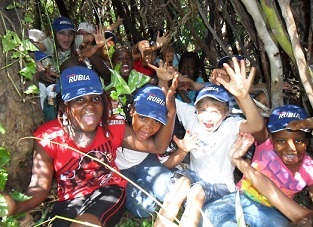
So of course, I was petrified. What was I thinking!? All those months of planning and waiting were over. I was finally going. Continue reading Volunteering in Malawi

Volunteering in China

Volunteering in ChinaChina is one of the most mysterious and magical countries on the planet, full of culture and endless adventures. Shrouded in History and full of vibrant life, it was for these reasons that I chose to volunteer there. I spent 5 months with Lattitude Global Volunteering in the south of China in a town called Yuxi, in the province on Yunnan and it was the most incredible experience of my life. The time I spent there was so humbling and educational; it was everything I had hoped it would be and more.

My main role in China was to be an English teacher to students of all ages. The kids were amazing, they were all so willing to learn and work hard that it made every day enjoyable. The daunting task of teaching lessons to over 60 children slowly begins to, with time, become the highlight of your day. There is no greater feeling than knowing that a group of people are learning and improving by your teaching, the English Language plays a key role in the world and the people of China know that. The kind of kids I taught had the ambition of people who saw no end to what they can achieve and where they could take their lives. Before long I began to realise that, although I was the teacher, I was learning so much from the people I was meeting.

I had no end of invitations to visit the homes of the students and be involved within their families’ routine. Learning about culture and traditions here in the U.K. normally involves reading a book or watching a DVD in school, but being out in China, in the heart of the country, educates you in a way that you can’t forget. My eyes were opened to all kind of foods, traditions, scenery and history that made every day an adventure.

Although I was placed on my own in China, this was possibly the best thing that could have happened to me. It enabled me to have the determination and courage to completely drop my guard and fully immerse myself within the culture. I worked really hard on learning the language and tried to get the most I could out of the country. I got to experience things and explore places that I would never have dreamt of before I visited the country.

A word of warning, volunteering in a country, especially China, gets under your skin. It moulds you into a person that you could have never imagined you would become. The country will never leave your memory and you will always remember your time there as the best of your life. No matter how hard you try, you can never articulate to someone how amazing China and the time you spent volunteering there was.

I cannot thank Lattitude Global Volunteering enough for enabling me to travel to this most incredible place. I made lifelong friends, had experiences I will never forget and began to really understand what life is about and what exactly I want to do with mine.

I enjoyed it so much, I’m planning on going back again this year to visit my friends, the school I worked in and learn so much more about the most magical place I have ever been. Good luck to anyone planning on going there, you’re in for an adventure!

Plan your trip to Malawi with Stanfords, click here to see our selection of China maps and travel guides

By: Lewis

Volunteering in South Africa

Volunteering in South AfricaEven as I begin writing this, I know I am going to have a tough time reliving the wonderful experiences that I have had over the past six months. Although I am glad to be home with my family, it feels as though I have left behind a little piece of me with my second family in South Africa. When I first decided that I wanted to take part in a voluntary overseas placement, I did so in the complete knowledge that it would be one of the hardest things I have ever had to do. I expected to feel homesick, lost, out of place and out of my comfort zone. I did – but I got so much back in return.

My last four years have been spent at university working towards my law degree. After undertaking a module in environmental law and writing my dissertation on the various environmental challenges facing the modern world, I realised that my professional calling was to become involved in environmental law. However, aware of the fact that true environmental awareness can never be attained by sitting behind a desk, I decided to spend a little time getting knee-deep in the very things that I would soon be spending my working life trying to protect.

When I first arrived in the Drakensberg I couldn’t believe how completely remote it was. All around me were towering mountains, dark, brooding cliff faces, expanses of indigenous forest and miles upon miles of wetland. The nearest shop was almost an hour away. The first night I spent at Entabeni was both the most exhilarating, and the loneliest, night of my life. I was away from everything I knew and loved but could hear, see and smell things that I had never before experienced. Everything was new- terrifying and exciting!

After that first overwhelming night I quickly got into the way of life at Entabeni. As part of a small team, I was responsible for designing, coordinating and conducting environmental education programmes to groups of school children on short-term residential courses. This involved a variety of different activities including forest and wetland projects, interpretive hikes, captive crane studies and also more adventurous pursuits, such as abseiling, wall climbing and camping expeditions. Despite using a variety of teaching methods, all of the work that we did at the Centre was geared towards developing an awareness and passion for environmental and conservation efforts. Although the work was physically and mentally exhausting, experiencing a “light bulb moment” with even just one of the kids within your group made it all seem worthwhile (i.e. that moment where you actuallyseea child become imbued with the same passion for the environment that you feel).

Courses aside, the best thing about living and working within South Africa was the people you met on a daily basis. During my time there I experienced so many different forms of kindness from so many different people. When I mentioned that my feet were suffering from wearing hiking boots constantly, Sandi (my South African mummy), came back from the next town trip with foot cream. When I lost a bracelet, one of the maintenance staff, Thulani, searched high and low until he eventually found it lying in the dirt road. Knowing my weakness for all things sweet, one of our kitchen ladies, Nomusa, would keep me the mixing bowl from the chocolate cake. I will never forget how wholeheartedly and completely I was welcomed into the “family” at Entabeni.

Since returning from my placement I can honestly say that I have seen a massive change in myself. If it has taught me anything, it would be that when things go wrong you simply “make a plan.” When problems arose on placement, there was no time to cry, envisage the worst case scenario or phone my dad! I simply had to accept the problem, formulate a solution and get on with it. South Africans pride themselves on their ability to “make plans” and this is definitely something that I’m bringing back with me to the UK!

I am due to begin my postgraduate diploma in September and will then begin a job in Edinburgh involving environmental litigation. Spending six months in South Africa, getting knee-deep in wetland, lost in indigenous forest and watching endangered wild Wattled Cranes flying above me, has taught me more than I could learn if I spent a lifetime in a classroom. Not only that, but I have also learned that basic, simple acts of kindness can connect people, regardless of culture, race, background or life experience. When I said that I feel as though I left a little bit of myself behind in South Africa, I genuinely mean it. Perhaps I’ll need to return in the not-too-distant future to put myself back together again!

Hamba kahle South Africa, it’s been amazing!

I would like to thank the Lattitude Bursary Scheme for providing me with the means to have such a fantastic experience. I would never have been able to afford to go otherwise and I am hugely grateful for their assistance.

Plan your trip to South Africa with Stanfords, click here to see our selection of South Africa maps and travel guides

Click here for travel information to South Africa

The Jeremy Paxman Interview

Award winning British journalist and TV presenter Jeremy Paxman is notorious for his hard hitting questions and abrasive interviewing technique. Beginning his career in local radio in Brighton, Paxman soon moved to Belfast where he reported on the troubles in Northern Ireland making his mark as an investigative journalist. Shortly after his return to the UK, he worked as a reporter on the BBC television show Tonight leading to a reporting role in Panorama which took him all over the world on his various assignments. In 1989, Paxman became the anchor of the BBC television show, Newsnight making him a household name in Britain. Continue reading The Jeremy Paxman Interview

The Ted Simon Interview

ted simonTed Simon is a British journalist turned author best known for travelling the world twice by motorcycle. Sponsored by The Sunday Times, Simon spent four years travelling the globe on a Triumph motorcycle which he later detailed in his bestseller‘Jupiter’s Travels’.

Twenty-eight years later, at the age of sixty-nine, Simon embarked on a new motorcycle adventure (this time on a BMW) following a similar route as described in his later book, ‘Dreaming of Jupiter’. Simon’s second trip took two and a half years and he discovered that much had changed in the world.

Describing his experience as a journey of self discovery on which ‘you find out what is real and what society has attached to you’; his experience has clearly had a profound impact on his life.Having given a fascinating talk in Stanfords Travel bookstore in Covent Garden, Ted Simon answered some questions for us.


How different was it doing the trip a second time around? Did you prefer either trip over the other? Continue reading The Ted Simon Interview