Costa Rica

La Patita de Manzanillo

Two friends and I were staying in a holiday house in the middle of jungle, yet near the beach, in Manzanillo, a small village that locals refer to as ‘the end of the road’, and it quite literally is. It’s right down the bottom of Costa Rica, on the Caribbean coast, nearing the border with Panama.

Having endured some hard days of travel – my friends had come up from Panama, and I had spent about two days travelling from the UK – we were thrilled to arrive at La Patita, a beautiful house sensitively designed and built with native hardwood, situated amongst the coastal jungle, with very little other construction for company. Continue reading Costa Rica

The Michael Palin Interview

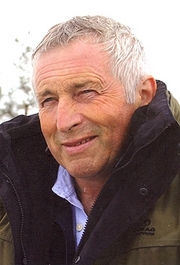
It’s no wonder Michael Palin has been named as a national treasure – he is equally loved for his acting in such classics as comedy TV show Monty Python, and for his fascinating travelogues from all over the globe, from the Poles to the Sahara.

His latest adventures, in eastern Europe, were screened on TV to much acclaim, and with the release of New Europe, Michael came to Stanfords to tell us more about his thrilling travels…

About New Europe

Which was the favourite place you visited on this trip?
It’s really difficult – being asked any favourite place you immediately miss one of the others, and you think, “Oh yeh, I’ve forgotten that…” and there are favourites for different reasons. Romania I think – in terms of stumbling across undiscovered gorgeous scenery – was the winner. Northern Romania, by the Ukrainian border, the Carpathians, and also further south in Transylvania – very, very beautiful. But then so was Bulgaria – the Rhodope Mountains, and the Rila Mountains – very, very beautiful.

In terms of cities, I suppose – although we didn’t show a lot in the series – some of the Polish cities like Krakow, which was a great city, and Budapest too, so they would be two of my favourite cities.

But an undiscovered little country is definitely Moldova, tucked away there, not much going for it, two parts of it already split (seceded), and yet it has certain charm to it. The capital is rather leafy and pleasant, nice little avenues. And the people there are strongly determined to make their way and things aren’t going particularly well for them – it’s the poorest country in Europe. But there was a definite feeling that people cared about the place, and I found it a really, really lovely place to be.

And which place do you predict might really take off as a hot travel destination in the next few years?
A lot of places we went to are already getting quite popular, like Tallinn and Riga. I think Gdansk in Poland, which is near to the Baltic States and is a very fine city with a lot of history around it; I think that could become very popular. I think and I hope that some of the mountain areas such as the Carpathians could become a big destination and the cities of east Germany like Dresden and Leipzig. Leipzig had a lot going for it. It’s less pretty than Dresden; it’s a very good strong working city.

And my final tip would be Sarajevo in Bosnia. People are going to find when they go there that’s it’s got a lot of drama, just associated with the recent history. That the city there isn’t all smartened up in the traditional fashion and it’s a really bruised and battered city but with a great deal of spirit to it, good working city. So Sarajevo for the more curious and enterprising traveller!

What was the funniest experience you had?
Well I guess things that were completely unexpected like interviewing the belly dancers in Turkey and then being auditioned for belly dancing, and driving a tank on the Polish-German border. Both things which are funny to others, not to me particularly – it was rather humiliating – but looking back on them they look very funny.

And people are generally good at laughing – we had some nice rather brandy-fuelled occasions with some of the people – especially in northern Romania, we had a party there and they can’t drink without music, they can’t have music without a drink, and they can’t drink and have music without some laughter and some ribbing of the foreigners and all that! So there was a rather jolly time up in the village in northern Romania – Ieud – yes, a lot of laughter there.


And the most annoying?
Well it was probably the same – I was annoyed I couldn’t drive the tank more easily!

There wasn’t really a great deal of annoyance because we were able to see an awful lot of Eastern Europe, and given access fairly freely, so there wasn’t really a great deal of frustration in it. There were times when the mood was fairly dark – going to Auschwitz, and talking to the lady in Prague – Lisa Mikova – who was the concentration camp survivor – when you really realise the awful history of Europe over the last hundred years – the depths of brutality, cruelty to which people can sink. That wasn’t annoying, that was shattering to hear that that went on.

I suppose sometimes I was quite dispirited to hear people talk about how their city centres got trashed at weekends by British stag parties or hen parties. I thought that was a bit of a shame because these are beautiful cities and put under a lot of pressure by people who didn’t really care where they were so long as they were having a good party.

But on the whole, it wasn’t really a frustrating journey. It was revealing more than anything else – everywhere I went I was seeing things I didn’t expect.

 Who was the most fascinating person you met or interviewed?
I suppose Lech Walesa would be, in terms of his role in history, the Polish president – the man who changed the course of history of Europe in the 1980s with the solidarity strikes – it was great privilege really to meet him. He was a little bit formal though, I felt, and he didn’t speak any English, or appeared not to speak any English. But when he relaxed – I asked him a question about his daughter being on ‘Celebrity Come Dancing’ – and suddenly he relaxed. I think then we saw the real guy who’s just been a working man, working in the shipyards, had a great deal of ability to relate to all his fellow workers, wasn’t particularly comfortable being…well he enjoyed being the statesman but the real man I think was someone who was a man of the people and when we got that…that was pretty interesting.

I met a German anthropologist in Turkey who showed me round Cappadocia with those extraordinary geographical, geological formations, these towers they lived in of volcanic rock that had solidified and he was a fascinating guide to that area. There was any number of people who helped us on our way.

How did these travels compare to your others, such as Himalaya or Sahara?
They were a little more cerebral – more about people, many more people, along the route, unlike Himalaya or Sahara where you could go for days without seeing anybody. In Europe there’s always someone to meet, to talk to. Twenty countries, which are more than Himalaya and Sahara put together, so you had to get your brain around a lot of different histories, languages, currencies, hopes, expectations…

Also I think that the fact it’s much closer to home, you kept feeling your own history of the last 50, 100 years, is very closely interwoven with the history of all Europe. Going to Eastern Europe is a bit like meeting a branch of the family that you knew existed but no-one had been able to meet for years. It’s the kind of uniting of one side of Europe with the other.

So these travels were less escapist, but more down to earth, with the real problems that face our continent. And stimulating – I like meeting people – they are really the raw material for these series. So that was the difference. Some of the landscapes were as striking – the Carpathians, the Danube Delta, the Curonian Spit (the great sandbar that runs south of the Baltics) – extraordinary places, the like of which I have never seen anywhere else. But I would say it was people rather than landscape that were the main attraction on this one.

About Michael Michael Palin


A question from a member of Stanfords’ staff who is a budding film-maker: With all this travelling, do you harbour any desire to act again?
It’s always there in the back of my mind, and if a good script and a group of good people to work with could be put together, I guess I might think of doing it. I rather went off films because it became quite unwieldy if you were part of 60, 70 people working on it. Even when you’d finished your film, however good it might be, you were really dependent on distributors to screen it, and very often they completely let you down.

Whereas doing these travel programmes, you work with about six or seven people and we make most of the decisions for each programme and we know the BBC will show them, so that’s why I have sort of steered away from films and did more of this. But I never say never!

What career might you have followed otherwise? [Michael studied Modern History at Oxford].
Oh I don’t know, my parents were just keen that I should do something for the future. They knew I liked writing. I tried to get a job at the BBC, in administration there and that didn’t work out. So probably I might have ended up in advertising, something like that, possibly journalism.

Do you still really enjoy travelling or does it feel like work?
It is work, but I enjoy it. It’s very, very nice work to do. And there are times when I do feel desperately tired and inadequate to the task, because you set yourself up, it’s a big thing to do – to bring back an entire series – in this case seven hours of television, on which you will be judged in a pretty sort of harsh world now. So it’s hard work, but that’s part of it – I quite like being extended.

I quite like having to do something that’s difficult, it’s good for the brain, it keeps you reading things, taking things in, noticing things and also it’s reasonably good for you physically – you have to keep reasonably fit to do this sort of stuff. So I do enjoy it and I would never take on a series if I had any doubts at all.

Do you go on ‘normal’ holidays with your family? What sort of trips?
Yes I do. All my three children are now grown up – they’re in their 30s, so they do their own thing – but my wife and I go on holidays. We go down to France where my sister-in-law has a house in the Lot Valley and that’s very nice and quiet and we all muck in and help look after the place and cut the grass and all that sort of stuff – that’s good fun.

Or else we might go for four or five days to a city in Europe like Barcelona, or to Marrakesh. This year we went to one of the Italian Lakes. Somewhere reasonably quiet where we can wander around – we don’t look for a lot more than that. It’s quite nice to have a number of short holidays rather than one long holiday away. I can’t remember when last had a really long, in the hot sun holiday. I feel like I’d quite like it at the moment actually – lying by some hotel pool for a week doing absolutely bugger-all, it seems rather tempting at the moment!


And what’s your ideal sort of holiday – cities, countryside…?
I quite like walking so I wouldn’t mind a holiday somewhere where the weather was reasonably temperate and cool that I could do some walking about – Scotland is particularly good for that. My wife doesn’t like walking too much, so if I’m going with her, we tend to go somewhere warm for a start, we do like the sunshine.

We like somewhere where you can find things to do – it’s nice to have two or three days just sitting doing nothing and reading but I do want to get out and have a look at places. So somewhere like Marrakesh in Morocco is great because we stay in a hotel just outside of Marrakesh, with scenery all around you, but then you can go into the city that’s busy and has lots of life, and that is ideal for the two of us. I like somewhere that’s alive. I like art galleries too – I like somewhere where there’s a good station and a good art gallery.

But I could equally well go off to somewhere like Oman and hang around for a week. It’s very much who you’re with, what your mood is, what you’ve got to do, if you want to read or write. I do find cities quite stimulating.

What do you never travel without?
I never travel without my notebook – I always, always take my little black Alwych notebook. And pens. And a map of wherever I’m going. And a torch. And I used to take a Swiss Army Knife, but I’ve had so many confiscated at the airport – the war on terror has reduced my number of Swiss Army knives. And a book to read, either a good guidebook or a novel, written by someone in the country I’m going to – I find it’s quite good to feel you’re getting a voice of people who live there. And that’s about it really.

What’s the strangest place you’ve ever slept?
The South Pole – it has to be. We were at the base of the South Pole administered by the Americans, which is under the ground – it’s all dug in beneath the snow – and there they have controlled temperature, they have showers, heaters, movies, cinemas, music, all under the South Pole.

We got to the South Pole and we were not allowed to sleep there because it’s contravening international convention – only scientists could stay there – if you’re just a sort of tourist at the South Pole, you’ve got to look after yourself.

We were allowed to go and have a shower, thanks to some very nice Americans – under the South Pole – then we had to go out and sleep, in minus 50 degrees, in a tent. There were about six of us and I was the last person to get in the tent so I was across the door. There was one older man who must’ve been about 80 – probably as old as you can fly out to the Pole – he did have to get up rather often in the night and he had a heavy boot, so I kept getting this boot in my neck three or four times a night. I had to keep saying to myself, “I’m at the South Pole, this is exciting, this is where Scott and Hamilton came, Scott gave his life to get here…remember where you are!”

So I think that was a pretty amazing experience – utter misery, but at the same time an inspirational place to be. And at the same time knowing that underneath were people listening to music and taking baths and showers and eating blueberry pie! All very weird.

Do you bring back souvenirs from your travels?
Occasionally I bring back things. I don’t bring back a lot because I like to travel to light. I’m very aware that a lot of places I’ve been that a lot of their treasures have been sold off and I think they should stay with the people. I’ve been offered things every now and then which are rather wonderful, but I just think they’re better off with the people there …my house is cluttered enough anyway. However, I do have some wonderfully decorated boots from south Yunnan in China that somebody gave me and they were just too good to miss so I brought those back.

Is there anywhere you haven’t been that you’d really like to?
Oh yes, yes – there are heaps of places. I haven’t really been to anywhere in the Middle East. I’d love to go to Syria; I’d love to go to Iran. I’d very much like to go up to southern Russia – the Caucasus there, Georgia, Azerbaijan, Kazakhstan, Turkmenistan, and Brazil, Argentina, I’d love to go there. Yeh, there’s an awful lot of the Earth I haven’t covered. Some parts of the Earth I covered so fast that I’d like to go back and take a bit more time.

New Europe by Michael PalinWhat – or where – is next?
At the moment, no plans. I’m going to Ireland at the weekend and then I’m going to Holland the weekend after that – both to talk about ‘New Europe’ and sign copies of the book and all that.

And I shall, over the next two or three months, just begin to think what to do next. I’m very happy to be at home now for a while. Eighteen months it takes – minimum – to get a series like this done from the filming to the actual writing of the book, then writing the commentary , then the editing of the film, and then the publicity, which goes on for three or four months. And until you’ve been right through that process, you can’t really have any clear idea what you want to do next – you just want to stop and to be at home and potter around London and enjoy living here and then an idea will come.

Buy New Europe by Michael Palin >>

Author: Rachel Ricks

The Jonathan Dimbleby Interview

For his latest venture, broadcaster and writer Jonathan Dimbleby heads to Russia for a new book and BBC TV series. Dimbleby crosses eight time zones and covers 10,000 miles, from Murmansk in the Arctic Circle to the Asian City of Vladivostok, with the aim of getting under the skin of modern Russia.

He was the only British television journalist to interview President Gorbachev during the Cold War, and he returns to Russia for the first time since those days. For Jonathan, crossing Russia became as much an interior journey as an exterior one, with great turbulence in his personal life as well as on a stormy White Sea in a “tub of a boat” manned by a drunken skipper…

Could you sum up what your main aim was with the journey through Russia?
Everyone has an idea about Russia, lots of people have seen pictures of or have been to Moscow and St Petersburg, not many people have had the chance to get behind the headlines about Russia and get under the surface. So my ambition was to discover the Russia people don’t know about, because I believe that that’s the real Russia. It’s a very, very large country so it meant a long journey and I didn’t know what I’d find nor what I’d think about it. It was an exhilarating prospect but a very daunting one as well.

Because there was a combination of personal and professional reasons you decided to embark on the journey?
Yes, in order to do it I gave up my weekly political television programme on ITV and I was giving that up, partly for personal reasons, because I wanted to be home at the weekends with my wife, and partly because I felt I couldn’t miss this opportunity. You don’t often get an opportunity to make five films and write a big book about a very important country, and I thought if I turn it down, I’ll live to regret it, I’ll kick myself. It was a challenging journey, partly because I was under various very powerful emotions as well as the normal challenges of trying to understand a complicated place and people.

So what extra dimensions do you think your state of mind added to this journey?
I think it made me look more closely. It made me think about the psychology of Russia because I was dealing with my own psychological challenges. It in some ways made it much more difficult because you are taking long journeys, 15-, 20-, 30-hour train journeys, or in the back of an elderly van for hour after hour on not fantastically good roads. And sometimes in the morning I would wake up and think, “Do I really want to go on with this?” I’m envious of the Ranulph Fiennes’ of this world who go out of their way to seek adventure and danger. I’ve experienced both – reporting from dangerous places – but I don’t go out of my way to find it.

I’m a bit of a home bird, so it was a challenge because I had to tear myself away from home, and I think that because I was in quite a stressed state, it made the adventure more difficult than it might otherwise have been. But I think it meant that once I’d galvanised myself, I did really try and engage with the people I met and I found that the real delight – once you’d consumed rather more vodka than you would normally – you could really get beneath that carapace, and explore people’s feelings and thoughts.

People were very, very open. I’d been used to Russia before the fall – the soviet Russia where no one could speak openly or freely and people were very distrustful – and it was a great delight this time to know that you could have an open conversation.

So in general did you find it a welcoming reception from people?
It was very odd. A lot of the receptions were entirely indifferent. Because we were doing it with the film teams as well, people were quite indifferent to the presence of film cameras, which was interesting – I thought people would be more curious. There was a tendency to stare through you, not because they necessarily saw through you but as if you weren’t really there.

It was rather touching when I came across journalists who are in a very difficult situation in Russia – if they write freely, if they say what they want, they very easily lose their jobs, and some of them, at an alarming degree, suffer persecution and get killed. They all wanted to know what it was like to work in a society where journalism and reporters were free, and it was rather touching that people would ask me, “What do you think of our town?”, “What do you think of our city?”, everywhere I went, that was the question. They were much more interested to know what I thought of Russia than to ask me about the rest of the world. I think that’s a mixture of insecurity, vulnerability and huge patriotic pride. And strong sense of place: “This is our little bit of land”.

Did you notice a profound difference from one side of the country to the other?
On the surface, no, because one of the effects of the Russian expansion, followed by the Soviet expansion, is that many of the cities look very similar and actually rather dreary, with neo-classical buildings and ‘60s housing estates. And now, because it’s the free market, it’s rather like you can get in this country – an awful lot of the same shops in marginally different streets. So there isn’t that sense of diversity. But when you get beneath that surface, yes there is a real diversity.

The Caucasus is very different from Russia; the Altai Mountains, which are further east, are very different. In Siberia, there’s a completely different atmosphere in towns like Tomsk or Chita, further to the east, and Vladivostok seems to belong to a different world. And psychologically I think people there do – you can be easily misled into not detecting this, because everyone speaks Russian, and because everyone, with the exception of small pockets, are loyal, patriotic Russians first, but there was a big diversity in people’s approach to life. Nikita Khrushchev, the Russian soviet leader in the ‘50s, used to say that Vladivostok should be Russia’s San Francisco. It is built on hills – you can see how it might be.

But people in Vladivostok are not interested in Russia; here they say, “We have a real community, we really live together. We also see lots of people come in and out here through the centuries because we’re a big port on the Pacific Ocean. In Moscow, it’s nothing except a big, money-making marketplace”, and they have quite a lot of disdain for Moscow.

In the Caucasus, you have people who say very clearly, “We are not Russian, we come from Dagestan”, or Chechnya or any of the other republics, and I’d ask, “Well if people don’t know where these places are, Kabardino-Balkaria for instance, what do you say?” They’d say, “Well we say we’re from the Caucasus – we’re Caucasian people.”

“You never call yourself Russian?” I’d ask. “Absolutely not.” And in truth, they look with suspicion at Russia and very often avoid going into Russia, as they see it, because the Russians tend to regard them as inferior – in casual conversation, people refer to people of the Caucasus as ‘blacks’, in the same ways in America the whites in the south used to call black people ‘niggers’. There’s quite a lot of racism.

There’s a unifying church, but there’s diversity of religions as well – old animist faiths, sort of intriguing, like a strong belief in mysticism, in witchcraft, that there are elves and spirits in the forest. These beliefs go right back and they’ve survived everything that’s been thrown at Russia, not least Stalinism and soviet unionists who tried to destroy religion, in fact it was banned in Russia. Now it’s flourishing again.

There’s another diversity, which is between the rich and the poor. You have a huge gulf between the oligarchs who have more money than they need, and poverty in parts of the towns and cities and in the rural areas that makes Russia seem really backward, almost like a third world country. You have peasant farmers using horses and carts or bicycles to get about… who don’t have cars, don’t have running water – they draw their water from wells – who live without any form of gas heating, although Russia is the massive supplier of gas to Europe. So it’s diverse in a very unattractive way because of this huge gulf between the rich and poor.

It’s diverse in its landscape – you’ve got three layers of landscape really. And that means that the landscape and the topography are so different, you go for thousands of miles and it’s completely flat with forest, and elsewhere you can travel thousands of miles and it’s completely flat with bare landscape, and elsewhere you’ve got mountains and lakes, and that was a revelation to me as I’d never seen anything like this.

Do you think you showed some clichés about Russia now don’t exist?
I think some of the clichés – as often with clichés – are true. There is a tendency to be quite abrupt in a way that we would often find rude – people aren’t extensively open, they’re reserved. And there are good reasons for that. The clichés of Russia’s tendency to distrust, its tendency towards autocracy, which is a very deep and growing and very disconcerting tendency, its aversion to democratic principals, maybe clichés but are true. And I think it’s truer than people would like to accept outside Russia.

There is a deep authoritarian streak and a deep fatalistic streak that runs through the Russian psyche. And you can understand why – wars, turmoil, revolution, repression, unbelievable upheavals as communism gave way to a raw form of market capitalism. All of these and all of the insecurities and uncertainties and dangers that that created, means that people on the whole are not optimistic. They live for today; they don’t think long-term because they never know what’s going to be round the next corner, so there’s very little systematic planning.

I think more important than the clichés, there’s a truth in the characteristics that maybe haven’t been explored. The Russia we know – it’s always the great paradox – has produced some of the most wonderful literature, great philosophical writing, music to die for, and yet on the other hand there’s an image of a country where people have not ever experienced the enlightenment. Although Russians are completely free to go where they want around the world, if you say to them, “Do you travel very freely?” They say, “Of course I do, I can go wherever I want in the world. Yes, we live in a dictatorship but that doesn’t matter; I’m free to do what I want so long as I don’t cause a problem.”

Did you have fears yourself before setting off?
I didn’t really have fears that anything nasty would happen to me. Since writing the book, I’ve sometimes thought, “Am I going to get a cup of polonium in my coffee?”. But mostly I don’t think I count enough – I’m not a threat to the Russian state, even though I’m very, very critical of the state.

I felt more threatened by the everyday dangers that Russians ignore – we get much too hung up here on health and safety so we end up not being able to do anything – it’s exactly the opposite [in Russia]. There’s virtually no health and safety – whether you’re in the streets with people building above and potentially dropping concrete blocks on your head… driving on roads where the old adage ‘live today because tomorrow you might die’ has been turned on its head and drivers seem to say, “Let’s die today because we might have to live tomorrow”. Through to a feeling that “What they do, the people in charge, there’s nothing much we can do about that, we just get on with our own lives and look after our family”. So there’s quite a good sense of family cohesion but not much sense of what kind of society do they want to be.

So what was your most frightening moment?
My most frightening moment without question was on the White Sea in a storm. I could see the weather was bad on the way there, because I sail, and no sailor enjoys rough weather. We were going by a passenger boat in the region called Russian Karelia, across the notorious White Sea to an island called Solovki, which is both a holy site and was also the first prison of the Gulag system, so there were a lot of people going there to see it – both pilgrims and tourists. The weather was blowing up and the little boats weren’t able to go, therefore everyone got onto the bigger boat. It was terribly overloaded with people – it should’ve taken perhaps 100, 150 and there were 250 people onboard. This was a tub of a boat. Before long the wind had really got up, the sky had become black and there were big, bubbling, boiling seas, with waterspouts either side.

I got really scared, and when you’re really scared, you apply a kind of courage to say something must be done, so I went up to the wheelhouse skidding and sliding, with someone from my team to translate for me, opened the door, staggering – like in one of those war movies – into the wheelhouse. There was the skipper looking relentlessly to the front and all I could see was these great white waves breaking for eternity. He didn’t take any notice of me. I said, “We’re overloaded, this ship ought to turn back to port. It’s not safe.” He completely ignored me.

I looked across and there was the first mate who was the only other seaman on board, who was paralytic, clearly vodka-ed out of his mind and just stood there looking into the middle distance. I knew there would be no chance if we turned over of anyone getting into a life raft. Three times I tried to get this guy at the wheel to even respond and the third time he responded contemptuously, “I am staying on this course”.

I then left and by this time passengers were crossing themselves and singing what appeared to me to be Russian versions of ‘Abide with me’. Our film gear was sliding backwards and forwards across the decks, sprayed with water and rain. I was dressed in a white summer suit so I just froze. Everyone was sheltered to the leeside of the boat, so I said, “Look, we’re tipping at this angle, you must come up to the windward side!” some people moved for a bit but it was obviously too unpleasant and so back they went. So I, with about three other people, went up to the windward side in a forlorn attempt to balance this boat, which of course made no difference at all, I just got extremely cold and very wet and very frightened and thought, “I do not want to end my life on the White Sea.”

When I got to the other end, I was pretty drained and pretty cross about it and I thought, “Yeah, sometimes health and safety is not a bad thing!” But the worst part of it all was that some faithful woman from the monastery that was there, a Russian Orthodox believer, said to me, “You shouldn’t have worried you know, if God wanted your soul, he would’ve have taken it, and he hasn’t, so he doesn’t want it yet.” And I thought, “Thank you very much! That’s really encouraging. He may want my soul, but I don’t know if he’s even there, let alone whether I want to give it to him!”

So did you ever think, that’s it, I’m going to pack it in and go home?
There were occasions when I didn’t want to go back – because I did the journeys in sections – and there were times when I jolly nearly did pack it in, actually. And that may seem rather weak and feeble, but I now regard that I have enough strength at least to say, “I’m not going to succumb to this”, and I was supported by close friends and family and my wife saying, “Come on, it’ll be alright.” I found myself from time to time quite severely on the edge of a depression, which made it sometimes quite difficult to get out of bed in the morning.

That did colour my perspective, which is why I explained it, because I think in a book you have to be true to your reader. It’s somehow different in television, because you can’t moan your way through a television programme – I don’t, I hope, moan my way through this book, but because there’s so much more space you can have a paragraph here or there where I’m squaring with the reader: “This was a pretty rough day”. I think that if you don’t do that, in a way you’re slightly short-changing the reader about your journey…and I wanted the reader to know how I felt on that journey. I think readers quite like that really; they like to be able to feel that in that respect you can be trusted and you’re not pulling the wool over their eyes.

How do you balance writing for a book and presenting for the TV programme?
Well the writing of the book feels a much more private occupation, though of course you’re sharing it with readers. Probably a much more intense way of people [watching you] on the television. In the book you can explore so much more, you’ve got more time. I loved writing it because I was able to explore more, so it’s an absolute journey. I had reflections and thoughts about what I came across, and I pick up on things that people tell me and then explore them for myself, whether it’s history, culture, music, politics, literature…

I feel quite strongly that writers like Tolstoy and Lermontov really understood Russia and the Russia of today as well as they did the Russian psyche and the Russia of the 19th century, so it’s very helpful to me to read those 19th-century writers as a way of opening the door into the 21st century. I hope that in the book it’s a shared journey, which in some parts is a raw and painful journey for me.

But for the most part I hope it illuminates Russia and the people who make up Russia in a way that will give greater understanding. It may confirm prejudices, I hope however that it will also create an empathy for the people of Russia and that understanding I hope will encourage people to treat Russia not with a clichéd disdain on the one hand or a wild-eyed romanticism on the other, but a real sense of what a real place is like with real people in it.

And how would you rate Russia in general as a travel destination? How easy is it to travel round?
It’s not as difficult to travel in practical terms as I’d thought it would be. It is opening up, there are more roads, and some of the roads are better. The links as you go further away from Moscow are much more difficult. Planes are unreliable. I don’t mean that they fall out of the sky – although I’m always fearful that they will – I hate flying, they fall out of the sky now rather less than they used to, but they will somehow be arbitrarily cancelled. There’s great competition between the airlines but it doesn’t actually seem to improve the punctuality.

The trains are my favourite form of travel – I like the trundling along for long journeys, looking out on the often unchanging landscape, the trains leave on time and they arrive on time. They allow themselves plenty of time to get there, so you often stop in the middle of nowhere for half an hour because they’re getting there too early.

Russia is laced by waterways – you could actually do the whole of Russia – which would appeal to me, as long as I could avoid the White Sea! The network of rivers allows you to have the most wonderful journeys. If you’ve got time to make the journey, then most certainly travelling on the ground is very rarely boring. I would not advise anyone to just to stay on the Trans-Siberian; I think they’d be missing opportunities.

I actually enjoyed the process of travelling. And on the trains you can have lots of casual conversations, as you’re cocooned on a train and people can be quite friendly. And there are bar cars, where the vodka gets you a long way.

What would you say was the highlight of your trip?
I would have to say going to the estate where Leo Tolstoy was born and where he wrote ‘Anna Karenina’ and ‘War and Peace’, and other major works. The estate and house are still there, wonderfully preserved inside how it was when he lived there and died in 1910. You get a real spirit of the place when you walk into the fields and the forest. We visited his grave, just a simple mound of grass. I think he was one of the great men of all time.

There were other things that were somehow more exciting or more immediately wonderful, like seeing Lake Baikal for the first time, which is one of the wonders of the world, the deepest oldest lake in the world. Sitting in a natural sulphur spring bath, in my underpants which gave me the veneer of respectability, with elderly matrons and others who were sitting there turning into prunes because of the sulphur and coming out reeking of sulphur but having the most wonderful conversation in the meantime. And I did that because Lermontov, Tolstoy and Pushkin had all been in these baths.

By the time I got towards the end of the journey, I wanted it to go on. I’d reached the point of feeling at peace with Russia more or less and with myself, and I could have quite enjoyed going on. But I still don’t know whether that was because it was the end of the journey, or whether it was because I really wanted it to go on! And I would of course recommend people to see Russia, but don’t have your expectations too high. It’s difficult. It’s easy to get lonely and feel unloved and you have to make quite an effort. If you make the effort, it could be very rewarding.

Would you go back?
I wouldn’t do the same journey again, but I’m fantastically glad I’ve done the journey. I never say I wouldn’t go back anywhere. There are some places I would go back to before I went back to Russia. But yes, I’d go back.

You mention Africa at the end of this book, is that the next plan?
Well that was a sort of folly of the moment because on the airport TV screens, I was watching [Jeremy] Clarkson and his fellow boy racers driving spectacularly through a salt pan in Africa. In my mind, I’d already left Russia and I saw that – I love parts of Africa and have spent quite a lot of time there over the years – and I suddenly thought, what if I did the equivalent and travelled from Cairo to Cape Town, finding my way and doing a similar kind of project? The African continent that people don’t really know. We have all seen the headlines – and they’re pretty desperate headlines very often – but there’s much more to Africa than the headlines. So yes, if I could tear myself away from my darling wife and my darling little daughter, I think I would do that. But I’ve got to wait for someone to ask me to do it first!

Argentina – Climbing Aconcagua

Argentina‘Felices Navidad!’ hollered the voice at the end of the distorted phone line. Irritated at having Christmas lunch disturbed, the family was instantly placated by the sound of my brother’s voice coming down a satellite phone from camp one, high on the flank of Aconcagua.
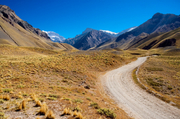
He was a member of the Walon UK & Toyota (GB) plc team of four that, in association with a commercial company and eight others, was attempting to scale the ‘Stone Sentinel’ by the Normal Route in aid of the charity Wooden Spoon. Continue reading Argentina – Climbing Aconcagua

Argentina

ArgentinaSince the collapse of the Peso, Argentina has gone from the most expensive country in South America to one of the cheapest. This has made Argentina into a hot destination for budget travellers for the first time.

I never made it to Patagonia, because it was winter, but I had a great time in Buenos Aires – a sophisticated European-style city with great food (if you’re not vegetarian), and great nightlife.

Domestic flights have suddenly become a bargain, so you can go to the far-flung corners of this vast country quickly and cheaply. I flew to Salta, a pleasant colonial city up in the foothills of the Andes. From here you can bus up to Bolivia through the back door and acclimatise, unlike flying in to La Paz at 4,000 metres (apprx 13,000ft).

Footprint are the experts in South American travel. The Footprint South American Handbook is great and the Footprint Argentina Handbook is far better than its rivals. As for maps, we stock a range of road atlases, street plans and detailed maps of Patagonia imported from Argentina and Chile.

Browse our collection of maps, guides and travel literature:
> Argentina travel guides
> Argentina road maps and atlases
> Travel literature inspired by Argentina

Author: Guy Bristow

Digital mapping on mobile phones

Mobile phoneHere at Stanfords we use all types of mapping, and recently, we’ve become rather taken with digital mapping. Here, digital mapping specialist Craig Wareham makes the case for one of the latest developments for walkers – digital mapping on mobile phones.
Maps have leapt from the page and onto websites such as the AA’s route planner, Google Maps and Microsoft’s Virtual Earth, to name but three. These have made digital maps widely available and often at no cost. However, while these services are of undoubted value for road-users, they lack the rich layers of information required by walkers, mountain-bikers, horse-riders and other ‘off-road’ users, who are used to relying on Ordnance Survey (OS) maps in all their glorious detail. Continue reading Digital mapping on mobile phones

Mark volunteered as a community teacher in Fiji

FijiNestled away in the heart of the Pacific Ocean, straddling 180° longitude the Fiji islands are about as far away from England as you can get. For me that was as good a reason as any for choosing to apply to volunteer in Fiji, but the opportunity to gain worthwhile experience both in a working and cultural capacity also appealed. If you add to that the lush green landscape, the hot tropical climate and the welcoming friendly nature of the people there really isn’t a better place to spend a few months or more.
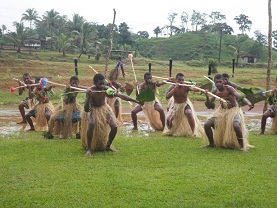
My placement was based in the interior of the main island of Viti Levuin an area lacking in any of the development and infrastructure seen in the tourist areas. I was working in a small secondary school with about 120 students aged between 13 – 19. The school itself is a community school owned and run by the 4 local tribes from the surrounding villages, which is also where the students come from. About 40 of the students were boarders whilst the rest would travel daily to school. My role in the school varied from teaching PE, music and art, to assisting with their English, to teaching Maths and Physics. There weren’t many subjects that I didn’t end up teaching at one point or another, and I was repeatedly thanked and told they don’t know how they would have coped without me. There was so much variety in the work I did during my placement; I went from teaching students how to play cricket, to reading music, to solving simultaneous equations. My work was not just restricted to the classroom; I was also involved in helping students train for the schools athletics competition, and trying to teach them the piano. Rest assured there is plenty of work for you to get stuck into.

Living in the middle of the Fijian jungle is obviously a bit of a shock at first, but you very quickly adjust. We were lucky enough to have regular electricity but the water supply was limited to a couple of hours a day which is obviously very different to the situation at home, where water is just something you take for granted. However the friendliness of the local community makes it very easy to adjust and cope with living in such a different environment so far away form home. Fijiis often called one of the friendliest countries in the world and it’s easy to see why. Everywhere I went people would greet me, and everyone within a 20 km radius seemed to know exactly who I was, which was probably because I was the onlykavalagi(European) around.

Whilst my weekdays would be spent living and working in the school, during the weekend I would usually stay in one of the surrounding villages. This could be a ten minute bus ride away, or if not on the main road, a two hour walk. It’s only really in the village that you get to experience the traditional Fijian way of life, but it’s also here that you will feel most at home. The way I was accepted into a family’s home and treated as one of their own was truly humbling. While in the village we might go to the farm to pull somecassava(a root crop) in the morning, or go fishing in the river to catch our food for lunch. The afternoon would be spent resting then maybe playing rugby or volleyball before bathing in the river. Rugby, especially sevens, is the national game of Fiji and games of “touch” are frequent. Anyone can join in no matter your age or ability so you can find yourself sometimes playing with about 30 people crammed into a space barely big enough for 10, but that is, as they say, the Fijian way.

Food is naturally a bit different from back home but one thing’s for certain there is always lots of it. The Fijians have a pretty big appetite so there is little chance of going hungry during your time here, and they will routinely tell you to “kana vakalevu”(eat plenty).Cassava,daloand the ubiquitousrourouare the staples of the village diet but there is also plenty of fish, prawns, chicken and other meat on occasion. The other ever-present in village life isYaqona(Kava), an important ceremonial and social drink, and you come to love the sound of the clang of metal in the evening as theyaqonais pounded.

Some of the many memories of my time in Fiji were:

  • Jumping off the many waterfalls that are tucked away in Fiji’s interior.
  • Exploring the local Wailotua cave, very big and full of cannibal history.
  • Going fishing armed only with a spear, much more fun than using a rod.
  • Watching Fiji win the Gold Coast sevens.
  • The whole village was in one small house crowded round the only TV, passionately cheering their team on.
  • Holding my first proper conversation entirely in Fijian without needing to speak any English.
  • Visiting the island of Taveuni, the garden island of Fiji.

I’ve learned so much by living and working in Fiji for 11 months, the type of education I could never have hoped to have back home and it has certainly made me think much more about what’s truly important in life. You come to appreciate the importance of community and sharing and realise just how materialistic our society is back home. Everywhere you go you are met by smiling faces and you can’t walk past anyone’s house without them calling to you to come and drink tea. Leaving the community and leaving Fiji was very hard and I was tempted to extend my placement for a second time. My initial placement was for 7 months but I was enjoying myself so much that I asked if I could extend until the end of the year. Fortunately Lattitude and their representatives in Fiji were extremely helpful and understanding and facilitated this for me with the minimum of fuss I’m already planning my return and when I do go back I know it will feel just like returning home.

Visit London

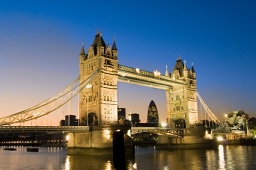
London - Tower BridgeFrom the delights of its parks and canals and the River Thames to its atmospheric markets and varied shops, museums and galleries, London has so much to offer tourists and locals alike. Try one of our staff recommendations:
1. Covent Garden & Theatre Land- Visit the atmospheric Covent Garden Piazza and surrounding cobble-stoned streets for some of the best shopping in London. Walk to the nearby Trafalgar Square, St Martin-in-the-Fields church, the National Gallery and British Museum. In the evening, dine in the vibrant restaurants of London’s Chinatown before an evening performance at the Royal Opera House or one of the many West End Theatres. Continue reading Visit London

Holiday Reading for a Trip to Latin America

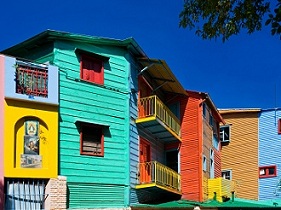
Buenos AiresOne of the great pleasures of going on holidays is having the time to indulge in some holiday reading. A good book helps pass the time on long journeys and is an enjoyable way to brush up on your knowledge of the history, geography and culture of the country to which you are travelling. With its deep historical and cultural roots, Latin American literature offers a wealth of knowledge to readers whilst immersing the reader in rich storylines that capture the beauty of the Latin American landscape. Here are 5 of our favourites:
Lost World by Patricia Melo

Former contract killer and fugitive, Máiquel, sets out on a journey to avenge his ex-girlfriend’s betrayal after she left him for another man ten years previously taking his only daughter. A dark tale of revenge, the pursuit of his family takes him through Brazil and Bolivia exposing the reality of the Brazilian underworld.

The Motorcycle Diaries by Ernesto ‘Che’ Guevara

Written eight years before the Cuban revolution, The Motorcycle Diaries is the story of two men, twenty-three-year-old Che Guevara and thirty-year-old Alberto Granado and their adventures as they set out to discover South America on a motorcycle. Although the whole world would soon know his name, Che’s diaries are full of drama, unexpected events and comedy typical of a road trip across South America.

The Fruit Palace by Charles Nicholl

Set in early 80’s Columbia, Nicholl sets out in search of ‘the great cocaine story’. This true story begins at the Fruit Palace, a gloomy café that doubles as a meeting point for dodgy dealings. Informative and well-written, Nicholl’s vivid descriptions of the landscape and people bring Columbia to life for the reader.

Death In the Andes by Mario Vargas Llosa

After the mysterious disappearance of three men from an isolated community in the Peruvian Andes, soldiers Lituma and Tomás are sent to the town to protect its people from the Shining Path guerrillas who are suspected to be responsible. The narrative is fragmented into two stories; their investigation of the disappearances in the town and the story of Thomasito’s love for a prostitute called Mercedes creating a powerful and captivating tale. Striking descriptions of contemporary Peru offer the reader a panoramic view of Peruvian society reflecting on its historical and political roots.

Tequila Oil by Hugh Thomson

Tequila Oil is an account of Thomson’s fascinating adventures getting lost in Mexico and his discovery of a side of Mexican life rarely seen by holiday makers. Both informative and enthralling, Thomson’s journey reveals a deeper insight into Mexican culture and history venturing into the jungles of Yucatan where he encounters the Maya. Upon his return some years later, Thomson has a greater understanding of the history of Mexico exploring recent archaeological revelations about the Maya and Aztecs.

Author: Clodagh O’ Brien

Browse our Collection of Maps and Guides for South America

Rachael’s Charity trek to Machu Picchu in aid of Barts and the London Charity

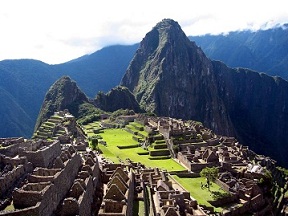
Machu PicchuRachael Gurney is facing the challenge of a lifetime as she prepares to trek up Machu Picchu in the Peruvian Andes.

I’m usually seen wearing high heels and tottering into chic bars, but on 29th September I will be heading to Peru. There I’m going to swop my heels for walking boots and attempt a Charity Challenge four day trek to the top of the sacred site of Machu Picchu. The aim of this is to raise money for the Cancer Centre at Barts Hospital in London.

I rarely exercise but have started doing core exercises, going on timed walks and walking up hills – which made me ache for three days! The altitude in the Andes may also be a problem, which is why I’ve begun training already. In April I shall go to Wales for the weekend for some hill-walking practice up Snowdon.

The hard work will all be worth it if I succeed in raising £4000 for the Cancer Centre at Barts Hospital. A close friend, Samantha, was successfully treated there for Acute Myeloid Leukaemia, which is one of the reasons why I have chosen this charity to support.

I want to do this trek as a way of giving something back to the centre which looked after Sam so well.

The second reason that I’ve decided to do this trek is in memory of my father. He died at the early age of fifty eight from cancer and was an important influence on my life.

He installed my love of travelling and discovering new peoples and cultures, so much so that I wrote a book about my experiences.

I want to help be able to help the Cancer Centre in the care it gives to patients and the research which is done.

On a personal level this is a huge physical challenge. Some years ago, I was diagnosed with an extremely virulent Reactive Arthritis. The result of this was that for many months I could only walk a short distance with the aid of crutches. At times I wasn’t sure whether I’d be able to walk again, let alone trek up a mountain, at altitude, in The Andes! I still have bad days, but am hoping that the early training will make me stronger. I’ve visited many countries over the years, from Colombia to Jordan but have always wanted to go to Peru, and by trekking up Machu Picchu and raising money this seems the perfect way.

I’ve started fundraising already as I need to raise 80% of the money by mid-July. As well as setting up a Justgiving page, Sam and I have had an initial event at the Cocktail Club in Covent Garden (that’s us in the photo). The event raised money through selling raffle tickets and by the bar donating a percentage of the money made from the sales of the (specially designed with a Peruvian feel) cocktails, to the cause.

People have already been very generous and I have made £645 so far. Every little helps if it can help fight this terrible disease.

If you would like to sponsor me you can do this by visiting my online fundraising page on www.justgiving.com/Rachael-Gurney1.

If you’d like more info, or have any tips on training or fundraising it would be great to hear from you. You can email me on [email protected] or find me on facebook.

If you’re interested in my book have a look on www.authorhouse.co.uk/Bookstore

‘With the help of charitable donations the Cancer Centre at Barts Hospital helps provide state of the art facilities and equipment; supports cutting-edge research and innovations in treatments and ensures the best possible standards for patients, staff and local communities. The hospitals still rely on the generosity of donors and volunteering from people in our diverse local communities and from those further afield. The Charity’s vital work cannot continue without the help of people like you.’

For further information about the Cancer Centre please visit www.bartsandthelondon.nhs.uk

Author: Rachael Gurney

Plan your trip to Peru and Machu Picchu with our collection of maps and guides >