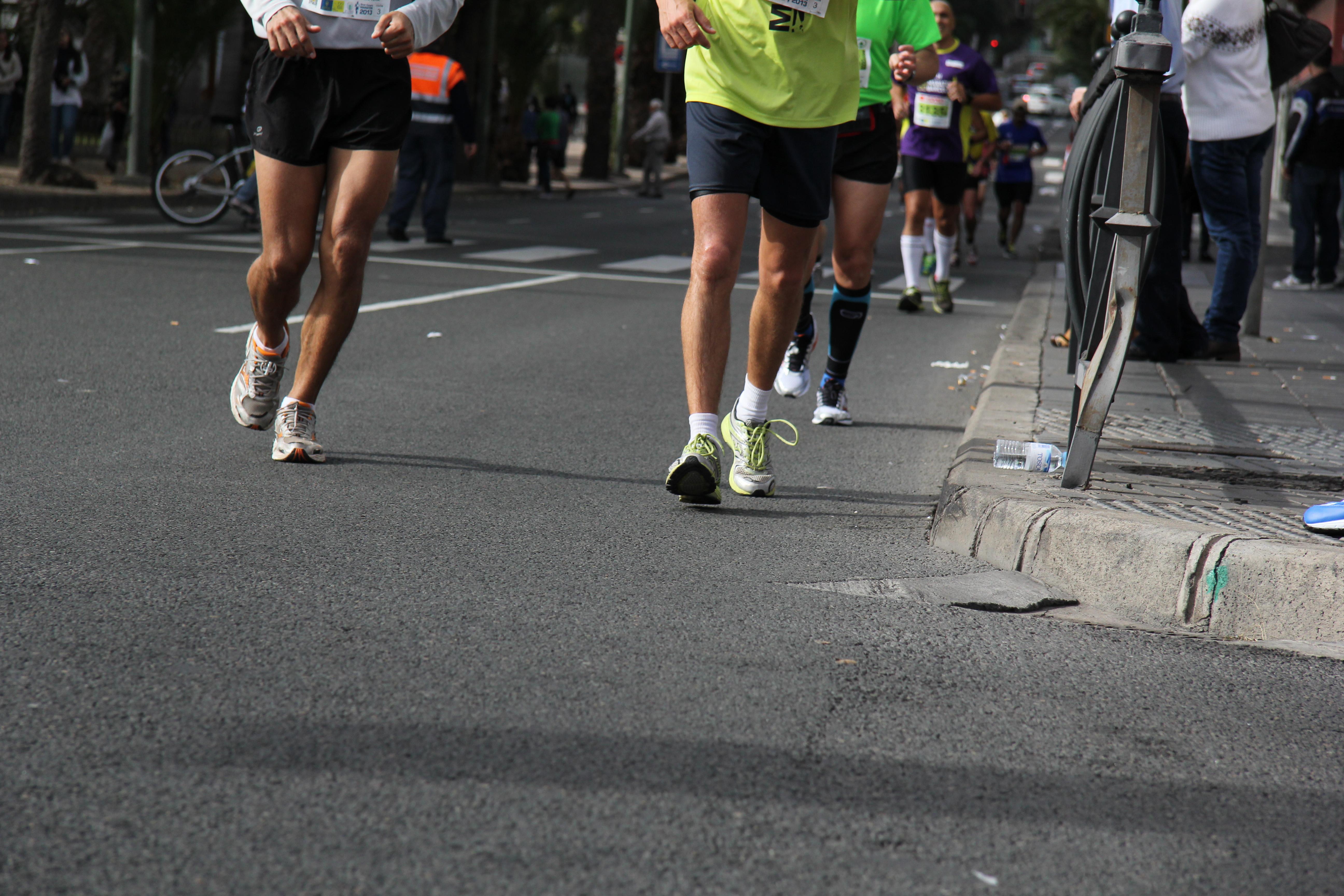
 With the London marathon approaching on Sunday, Molly Loeffler takes a look at the history of this great British sporting event.
The idea for the London Marathon was born in 1978 in a pub next to Richmond Park. Ex-Olympians John Disley and the late Chris Brasher were in the Dysart Arms listening to people talking about the New York Marathon. After hearing about the amazing atmosphere and experience their fellow runners had at the New York Marathon, Disley and Brasher decided to enter the 1979 race.
The ex-Olympians were astounded by the marathon. They loved how the entire city was involved with the course going by major New York attractions and thousands of cheering spectators lining the streets. Once they returned to London, Brasher wrote an article entitled ‘The World’s Most Human Race’ for The Observer and discussed how he believed the New York Marathon brought people together in a family sort of way. At the end of the article, he questioned whether London could ever host such an event.
The editor of The Observer, Donald Trelford, decided to take this article as an invitation to start considering the idea of a London Marathon. In 1980, Trelford organized a lunch for Brasher and Disley to meet authorities that would be involved in planning a marathon – the general consensus was that a London Marathon was an idea worth looking into.
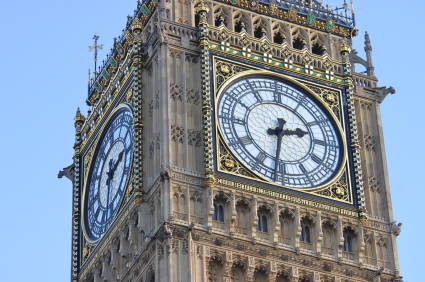 A couple of weeks later, Disley finished and presented a course design that edged along the Thames and only closed two bridges. The course was approved by police and the tourist board was very pleased with it because it displayed many London sights including Cutty Sark, Tower Bridge, the Docks, The Embankment, Big Ben and Buckingham Palace.
After visiting the US again to learn more about marathon planning and financing, Brasher prepared a £75,000 budget. Realizing that they could not pay for this themselves, they received a stroke of luck when Gillette, who was looking for a new sporting event to sponsor, offered to sponsor for three years.
Once they had established funding and charitable status for the marathon, Disley and Brasher composed 6 aims for the London Marathon:
- To improve the overall standard and status of British marathon running by providing a fast course and strong international competition.
- To show mankind that, on occasions, they can be united.
- To raise money for sporting and recreational facilities in London.
- To help boost London’s tourism.
- To prove that ‘Britain is best’ when it comes to organising major events.
- To have fun, and provide some happiness and sense of achievement in a troubled world.
20,000 people applied to run the inaugural race on 29 March 1981, but only 7,747 were accepted. 6,255 finished the race and American Dick Beardsley and Norwegian Inge Simonsen were the first to finish the race crossing the finish line hand in hand. The women’s race was won by 43 year old and mother of two Joyce Smith, who also broke the British record. Just as Disley and Brasher had hoped, thousands of people lined the streets to cheer on the runners and thousands more watched on BBC. The race has gained popularity and size over the years and 882,946 runners have finished the marathon since 1981 and it is televised in over 150 countries all over the world.
The course has changed many times over the 31 year history. The first marathon finished on Constitution Hill. Since then, the finished line has been on Westminster Bridge, and is currently on The Mall.
While charities’ role in the London Marathon was not very prominent in the beginning, more than three quarters of all competitors now run for a good cause. The London Marathon named its first official charity in 1984 and gave the Sports Aid Foundation entry places to help their fundraising. Since then, the marathon has had one or two official charities every year. They have also introduced the Gold and Silver Bond schemes to help charities gain places and raise money through the marathon. With these schemes, runners can sign up for the marathon through these charities once regular sign up has ended. 1,300 charities are involved with these bond schemes.
The London Marathon broke world records in 2007 when runners raised £46.5 million for charity making the marathon the largest single annual fundraising event in the world. The Guinness world record was broken again in 2008 when £46.7 million was raised.
The 2013 London Marathon is on Sunday 21st April and is sponsored by Virgin for the fourth consecutive year. Visit virginlondonmarathon.com for course maps, runner information, spectator information and any other marathon information that you might need. Best of luck to everyone running it!
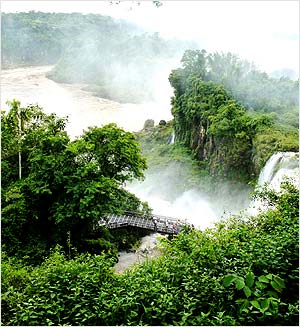 My visit to Iguassu Falls in Argentina was one of those highlights of a lifetime – and it turns out, not just for the spectacular waterfalls themselves – it was going to be an extraordinary opportunity to see wildlife close up, too.
 Maybe it wasn’t an obvious choice of first destination for a couple of first time travellers who like their home comforts, but actually Kolkata was not the terrifying culture shock people warned us about. Yes, we walked out of the airport to find a road made virtually uncrossable by unpredictable yellow taxis; we took said taxi in a seat-clutching ride across town seeing people cycling with boxes of chillies on their heads and live chickens tied to their handlebars; we were greeted in the streets by mothers begging for milk powder and packs of yellow dogs and men sleeping on the pavements. Yes, it was a million miles away, but amid this melee of people and smells and confusion, we found a city of incredibly beautiful buildings and parks, some of the best street food of the trip, and so many smiling faces: a girl who taught us Indian classical dancing in the Victoria Memorial gardens, a couple of street kids who we shared a lassi with, parents and children shaking ours hands at a Kali festival we happened to catch.
 It wasn’t just that Kolkata allowed us to jump into another culture headfirst, it also allowed us to meet other travellers, get advice, make plans. There is definitely a district for travellers, and lucky for us, most of them had been around for a while. Trains were all explained, haggling (although we never really mastered that), the head wobble. We ended up travelling with a guy we met on the first day for three weeks. Really (and I hate to admit it) it does help to have a man around in India. They just get more respect. Annoying but true.
 From Kolkata it was an overnight train to Darjeeling. The trains are really something. The queues for the tickets are utterly bewildering, but as long as you stand your ground as aggressively as everyone else pushes it shouldn’t take too long! The train itself is the best place to meet people. There’s always one man who takes charge of the conversation. Warning- he is usually the one that snores the loudest. You can buy everything under the sun. On that first train journey we counted 33 items that you could purchase, including yo-yo, statues of Ganesh, and nail clippers.
 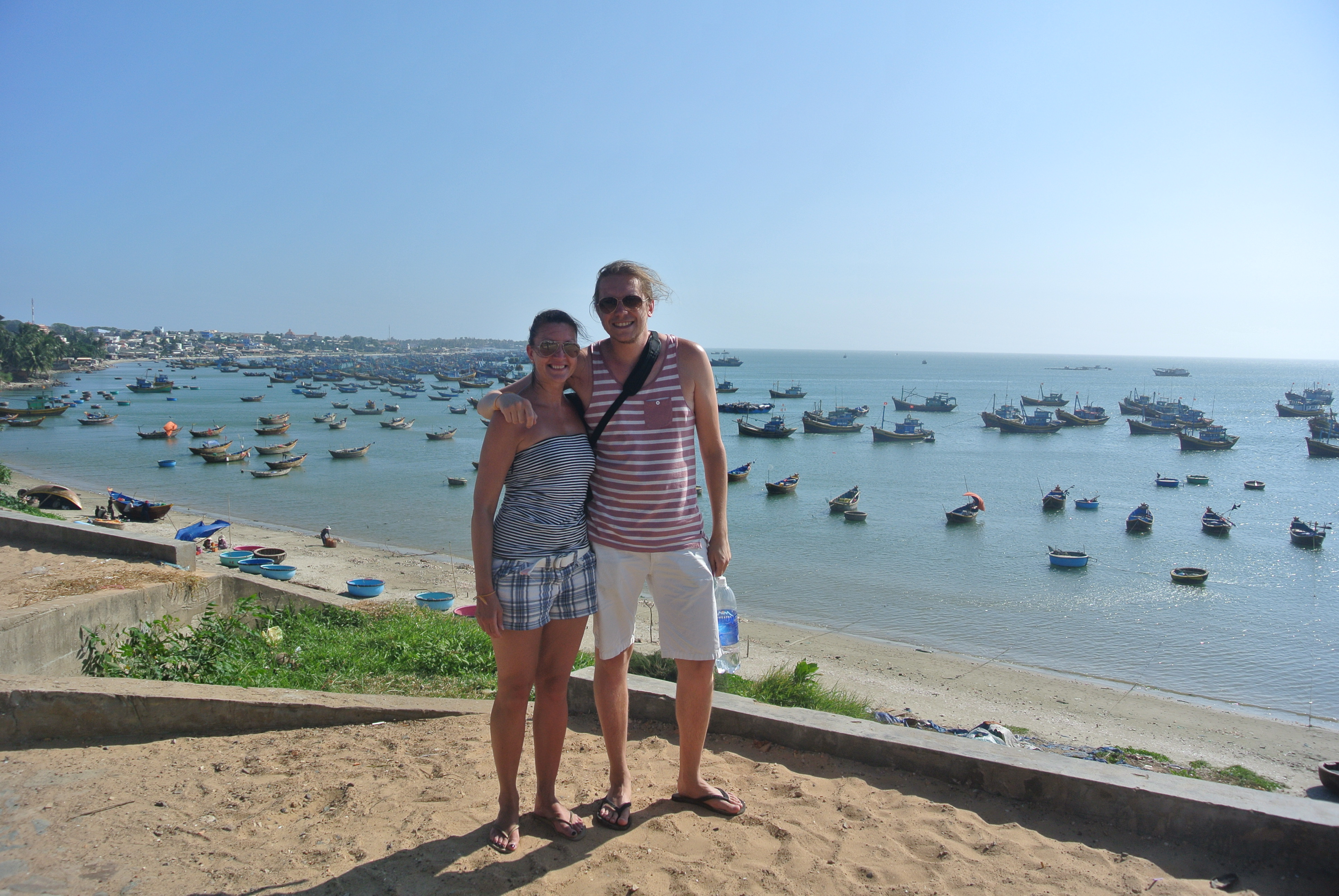 The 5-hour bus journey up the east coast of Vietnam from Saigon was packed full of near misses, a distinct lack of seats, and a police pullover. The driver appeared to be more focused on speaking on his mobile than the safety of the passengers and we could both see the headlines about two British backpackers being involved in a road accident. After what could only be described as the worst travel experience of both our lives, we finally arrived at the Zenora Beach Resort, Mui Ne.
 Debbie Valentine explores the cultural side of the sunny island of Malta.