 Debbie Valentine explores the cultural side of the sunny island of Malta.
The tiny island of Malta, basking in the Mediterranean sun, is not the first place you might think of for a cultural holiday. It has a reputation for being full of retired Brits sunning themselves, but if you dig a little deeper you’ll find some amazing history and beautiful things to see.
With over 7000 years of history, Malta is home to some of the most important and fascinating archaeological sites in the world. The ancient temples of Mnajdra, Ġgantija and Ħaġar Qim date from around 3000BC and are huge sites – Maltese locals thought they were the work of giants.
The most famous ancient Maltese site is the Hypogeum, a vast underground chamber, used as a temple and burial site. More than 5500 years old, the impressive structure is a UNESCO World Heritage Site. Reaching down to more than 10 metres below the ground there is a lot to discover about Malta’s ancient history. Tickets to visit the site are limited, for conservation reasons, so make sure you book ahead if you want to visit.
Many of the finds from these ancient sites are in the National Museum of Archaeology in Valletta, including the famous ‘Venus’ statue discovered at Ħaġar Qim, and the ‘Sleeping Lady’ from the Hypogeum. Ranging from 5200BC to 2500BC, the museum covers the first arrival of man on Malta through early settlements. You’ll find all kinds of fascinating finds inside.
 In Rabat, just outside the walls of Mdina, you can learn more about the Roman history of Malta. The Domus Romana is the ruin of a roman house, and has some beautifully preserved mosaic floors. The small museum contains some finds from the site and a history of the Romans on Malta. The island prospered under the Romans, and you can learn more Roman history at St Agatha’s and St Paul’s catacombs in Rabat. They are an interesting place to visit, to see the burial and worshipping spaces carved out of the rock.
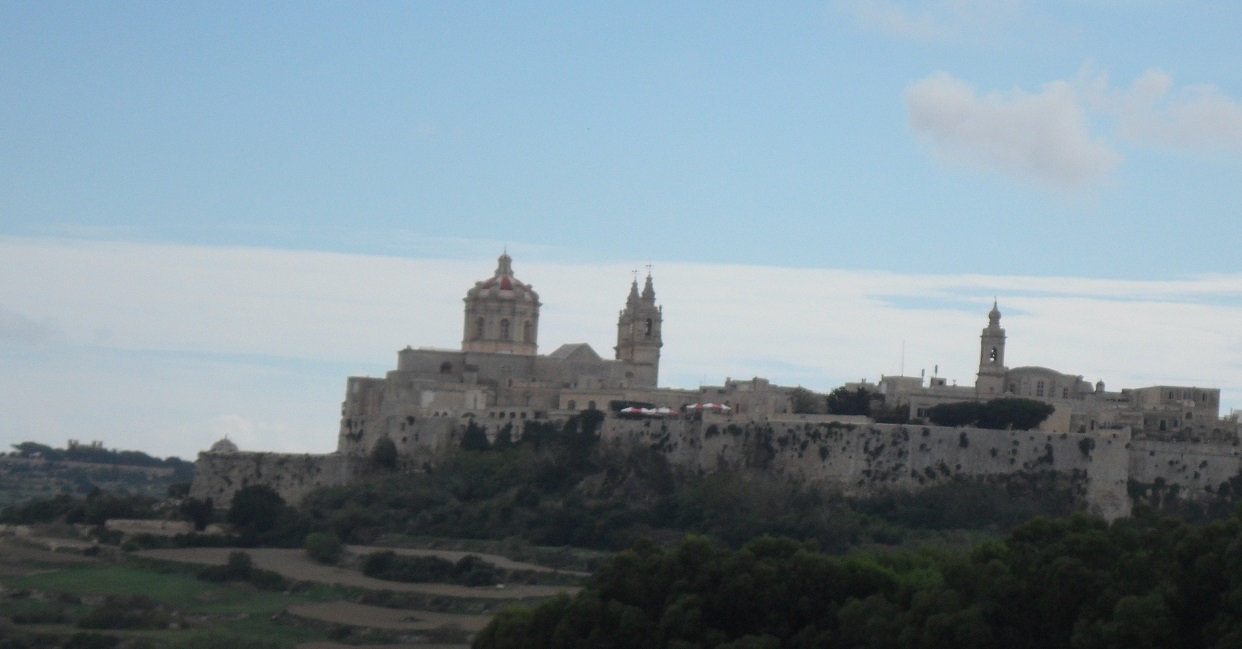
The most famous historical association Malta has is with the famous Order of the Knights of St John. The small, walled city of Mdina is beautifully preserved and here you can learn about its links with the Order. Their influence can be seen all over the island, not least in the eight-pointed Maltese Cross.
Walking around the fortified capital of Valletta, the influence of the Knights can be seen in the Auberges, the grand houses of the Knights. The Auberge de Castille and the Auberge d’Italie are two of the grandest buildings in the city. The latter is now the head office of the Malta Tourism Authority,and the Auberge de Provence houses the National Museum of Archaeology, so you can see the grandeur that some of the knights lived in.
One of the grandest buildings in Valletta is the Grandmasters’ Palace. Formerly the residence of the head of the Order of the Knights of St John, it now forms the Office of the President and the House of Representatives. The grand State Rooms and the armoury are open to the public, and visitors can learn about the Knights’ military role, especially in the 1565 Great Siege.
More recently, Valletta played an important role during the Second World War, and there is lots to discover about this period in Malta’s history. Malta was in a strategic location in the Mediterranean, so was the base for Allied raids on Italy, but was also the victim of terrible bombing itself. This history is well preserved on Malta and is some of the most fascinating.
Hidden underneath the streets of Valletta, dug out of the limestone of Malta, are the Lascaris war rooms. This was the base from which the Allies coordinated air surveillance and planned the invasion of Sicily. It has been preserved and a guided tour will tell you about the ravages of the Second World War on Malta and the amazing work done in these underground tunnels.
Fort St Elmo was the military base in Valletta during the Second World War, and here, at the National War Museum, you can see the George Cross that the whole country was awarded for its bravery by King George VI. There are lots of artefacts and exhibits here about both World Wars, including a restored fighter plane and submarine. The Malta at War attraction offers a civilian perspective on the war, showing how people’s lives were affected by the war, and how they coped.
Whatever history you’re interested in, you’ll find something to grab your interest on Malta. Added to the beautiful weather and lovely scenery, this makes the tiny island a great place for a memorable holiday.
To discover our full range of Malta street maps and travel guides, click here.