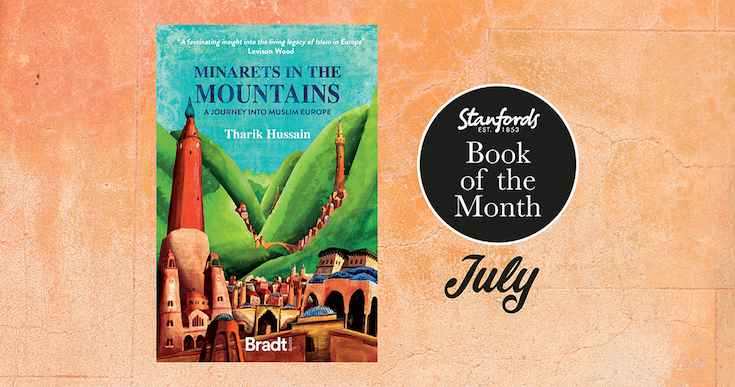
Book of the Month: Minarets in the Mountains by Tharik Hussain

Minarets in the Mountains: A Journey into Muslim Europe by Tharik Hussain £9.99

In our Book of the Month for July, Londoner Tharik Hussain sets off with his wife and young daughters around the Western Balkans, home to the largest indigenous Muslim population in Europe, and explores the regions of Eastern Europe where Islam has shaped places and people for more than half a millennium. Encountering blonde-haired, blue-eyed Muslims, visiting mystical Islamic lodges clinging to the side of mountains, and praying in mosques older than the Sistine Chapel, he paints a picture of a hidden Muslim Europe, a vibrant place with a breathtaking history, spellbinding culture and unique identity.

Minarets in The Mountains, the first English travel narrative by a Muslim writer on this subject, also explores the historical roots of European Islamophobia. Tharik and his family learn lessons about themselves and their own identity as Britons, Europeans and Muslims. Following in the footsteps of renowned Ottoman traveller Evliya Celebi, they remind us that Europe is as Muslim as it is Christian, Jewish or pagan.

Like William Dalrymple’s In Xanadu, this is a vivid reimagining of a region’s cultural heritage, unveiling forgotten Muslim communities, empires and their rulers; and like Kapka Kassabova’s Border, it is a quest that forces us to consider what makes up our own identities, and more importantly, who decides?

Watch Tharik Hussain introduce Minarets in the Mountains.
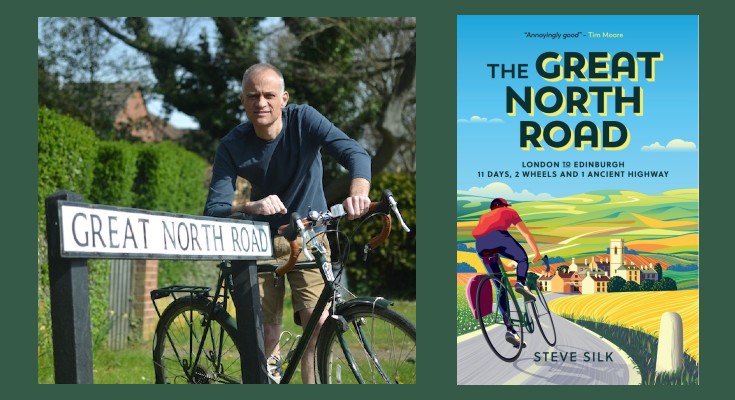
Monuments and Markers along the Great North Road

Are you the kind of person who can’t walk past a plaque or a monument without reading every single word? Here, Steve Silk, the author of The Great North Road, talks us through his five favourites along the 400 miles between London and Edinburgh. 

As a crucial route linking London to Edinburgh, the Great North Road has been Britain’s backbone for centuries. Kings, queens, soldiers, rebels, mail coaches and highwaymen used the road to get from A to B. One hundred years later journalist Steve Silk went on pilgrimage by bike to explore its history. At a slower pace it’s easier to notice key markers and signs of the past that surround us…

Continue reading Monuments and Markers along the Great North Road

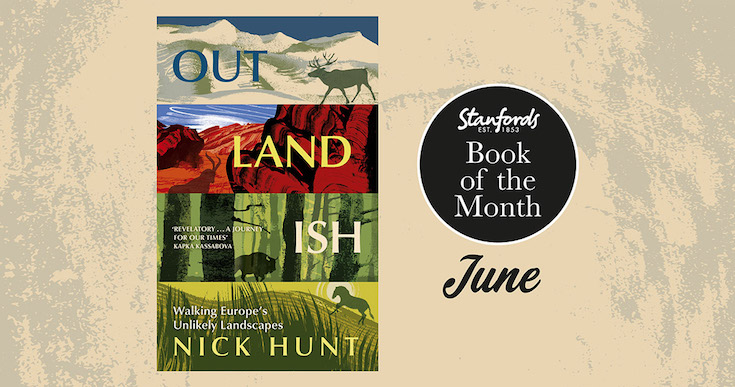
Nick Hunt: Outlandish: Pilgrimages of the imagination

Acclaimed travel writer Nick Hunt joins Peter from Stanfords Bristol to talk about his latest book and the Stanfords Book of the Month for June 2021, Outlandish: Walking Europe’s Unlikely Landscapes.

Arctic tundra in Scotland, jungle in Poland, desert in Spain and steppe in Hungary: places acting as portals in time and space. These are landscapes brimming with story, mystery and a sense of deep history.  But they also offer us glimpses of a world not yet here, one perhaps just around the corner.

Following Nellie Bly

GLOBETROTTER NELLIE BLY’S ADVICE FOR THE ADVENTURER

Six top tips 

By Rosemary J Brown

Trailblazing journalist Nellie Bly circled the world faster than anyone ever had in 1890. She travelled alone — literally with the clothes on her back and a Gladstone bag – to beat the fictional 80-day record of Phileas Fogg.  When she won her race around the world in 72 days, it was called “the most remarkable of all feats of circumnavigation ever performed by a human being”.  

Continue reading Following Nellie Bly

10 Pride Month book recommendations

Here are 10 book recommendations from staff at Stanfords to celebrate Pride Month:

Conundrum by Jan Morris

As one of Britain’s best and most-loved travel writers, Jan Morris has led an extraordinary life. Perhaps her most remarkable work is this grippingly honest account of her ten-year transition from man to woman – its pains and joys, its frustrations and discoveries.

Continue reading 10 Pride Month book recommendations

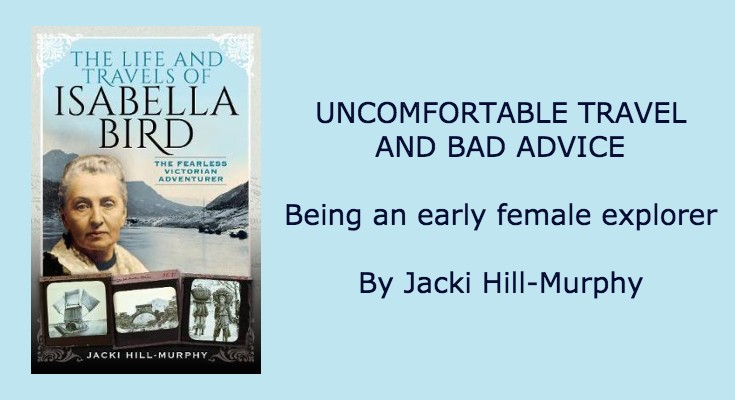
The Life and Travels of Isabella Bird

UNCOMFORTABLE TRAVEL AND BAD ADVICE

Being an early female explorer

By Jacki Hill-Murphy

While I was writing The Life and Travels of Isabella Bird the question on my mind was: could we possibly have similar adventures to Isabella today? While  travelling  to hitherto unknown countries Isabella’s methods to reach the heart of a place, its people, their culture and the wildest features of its landscape would be totally off limits to us today; in a century and a half we have cleaned up and commingled our world and turned slow travel into fast.

Continue reading The Life and Travels of Isabella Bird

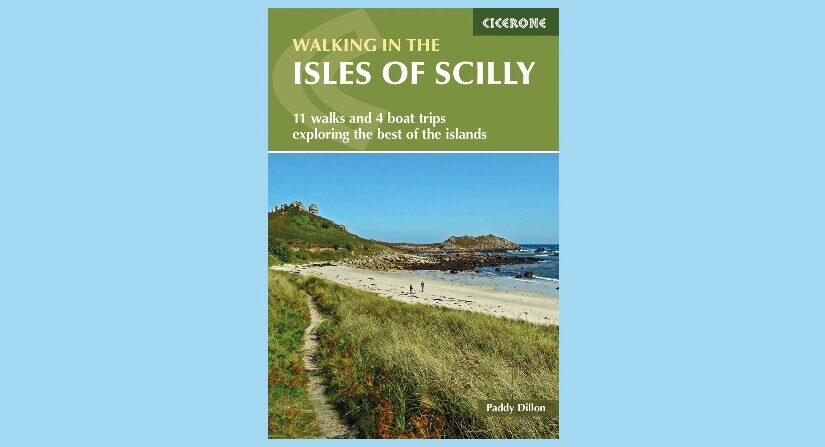
Walking in the Isles of Scilly: The Garrison Wall

-by Paddy Dillon

Of all the British Isles, the Isles of Scilly are the most blessed. Basking in sunshine, rising green and pleasant from the blue Atlantic Ocean, fringed by rugged cliffs and sandy beaches, these self-contained little worlds are a joy to explore. They are as close to a tropical paradise as it is possible to be in the British Isles, with more sunshine hours than anyone else enjoys. There are no tall mountains, but the rocks around the coast are as dramatic as you’ll find anywhere. There are no extensive moorlands, but you’ll forget that as you walk round the open heathery headlands. The islands may be small in extent, but the eye is deceived and readily imagines vast panoramas and awesome seascapes. Views to the sea take in jagged rocks that have ripped many a keel and wrecked many a ship. The islands are clothed in colourful flowers, both cultivated and wild, and attract a rich bird life, including native breeding species and seasonal migrants. And always, there is the sea.

The Isles of Scilly form the smallest of Britain’s Areas of Outstanding Natural Beauty, and their historic shores have been designated as Heritage Coast. The surrounding sea is protected as a Marine Park of great biodiversity. Archaeological remains abound, not only on the islands, but also submerged beneath the sea. The Isles of Scilly are special, revealing their secrets and charms to those who walk the headlands, sail from island to island, and take the time to observe the sights, sounds and scents of the landscape. While the walks in this guidebook could be completed in as little as a week, a fortnight would allow a much more leisurely appreciation of the islands, and leave memories that will last for a lifetime.

Continue reading Walking in the Isles of Scilly: The Garrison Wall

Book of the Month: Outlandish by Nick Hunt

In our Book of the Month for June, Outlandish: Walking Europe’s Unlikely Landscapes acclaimed travel writer Nick Hunt takes us across landscapes that should not be there, wildernesses found in Europe yet seemingly belonging to far-off continents: a patch of Arctic tundra in Scotland; the continent’s largest surviving remnant of primeval forest in Poland and Belarus; Europe’s only true desert in Spain; and the fathomless grassland steppes of Hungary.

Continue reading Book of the Month: Outlandish by Nick Hunt

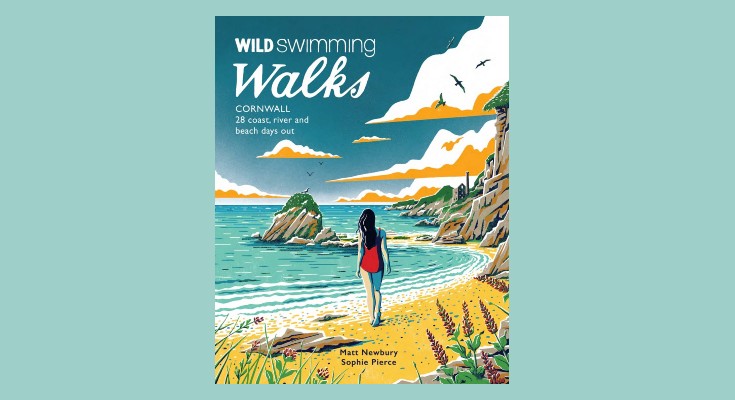
5 Wild Beauties of Cornwall

The tip of South West England is a paradise for walking and swimming, with over 300 miles of coastline and hundreds of beaches.  And yet the terrain of Cornwall is not just about the coast, but about deserted moors, sweeping estuaries and wooded dells.  Matt Newbury and Sophie Pierce, authors of new guidebook, Wild Swimming Walks Cornwall, share some of their favourite swim spots. 

Continue reading 5 Wild Beauties of Cornwall

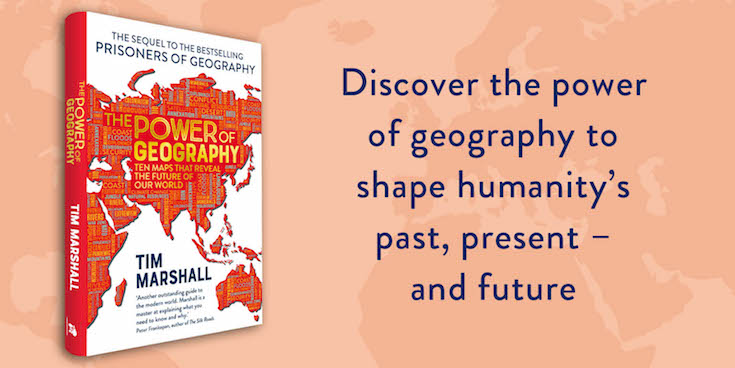
An extract from ‘The Power of Geography’ by Tim Marshall

Tim Marshall’s global bestseller Prisoners of Geography showed how every nation’s choices are limited by mountains, rivers, seas and concrete. Since then, the geography hasn’t changed. But the world has.

In this revelatory new book The Power of Geography, Marshall explores ten regions that are set to shape global politics in a new age of great-power rivalry: Australia, Iran, Saudi Arabia, the UK, Greece, Turkey, the Sahel, Ethiopia, Spain and Space.

Delivered with Marshall’s trademark wit and insight, this is a lucid and gripping exploration of the power of geography to shape humanity’s past, present – and future.

We are honoured to have an extract from the Australia chapter to share with you:

Continue reading An extract from ‘The Power of Geography’ by Tim Marshall