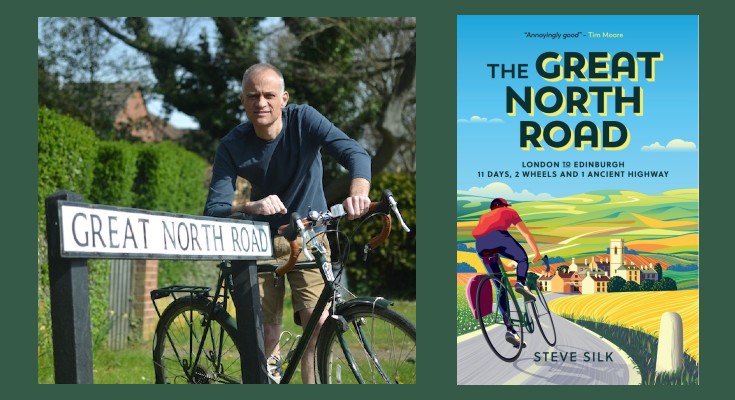
Are you the kind of person who can’t walk past a plaque or a monument without reading every single word? Here, Steve Silk, the author of The Great North Road, talks us through his five favourites along the 400 miles between London and Edinburgh.
As a crucial route linking London to Edinburgh, the Great North Road has been Britain’s backbone for centuries. Kings, queens, soldiers, rebels, mail coaches and highwaymen used the road to get from A to B. One hundred years later journalist Steve Silk went on pilgrimage by bike to explore its history. At a slower pace it’s easier to notice key markers and signs of the past that surround us…
Robin Hood’s Well – Skellow, South Yorkshire
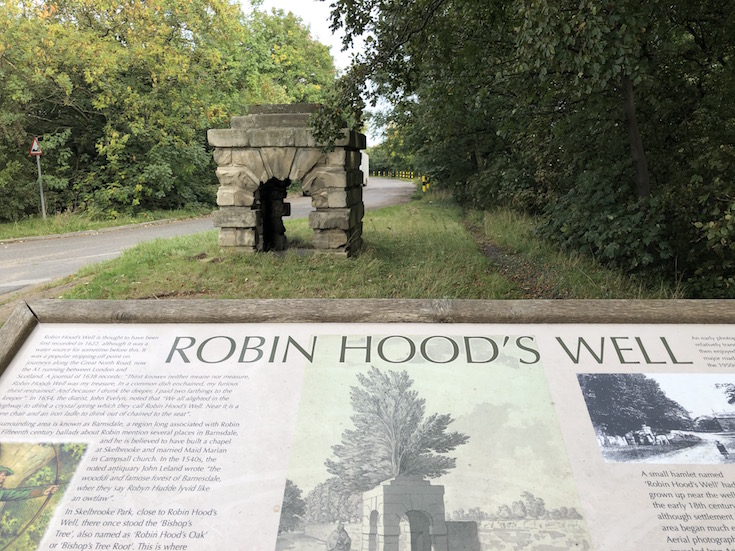
Hidden in a layby along a particularly noisy stretch of the A1 you’ll find an elegant well house. It’s all that remains of Robin Hood’s Well where travellers stopped for centuries. The very information board includes a poem from almost 400 years ago:.
Thirst knows neither name nor measure
Robin Hood’s Well was my treasure
In a common dish enchained
My furious thirst restrained
And because I drunk the deeper
I paid two farthings to the keeper.
Those memories certainly tie in with another writer who described people sitting in a stone chair and drinking the water with the help of an iron ladle. It’s enough to send a shiver down public health officials’ spines whatever the era.
The Old Forge – Carton on Trent, Nottinghamshire
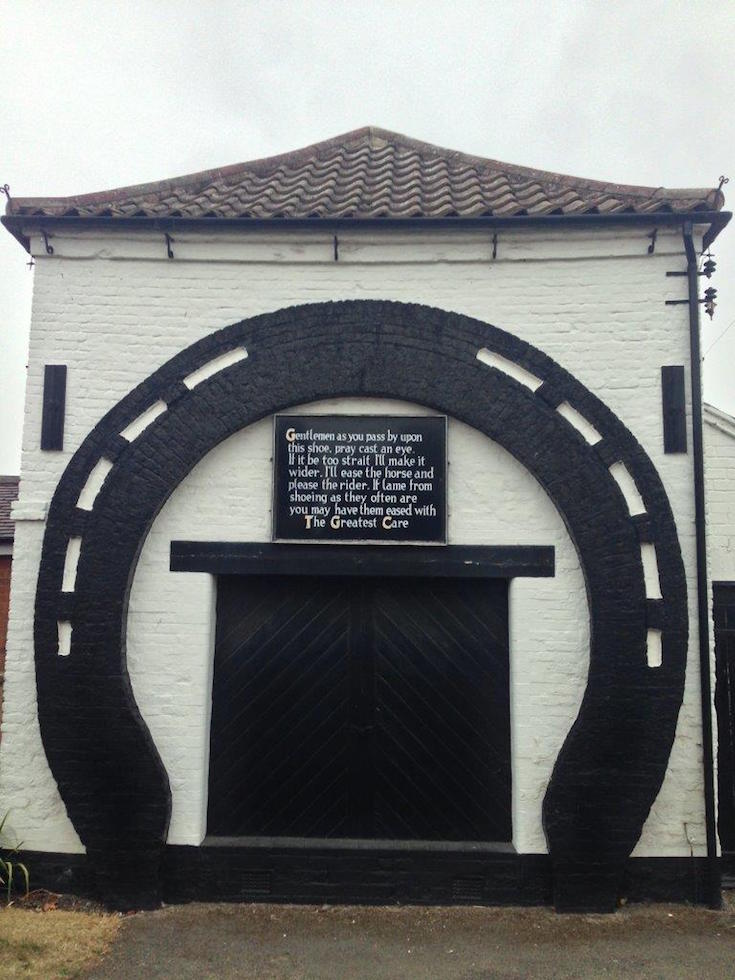
For hundreds of years travelling along the Great North Road meant using horse power. And where you had horses, you needed an entire ecosystem of paddocks and stabling, ostlers and coaching inns.
Most evidence of those days has been wiped away by the internal combustion engine. So three cheers to this magnificent old smithy with a two-storey high brick horseshoe built into its frontage. And a charming inscription:
Gentlemen as you pass by upon this shoe,
Pray cast an eye.
If it be too strait I’ll make it wider
I’ll ease the horse and please the rider.
If lame from shoeing as they often are
You may have them eased with
The Greatest Care.
The old forge remains a low-key tourist attraction – many a horse-drawn wedding party still poses outside.
The FT Bidlake Memorial Garden – Sandy, Bedfordshire
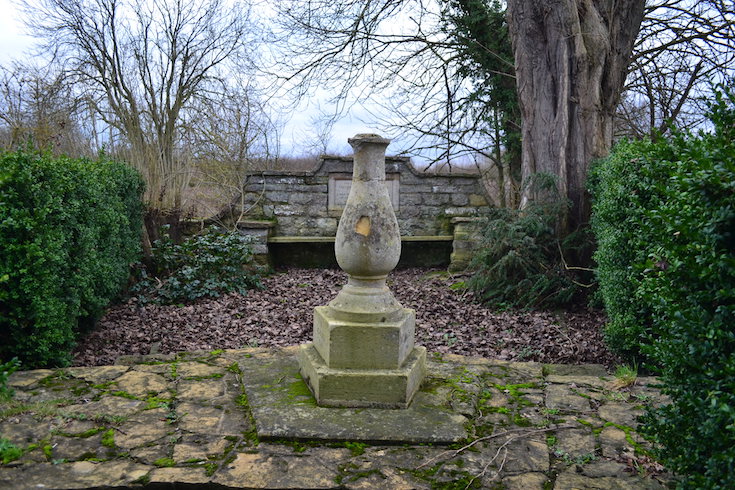
Tucked away in a tiny triangle of land close to a busy junction is an almost secret memorial to one of Britain’s most influential early cyclists. His name was FT Bidlake, a record-breaker in the late 19th century and a record keeper for much of the early 20th.
Protected by tall poplar trees, the garden consists of a bench, the base for a sundial and a plaque describing him as “a great cyclist, a man of considerable charm and culture an untiring worker for cyclists”.
Believe it or not, the idea of cyclists racing on roads was controversial in the 1890s. And a minor traffic accident involving Bidlake and a horse and trap produced a moral panic which saw the sport voluntarily ban all road racing before the end of the century.
So while the great cycling nations of mainland Europe ploughed on, us Brits turned to time trialling – one person at a time, racing against the clock. Even this was frowned upon. It was a world of whispered rendezvous points and early-morning starts.
And the organiser of these clandestine events? FT Bidlake. In his latter years remembered as a white-haired man with a cloth cap, bow-tie and breeches.
…And always with a stopwatch in his hand.
The Battle of the Standard – Northallerton, North Yorkshire
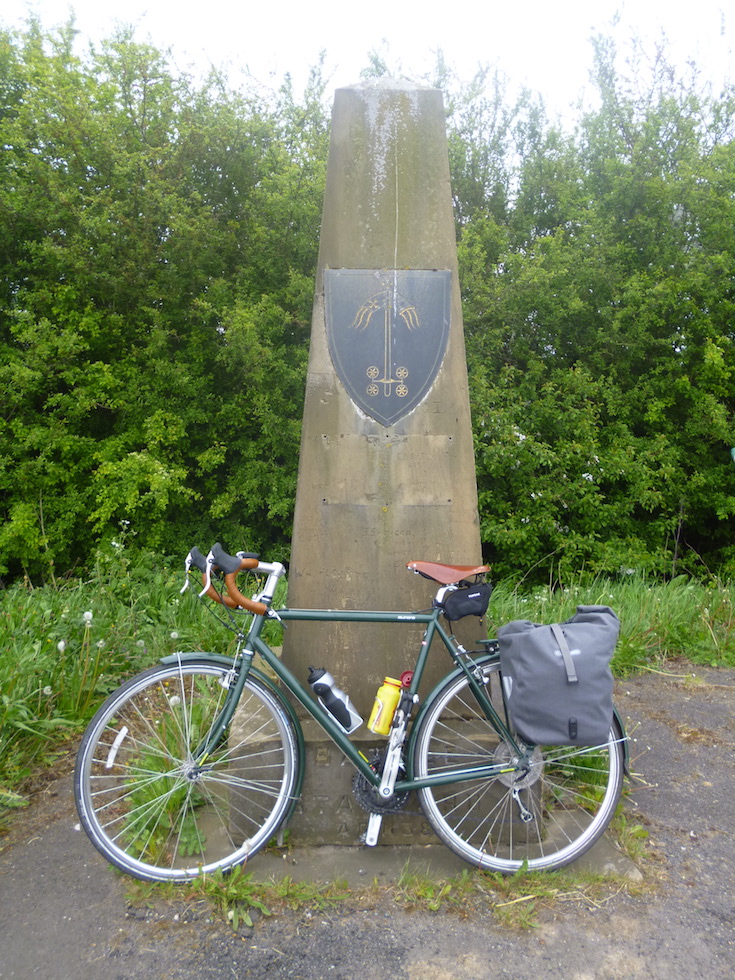
Battlefield sites litter the land alongside the Great North Road. Most are essentially fights between monarch and rebels. But this one introduces a new feature – marauding Scots. In fact it’s almost compulsory for Scots to be described as marauding in battle-related literature in these parts. On this occasion they had crossed the River Tweed in March 1138 and devastated parts of the country with what the information panel calls “vicious savagery”. King Stephen was otherwise engaged, so Thurstan, the Archbishop of York, was sent north to get a grip.
Across the high ground, Thurstan arranged for a series of banners to be raised on top of a crude carriage. The flags represented the great Northern saints: St Cuthbert of Durham, St Peter of York, St John of Beverley and St Wilfred of Ripon. This was the standard that gave the battle its name.
The English were greatly outnumbered, but better led and better armed. After a row over tactics The Scottish king had put 6,000 Galloway Picts in the front line. The panel board continues:
“They had a reputation for ferocity and courage but were lightly armed and clad in short kilts leaving their buttocks half-naked.”
Baring buttocks in March was never going to end well. The English held firm and eventually broke through, killing many thousand Scots in the process.
The Battlefield Walking Tour – Prestonpans, East Lothian
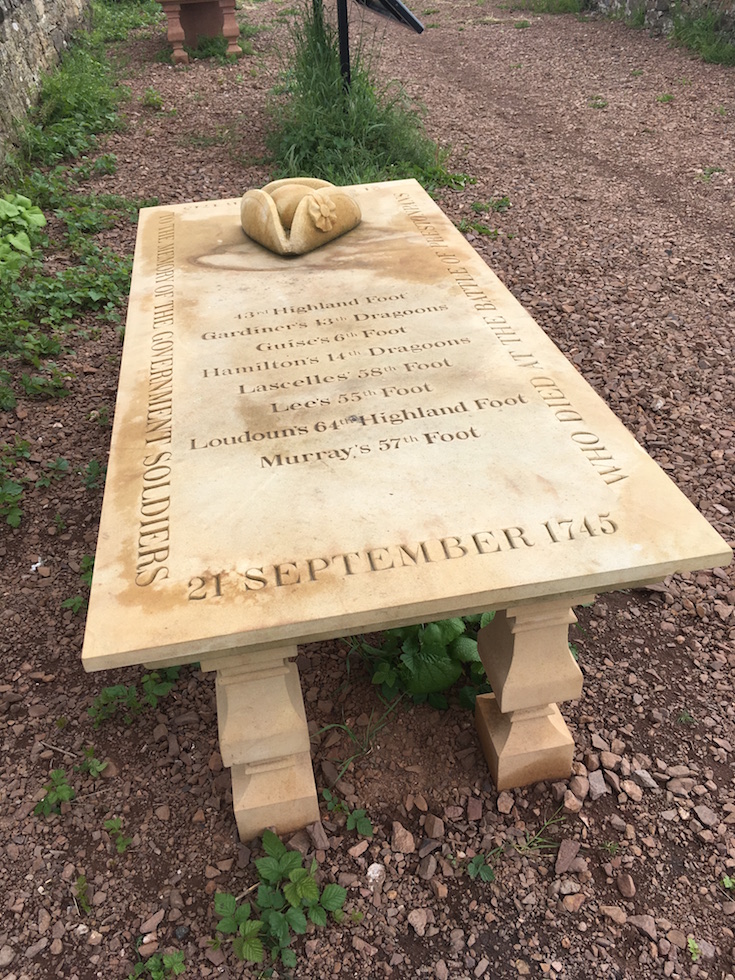
The Battle of Prestonpans is the favourite of all my Great North Road scraps, not least because the underdogs pulled off an unlikely victory – the might of the British state beaten by Jacobite rebels. The former should have thoroughly defeated the latter, but, on September 21st, 1745, the Redcoats under Sir John Cope turned and ran in the face of a Highland charge. Ultimately the tables would be turned the following year at Culloden, so this victory heralded only the briefest of honeymoons.
Like any good battle, it’s spawned a few myths. First, that Cope slept soundly in a comfortable bed nearby, completely unaware of his enemies’ movements; second that in the headlong retreat, he was that rare creature, a general who brought news of his own defeat to the wider world. Apparently neither are true but they’re good enough stories to weave into a Border Ballad taunting Cope:
Hey Johnnie Cope, are you wauking yet?
Or are your drums a-beating yet?
If ye were wauking I wad wait
To gang to the coals i’ the morning.
Wauking, it should be said, translates as waking.
Along the path of an old waggonway you will find two symbolic tombstones raised off the ground: one in red sandstone to the memory of the Jacobite soldiers; another in yellow limestone for the government soldiers.
The Great North Road: London to Edinburgh – 11 Days, 2 Wheels and 1 Ancient Highway by Steve Silk (Summersdale) is available now.
Join us at Stanfords London 8th July 2021 at 7pm as we welcome Steve Silk to talk about The Great North Road. Tickets available here.