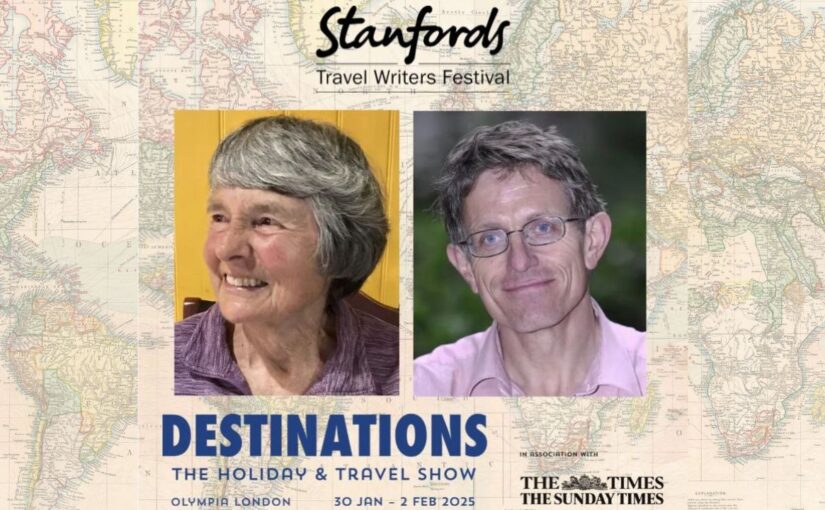
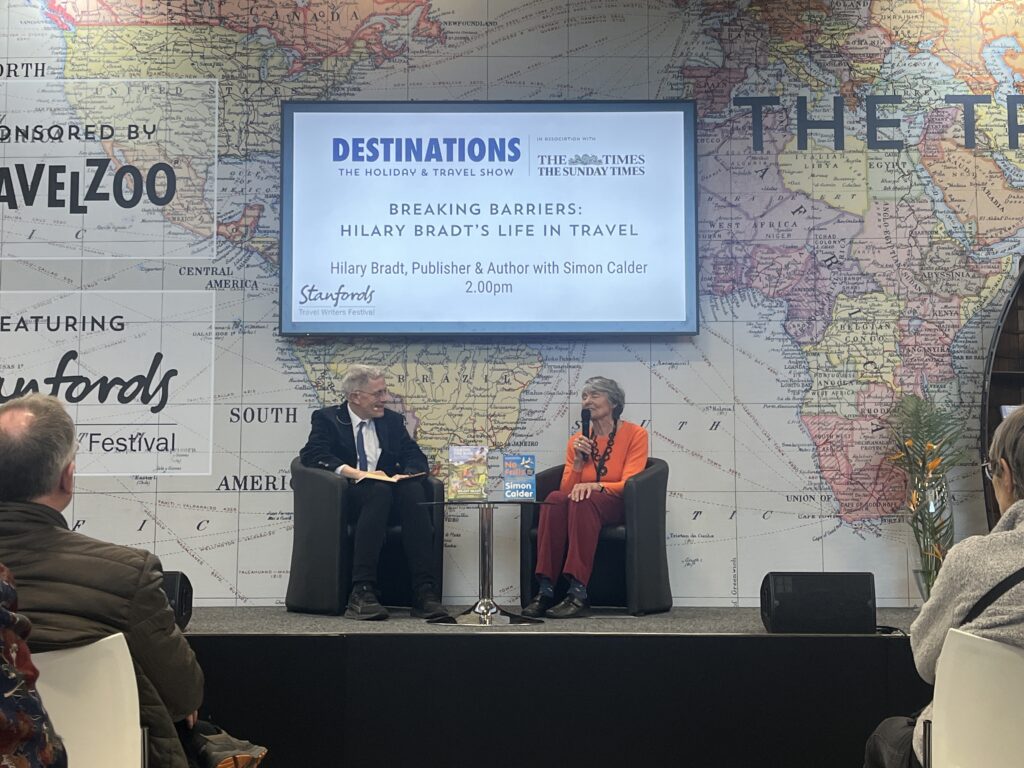
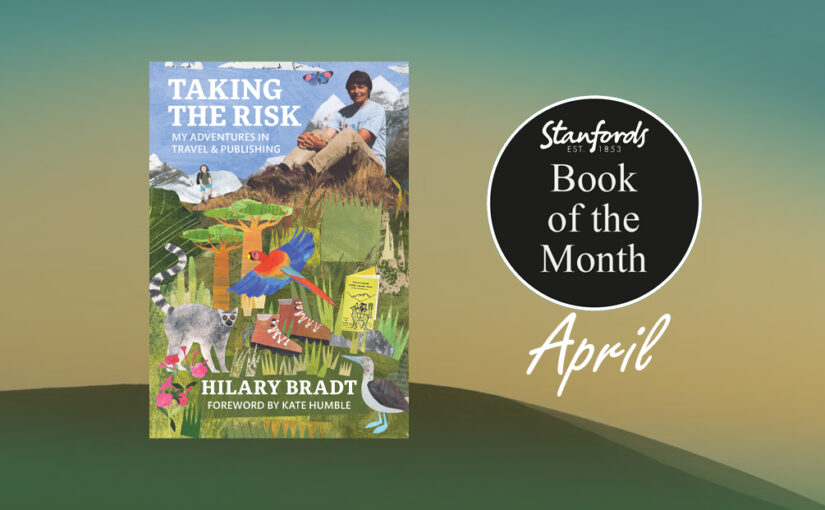
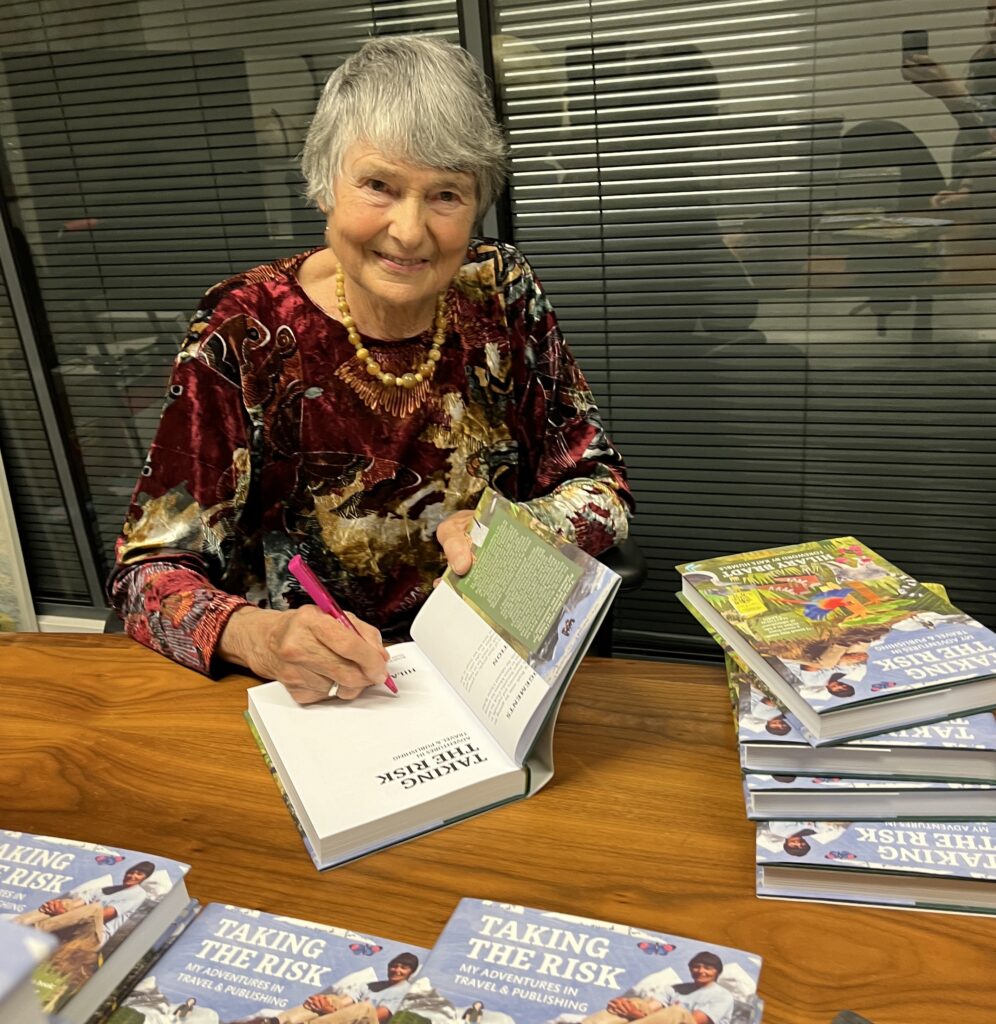
Taking the Risk is Hilary Bradt’s engaging, insightful, amusing and sometimes alarming memoir about serendipitous adventures in travel and publishing. A travel industry trail-blazer who co-founded Bradt Guides, Hilary Bradt talks to travel journalist Simon Calder about 50 years of escapades, surprises, mishaps and success.
Over the next few weeks the judging will commence for the 2025 Edward Stanford Travel Writing Awards Presented by Viking. Yesterday the shortlisted entries for the Bradt New Travel Writer of the Year were announced.
Unpublished writers were invited to submit a piece on the theme; ‘A Hasty Exit.’
Here are the finalists, highly commended and commended pieces:
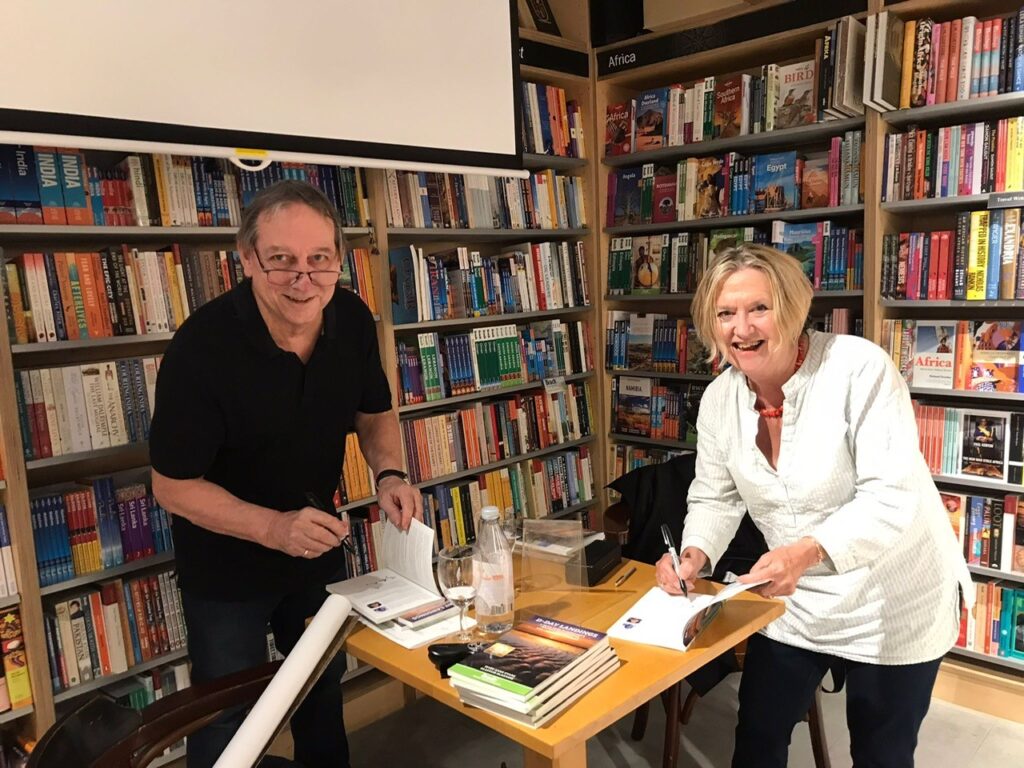
Published to commemorate the 80th anniversary of the military mission that changed World War II, this is Bradt’s new guidebook to visiting beaches, memorials, museums, battlefields and other sites associated with D-Day and the Battle of Normandy (Operation Overlord). A simple-to-follow, portable guide for independent travellers, it includes maps and driving instructions to help visitors go back in time to explore World War II history.
In Taking the Risk Hilary Bradt looks back on 50 years of escapades, surprises, mishaps, disasters… and success. From her first solo trip aged three (on a British beach), she revisits six decades of hitchhiking, feeding the travel habit by working abroad, and starting a successful travel publishing company where knowing nothing proved a surprising asset.
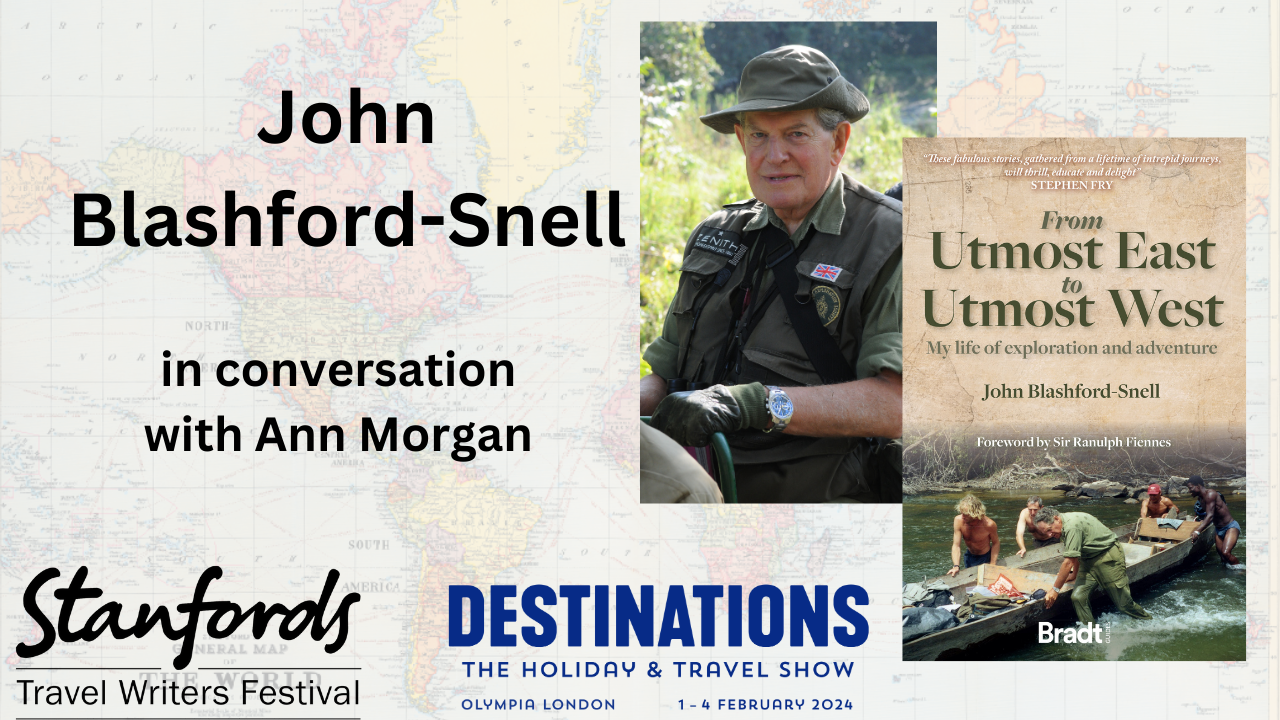
From Destinations: The Holiday & Travel Show in London’s Olympia, The Stanfords Travel Writers Festival welcomes Colonel John Blashford-Snell, one of the country’s most eminent and seasoned explorers.
His name is known globally for his daring adventures and intrepid journeys of discovery. Now, well into his eighties (and still planning future trips), he talks to Ann Morgan, telling tales from Africa, Asia and the Americas, about some of the 100 or so expeditions he has led in pursuit of archaeological, anthropological, botanical, biological and zoological objectives.
The world’s best competition for unpublished travel writers. In association with the Edward Stanford Travel Writing Awards.
For over twenty years, the Bradt Guides ‘New Travel Writer of the Year’ competition has been seeking out and championing new writing talent. Previous winners and finalists in the competition have gone on to see their work published in newspapers, travel magazines and books.
At the Edward Stanford Travel Writing Awards in March we awarded Hilary Bradt with the Outstanding Contribution to Travel Writing Award. The previous year’s recipient of this award, Dervla Murphy, sent this message to Hilary from her home in Ireland for us to read out at the awards;
“When we first met in an Andean hut in 1979 I had one of those instant reactions- a kindred spirit. During the subsequent decades Hilary, as both a traveller and writer, has provided invaluable guidance and encouragement to generations of young travellers uninterested in beaten tracks. Congratulations of your award Hilary.”
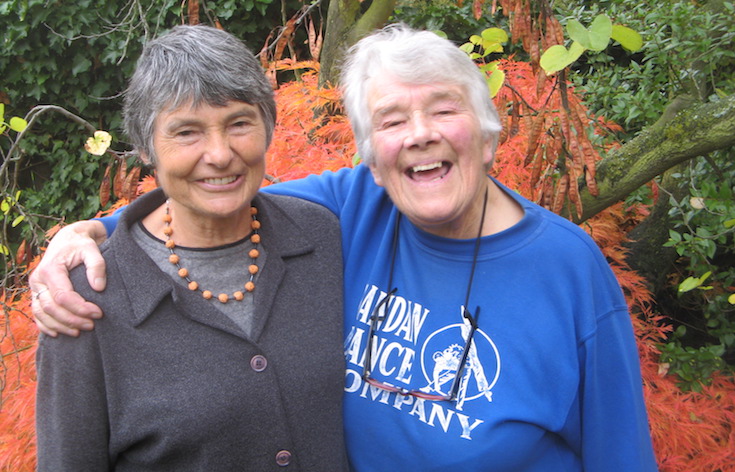
Here Hilary Bradt pays tribute to a great travel writer and a special friend for 40 years.
-by Hilary Bradt
On May 5 I received an email from Dervla’s friend and PR, Steph Allen, with this message: “I’ve just spoken to Dervla who is not at all well. She has heart failure and believes that she is (in her own words) on her way out. I asked if there was anyone she’d like me to let know and she asked if I could send you a message to say thank you for everything you have done for her over the years”. This unwarranted thoughtfulness and generosity personifies this extraordinary woman who died on May 22, and who I first met in 1979 in an Ecuadorian hostal (the sort with no hot water, $3 a night, with rooms clustered around a courtyard). She was returning from Peru, which would (eventually) result in Eight Feet in the Andesand George and I were researching our guide to Backpacking inVenezuela, Colombia and Ecuador – the third in our fledgling backpacking series. I, like so many other young travellers, had been inspired by Dervla’s early books, in my case Full Tiltand In Ethiopia with a Mule, and was awe-struck to meet such a famous writer. The awe was diluted by a shared bottle of local rum, but the admiration grew steadily throughout our 44-year friendship.
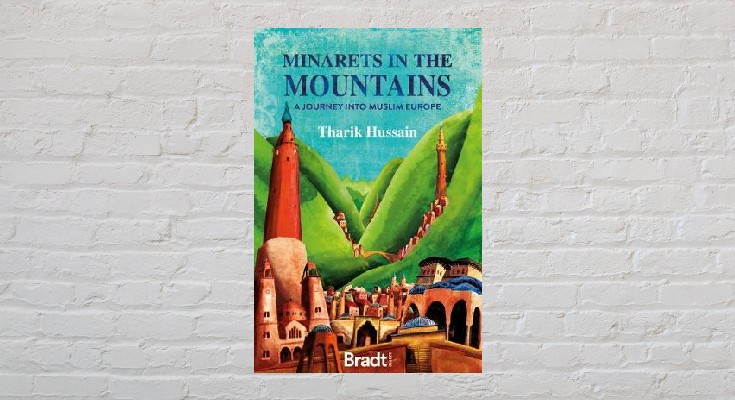
In his 2021 bestselling book, Minarets in the Mountains: a Journey into Muslim Europe, author Tharik Hussain tells the story of Europe’s living indigenous Muslim communities in countries like Bosnia and Herzegovina, Serbia, Kosovo, North Macedonia, Albania and Montenegro, where they have been living for almost six centuries. Yet the story of Muslim Europe is actually as old as Islam itself. These five places of European Muslim heritage reveal the continent’s fourteen centuries of Islamic presence.
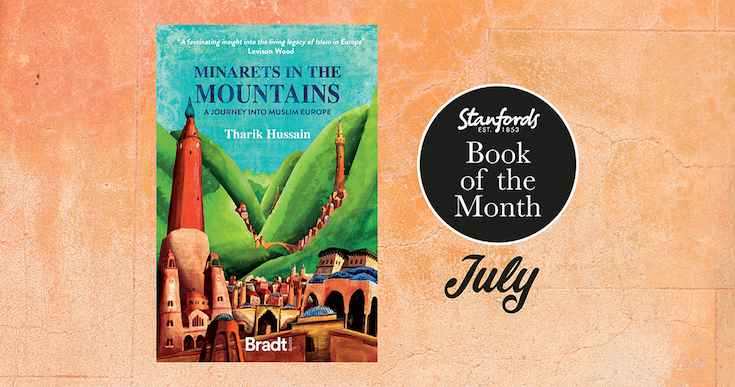
In our Book of the Month for July, Londoner Tharik Hussain sets off with his wife and young daughters around the Western Balkans, home to the largest indigenous Muslim population in Europe, and explores the regions of Eastern Europe where Islam has shaped places and people for more than half a millennium. Encountering blonde-haired, blue-eyed Muslims, visiting mystical Islamic lodges clinging to the side of mountains, and praying in mosques older than the Sistine Chapel, he paints a picture of a hidden Muslim Europe, a vibrant place with a breathtaking history, spellbinding culture and unique identity.
Minarets in The Mountains, the first English travel narrative by a Muslim writer on this subject, also explores the historical roots of European Islamophobia. Tharik and his family learn lessons about themselves and their own identity as Britons, Europeans and Muslims. Following in the footsteps of renowned Ottoman traveller Evliya Celebi, they remind us that Europe is as Muslim as it is Christian, Jewish or pagan.
Like William Dalrymple’s In Xanadu, this is a vivid reimagining of a region’s cultural heritage, unveiling forgotten Muslim communities, empires and their rulers; and like Kapka Kassabova’s Border, it is a quest that forces us to consider what makes up our own identities, and more importantly, who decides?
Watch Tharik Hussain introduce Minarets in the Mountains.
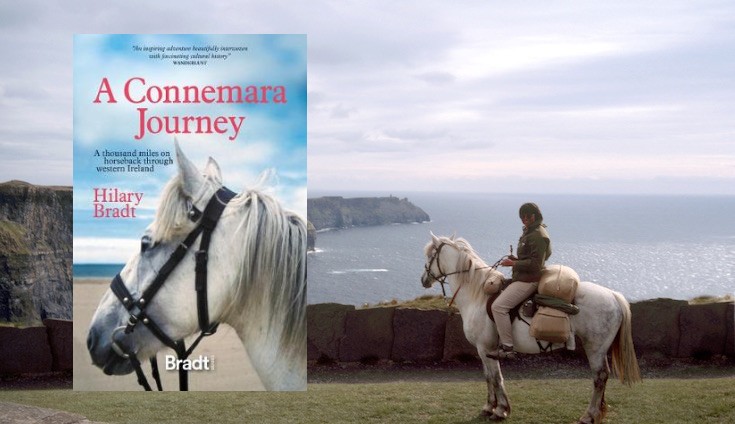
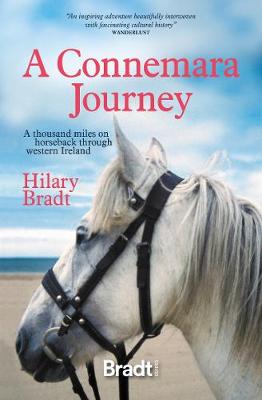
A Connemara Journey is Hilary Bradt’s classic account of a journey through Ireland on horseback in the 1980s published for the first time in a single volume.
In 1984, Hilary Bradt achieved an ambition from her pony-mad childhood to undertake a long-distance ride. Using her experience of horsepacking in Peru with saddlebags imported from America, she and her pony set forth with no decent maps, and only a vague idea of the route. The book is also a portrait of a vanished rural Ireland before the Celtic Tiger era, built up from descriptions and conversations with local people.
The journey takes Bradt a thousand miles south from county Mayo, around the peninsulas of Kerry and Cork, and inland towards Waterford.
From my horsey childhood growing up in the 1950s and addicted to pony books, I had dreamed of having my own pony and going on a long-distance ride. No more riding-school hour doing a circular hack, but days out exploring the countryside with my perfect pony. This finally came to pass in 1984 when I found myself single again and ready to embark on this greatest of all adventures.
First I had to decide where to go.
I know, Iceland! It had all the requirements: lovely scenery, a tough breed of native pony and friendly people who generally spoke English. I’d been there and loved it. I tried out the idea by rather casually mentioning in my Christmas letter that I was going to buy a native pony in Iceland and do a long-distance ride. I received a reply from a horsey friend: “Ireland! What a great idea. A Connemara pony would be strong enough and it’s such a beautiful country. And they love horses.” Oh. My handwriting… well, let’s think about Ireland then. It had never come into my reckoning, perhaps because of a very wet family holiday there where we children had sulkily squelched up Ireland’s highest mountain in mist and rain. But now, suddenly, everything fell into place. Ireland was an ideal choice. Scenic, safe, English-speaking … perfect!