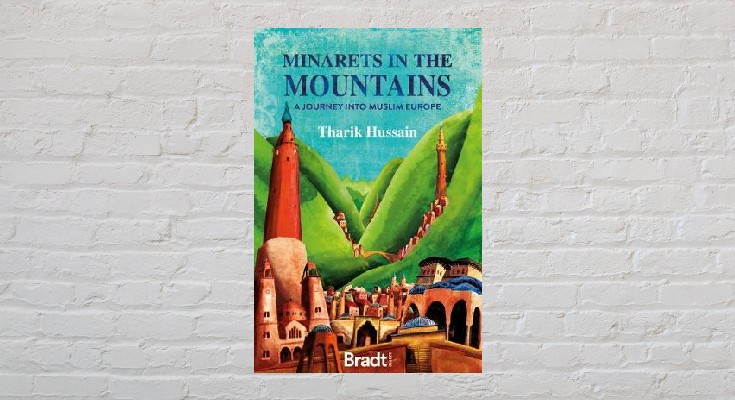
In his 2021 bestselling book, Minarets in the Mountains: a Journey into Muslim Europe, author Tharik Hussain tells the story of Europe’s living indigenous Muslim communities in countries like Bosnia and Herzegovina, Serbia, Kosovo, North Macedonia, Albania and Montenegro, where they have been living for almost six centuries. Yet the story of Muslim Europe is actually as old as Islam itself. These five places of European Muslim heritage reveal the continent’s fourteen centuries of Islamic presence.
1. Hala Sultan Tekke and Umm Haram Mosque, Larnaca, Cyprus
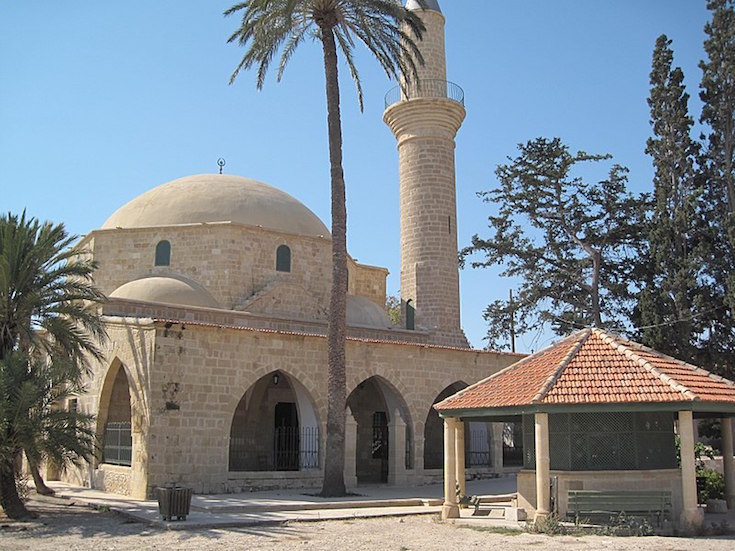
This quaint mosque, overlooking two salt lakes, sits just outside the southern Cypriot town of Larnaca as a symbol of the beginning of the Islamic presence in Europe. The tekke is reportedly the site of the final resting place of a contemporary of the Prophet Muhammad, Umm Haram, who some believe may have been one of his aunts. According to historic Muslim sources, she was part of a fleet of Muslims that landed on the island around 649 AD. This means the Islamic presence in Europe began with the first generation of Muslims – the very first humans to accept the religion.
2. Mosque-Cathedral, Cordoba, Spain
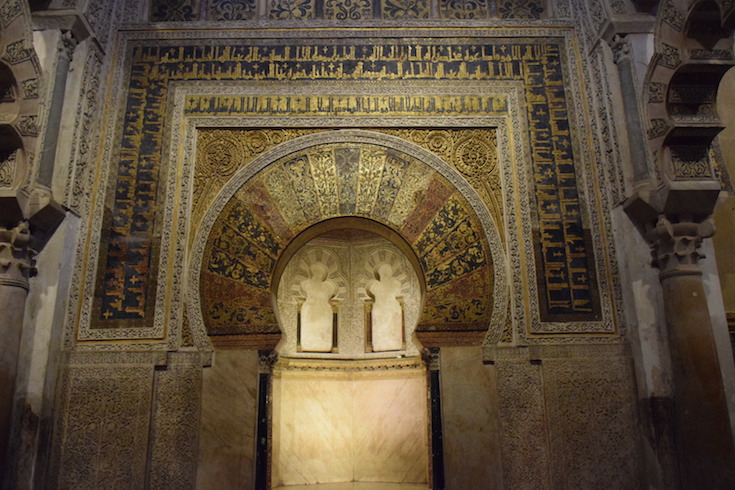
Still one of the finest examples of a classical Umayyad Mosque, the current Mezquita-Catedral de Cordoba was the first major mosque built on mainland Europe. Its construction was started in 785 AD by Abd ar-Rahman I who founded the Umayyad Emirate of Al-Andalus as an offshoot of the earlier Umayyad dynasty in Syria. The mosque’s architecture and design was based on the Grand Mosque of Damascus, and its spectacular mehrab (prayer niche) – still intact today – is regarded one of the finest expressions of Islam’s first art movement: the Umayyad style. In 929 AD, the then ruler of Al-Andalus, Abd ar-Rahman III declared himself Caliph of the entire Muslim world. As this was his kingdom’s main mosque, it might well be considered Europe’s only Caliphate mosque.
3. Nasrid Palace, Alhambra, Granada, Spain
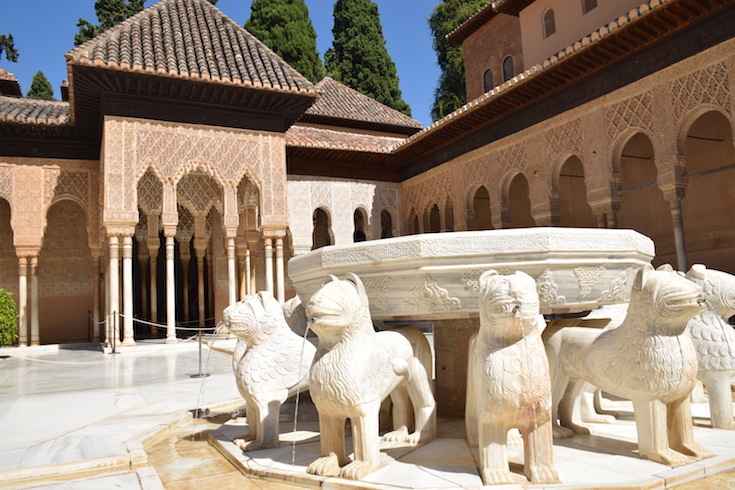
Whilst the mosque in Cordoba tells the story of the beginnings and height of Muslim Al-Andalus, the Alhambra is forever associated with its last call. The stunning red fort, home to a palatial city was also at the centre of a highly cultured and flourishing Muslim society, but on a much smaller scale, as the Emirate of Granada. This lasted for about 250 years from approximately 1236 and was ruled by the Nasrid dynasty, who built the Alhambra’s most stunning quarters, the Nasrid Palace. In 1492 however, the Alhambra was where the Catholic Monarchs from the north symbolically received the keys to the palace, signalling the fall of the last Iberian Muslim stronghold. They took the keys promising to respect the rights of all citizens to observe their faith, just as they had been allowed to for the majority of the past seven centuries. Shortly after, this was overturned and Spanish Muslims and Jews were ordered to either convert to Catholicism or leave their homeland; because to stay would mean being put to death.
4. Tomb of Sultan Murad I, Pristine, Kosovo
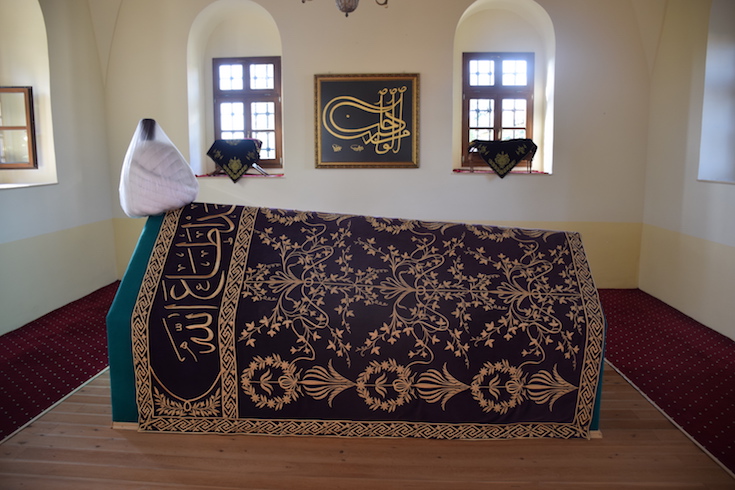
In 1389, two sides made up of various ethnicities and religions, but often depicted as Christendom v Islam, went to war for territorial gain on the plains of Kosovo. The main victor was the increasingly influential Turkish empire of the Ottomans, led by Sultan Murad I, who was killed during the battle and had his organs buried on the site. Murad’s tomb, which sits 10 kilometres northwest of modern Pristina, symbolises the pivotal moment the Ottomans entered mainland Europe, going on to conquer much of the territory east of Austria. This victory also ensured the Muslim and Jewish presence in mainland Europe would continue, for as well as becoming home to indigenous European Muslims to this day, the Ottoman lands also became the home of Sephardic Jews from Iberia after Sultan Bayezid II rescued them following their expulsion a century later.
5. Shah Jahan Mosque, Woking, England
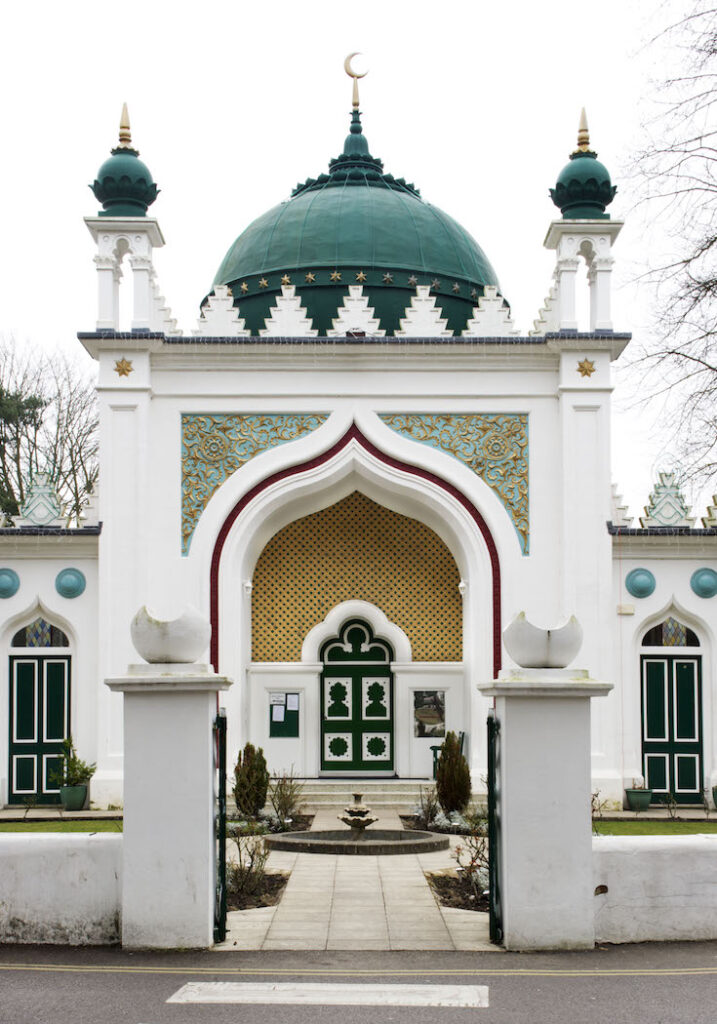
Britain and northwestern Europe’s first purpose-built mosque, the Shah Jahan Mosque in Woking, Surrey, was once a flourishing centre of Islamic activity dubbed the ‘Mecca of Europe’. The mosque was built by Hungarian-Jewish scholar, Wilhelm Gottlieb Leitner in 1898. He also founded the Muhammadan Cemetery in 1884 in nearby Brookwood – the UK’s first Muslim cemetery. Later in 1915, the Woking War Cemetery – now the Peace Gardens – was opened close to the mosque for fallen British Muslim soldiers from WWI and WWII. All three sites are now part of the country’s very first Muslim heritage trails called Britain’s Muslim Heritage Trails. These are two self-guided trails, The Woking Trail and The Muslim Cemetery Walk designed to teach visitors about the history of each site. Today the mosque is used by a largely post-colonial, south Asian community that arrived from countries like Pakistan and India from the 1960s onwards.

Minarets in the Mountains: a Journey into Muslim Europe by Tharik Hussain is available for £9.99. All our copies are signed by the author (while stocks last).
Watch Tharik Hussain introduce Minarets in the Mountains: