Isobel Goes to India

A year ago I was wrapping up a two-month stint in a busy little seaside town on the Adriatic coast of Italy and if you had told me that 12 months later I’d be prepping to go to India I probably would have laughed in your face. I’m not even sure I believe it now and I leave in less than two weeks. Truth be told, until I stumbled upon Development in Action’s website at the start of July I’d never really given India much thought as a destination of choice. It’s not that I wasn’t interested, it’s just always seemed so much further away than the 4000+ miles.

People’s reaction to my news has been interesting; an unspoken question of ‘why there?’ lies beneath the bemused smile. I admit, there is a small part of me that thinks the whole thing is crazy and ridiculous but I’m becoming more inclined to think, why not there? The more I actually think about it, the less sense it makes that I’d never considered it before. It may only be one country but it is also 28 states, 7 union territories and more than 1.2 billion people. The cultural possibilities are practically endless. Continue reading Isobel Goes to India

The ‘Art’ of Travelling Solo

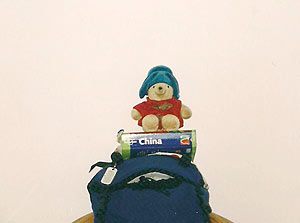
Paddington in China 2001No suitcases and no boyfriends’ has been my (albeit tongue-in-cheek) rule since my first bit of extended travelling. Travelling light has its obvious advantages, but travelling on your own? The no boyfriends bit came about with a European Interrail trip at the tender age of 21. My then boyfriend morphed into a complete moron and was thoroughly uninterested in anything; ‘but I can see that in a book’ he moaned as I attempted to drag him round Pompeii. Enough said.

So, since then I have travelled on my own (if we don’t count Paddington Bear who always comes with me) all over the world – Asia, Middle East, Africa amongst other continents – some forty odd countries at this stage. Travelling on a low budget and with only the vaguest notion of an itinerary has meant that virtually all of my travel has been of the unorganised form – public transport and cheap places to stay that I find as I travel. It’s all added up to my having had a fantastic time, meeting many wonderful people, and with only, touch wood, a couple of hairy moments to date.

Recently, however, someone came into Stanfords asking for a non-existent book called ‘the art of travelling solo‘, which got me thinking. Is travelling solo an art, or simply a case of the kind of person you are? Arguably, if you are a bit introverted, persistently restless, have some odd interests (being an archaeologist with a bent for political heritage, modernist architecture, cities, or anything a bit quirky, for example), and have a tendency to worry about other people, travelling with anyone else can be quite stressful: no, I don’t want to spend hours on a beach or to go shopping (unless its a book shop or to wander around an exotic souk); I definitely do not want to spend all my time in one place or hang around some soulless resort or chain hotel with nobody but other tourists. I want to at least get a glimpse of how life is like in the country where I am, stay where I like, wander about, investigate that odd thing I’ve just come across, change my plans at the last minute, eat when I like, and have conversations with the people I meet and all the time not be worrying that my companion is bored, tired, hungry or why they are in a bad mood; nor do I want to worry about upsetting them when I’m feeling less than cheerful. But what kind of person should consider travelling solo, and how do you manage on your own?

Here are a few suggestions from my own experiences.

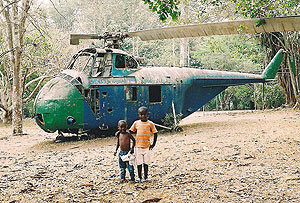
Gardens - Ghana 2008Perhaps the first rule of travelling alone is to be happy in your own company. I’ve gone for days and days without having a proper conversation and with only my thoughts and my book (and Paddington) for company. If you are someone who finds that spending anytime at all alone sees you reaching for the phone, logging onto Facebook, checking your email or needing to go and spend time with someone who knows you, do not travel on your own, you will be miserable. The second rule is being able to rely on your own resources: travelling can be quite stressful and there will be days when everything goes wrong and you will curse yourself for not being able to stay at home in the safety of your armchair. If you are the kind of person who finds it hard to manage any kind of crisis without calling a friend, your mother, the Samaritans, anyone else who can sort it out for you, don’t travel on your own. Having said that, solo travel is a wonderful opportunity to get to know yourself and to develop confidence in your own abilities; you may well surprise yourself.

The third rule connected to the above is avoid getting yourself into trouble in the first place and to know what you are going to do if it does all go wrong: take a reliable guide book, maps, a phrasebook; get your shots, malaria tablets etc; take out travel insurance; keep a photocopy of your passport, a credit card and some spare cash in some internationally recognised currency – e.g. US dollars or Euros – separate from your main stash; take the details of your embassy/consulate with you; leave copies of vital documents at home with someone you can call in an emergency. In short, know what you are going to do if all your money is stolen; you lose your passport; or you are struck down with some bizarre illness.

As a woman travelling alone and one without a lot of physical strength – petite let’s say – my general aim is to avoid drawing attention to myself. Now, I know for most women this is an anathema but trust me, if you are travelling on your own, particularly in more ‘macho’ or conservative /Islamic countries, this is important. It shows infinitely more respect both for yourself and for those women around you if you dress conservatively, and you will be afforded more respect for it. In some countries, western women are occasionally treated as sort of ‘honorary men’ – for example in Mali I was included in the tea-drinking and discussion that most men engage in; and while crossing the Syrian-Turkish border, I had been patiently standing in the women’s queue, when a elderly man appeared and ushered me up to the top of the men’s queue (which made me feel guilty, particularly when some of the other women scowled at me). In short, make sure you have some understanding of the culture of the country you are going to and dress accordingly. You’ll be much safer that way, though even I’ve had enough ‘propositions’ and marriage proposals that would have kept me in divorce proceedings for years so always be prepared to deflect any unwelcome attention, preferably politely. On the other hand if your primary interest is to get a tan and to saunter about in your bikini, get thee to a resort! And that goes for men too (especially if you want to wear a bikini…).

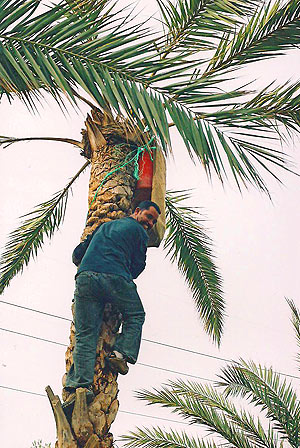
Palmwine - Tunisia 2006One of the great pleasures of travelling on your own is that you inevitably have all sorts of conversations. Travelling up the Yangzte in 2001, I spent most of a day talking with a woman called Lu. She could not speak English and I could not speak Mandarin but with the help of my phrase-book cum dictionary, and the occasional help from someone passing who had a smattering of English, we managed. Another time, a conversation with a chatty stall-owner in the small town of Gabès in Tunisia led to me spending an entertaining evening with a group of Tunisians in a palm grove eating fish cooked over a fire and drinking palm wine, got down from a nearby palm tree (the less said about the hangover the next morning the better). Then there was the time I was eating dinner in a small restaurant in Mysore when an Australian guy of Indian origin asked if he could join me. It turned out the poor man had been completely ripped off (never ever let your credit card out of you sight); he just wanted to talk about it with someone. At the end of dinner he gave me a book he had been reading – Shelia Paine’s – Afghan Amulet – which is superb and has remained one of my favourite books of travel literature.

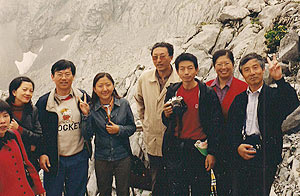
I couldn’t begin to recount all the interesting people I’ve met and wonderful conversations I’ve had ranging from the philosophical to the obscure and hilarious with both fellow travellers and curious locals, particularly as a woman travelling on my own: what, your husband has let you go off on your own?; where are your children?; you have no husband or children: the end of the world is surely near! Stuck in a small village halfway up a mountain in Nepal due to a sudden storm, I had a memorable and quite funny conversation with the 20-something year old son of the family, whose small guest house it was explaining that, no, not all Western women behave like they do in the American movies – there was no suggestion on his part, he was genuinely curious. Or, they just want to know about where you come from and to practice their English. Gathered up by a group of Chinese school teachers on holiday in Lijang, I spent the day with them and had what seemed like the meal of a thousand dishes as they just kept ordering – I would never have had deep-fried dragon flies otherwise (they are crunchy but don’t taste of a lot, if you are wondering).

Teachers Lijang 2001So I think that is the fourth rule for travelling solo – be open to those around you, though trust your instincts. If you have even the remotest sense that someone is dodgy, then get out of there. Having said that, on the odd occasion I’ve found myself in a difficult situation – hassled by a smuggler on a bus crossing the Nepalese-Indian border; abandoned in Nanjing as it was getting dark by a taxi-driver nowhere near where I wanted to be but with no idea where I was; surrounded by a group of increasingly aggressive boys in Skopje who wanted my bag – someone has miraculously appeared to rescue the situation. So be friendly, helpful when needs be, and polite; even if you are a complete incompetent like me when it comes to languages, learn to say hello and thank you at least; and take interest in and have some faith in your fellow humans – everyone has a story to tell and for the most part if you need help someone will help.

Lastly, some practical considerations. Travel light and take as few valuables as possible: there will be no one to watch your bag if you need to nip into that shop or, more challengingly, go to the loo. Do wear a money belt, and ensure that if you have to leave one of your bags out of view for a bit, that you have your essentials with you. Eating on your own in a restaurant can cause some people problems. Take a book with you; eat at non-peak times, such as late afternoon, and then get some bits and pieces and a few beers from a local shop to have in your room later. I often write my journal while eating in restaurants because apart from the advantage of having a table, I sometimes get excellent service, I suspect because they think I might be writing a review.

The very last though quite possibly the most important requirement for travelling solo is to never take anything too seriously and to have a sense of humour; you will need it as you struggle with the seemingly illogical logic of a different culture or have to deal with cultural misunderstanding number 563.

So is there an art to travelling solo? I think it is more an art of having a little faith in yourself. You are on your own and often so far out of your ‘comfort zone’ surrounded by a culture and language that is often entirely alien, that you can only be yourself. You are free from everyone else’s expectations and demands; you can step out of your life for a bit, sail with the wind for a while. Whatever it is, I just love it. And while there won’t be anybody to reminisce with when you get home, there won’t anyone to tell tales on you either…

Author: Caroline Sandes

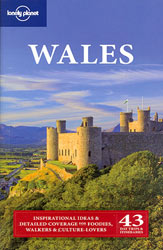
Wales Travel Guide

Wales-Lonely Planet Guides
Click here to buy the
Lonely Planet guide to Wales >

Wales at its best is tramping in splendid isolation across magnificent green hills and purple-heather moors, valleys ringing with the song of male voice choirs and poetry of 6th-century bards, local pubs beckoning with a pint of Best Bitter.

One man and his dog (and sheep by the millions) are the only souls for miles around; King Arthur fires the imagination with his treasury of ancient Welsh lore; and you can be sure it will rain. Political devolution has long dominated national politics and no one shows a greater pride in this raw, underrated land of heady rough-cut landscapes, mighty stone castles and lyrical morning mists than those fiercely patriotic, rugby-loving, song-mad, Welsh-speaking Cymry (Welsh).

Best time to visit

March to June, September

Top things to see

  • Pontcysyllte, the world’s longest navigable aqueduct on the Llangollen Canal
  • Snowdon, Wales’ highest and headiest peak at 1,085m
  • The Six Nations Rugby Championships in Cardiff
  • Conwy, Caernarfon, Harlech and Beaumaris castles
  • The Brecon Beacons National Park – rugged hills, moors and fantastic pubs

Top things to do

  • Hike, mountain bike, camp, get wet, feel alive in the Snowdonia National Park
  • Shop for china in Portmeirion, a whimsical vision of Italian classicism
  • Be roused by male voice choirs performing at Llangollen’s International Eisteddfod
  • Follow the Pembrokeshire coastal path through quaint fishing villages and around secluded coves – play spot a puffin!
  • Frolic across sandy beaches and limestone cliffs on the Gower Peninsula

Get under the skin

  • Read – Random Deaths and Custard by Catrin Davydd, one of Wales’ best contemporary creative writers
  • Listen – to operatic arias by Welsh tenor Aled Wyn-Davies
  • Watch – Solomon and Gaenor, a turn-of-the-20th-century tale of forbidden love set against South Wales’ coalfields
  • Eat – bara brith (tea-soaked fruit loaf); a Welsh cream tea (fruit scone with strawberry jam and whipped cream); or a lunchtime plate of Welsh rarebit (an 18th-century version of beer-soaked Cheddar cheese on toast)
  • Drink – a pint of Cardiff-brewed Brains or ale from a local microbrewery

In a word
Bore da (Hello, good morning)

Trademarks
Mountains; sheep; coal mines; male voice choirs; rugby; tongue-twisting place names starting with double L; King Arthur and Merlin; leeks; the Welsh red dragon

Did you know?
Genuine Welsh products: Richard Burton, Anthony Hopkins, Laura Ashley, Roald Dahl, Tommy Cooper, Peter Greenaway, Alfred Sisley

Excerpt from an article originally published on lonelyplanet.com.

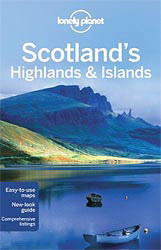
Scotland's Highland & Island-Lonely Planet Guides

Scotland Travel Guide

Scotland's Highland & Island-Lonely Planet Guides
Click here to buy the
Lonely Planet guide to
Scotland’s Highland & Islands >

There is a particularly Scottish habit known as ‘Munro bagging’. This challenging — and somewhat competitive — sport involves climbing each of the peaks in Scotland that are more than 3000ft high. There are 284 of these ‘Munros’, named after Hugh T Munro, the Scottish baronet and keen mountaineer who compiled the first list of them. They vary from easy day walks that barely require a map to airy scrambles, best tackled by those with climbing and navigation experience — and a head for heights.

It is a badge of honour among hikers to have ‘bagged’ all 284 Munros, which to the uninitiated, might sound like a joyless mountain slog. But even for non-committed trekkers, a spot of Munro bagging is an infinitely exhilarating experience in the wildest corners of the British Isles.

The six hills below are some of the most approachable and rewarding of Scotland’s Munros. Included are also some of the loveliest places to stay, so you will not even have to put up a tent. Continue reading Scotland Travel Guide

Blogger of the Month: Jayne Gorman from 40before30.com

Meet Jayne

How did you first get involved with travel blogging?

I’ve started describing myself as the ‘accidental blogger’ because when I started out I honestly had no idea what I was doing, I didn’t even know what a blogger was. I was working in international events and visiting some obscure and fascinating places like Xiamen in China. A friend suggested I chronicle my travels in a blog instead of emailing friends and family separately, so I logged onto blogger and started writing.  Mainly for my mum!

Where did the concept for 40 before 30 come from?

After I started my blog I found other bloggers began to read it and leave helpful comments. I begun reading their blogs and learning a little bit more about how it works. I wanted my blog to have a name that people could remember but also wanted to set myself a challenge around which to frame the articles. I worked out that I had already blogged about 20 countries and decided to attempt to cover another 40 before my 30th birthday. The name 40 before 30 stuck.

What advice do you have for people that want to start their own travel blog?

After trying several I would recommend WordPress as a blogging platform, its easy to use, flexible and reliable. If you start on WordPress it saves a lot of hassle transferring to it at a later date – I would know! When it comes to content I would say always remember to be yourself. Write as if you are talking to a friend, the more personal the blog the better. That’s the style I enjoy reading anyway.

How do you drive readers to your blog?

Twitter is a major source of traffic and new followers for my blog but most traffic comes from Google. A good grasp of basic SEO (search engine optimisation) principals will stand you in good stead.

What are the 3 most important things you take on a trip?

A notebook and pen – I never travel without a Moleskine; it looks intelligent and never runs out of batteries!

My iPhone – for all the tweeting, four squaring and intagramming needs

And a good book – or two. I’m not a fan of e-readers, I prefer a book you can hold, smell (love the smell of fresh pages) and treasure forever.

What is the strangest thing you have ever eaten on your travels?

I refrained from eating guinea pig in Peru – it wasn’t the most appetising looking thing, lying on it’s back, sizzling on the grill with legs in the air. But I tried both kangaroo and camel on the barbie in Australia and found them surprisingly tasty.

What’s your favourite place you have visited on your travels?

Without a doubt – India. It’s an intense experience but the food, people and clash of cultures are mesmerising and I can’t wait to go back.

How do you decide where to visit next?

I love to visit new destinations and tick them off my challenge but I also love revisiting old favourites too. For my summer holiday I’m going back to the Greek Islands, which is where we holidayed every year with my parents when we were children. I’m taking my boyfriend who has never been so it will be like seeing it for the first time again through his eyes.

What is the best thing about being a travel blogger?

Combining my twin passions of travel and writing and getting to meet many people who feel the same.

Are there any negative aspects of the job?

The worst part is probably missing out on major events in your friends and family’s lives because you are not in the country. I make conscious efforts to get around to seeing everyone whenever I am at home – and to put the iPhone away for the duration of the visit!

Read more about Jayne’s travels at 40before30.com.

Britain’s Grand Gourmet Tour

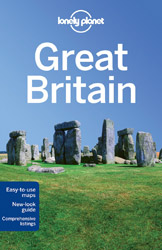
Great Britain-Lonely Planet Guide
Click here to buy the
Lonely Planet guide to Britain >

Want to go straight to the source of Britain’s tastiest produce? Matthew Fort takes you on a tour of 20 of the best specialty foods of Britain.

1. Mozzarella in Hampshire

Traditionally, mozzarellais made with the milk of the water buffalo in the Campania region of Southern Italy. But there’s no need to go that far – instead, try the 2,500 acres of biodynamic farmland at Laverstoke Park Farm in deepest Hampshire, where you will find the biggest herd of water buffalo in the UK – and Laverstoke’s acclaimed mozzarella.

2. Tea in Cornwall

It may seem odd for a country that drinks so much of the stuff, but there’s actually only one tea estate in Britain, and that’s Tregothnan Estate in Truro, Cornwall. It’s in the warm, wet county of Cornwall, where the climate is not that dissimilar from the classic tea-growing areas of Sri Lanka and India. There are over 30 Assam and Chinese varieties, and tea production follows the time-honoured system of hand plucking the bushes.

3. Sparkling wine in Bodmin

There was a time when British wine was scoffed at. No longer. British wine, and in particular British sparkling wine, regularly picks up awards in international competitions. And no British sparkling wine sparkles more than that of the Camel Valley vineyard. It won the Trophy and a Gold Medal in the International Wine Challenge for Camel Valley Bacchus in 2009.

4. Berries in Gloucestershire

There’s nothing quite like picking your own fruit on a warm summer’s day and there’s plenty to pick at the Wotton Farm Shop on the Severn escarpment in south Gloucestershire. They grow raspberries, strawberries, redcurrants, gooseberries, blueberries and tayberrie. It’s run by the Grimes family, and is a member of the Big G group of Gloucestershire Farm Shops, a collective of growers and artisan producers.

5. Apple juice in Brookthorpe

Berkley Pippin, Transparent Codlin: there’s a kind of poetry about the names of apples you’ll find growing in the orchards of Dave Kaspar and Helen Brent-Smith, the two-person workforce behind Day’s Cottage. You can buy cider, perry and bottles of apple juice, each graded by sweetness and frequently with the names of the particular apples making the juice at this cheerfully ramshackle cottage.

6. Chicken in Chepstow

Madgett’s Farm has been there, in the rolling, wooded landscape where England meets Wales, for a very, very long time – it’s even mentioned in the Doomsday Book – and it has a reputation for the quality of their chickens, ducks, geese and turkeys. The birds have proper texture and a deep rich flavour, as you can judge yourself by visiting the farm, buying one and taking it home to cook and eat.

7. Honey in Monmouthshire

There’s a season for honey. It lasts, according to Les and Jill Chirnside of the Llanover Skirrid Honey Farm near Abergavenny, from about March until the end of October, or even into November. During this period, it’s all go for beekeepers, removing the honey from the combs and getting it into jars. Les and Jill are happy to talk honey with anybody – just call first to make sure they’re not out tending to their bees.

8. Caerphilly cheese in Ceredigion

Trethowan’s Dairy is a family business, making Gorwydd Caerphilly (pronounced Gor-with), with its stone-coloured rind, its inside the colour of primroses and its fresh, creamy flavour with a distinct lemony tang at the end of it. The same Gorwydd Caerphilly that has won a hatful of awards, including 2001 Best Welsh Cheese (World Cheese Awards). The dairy also runs a cheese school in collaboration with food writer Fiona Beckett, to teach the finer points of artisan cheese appreciation.

9. Bread in Montogomery

Speed and heat are the great enemies of the goodness in flour, and nothing grinds slower or cooler than a water-driven mill. It’s this go-slow approach to milling that has made Matt Scott’s Bacheldre flours the choice of a slew of first-division chefs and bakers, as well as the Ludlow Food Centre in Shropshire, where Anna, the master baker, uses them for her cakes and breads.

10. Beef in Denbighshire

There are 12,500 acres of the Rhug Estate,the core of which is a 2,500-acre organic farm. Here, Lord Newborough has built up a herd of glorious Aberdeen Angus cattle. These are reared on a coastal farm near Caernafon and then moved to the lusher inland pastures of Rhug, where they can mature.

11. Pies in Cumbria

There are pigs galore at Sillfield Farm, in a handsome part of the Lake District. They’re special pigs, too – Gloucester Old Spot, saddleback, Middle White, Tamworth and wild boar – all old breeds with particular, delicious qualities. In the end, they all go into a range of porky products made on the farm, under the watchful eye of Peter Gott, a true food hero, who can count Prince Charles and Jamie Oliver among his admirers.

12. Kippers in the Isle of Man

Moore’s Traditional Curers have been splitting, gutting, salting and smoking herrings on the Isle of Man in time-honoured fashion since 1884. Manx kippers tend to be smaller than those of the east coast, and the flavour is delicate and mellow, with a touch more smoke than salt. Moore’s are proud to show off the production process in kippering season, which runs from May through to September.

13. Fudge in Penrith

It’s called The Toffee Shop, but it’s actually more famous for its fudge, which has been made to the same recipe for over 100 years. There’s not much on display in the windows, or even in the shop itself, just slabs of fantastic fudge wrapped in opaque greaseproof paper and heaps of toffee. And then there’s the comforting aroma of warm molten sugar and butter…

14. Soft cheese in Dumfries

The Loch Arthur Community is set among the green, rolling hills of Dumfrieshire and the farm is run to strict biodynamic principles. Among Loch Arthur’s cheeses are Crannog, a soft cheese, and Criffel, a semi-soft rind-washed cheese, both of which have won multiple awards. Visit not only to try them yourself but to see the farm, large garden, creamery, bakery, woodwork studio, weaving workshop and thriving farm shop.

15. Salmon in Sutherland

You’ll find Kinloch Lodge, where Hugh Montgomery practises his craft, on the northernmost edge of Scotland, off one of the narrowest, windiest roads you’ll ever drive along. Hugh passionately labours over his sides of salmon (wild salmon caught locally or farmed from Loch Duart) with exacting attention to detail. He also smokes trout, venison, mackerel, duck and pheasants and does a range of sausages and haggis.

16. Sausages in Nottinghamshire

So you want to learn about making sausages? Or how to cure a ham or prepare any charcuterie? Then make the trip to Wellbeck, a kind of forgotten fairyland, where you’ll find the School for Artisan Food, housed in a block of renovated 19th-century stables. There’s a working bakery and a dairy, as well as the butchery section, and a micro-brewery is about to open. Do a one- or two-day course – or you can also just look round for free.

17. Beer in Burton upon Trent

Burton upon Trent has been the capital city of British brewing ever since the unique properties of the water there were discovered to be ideal for the brewing of ales. Here you can tour The National Brewery Centre to see how beer is made or attend one of the regular tasting events, and then order a pint of your choice in The Brewery Tap bar.

18. Spirits in Suffolk

Adnams have been brewing their award-winning beers at Southwold since 1872, and the same care is now being brought to bear on their gins and vodkas, all of which are made, as far as possible, with locally grown raw materials. There are tours of the distillery for the over-18s and the £10 admission entitles you to a discount on bottles sold in the Adnams shop nearby.

19. Shellfish in Kent

Whitstable may be more famous for its oysters than its whelks, but there are still enough lovers of this chunky marine snail to keep the Wests at work in pretty tar-black clapperboard buildings at one end of picturesque Whitstable Harbour. Here they unload the whelks from the whelk pots, grade them, and then boil them for 20 minutes. After that, they are plucked out of their shells and are ready to eat.

20. Wild food in Sussex

Nick Weston was the survival expert on Channel 4’s Shipwrecked series, but now he shows other people how it’s done, not just the which-berry-can-I-eat-without- poisoning-myself part, but the full range of shooting, fishing, preparing and cooking as well. Between April and October, he conducts one-day and two-day courses that cover whatever food is free, wild and in season, how to find it, deal with it and how best to serve it up.

This article was originally published on lonelyplanet.com

britain_lonely_planet_guides

Indian Summer: Travel Books that Transport You

India

Travelling in India is an assault on the senses. First time visitors can find themselves overwhelmed; by the vibrant colours, the smell of poverty, a claustrophobic feeling amongst the teeming crowds. And yet many of us are enticed to revisit; charmed by the people, attracted to the intensity.I revisit my sensory journey to India through the eyes of fictional characters and enthralling tales that are based there. You can escape the grey and dreary UK weather and enjoy an Indian summer through this sample of captivating books set in God’s Own Country. Continue reading Indian Summer: Travel Books that Transport You

Travel writing: is it all glitz and glamour?

Travel WritingCan there be many jobs as enjoyable as writing a brand-new travel guide? Being paid to be on holiday must be one of the top dream jobs.

Twenty-two-year-olds with a passion for travel and an aversion to 9–5 office work view it that way. But as anyone who has ever written a travel guide will tell you, it’s rarely about staying in drop-dead gorgeous beach resorts, journeying down Route 66 on a Harley Davidson or travelling through Russia in a first-class compartment of the trans-Siberian Railway. It’s much more about sheer hard work.

Continue reading Travel writing: is it all glitz and glamour?

Strong Pound Means More from your Holiday Money

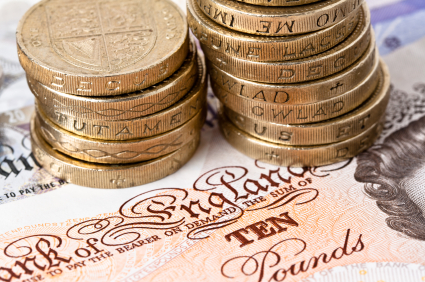
The pound has strengthened against the euro and is now at the strongest it has been since 2008 which means people travelling from Britain will get a lot more from their holiday money. The increase is not just restricted to the Eurozone as the pound is also strong against other currencies including Mexican pesos and Rio’s real. According to a poll carried out by Post Office Travel Money, around 80% of world currencies are weaker against the pound. The best value holiday destinations are considered to be Brazil and South Africa as well as Hungary and Greece.
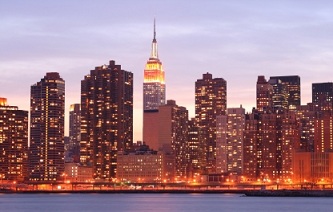
Budget Nightlife Guide to NYC

New York City seems to be always on the move, from the early morning rush to late into the wild nights. Unfortunately for the budget traveler, it can be a very expensive night out. However, if cheap accommodation in the Big Apple exists, so do cheap bars. You’re sure to find affordable fun. The city is vibrant and diverse, so your choice of nightlife depends on the kind of entertainment you’re looking for.

Cheap Bars and Happy Hours

If you’re looking for a centrally located bar that won’t break your wallet, look no further than Old Town Bar and Grill at Park Avenue and Broadway for cheap food and beer. Of course, there are many more places that can compete. Welcome to the Johnsons is an attractive option for its long happy hour from 1 to 9pm, when drinks are $2 and finger food is free. Or you can check out Acme Bar & Grill for their $2 specials (they also have themed days, like Wednesday’s “ladies two for one”).

A slightly more expensive option is Fiddlesticks on Greenwich and Seventh, whose Monday to Friday happy hour lasts until 10pm, during which time everything costs $3. On the East Side look for Bravest, with their $1 pints of beer during happy hour. Or even better, on the Upper West Side you’ll find the bar Bourbon Street, which offers 50 cent beers until 11pm! Though, the king of them all has to be Crash Mansion, which has free well drinks from 9 to 10pm, just remember to RSVP at with your name to New York Underbelly!

Concerts and Clubs

For live shows, you can expect to find cover charges averaging around $20, but don’t let that get you down. You have options. The West End is a sweet university-crowd place that has bands every weekend, and no cover. Arlene Grocery is another bar with nightly live music for only $3 cover. Madame X has free jazz from Sunday to Wednesday, and DJs at the weekend for which they only start covering $5 after 10pm.

The biggest dance clubs also charge covers that can be anywhere from 10 to 30 bucks. Keep an eye out for deals, like the ones you can find through Webster Hall’s e-mailing list. . There are some smaller, cheaper clubs as well. Venue has three dance floors and no cover. Sapphire is smaller but with a great music selection and only covers $5 after 10. Polly Esther’s charges $8 at the door, but it’s a great 70s and 80s music club. For beautiful people watching, Meow Mix only covers $5 and offers a great party.

Theatre and Burlesque

Perhaps you will have decided to begin your night with 99 Cent Pizza, the cheapest pizza you’ll find in the night, which is behind the Port Authority. From there you’re set to enjoy a sit-down night enjoying a show.

If it’s comedy, head to the Comedy Cellar. All the big name standup artists perform there, and you have a chance to avoid the cover charge by checking out their website. If it’s burlesque you want, look no further than Mr. Choade’s Upstairs/Downstairs at The Slipper Room. It’s only $5 cover.

Finally, if its theatre you want, take these suggestions to heart. Look for deals online for the big shows, if that’s what you’re after, but know that there are dozens of lesser-known theatres. Buy tickets for their shows at Times Square’s TKTS discount ticket booth. Also, keep an eye out for student deals or standing room only tickets. Another good option is to sign up for the newsletter at nytix.com.

Browse our collection of maps, guides and travel literature:
> New York travel guides
> New York road maps and atlases
> Travel literature inspired by New York City