 ‘No suitcases and no boyfriends’ has been my (albeit tongue-in-cheek) rule since my first bit of extended travelling. Travelling light has its obvious advantages, but travelling on your own? The no boyfriends bit came about with a European Interrail trip at the tender age of 21. My then boyfriend morphed into a complete moron and was thoroughly uninterested in anything; ‘but I can see that in a book’ he moaned as I attempted to drag him round Pompeii. Enough said.
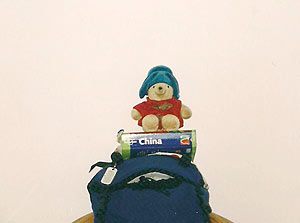
So, since then I have travelled on my own (if we don’t count Paddington Bear who always comes with me) all over the world – Asia, Middle East, Africa amongst other continents – some forty odd countries at this stage. Travelling on a low budget and with only the vaguest notion of an itinerary has meant that virtually all of my travel has been of the unorganised form – public transport and cheap places to stay that I find as I travel. It’s all added up to my having had a fantastic time, meeting many wonderful people, and with only, touch wood, a couple of hairy moments to date.
Recently, however, someone came into Stanfords asking for a non-existent book called ‘the art of travelling solo‘, which got me thinking. Is travelling solo an art, or simply a case of the kind of person you are? Arguably, if you are a bit introverted, persistently restless, have some odd interests (being an archaeologist with a bent for political heritage, modernist architecture, cities, or anything a bit quirky, for example), and have a tendency to worry about other people, travelling with anyone else can be quite stressful: no, I don’t want to spend hours on a beach or to go shopping (unless its a book shop or to wander around an exotic souk); I definitely do not want to spend all my time in one place or hang around some soulless resort or chain hotel with nobody but other tourists. I want to at least get a glimpse of how life is like in the country where I am, stay where I like, wander about, investigate that odd thing I’ve just come across, change my plans at the last minute, eat when I like, and have conversations with the people I meet and all the time not be worrying that my companion is bored, tired, hungry or why they are in a bad mood; nor do I want to worry about upsetting them when I’m feeling less than cheerful. But what kind of person should consider travelling solo, and how do you manage on your own?
Here are a few suggestions from my own experiences.
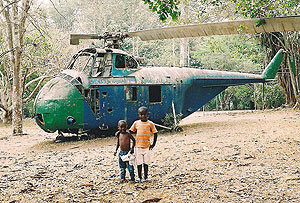 Perhaps the first rule of travelling alone is to be happy in your own company. I’ve gone for days and days without having a proper conversation and with only my thoughts and my book (and Paddington) for company. If you are someone who finds that spending anytime at all alone sees you reaching for the phone, logging onto Facebook, checking your email or needing to go and spend time with someone who knows you, do not travel on your own, you will be miserable. The second rule is being able to rely on your own resources: travelling can be quite stressful and there will be days when everything goes wrong and you will curse yourself for not being able to stay at home in the safety of your armchair. If you are the kind of person who finds it hard to manage any kind of crisis without calling a friend, your mother, the Samaritans, anyone else who can sort it out for you, don’t travel on your own. Having said that, solo travel is a wonderful opportunity to get to know yourself and to develop confidence in your own abilities; you may well surprise yourself.
The third rule connected to the above is avoid getting yourself into trouble in the first place and to know what you are going to do if it does all go wrong: take a reliable guide book, maps, a phrasebook; get your shots, malaria tablets etc; take out travel insurance; keep a photocopy of your passport, a credit card and some spare cash in some internationally recognised currency – e.g. US dollars or Euros – separate from your main stash; take the details of your embassy/consulate with you; leave copies of vital documents at home with someone you can call in an emergency. In short, know what you are going to do if all your money is stolen; you lose your passport; or you are struck down with some bizarre illness.
As a woman travelling alone and one without a lot of physical strength – petite let’s say – my general aim is to avoid drawing attention to myself. Now, I know for most women this is an anathema but trust me, if you are travelling on your own, particularly in more ‘macho’ or conservative /Islamic countries, this is important. It shows infinitely more respect both for yourself and for those women around you if you dress conservatively, and you will be afforded more respect for it. In some countries, western women are occasionally treated as sort of ‘honorary men’ – for example in Mali I was included in the tea-drinking and discussion that most men engage in; and while crossing the Syrian-Turkish border, I had been patiently standing in the women’s queue, when a elderly man appeared and ushered me up to the top of the men’s queue (which made me feel guilty, particularly when some of the other women scowled at me). In short, make sure you have some understanding of the culture of the country you are going to and dress accordingly. You’ll be much safer that way, though even I’ve had enough ‘propositions’ and marriage proposals that would have kept me in divorce proceedings for years so always be prepared to deflect any unwelcome attention, preferably politely. On the other hand if your primary interest is to get a tan and to saunter about in your bikini, get thee to a resort! And that goes for men too (especially if you want to wear a bikini…).
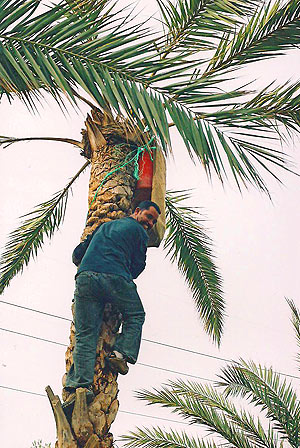 One of the great pleasures of travelling on your own is that you inevitably have all sorts of conversations. Travelling up the Yangzte in 2001, I spent most of a day talking with a woman called Lu. She could not speak English and I could not speak Mandarin but with the help of my phrase-book cum dictionary, and the occasional help from someone passing who had a smattering of English, we managed. Another time, a conversation with a chatty stall-owner in the small town of Gabès in Tunisia led to me spending an entertaining evening with a group of Tunisians in a palm grove eating fish cooked over a fire and drinking palm wine, got down from a nearby palm tree (the less said about the hangover the next morning the better). Then there was the time I was eating dinner in a small restaurant in Mysore when an Australian guy of Indian origin asked if he could join me. It turned out the poor man had been completely ripped off (never ever let your credit card out of you sight); he just wanted to talk about it with someone. At the end of dinner he gave me a book he had been reading – Shelia Paine’s – Afghan Amulet – which is superb and has remained one of my favourite books of travel literature.
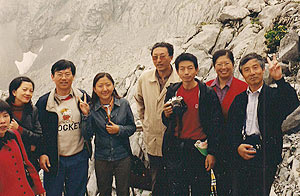
I couldn’t begin to recount all the interesting people I’ve met and wonderful conversations I’ve had ranging from the philosophical to the obscure and hilarious with both fellow travellers and curious locals, particularly as a woman travelling on my own: what, your husband has let you go off on your own?; where are your children?; you have no husband or children: the end of the world is surely near! Stuck in a small village halfway up a mountain in Nepal due to a sudden storm, I had a memorable and quite funny conversation with the 20-something year old son of the family, whose small guest house it was explaining that, no, not all Western women behave like they do in the American movies – there was no suggestion on his part, he was genuinely curious. Or, they just want to know about where you come from and to practice their English. Gathered up by a group of Chinese school teachers on holiday in Lijang, I spent the day with them and had what seemed like the meal of a thousand dishes as they just kept ordering – I would never have had deep-fried dragon flies otherwise (they are crunchy but don’t taste of a lot, if you are wondering).
 So I think that is the fourth rule for travelling solo – be open to those around you, though trust your instincts. If you have even the remotest sense that someone is dodgy, then get out of there. Having said that, on the odd occasion I’ve found myself in a difficult situation – hassled by a smuggler on a bus crossing the Nepalese-Indian border; abandoned in Nanjing as it was getting dark by a taxi-driver nowhere near where I wanted to be but with no idea where I was; surrounded by a group of increasingly aggressive boys in Skopje who wanted my bag – someone has miraculously appeared to rescue the situation. So be friendly, helpful when needs be, and polite; even if you are a complete incompetent like me when it comes to languages, learn to say hello and thank you at least; and take interest in and have some faith in your fellow humans – everyone has a story to tell and for the most part if you need help someone will help.
Lastly, some practical considerations. Travel light and take as few valuables as possible: there will be no one to watch your bag if you need to nip into that shop or, more challengingly, go to the loo. Do wear a money belt, and ensure that if you have to leave one of your bags out of view for a bit, that you have your essentials with you. Eating on your own in a restaurant can cause some people problems. Take a book with you; eat at non-peak times, such as late afternoon, and then get some bits and pieces and a few beers from a local shop to have in your room later. I often write my journal while eating in restaurants because apart from the advantage of having a table, I sometimes get excellent service, I suspect because they think I might be writing a review.
The very last though quite possibly the most important requirement for travelling solo is to never take anything too seriously and to have a sense of humour; you will need it as you struggle with the seemingly illogical logic of a different culture or have to deal with cultural misunderstanding number 563.
So is there an art to travelling solo? I think it is more an art of having a little faith in yourself. You are on your own and often so far out of your ‘comfort zone’ surrounded by a culture and language that is often entirely alien, that you can only be yourself. You are free from everyone else’s expectations and demands; you can step out of your life for a bit, sail with the wind for a while. Whatever it is, I just love it. And while there won’t be anybody to reminisce with when you get home, there won’t anyone to tell tales on you either…
Author: Caroline Sandes