11 Quirky Things to Do in Montevideo

Palacio Slavo

In the third and final instalment of her series on Montevideo, Rachel Ricks looks at the quirkier side of the Uruguayan capital.

The capital of Uruguay tends to get overshadowed by its Argentine neighbour Buenos Aires. But if you’re looking for something a little bit different, head to this compact and friendly city just across the River Plate – it’s got a weird and wonderful array of sights and things to do…

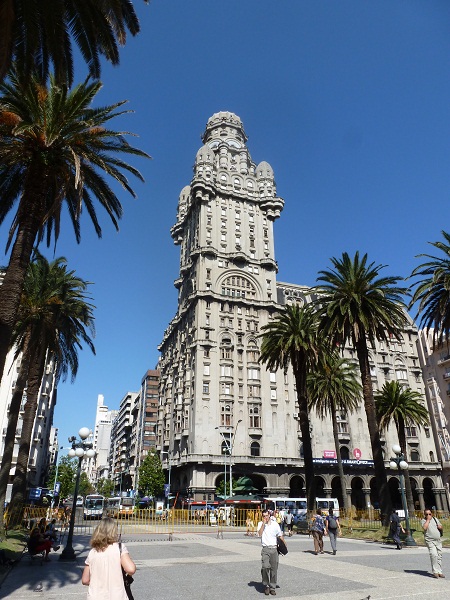
1. Gaze at the Palacio Salvo

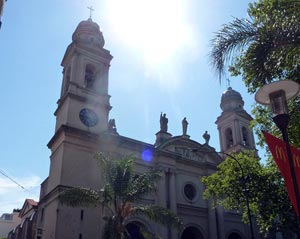
Stare up at the eccentric design of the former Palacio Salvo Hotel in Plaza Independencia. Now converted into apartments, it seems a shame this Baroque building – the icon of Montevideo – can’t still be a hotel. It would’ve been a remarkable place to stay.

2. Downton Abbey, Montevideo style

Get the Downton Abbey experience at the Palacio Taranco and Museo de Artes Decorativas (25 de Mayo 376; free entry) – the former home of a wealthy early 20th century family, where you can roam grand rooms decorated with French and Spanish art and furnishings. And, unlike many stately homes, you can also peek behind the servants’ doors – the kitchen has the biggest cooking range I’ve ever seen. Continue reading 11 Quirky Things to Do in Montevideo

His and Hers Guide to the Globe – Part 4: Phnom Penh

Our round-the-world couple Matt and Sharon Ward are now in Phnom Penh, Cambodia. Here’s what they had to say about the area from a his and hers perspective…

After a 7-hour bus journey we arrived safely in Phnom Penh,Cambodia. Our accommodation, 88 Backpackers, kindly provided us with a free tuk tuk to our hostel, where we were met by the sight of lots of western backpackers and a swimming pool.

Matt’s ‘His Guide’

For our first afternoon we relaxed by the pool and researched places to go and things to do. After a quick shower, we headed out into the Phnom Penh evening. Sharon’s map reading skills suggested the main riverside area was only a 15-minute walk, so we decided to head off on foot. After walking through an area with no street lights and people staring at us we decided to flag down the nearest tuk tuk. The driver’s directional sense was almost as bad as Sharon’s as we sped off in the wrong direction. I brought this to the driver’s attention, which brought out a laugh, before we were back zig-zagging in and out of traffic in the correct direction. As we approached a roundabout, I noticed a motorcyclist cut up another cyclist while making a right hand turn, causing the second cyclist to spin off his bike with his head smashing off the road. He wasn’t wearing a helmet. We quickly jumped out of our tuk tuk and ran to his aid. Sharon was doing her best Casualty impression, while I shouted for someone to call an ambulance. Nobody could understand my request, instead they just wanted to move the motorbike and patient as it was blocking their route. I couldn’t get over how rude and uncaring the locals were. The American man came to and while a little shaken and with blood all over his face, he jumped back on his motorbike and didn’t want any medical attention. 

Feeling a little shaken ourselves, we stopped off for a drink and decided to treat ourselves for dinner. We popped into the Riverside Bistro and ordered two ‘Australian’ steaks. Bad choice. The steaks were awful and taught us that while inAsia, we’ll eat Asian dishes.

The next day we paid our tuk tuk driver $18 for his services for the day. Our first stop was The Choeung EK Genocidal Center – ‘The Killing Fields’. I had no idea what to expect, and if I’m honest I had never heard of it before we started travelling. $5 each allowed us entrance with a UK audio guide for our tour. I was absolutely shocked at what I witnessed and heard. I firstly couldn’t understand how human beings could be so cruel to others. Secondly, I couldn’t understand how Cambodian’s  could treat other Cambodian’s this way. As you looked around, you could see visitors sobbing at the sight of mass graves of men, women and children. Our audio guide then played out the music which rang out around the fields during those painful years, which was designed to drown out the screams from those being tortured and killed. This sent a shiver down my spin and will remain with me for a long time. From here, we jumped back into our tuk tuk and headed to the Tuol Sleng Prison, which was $2 each to enter. This is where thousands of Cambodian’s were imprisoned, tortured and murdered. If you were from a successful background then you were a prime candidate to be taken here as the Khmer Rouge saw you as a threat to their regime. From here the prisoners were transported to ‘The Killing Fields’, which was to be their last journey and more heartbreaking was the fact they were actually told that they were being freed or handed back to relatives.

That evening we had a very nice meal at Anjali Indian, which was located at the Riverside, before heading back to our hostel to relax and reflect.

I really enjoyed my experience of Phnom Penh, although 2 whole days were enough for me as apart from The Killing Field and Tuol Sleng Prison, I don’t feel that there is too much more to do. I would recommend this place to anyone wanting to visit Cambodia.

Sharon’s ‘Her Guide’

After we checked-in we went straight to our rooms to sort out some laundry.  Our room was basic (bed and bathroom) but it still felt like we had upgraded in comparison to our last place.

We spend the rest of the afternoon by the swimming pool reading up on where to go in Phnom Penh and examining the map to familiarise ourselves with the streets. After enjoying a long hot shower we eventually went out for the evening and navigate our way through the streets down to the river. Not 100% confident in our (my) map reading skills, we eventually got a tuk tuk and asked him to take us to the riverside, his sense of direction appears to be worse than mine as we had to ask him to turn back and go the correct way down the river. Not far from where we wanted to be dropped off we witness a motorcycle crash in front of our tuk tuk. The rider comes off his bike and we had to yell at our driver to stop. We both jump off the tuk tuk and my instinct is to run to the guy lying on the ground with blood coming from his head. He was unconscious and people are trying to move him, I started yelling at someone to phone an ambulance and tell those people surrounding me he should not be moved. The rider eventually comes too and tries to get up. I did all the things I’ve seen in the movies like telling him to lie still, we have an ambulance coming, I asked him his name and if he knows where he is, I asked him what hurts and tell him he’s come off his bike. He completely ignores my nurse-like attempts, stands up and says he doesn’t want any medical attention. He sounds American and he wasn’t wearing a helmet.  A little shaky he thanked me for my help, takes his keys from me and gets back on his bike. That’s not what happens in the movies.

We wandered around for a while trying to find somewhere to eat until we ended up in the Riverside Bistro. We decided to treat ourselves to an Australian Steak with Roquefort sauce. When it arrived it was not something any Australian would have been proud of and we decided then and there that we’ll only eat Asian food while in Asia.

The following day we were picked up by Somaile, our tuk tuk driver from yesterday. We paid $18 for the day and our first stop was Cheung Ek, “The Killing Fields”. We were navigated through a series of points in the field where the narrator described the atrocities that happened. We listened to the stories of those that survived and the remorseful speech of Duch who ran the prison and was responsible for the murder of thousands of innocent citizens. The final stop on the tour was the Buddhist Stupa filled with 5,000 human skulls. The tour was both harrowing and educational. To realise something so horrific had gone during your own lifetime seemed incomprehensible. 

We made our way back to our tuk tuk where we are both travelled silently to our next point of interest; S-21, Tuol Sleng Prison.  This is the place thousands of Cambodian prisoners are held before being, tortured, transported and then eventually executed at the killing fields.  It was another sad and heartbreaking visit that displayed the pictures of those massacred during the Khmer Rouge Regime.

It was another silent journey in the tuk tuk. We were dropped off at the Blue Pumpkin where we ordered our lunch and eventually discussed the events of the day.

That evening we made our way back down to the riverside and enjoyed an authentic Rogan Josh curry with naan bread at an Indian Restaurant called Anjali. It was a good meal with big juicy pieces of chicken, something, I had noticed, quite rare in Cambodia. The bill came to $12 which included our drinks and rice.

As much as I found the killing fields and prison a real eye opener and reality check, I didn’t think there was much more to Phnom Penh. The riverside was nice enough but very little else to do in the city. Siem Reap was, by far, the better place to visit. However, I would encourage anyone to go and see both places.  It is inspirational to see how a country and its people have been able to redevelop after being destroyed by a war and hit with the most heinous genocide.

> Cover more of Cambodia with our collection of travel guides and maps.

Edinburgh's Top 5 Alternative Attractions

Edinburgh enthusiast Debbie Valentine takes a look at the less-explored side of the Scottish capital.

If watching the annual Hogmanay celebrations has whetted your appetite to visit Edinburgh, then you’ll be pleased to hear that there’s plenty to do in this beautiful city – however long your visit. While the Scottish capital is home to many famous attractions, what are the options away from the castle and Princes Street? Here’s five hand-picked highlights worth exploring:

1. Enjoy the View

Edinburgh is one of the most beautiful cities in the world, but to really appreciate it you’ll need to get up high. Arthur’s Seat, the famous hill, is the place to climb to get a great view, but there are other spots not quite so strenuous to ascend.

Even if you don’t want to pay to get into the castle, do visit the esplanade in front, where the Military Tattoo is held every August. The climb to the top of the Royal Mile is full of history and the view across Princes Street north to the River Forth and south to the Braid Hills is fantastic.

For a relatively easy climb, it takes about five minutes to walk to the summit of Calton Hill, to the east end of Princes Street. You’ll be rewarded you with a wonderful view of the New Town and the Forth bridges. The hill is topped by an old observatory, the National Monument (a never-finished homage to the Parthenon) and the Nelson Monument, a tower that can be climbed for an even better view. If your budget will stretch to it, a visit to The Tower restaurant at the top of the Museum of Scotland also affords a great view across the city – and a tasty dinner. Continue reading Edinburgh's Top 5 Alternative Attractions

Walking in Spain: Charles Davis on the Alpujarras

Author Charles Davis on his experience of writing guidebooks on walking in the picturesque Alpujarras and how walking in the area has changed over the past ten years.

When David Brawn at Discovery Walking Guides suggested I write a walking guide to the Alpujarras, I told him there were too many tourists there. In retrospect, I can see that for a publisher the distant prospect of potential clients wasn’t necessarily a major drawback to the project. When David heard my alternative idea for a guidebook, he said it sounded like clambering about the town rubbish dump. I then inadvertently insulted the place where he lived and he said something that peeved me, and I said and he said, and the correspondence continued in this vein, each dispatch coming complete with its own barbed aside.

My prejudice against the Alpujarras was the product of pure snobbery, based on the fact that a few people had been there before me and more looked likely to go in the wake of Chris Stewart’s successful setting-up-home-abroad memoir, Driving Over Lemons. It’s a prejudice I have now wholeheartedly renounced. Blessed with high peaks, long ridges, deep valleys, clear mountain streams, lovely woods, eye-popping vistas, and a host of picturesque villages, the Alpujarras are the setting for some of the best hiking in Spain. And no, there aren’t too many tourists there! Continue reading Walking in Spain: Charles Davis on the Alpujarras

A Guide to Zante’s Quieter Side

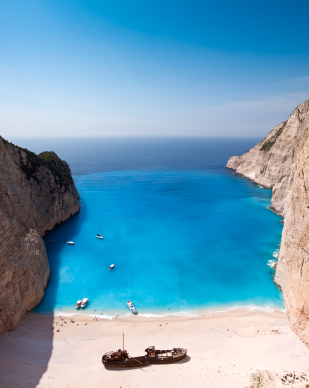
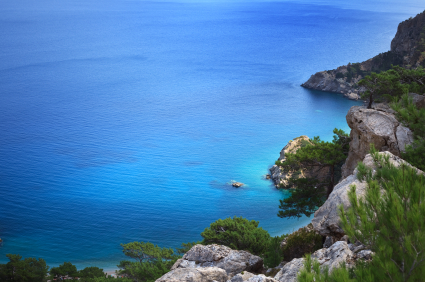
Zante Smugglers Cove beach

Ian John takes a look at the other side of Zante, the third largest of the Ionian Islands, and discovers a destination of small villages, secluded beaches and museums.

The picturesque Greek island of Zante, also known as Zakynthos, has become one of the most popular holiday destinations for party lovers. The bustling town of Laganas is particularly renowned for its loud bars, fabulous nightlife and red-cheeked revelry into the small hours. Indeed, Laganas’ popularity as a clubbing destination has ensured its status as a rival to that most famous of Ionian party island destinations,Corfu.

Yet to assume that Zante’s popularity is due to its strident nightlife does the island a great disservice. Away from the loud sounds and bright lights of Laganas lies one of Greece’s most beautiful island destinations, with many other delightful beachfront towns and resorts offering an ideal getaway for holidaymakers seeking a quieter break.

Almost all of Zante’s famed nightlife is based around the resort of Laganas close to the airport, but away from the town there are plenty of smaller resorts worth considering.

If you’re a family or couple, the resorts of Alykes and Alikanas are excellent choices. Located on Alykon bay, both towns have gently-shelving beaches that dip into the warm, azure waters of theMediterranean, making them a safe haven for families to enjoy a paddle or, for the more energetic, one of the many water sports at Alikanas beach.

Both resorts are home to several small supermarkets, shops, cafes, tavernas and bars – meaning everything for a holiday can be easily found and the Greeks’ famous hospitality, especially towards younger guests, means a warm welcome is assured. Accommodation in the region is plentiful with several popular hotels and villas for rental allowing easy exploration of this beautiful region of the island.

Another excellent destination for those seeking a quieter time is Tsilivi. This small town is situated on the east coast of the island around five miles from Alykes and Alikanas and roughly the same distance from the airport near Laganas. Tsilivi beach is a blue flag-rated and has abundant water sports available.

Tsilivi is close to Zante Town, the island’s capital, and this beautiful harbour town is well worth a visit, especially to enjoy the fabulous Byzantine Museum, located on the equally grand Solomou Square – a real joy to behold when beautifully lit on a warm summer’s evening. Overlooking the square is the statue of Dionysus (pronounced ‘Dennis’) Solomos, the famed Greek poet who penned the epic poem Hymn to Freedom, which subsequently became adopted as the lyrics of the Greek national anthem.

One of the best ways to see the island’s abundant attractions is via an all-day cruise, several of which set off daily from the harbour in Zante Town. The cruise is a leisurely way to enjoy the sights of Zante and offers the chance to explore some of the island’s most famous (yet inaccessible from land) landmarks, such as the Blue Caves, the island of Marathonisi, the caves at Keri and the famous Smugglers Cove beach.

Inland there are several small villages that are easily accessible if you choose to rent a small car or motorbike from a variety of vendors all across the Zante. The island is only small and even renting a car for a few days will allow you to enjoy the slower pace of life in villages such as Katastari and Volimes in the north as well as Kalamaki, Keri and Vassilikos in the south.

To conclude, don’t be fooled by the hype of Zante as a clubbers’ paradise. While Laganas may offer the nightlife, the rest of this beautiful island remains a quiet, friendly haven for holidaymakers of all ages to enjoy.

Discover more of Zante with the following hand-picked travel guides and maps:

Zakynthos – Sunflower Complete Guide

Zakynthos & Kefalonia Pocket Guide

Zakinthos Freytag-Berndt map

Rome: The Papal Election Process

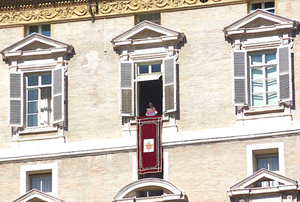
Pope Benedict XVI blesses the crowd from his window in the Vatican Palace, part of the traditional Angelus service which takes place at noon on Sundays.

With Pope Benedict XVI resigning his eight-year papacy on 28th February, Annabel Barber takes a closer look at the papal election process, and what it means for travellers heading to Rome between now and Easter.

It didn’t take long. A mere 24 hours after Pope Benedict XVI announced his abdication, portents were being seen in the skies above the Vatican. Jupiter, the great god of the Romans, began rattling his thunderbolts and lightning was recorded striking the cupola of St Peter’s – twice. This is the kind of thing that happened on the eve of Caesar’s murder. “Never till to-night, never till now,” says a trembling Casca, “did I go through a tempest dropping fire. Either there is a civil strife in heaven, or else the world, too saucy with the gods, incenses them to send destruction.” Is that what heaven is doing? Or is it a seal of approval?

After an eight-year pontificate, Joseph Ratzinger is voluntarily vacating the Throne of St Peter. It is not an unprecedented step, but it is a controversial one; something that’s not ‘done’. But Benedict XVI has never been afraid of controversy. While he lacks the charisma of his predecessor John Paul II and while he never inspired such fervent devotion in people’s hearts, he has been, in his thoughtful, mild-mannered way, revolutionary. Continue reading Rome: The Papal Election Process

Travis Elborough on London Bridge in America: The Tall Story of a Transatlantic Crossing

Travis Elborough: London Bridge in AmericaWe caught up with author Travis Elborough, whose latest book tells the tale of the old London Bridge’s extraordinary trans-Atlantic journey.

The London Bridges of old were famous for involuntarily falling down, but in 1968 the one built in 1831 – a far sturdier structure than its predecessors – was voluntarily dismantled, brick by brick, and transported to the Arizonan desert, where it was rebuilt for the benefit of holidaying Americans.

It’s among the most bizarre stories of the 20th century, and one that author Travis Elborough has breathed new life into with his latest book, London Bridge in America: The Tall Story of a Transatlantic Crossing – a title that promises to reveal as much about Anglo-American relations as it does the 3,000-mile journey of a London landmark. Continue reading Travis Elborough on London Bridge in America: The Tall Story of a Transatlantic Crossing

Montevideo: A Cultural Guide

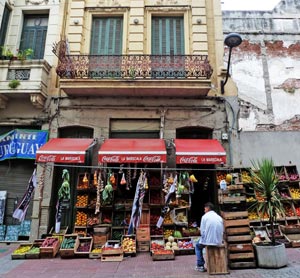
Montevideo fruit shop

In the first of a three-part series on Montevideo, Rachel Ricks looks at the Uruguayan capital’s cultural offerings.

Montevideo is the 2013 Ibero-American Capital of Culture, and I reckon it’s about time this unassuming city got some attention. I’ve been here for five weeks now and I’ve noticed a real buzz in the air. A year of free activities and events opened on Friday 11th January with a night of four free concerts happening at different locations round the city. I opted to see Molotov – a Grammy Award-winning Mexican band that’s been highly popular in Latin America for more than 20 years. The stage was set up on a large seafront area and hundreds of people streamed in from all over the city to take advantage of this concert. The bass player announced that he was very happy to be here, because not only was today his birthday but this was the band’s first concert of 2013. They played to an enthusiastic crowd for nearly two hours – pretty good for a free gig, and what a great start to an exciting year for Montevideo.

What else is happening this year?

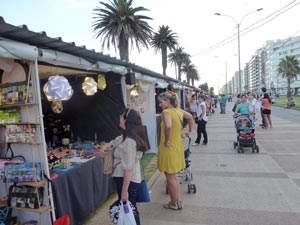
The city will see lots of events, markets and shows cropping up throughout the year. I came across an artisans’ market lining the seafront Ramblas at Punta Trouville, in the Pocitos neighbourhood, with stalls of lovely locally-made arts and crafts, a small stage with bands and an interesting photography exhibition of Pocitos in the early 20th century.

Teatro Solis Montevideo

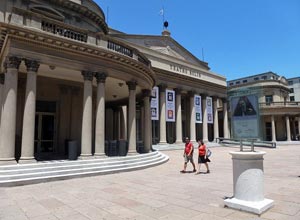
Teatro Solis on Plaza Independencia is the most prestigious theatre in the country and has a varied programme of opera, plays and dances, particularly for 2013. This year’s highlights include Shakespeare’s The Tempest, led by British director Declan Donnellan; Cuarteto, a theatrical work by Heiner Müller; and The Met: Live in HD – a series of 12 operas transmitted live from New York, starting with Rigoletto by Verdi in February. You can also take a fascinating guided tour behind the scenes of the theatre.

And of course, every year from the end of January you can catch the city’s Carnaval that runs for no less than 40 days – the longest celebration of its type in South America. Free workshops, performances and parades fill the city’s streets in these weeks. From my hostel, I can hear the practising for the drums – the llamadas (calls) every night. Check out this year’s programme on the city government’s website.

A walk through the culture and sights of Montevideo

The Ciudad Vieja (Old Town) is the area to head if history and culture are what you’re after in Montevideo. This area of the city maintains many colonial buildings, some of which house quirky little museums.

Cathedral Montevideo

The Plaza de la Constitucion is the oldest in Uruguay, built in 1726, and is home to the Catedral Metropolitana – one of the most attractive cathedrals I’ve stepped in to. On the other side of the plaza is the Cabildo, once both the town hall and prison, where you can wander the ground floor which now holds small exhibitions. Of particular interest for me were the black-and-white photos of Montevideo in the 1800s to the 1930s.

Running through the centre of the Old Town is Sarandi – an attractive pedestrianised street lined with cafés and interesting shops. Follow this down to Perez Castellano and turn right to continue along this pedestrianised street with old-fashioned fruit and veg shops, down towards the port.

The Port Market building was designed like a Victorian British railway station with an elegant glass roof and a clock in the centre of it. It is full of parradillas or asados – the type of grills that Uruguay is famous for, piled high with every kind of meat, and where you can join locals and tourists alike sat round the bar tucking in to mouth-watering meals.

For more, look out for my 11 quirky sights of Montevideo – and for more on where to eat and drink, my Montevideo café guide – both coming soon.

Where to stay

Budget travellers beware – Montevideo is not cheap. Even the hostels charge US$50 for a room.  Your best bet is Planet Hostel (Canelones 1095), where dorms are 320 Uruguayan pesos (£10.50) a night.

Artisans market Montevideo

If you’re after a private room, you’re better to walk into any of the one-star hotels in the blocks either side of Avenida 18 de Julio. I opted for Hotel Ideal (Colonia 914) where a private double with shared bathroom was 650 Uruguayan pesos (£21) – the best deal I found – and I enquired in many. Don’t be put off by the one star – the hotel, although a little old and tired in places, did a better job than any hostel – the incredibly friendly and helpful staff insisted on giving fresh towels, soap and linen every day and I even had cable TV and an elegant balcony.

If your budget stretches further, there are also plenty of two-star-plus hotels in this area, while plusher hotels sit along the Ramblas facing the Atlantic Ocean.

How to get around

Montevideo is perfectly walkable. The main sights are close to each other, and the streets are safe and pleasant to stroll around. The bus network is simple to use too, with locals more than ready to help out.

Getting there

There is an international airport, but flights to Montevideo do not come cheap. Most people travel by road down from Brazil, or across from Buenos Aires in Argentina. I did the latter – for this, take the ferry (two to four hours journey time, depending on boat service) to Colonia in Uruguay where you transfer to a bus to Montevideo (2.5 hours). Prices vary according to your chosen route, boat service and whether you include the bus – the companies offer boat + bus packages – see Colonia Express and BuqueBus.

All prices and conversions were correct at time of my visit in Dec 2012 – Jan 2013.

You can read more about Rachel’s travels on her blog.

> Marvel at Montevideo’s culture with our range of travel guides and maps.

All photos © Rachel Ricks

Avoid All Travel to Whole Country: Preparing to Visit Iran

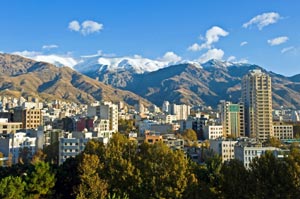
Iran mountain town

On Monday, the intrepid Caroline Sandes will travel to Iran – a country the Foreign & Commonwealth Office strongly discourages visiting. Having secured an Iranian visa and, more challengingly, travel insurance, how does one plan a trip to one of the world’s most volatile countries?

Iran has reached the top of my ‘places I want to go’ list – not least because I’m worried that due to the current political shenanigans of the Middle East, the opportunity for me to visit will suddenly disappear. I’ve always wanted to see Iran – Esfahan and Persepolis specifically – and I’ve heard great things about the country and its people from those who’ve travelled there. However, as a solo woman traveller, I’ve also always been aware that it probably would be fairly tough travelling and so I’ve put it off. Not anymore. The visa has been obtained and the flights booked and I’m off on Monday for three weeks.

Given the perceived difficulties of travelling in Iran at the moment, this trip has required considerably more planning and research than usual. I thought, therefore, that it might be useful to explain the process, as much of it is useful if you’re thinking of travelling anywhere you haven’t been before.

Getting an Iran visa

Firstly, due to the aforementioned political instabilities, the British Foreign Office advises against all travel to Iran. This advice is to be heeded and you should always check its Travel Advice section. In my case, however, I am Irish and the Irish Department of Foreign Affairs is advising to ‘Exercise Caution’, and the Irish Embassy is still open in Tehran, so I don’t feel too irresponsible. I will of course register my passport on its website as recommended.
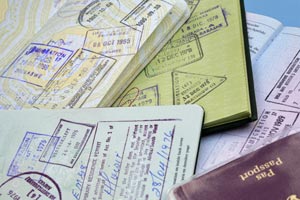
Iran visa

The British Foreign Office’s advice and the closure of the Iranian embassy in London means two problems. The first is obtaining a tourist visa for Iran and the second is getting travel insurance. Firstly, the visa – they aren’t difficult to secure but there is a procedure that needs to be followed. I needed one for at least three weeks’ travel, and they have to be collected from the embassy in Dublin. On the advice of David at Travel the Unknown, who had just come back from Iran, I used an agency, Persian Voyages, who were very helpful. The process actually took a couple of months (partly because I was a bit slow in getting the paperwork off and because Christmas was in the middle).

Firstly, you need a visa code (i.e. authorisation from Tehran) – then you fill out the paperwork, include some passport photos (if you’re a woman it’s strongly recommended to get photos taken with your head covered) and send them off with your passport and the fee. Eventually your passport reappears with a visa in it. I was very excited about getting mine – dragging my boyfriend off to the post office on a Saturday morning to collect it – as it finally meant I was definitely going.

Travel insurance for Iran

Next, the travel insurance. I can’t get travel insurance here because of the Foreign Office’s advice against all travel, and I can’t get travel insurance from a company in Ireland despite my parents being resident there because I am not resident there. There was a company that offered travel insurance for war zones but it’s stopped doing that – it recommended trying ihiBUPA, based in Denmark. Sure enough, for a bit more than your usual travel insurance, you can get cover for absolutely anywhere, though they do ask that you tell them if you’re going to Iraq or Afghanistan…

I don’t travel without insurance – having no desire to inflict emergency bills for having me repatriated or worse on my parents, and I’m certainly not travelling to Iran without it; not just because Iran is an earthquake hotspot but because the Iranians, although reputedly lovely people, are also considered some of the worst drivers in the world!

Iran travel budgeting

Budgeting

Iran is presently suffering from sanctions by the West, which means its currency, the rial, is dropping in value. This should make it cheaper for me to travel there because I’ll have foreign western currency (euros), but several things need to be taken into account here. Firstly, there are no international banking connections with Iran so I will not be able to access any other money while I’m there, so much more careful budgeting than usual will be required. Secondly, because of rising inflation, things could become much more expensive and lead to social unrest – the latter definitely to be avoided. As it turns out I shall be there for International Women’s Day on the 8th March, the small parades for which are heavily policed affairs. So, all fun and games then…

Do your homework

When going to somewhere like Iran it’s important to keep up to speed with what’s going on up to the point of departure. This is where the internet and friends and contacts come in handy. Apart from keeping an eye on the travel advice from both the Foreign Office and the Irish Department of Foreign Affairs, and on the news – specifically Al Jazeera – I’ve also used Lonely Planet’s Thorn Tree travel forum, which provides useful advice on current costs and so forth from returning travellers.

One of the many joys of living in London is there are people here from pretty much every country in the world and unless you lead a very insular life, you’ll inevitably know someone or know someone who knows someone who’s either been to or come from the country you’re visiting (failing that, drop into Stanfords – between us we’ve covered a significant proportion of the world’s countries). In this case I tracked down an ex-PhD colleague who is Iranian and asked her advice. She was brilliant, explaining places I should go and where I shouldn’t, what I should and shouldn’t do, and even giving me a contact in Persepolis.
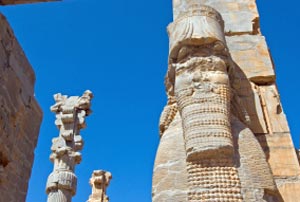
Iran ancient sculpture

There are a couple of websites that I find useful for preliminary dreaming and for topping up the guidebook – wikitravel.org and seat61.com – but the other crucial factor, usually decided upon the minute I’ve decided which country I’m visiting, is which guidebook to take – a question we get asked a lot in Stanfords.

Iran guidebooks and maps

Different guidebooks do different things and have their own specialities and quirks, so the trick is to match one up to the type of holiday. For Iran there isn’t a huge choice: a Bradt, an Odyssey and the ubiquitous Lonely Planet. Bradt guides can be very good and quite individual – I’ve used them successfully in Ghana and Luxembourg – but the Iranian one starts out by assuming you’ve sorted your travel plans already. That’s no good for me as beyond getting to the country in question and maybe booking the first night, I book nothing else, so logistical information is important.

The Odyssey is lovely and definitely good for either pre-trip research or if you’re on a tour, but no good on logistics – so that left the Lonely Planet. To be honest the LP is the guide book I usually use as it has good reliable maps, information and options for where to stay – useful if you’re like me and tend to turn up somewhere with nothing booked. In this case it was also the most up-to-date guide. Another pre-trip guide I’ve found useful is the Culture Smart for Iran, for obvious reasons.

I never travel without a map, but again – which map? Maps, like guidebooks, come in different shapes and sizes and once again it depends on what you want them for – driving, orientation, pre-trip planning etc.
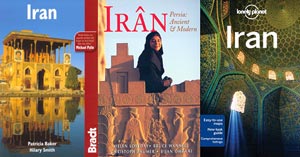
Iran travel guides

At the moment I have the Freytag and Berndt stuck on the wall because of its quite large scale, while the entire country is on one side of the page which makes it easier to get a grip on Iran’s geography and transport routes. However, it’s very big and since I really only need it for orientation, I’ll probably opt for something smaller – for example the Reise Know-How.

So, those are the main things sorted out: passport and visa, money, guidebook and map, and what’s going on. My flight is booked – one way to Tehran and return from Ankara as I’m hoping to take the train from Tabriz – and I’ve decided on what books I want to take with me. That just leaves the small matter of clothing… what am I going to do about a hejab?
His and Hers Guide to the Globe – Part 3: Siem Reap

Matt and Sharon Ward in Cambodia

Our round-the-world couple Matt and Sharon Ward have spent the next stage of their journey exploring the delights of Siem Reap in Cambodia. Here’s what they had to say about the world-famous Angkor region from a his and hers perspective…

A very early flight took us to Siem Reap in Cambodia, where we were surprised at how nice the small, modern airport was with its beautifully-landscaped grounds. You need $20 each and a passport photo to purchase your travel visa – ours were processed via a handful of officials who sat in a line, stamping and passing them onto the next official: a seamless and efficient process. A quick taxi journey took us to the Bun Nath Guesthouse, which was our first accommodation away from friends and the big city lifestyle.

Matt’s ‘His Guide’

After a quick power nap due to our 3am start, we ventured out to take in our new surroundings. Siem Reap has a long main street and many side streets off it with shops, bars and restaurants. I wasn’t too sure what to make of it at first, but as before I was prepared to give it a chance. We arranged our tuk-tuk driver through our guesthouse rather than going with the pushy airport driver. Mr Dano was polite and happy to drive us around for our stay and at a very good price ($15 per day).

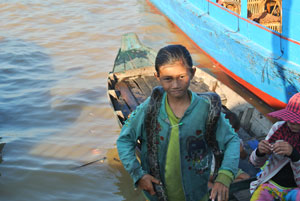
First off we headed towards Tonle Sap Lake, which involved a relaxing but occasionally bumpy 40-minute ride. Here we purchased tickets for a one-hour boat trip, which saw us take in the Floating Village & Crocodile Farm. This was a real eye opener for me with the sight of children begging with snakes wrapped around their necks, infants in tin bowls sailing the filthy river and people asking for help at every turn. There were hardly any adults to be seen – our guide mentioned that a lot of parents never returned alive from fishing trips. The tuk-tuk ride back to the guesthouse was a quiet one as I tried to make sense of what we had just witnessed. I felt very humbled and fortunate with the childhood I had.

That night we took a walk down to Pub Street, which is the main hub for food and drinks. We experienced our first power cut as we sat patiently in the dark awaiting our meal at Tigre De Papier – unfortunately, my chicken in basil with rice wasn’t worth the wait. From here we stopped off at a rooftop bar called Purple Mangosteen, a great place to take a few night-time pictures of the busy streets, before finishing off our first day at the Night Market.

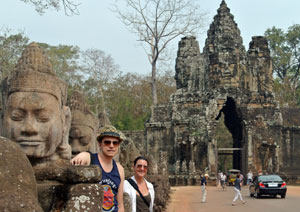
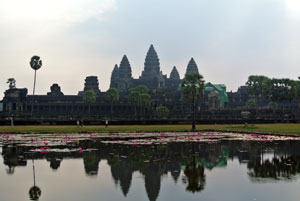
The following morning we had a 5:30am pickup taking us to Angkor Wat for sunrise. For $20 each we made our way in darkness towards the temple. A massive crowd had started to form, which felt a bit like a rock concert with fans eagerly awaiting the headline act to enter the stage. As the sun began to rise the temples looked stunning as they took on many different forms. This is something I would definitely recommend seeing. We spent about three hours walking around the temple before jumping back into our tuk-tuk and making the short trip to Angkor Thom. By late morning we were hungry, tired and a bit ‘templed out’, so decided to head back and grab some food and rest.

Angkor Wat

That night we popped into the Cambodian Soup Restaurant to try the Khmer Curry. With poor service, dirty tables and miserable staff, we quickly moved next door to the Khmer Family Restaurant for a curry and a few Angkor Beers with the bill coming to a whopping $9!

For our final day we decided to have a lie in before venturing out to the Red Piano for breakfast and coffees (our guesthouse didn’t provide meals). We popped into a bookstore and picked up a few books on the Khmer Rouge Regime and Cambodia’s struggles as neither of us remembered being taught this at school. From here we took in the Royal Residence and National Museum, which for me was slightly overpriced at $12, as was the café inside.

As a whole, I felt that Siem Reap really came to life at night with the overhead neon street lights, busy night markets and a packed Pub Street. Our informative day tours also contributed towards a thoroughly enjoyable trip and one that I’d recommend to anyone.

Sharon’s ‘Her Guide’

From outside the terminal building we easily picked up a taxi. Our driver was very friendly but tried desperately to get us to book him for tours. Matt was having none of it, but I eventually gave in, as I was feeling both tired and a little vulnerable. We agreed with him to pick us up at 3.30pm for our first tour. When we arrived at our guesthouse, we realised its tuk-tuk driver was in fact $2 cheaper ($8), so we arranged for him to pick us up at 3pm, avoiding the airport taxi driver. When we got to our room I immediately noticed a rancid smell; Matt having no sense of smell was oblivious to it. I made my way out to the balcony and below our room appeared to be an open sewer. We had already been told that we were moving to another room in the morning, so I just put up with it.

Our tuk-tuk driver called Mr Dano picked us up for our Floating Village tour. This is when we got to experience the real Cambodia. There were huts at the side of a dirt track road built up on sticks, children running around in the middle of the road and although they appeared to be living in real poverty, they all looked very happy. The Floating Village tour cost $20 each and we are taken by boat along the river, with houses, schools, shops and even a basketball court floating around us. From there, we were then taken to a Crocodile Farm, where we witnessed some of the children selling photos of themselves with snakes round their necks for a dollar. The journey back to the guesthouse was subdued as we both sat reflecting on what we had seen, and for me I realised how lucky I actually am.

Cambodia snake

That evening we made our way to Pub Street and noticed how the city had suddenly come to life. The streets were lit with neon lights and the night markets were a hive of activity.  We ate in Tigre De Papier, which seemed a little grubby with mosquitoes buzzing around us.  We then tried our hand at some haggling at the night market. I wasn’t quite sure if I came away with a bargain or not, but I did leave with two very nice sarongs for $10.

The next day we got picked up by Mr Dano at 5:30am to see the sunrise over Angkor Wat, which cost us $20 each for the full day. We stood patiently with the rest of the gathering crowds and watched the silhouette of Angkor Wat gradually paint itself out as the dawn broke behind it. We spent several hours walking around trying to find Angkor Thom from the map, when we eventually realised that it’s a lot further away. We made our way back to Mr Dano, who was waving and smiling at us and ready to take us to wherever we want to go next. By 11:30am we are both hungry and exhausted.  We decided to head back for lunch at the Blue Pumpkin and then get our heads down for a couple of hours.

That evening we had a refreshing cold shower which was not through choice, unfortunately I had (accidentally) booked our rooms without hot water, which easily explains why the rooms were only £3 each a night. We made our way down to Pub Street for some dinner. The first place we tried was the Cambodia Soup Restaurant.  We were rudely pointed towards a table, menus thrown down at us. One glance at the unclean table, flies and mosquitoes buzzing around us, and we walked out. Next door was the Khmer Family Restaurant where we were greeted with a welcoming smile, taken to a clean table and gracefully handed our menus. We both had the Khmer curry and beers. Although lacking a little in chicken it was tasty and I enjoyed it.

On our final day we enjoyed a long lie before heading out for breakfast at the Red Piano. We came across a bookstore where we both bought books on Cambodia. We spent the rest of the morning walking through the Royal Residence and National Museum. At $12 each, I thought it was over priced; though modern, small and easy to get around.  It was mainly based around the temples and Buddhism, but there wasn’t much else on the history of Cambodia, nor anything about the Khmer Rouge Regime.

I really enjoyed my time in Siem Reap. I felt safe and loved the idea of Pub Street. The night markets were just fantastic for bargains and there were foot massages available everywhere for something crazy like a dollar. My only regret was not stopping for a foot massage while I had the chance.

> Cover more of Cambodia with our collection of travel guides and maps.