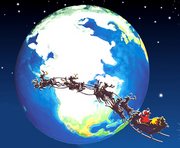
At Stanfords, we’re lucky enough to work together with people from all over the world. From burning shepherds, and carps in the bath to an ugly old woman who leaves presents, here a few of us share how we celebrate Christmas when we’re back home…
Italy
Margherita
Christmas starts in Italy with Advent – we put up an Advent calendar and display a nativity scene (presepe) from 1st December, but the figure of baby Jesus is not put in place until 12.01am on the 25th and figures of The Three Kings arrive on 6th January. There is a huge, wonderful museum of nativities in Naples.
Christmas is then generally celebrated on the 24th with a dinner with everyone together. We follow the northern European traditions of the Christmas tree and of Father Christmas (Babbo Natale) coming down the chimney and putting presents under the tree and they are opened on the 25th. A star is then added above the nativity and to the tree when Jesus is born.
 Food is really regional, but a food eaten all over Italy is Panattone or Pandoro (traditional Italian dry sponge cakes). In my family in Tuscany, we always have crostini toscani (little toasted breads) with liver pate served hot; my aunty would hand-make tortellini and put them to dry on the ironing board and I would steal them. We’d cook them in a meat stock that my mum prepared – bollito – from a big pot with all different vegetables and meat. The main cut of meat in my family was the ox tongue – we’d have this just at Christmas. Another aunty would make a vegetable tart. There’d be mandarins, clementines and nuts. After lunch we open presents, play cards, watch TV, go for a walk.
The Panattone is good the morning after, dipped in tea. On the 26th it’s great because all the leftovers are re-cooked in different ways.
The Christmas period ends on Epifania (Epiphany; 6th January) – we have a saying that “Epiphany is bringing away all the festivities” – when The Three Kings are added to the nativity scene, and la Befana (the ‘witch’, but really an old ugly lady who flies on a broom) comes and leaves presents – or coal – depending on your behaviour – in stockings.
Sweden
Karl
 We follow Advent to count down to Christmas. Each week we light one, two, three and then four candles in the window. Sankta Lucia(St Lucy) comes on 13th December when little girls all dress up like her in white sheets and with fake candles in their hair, while boys dress up as gingerbread men or elves. At high schools one girl is selected to be St Lucia – with real candles in a crown – and other girls are chosen to be her maids walking behind her and singing.
The 24th December is the big day for us, when most people celebrate. We start with a midday lunch when you visit relatives. The close family then gather together in the evening when we have a big dinner with typical Swedish dishes – ham, spare ribs, meatballs, salmon, herring, eel, and various salads. For dessert, we have a traditional rice pudding with an almond hidden in it – whoever gets the almond is the one who is getting married next. After dinner, we gather together round the Christmas tree – in the old days you danced around it – and hand out the gifts with some mulled wine and gingerbread.
On the 25th we don’t do much, just relax and eat leftovers. The holiday lasts for most people until the new year.
Poland
 Lukasz
On the 24th December it’s the most important day, when we would kill carps that we had kept in the bath for two days and then eat them. The traditional Christmas Eve supper should have 12 dishes and the carp is the main dish. We fast until the evening supper and we don’t eat meat at all on the 24th. We always leave one plate empty for an unexpected guest, and in the countryside they put a bundle of straw under the tablecloth for baby Jesus.
It’s a big family thing – all the generations come together. Santa Claus – Swiety Mikolaj – comes and puts gifts under the tree, but if you are bad you get a twig. Grandpa Frost replaced Santa Claus between 1945 and 1990. We open gifts either on the evening or the next morning. There is midnight mass as well. On the 25th and 26th all we do is eat meat.
Basque Country, Spain
Julio
 In the Basque country we have a celebration on the 24th December of Olentzero– a shepherd figure who lives in the mountains and comes to tell that Jesus was born – and he brings presents to celebrate. So in my town, we have a parade with a puppet representing this figure, and for some reason he is burned at the end of the procession!
On 6th January, The Three Kings bring presents to children, although the rest of Spain also has Father Christmas on the 24th December. On the 24th, we have a dinner with close family. In my house we don’t have a tree or nativity scene, which others in Spain do. The guests stay til the 25th when we eat the leftovers. It all happens again on New Year’s Eve – we have a family dinner, but with many more people together this time, and again we have leftovers on the 1st January.
England
Rachel
 You have to have an Advent calendar from the 1st December, even if you’re grown up. And a stocking that you put at the end of your bed on the 24th to find it stuffed with little gifts – some useful, others silly – on the morning of the 25th. There are also presents left by Father Christmas under the tree (a real one – Norway spruce for the scent) and they are all opened on Christmas morning. Lunch is roast turkey, stuffing, gravy, cranberry sauce, pigs-in-blankets (sausages wrapped in bacon), Brussels sprouts and potatoes. Much more than anyone could ever eat is cooked. The afternoon is for playing games, taking a walk (or a nap) and if there’s a good old film on, that plays on the TV in the background.
In the evening we have a buffet tea with a gammon ham, vol-au-vents, sausage rolls, turkey sandwiches, cheeses, crackers, crisps and French fancies, chocolate yule log and hot mince pies. More games are played and when the energy levels flag, the TV goes on til bedtime.
Boxing Day (26th December) is for examining the presents you received and then visiting relatives in the afternoon, although annoyingly, this is when the best films are on TV.
Author: Rachel Ricks
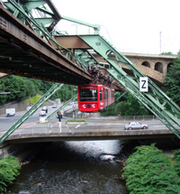 Many people may ask where the hell Wuppertal is. Even more will ask what the reason to go there is. Well, you won’t find ancient monuments; not even medieval ones. Ok, there are no monuments at all. It is just a middle-sized city in Germany, not far from Cologne or Dusseldorf. But still, people from around the world keep coming to Wuppertal. And they come to use its public transport.

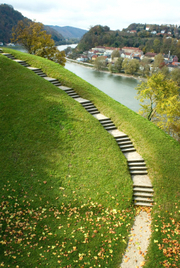

 Historical former residents include astronomer Johannes Kepler, composer Anton Bruckner and poet Adalbert Stifter, while Mozart’s Linzer Symphony has immortalised the name of the town in which it was composed.
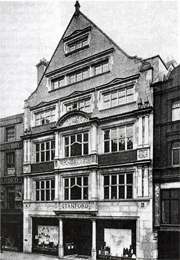 Established in 1853, Stanfords has since made and supplied maps to royalty, the military, and famous adventurers, explorers, writers, and even dolls, for over 150 years.
 John Simpson is to teach adventurers Sir Ranulph Fiennes and Sir Robin Knox-Johnston how to file news reports from a war-zone in a new BBC series.
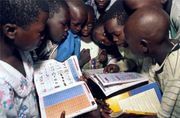 Stanfords were pleased to be able to donate nearly £125 to international development charity ActionAid after a special Christmas shopping evening.
 Our manager of Stanfords in Bristol appeared on TV to defend the city’s river following a gaffe made by Strictly Come Dancing judge, Len Goodman.