 In these tough times, we all want our holidays to stretch that bit further, to get more value for money and a fuller experience during our stay. What better way than taking a volunteering holiday? See a country, help other people, and gain valuable experience for your CV… Kristina Roe from responsibletravel.com shows us how…
My experiences of working in a school that stood within the grounds of Central America’s largest landfill site, in the heart of Guatemala City will stay with me forever. The rubbish dump, or basurero as it’s called by the locals, covers approximately 40 acres of land and is home to nearly 1,000 families who hunt for rubbish that can be sold on to make a profit. It was here that I worked for a month, teaching English in a school set up to help provide children in the area with an education and a future.
Like a growing number of people, there was something deeply appealing to me about heading off to a new place, working among local people, learning about a culture and hopefully ‘doing something worthwhile’.
Ten years ago, volunteering either involved taking two years off in developing countries, or spending a weekend pulling prams out of canals in the UK. More recently, one- to three-week trips have been created, many of which combine time spent volunteering with an opportunity to travel and to visit the main areas of interest as a tourist. The result is that there is now a huge range of projects and trips available with a vast number of companies and charities – there really is something to match most interests and skill sets in a wide range of destinations.
 So why the sudden increase? Justin Francis, managing director of responsibletravel.com, which lists over 350 such volunteering holidays, believes that as the range of volunteering options has increased, the concept of volunteering has become more accessible. “Travellers are looking for more rewarding forms of travel. They want to really experience places and cultures and give something back in the process too”, Justin says.
However, as more and more organisations begin to offer volunteering trips, Justin warns that it’s more important than ever for people to take the time to research the different options, choose a trip that best suits their needs/ ages/ skill sets and take steps to ensure that the company they are travelling with offers ‘responsible’ volunteering options. “All volunteer projects should be based on a real local need and work in partnership with local people rather than being dreamed up by a travel company’s marketing department in the UK,” says Justin. He adds, “You should be able to ask to see an independent report on the benefits of the project to local people and the environment and the organisation should be totally transparent about the cost of the trip and where that money goes.”
As Edward Abbey once said, “sentiment without action is the ruin of the soul”; if you like the idea of travelling with a purpose but you want to be sure that you are choosing a responsible volunteering holiday, responsibletravel.com advises asking the company running the trip the following 10 questions:
1. Is the project based on a real local need? If so, what?
2. Was the project suggested by local people rather than invented by a marketing department?
3. Is the project run jointly with local people? (This transfers skills and ensures longevity.)
4. Can you see an independent report on the benefits (both short- and long-term) of the project to local people/environment?
5. Can you speak to a previous volunteer?
6. What pre-trip briefing and training is needed or available?
7. Can you see their policy for responsible tourism?
8. Do they offset the Co2 from the flights of all personnel?
9. Is there transparent information around cost and where the money goes?
10. Does the organisation take steps to match your skills to the needs of the project?
Volunteering holiday options…
 Elephant conservation holiday in Thailand
Work alongside professional mahouts (elephant keepers) in a centre that gives refuge to domesticated elephants that have been roaming the streets of Bangkok and other cities. This centre is part of a larger Wildlife Rescue Centre and aims to give refuge to animals in an environment as close to nature as possible. You will help with feeding the elephants, picking bananas and pineapples, cleaning their enclosure, hosing down the elephants and swimming with them in the lake. Based on temple grounds near Thayang in the South of Thailand, this project is about 100 miles South of Bangkok and about 15 miles from the beaches of Cha Am and Hua Hin.
Penny Hamilton visited the project in 2007 and said she had “an absolutely amazing time”. “To be so close to these magnificent animals was simply breathtaking. There are so many memories that I have taken back home with me; the great people that I met to swimming with the Elephants in the lake in front of the centre. The local people are so friendly and welcome all the volunteers into their community with open arms. I was never into the typical beach holiday but this has sparked a new interest for me.”
Trips last for one-three weeks and start every week on a Sunday. From £399 (one week) – £715 (three weeks), excluding flights.
www.responsibletravel.com/ThailandElephants
Volunteer and holiday in Kenya
 You will work alongside the local community on school projects, expanding and enhancing existing facilities as well as building new ones. There may also be the opportunity to teach and coach sports and assist in landscaping and tree planting. You will also get the chance to enjoy the beauty of the Kenyan coastline and stunning Indian Ocean as well as game viewing in Shimba Hills National Reserve, Mwaluganje Elephant Sanctuary and Tsavo East National Park (on the longer three- or four-week trip). Mukurumuji Camp where you’ll stay, is located in a secluded region of the Shimba Hills National Reserve boundary. It is surrounded by indigenous communities and a wide variety of wildlife. Mukurumuji is frequently visited by Elephant, Buffalo, Sable Antelope and occasionally Leopard; as well as being home to many other rare animal varieties and wildlife.
After visiting this project in 2006, Jane Edington said “I would recommend a holiday like this for anyone who wants to experience a little more of what life is like in a country, which is difficult from a purely hotel/tourist perspective.”
From £682 (seven days) – £1,705 (four weeks), excluding flights.
www.responsibletravel.com/VolunteerKenya
Author: Kristina Roe
 Know you want to take some time out between school, college, university or your first job?

 Britain is to gain another National Park – the South Downs – joining such other protected areas of natural beauty as the Lake District, the Brecon Beacons and Dartmoor.
 We get a thrill whenever we come across descriptions of the wonders of maps in the world of literature. It all started for us with the great Sir Arthur Conan Doyle, who in
 You might want to climb one of Mauritius’s many peaks (they are all small – the tallest being only 828 metres – yet some are very challenging), hike in the Black River Gorges National Park or explore the private estates that have recently been opened to the public. Or bathe under cool waterfalls, swim in lush lagoons, dive or snorkel within the coral reef or take a boat trip to one of the nearby uninhabited islands. Also visit zoos, museums and colonial houses and spend the rest of your money on cheap clothes and souvenirs in the capital Port Louis or the Central Plateau towns.
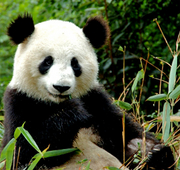 Love animals and dream of seeing them in their natural habitat? Here are our 10 favourite animals in the world and where you can go for guaranteed sightings of them, plus 10 you can see nearer to home…