In 1650 and 1654 the great biblical scholar James Ussher published two Latin treatises on the chronology of the Old and New Testaments. By analysing and linking the various genealogies recorded in the Bible, Ussher arrived back with Adam and Eve in the Garden of Eden, and he felt confident in fixing the date of the creation of the world as occurring in 4004 BC, on 23 October of that year, probably at four o’clock in the afternoon.
This chronology was printed in many Bibles down to the late 19th century, and consequently Ussher’s name became notorious as a pillar of fundamentalism, and an enemy of science. This was quite unfair on Ussher, who was simply following and refining the knowledge and beliefs of his time. His chronology was a testimony to the unity of knowledge which then prevailed: it connected the biblical tradition with real history, and no one in the 17th century would have found anything odd in that. As the natural sciences slowly developed in the years after Ussher’s work was written, his chronology offered a base-line, to be weighed, tested, and ultimately rejected.
By the early 19th century, the age of the earth had become a subject of intense interest, central to problems such as the diversity of species and landforms, and to the emerging study of the fossils of extinct species. Had the earth and all its life-forms really been born in an instant of time, or nearly so, in a burst of creative activity? If not, how long would be required for it to assume the diverse forms that we now see? Many answers were proposed to this question, some attempting to retain a biblical framework, others extending the time-scale to tens or even hundreds of thousands of years. The man who cut through this great controversy was Charles Lyell, whose Principles of Geology (published in three volumes 1830-33) laid the foundations of the modern science of geology. Unlike other theorists, Lyell never suggested even an approximate age for the earth, in fact he explicitly separated geology from cosmology because he considered that in his time the problem of the origin of the earth was pure speculation. But the whole thrust of his work made it plain that the age of the earth had to be conceived in terms of millions, perhaps hundreds of millions, of years.
 Before Lyell, it had been universal for geologists to explain the diverse forms of the earth’s surface by postulating a past era of cataclysmic events – the so-called catastrophic school of geology. Even if God’s intervention were discounted, the birth of mountains, valleys, glaciers, waterfalls and deltas must have been sudden violent transformational events, of a kind that no longer occurred, since we do not see these things taking shape now, before our eyes. Lyell opposed this view on strong theoretical grounds, arguing for the principle of the uniformity of nature. The physicist does not assume that the laws of physics are different now from what they were a thousand years ago, or a million; why then should the geologist imagine that the earth was shaped by forces which no longer exist? The title of his book was a conscious echo of Newton’s great exposition of physical laws. Lyell had spent years of fieldwork, mainly on continental Europe, amassing evidence which proved the contrary, distilling his central belief that the earth has been shaped in the past by precisely those same processes which we now see in operation. The logical, but radical, outcome of this belief was that many millions of years would be required to produce the geological forms which we see today.
Lyell’s views were the product of his all-important field-trips in the late 1820s in France and Italy, especially in the volcanic regions of the Auvergne and Sicily. What he saw there were strata of sedimentary rock – limestone, sandstone, marls and clay – punctuated at different levels by the remains of volcanic eruptions. The only rational explanation was that the character of the rock strata was determined not solely by their age, but by the conditions under which they were laid down, and that these conditions had recurred again and again in successive eras. He also saw that the fossils preserved in the limestone showed obvious continuity with species still common in the Mediterranean. Therefore the conditions during the past eras when these creatures lived must be similar to those of today, even though they were millions of years old, and moreover the living creatures of today would become the fossils of the future.
 These observations had the force of a revelation for Lyell, and he hastened to incorporate them in the book which he had already planned, and more, he announced what he considered to be the new principles upon which a mature geological science could be built. He argued that until now geologists had been “under a delusion as to the age of the world and the date of the first creation of animate beings”, and that this had baffled their entire approach to the subject. In place of the earlier vision of the earth being formed by “an exaggerated picture of energy and violence”, he claimed that “the language of nature signified millions of years” – years of slow change, of erosion, sedimentation, the rise and fall of the land, the encroachment and retreat of the sea. Lyell named this new approach to geology “the doctrine of absolute uniformity”, and he acknowledged that it required “incalculable periods of time” to work its effects. No catastrophic forces were required to explain the earth as it is today or as it will be in the future. Even the ravines of the Niagara Falls would one day be eroded, he predicted, releasing the waters of Lake Erie to flood the entire region around the St Lawrence.
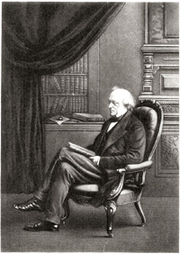
The reception given to the Principles was overwhelmingly favourable, and in a few years its contents became scientific orthodoxy. Although radical, it had a lucidity and a weight of evidence that was irresistible. Lyell himself, serious, gentlemanly and cultured, became the archetypal Victorian man of science, knighted by the Queen in 1864, and eventually buried in Westminster Abbey. As Darwin said later, the merit of the Principles was that “it altered the whole tone of one’s mind”, so that one saw things thereafter in the light of Lyell’s ideas. Darwin carried the book with him on his Beagle voyage, and was profoundly influenced by it, for it provided the vast time-scale within which the evolution of life-forms became conceivable. But to Lye
ll, Darwin provided a major problem. Until the final decade of his life, Lyell had real difficulty with the concept of the species. If species became extinct, as he knew they did, and if new ones appeared, how could they also be transmutable? A species must, in his view, be a fixed, stable entity. Although he could offer no theory as to how a new species could arise, it seemed inconceivable to him that one could simply change into another, and in particular he found the idea that mankind had evolved from apes repugnant. The origin of the human intellect must, he believed, require some special explanation. It was many years after the publication of The Origin of Species before Lyell conceded that the ideas of his friend Darwin appeared to be scientifically irrefutable. In his imagination however, he never embraced evolution as a great intellectual breakthrough, rather he acknowledged its force, but was silent before it.
But Lyell’s theories on geology and the age of the earth did not remain unchallenged. In the late 1860s, Lord Kelvin and other physicists began to criticise them on the grounds that they conflicted with their views on the origin of the earth. It was universally believed that the earth had been born as a mass of hot or molten elements, which had been cooling ever since. The calculations of the physicists suggested that the current temperature of the earth, especially the high temperatures of its interior, meant an age no greater than 25 million years. This was far smaller than the time-scale required by Lyell, who had recognised that volcanic eruptions over hundreds of millions of years must be fuelled by an undiminishing source of heat within the earth.
For some years therefore, a huge question-mark hung over Lyell’s theories, until the turn of the century, when the discovery of radioactivity provided the necessary inexhaustible source of heat. New estimates of the age of the earth then became possible, and they were revised dramatically upwards, so that Lyell’s faith in the meaning of his observations was completely vindicated. Understanding the true age of the earth was a part of mankind’s growing-up process, perhaps less dramatic than the Copernican revolution or the Darwinian, but still a vital one, and Lyell’s work provided an essential basis for that of Darwin.
Taken from A Universe of Books by Peter Whitfield. Also the author of The Mapping of the Heavens, The Charting of the Oceans, New Found Lands – Maps in the History of Exploration, Cities of the World: A History in Maps and London: A Life in Maps.
His real claim to fame, however, is that during the 1980s he was a colleague of ours as director of Stanfords and wrote about our history in The Mapmakers – A History of Stanfords. For further information on Peter Whitfield, visit his website: www.wychwoodeditions.co.uk.
Author: Peter Whitfield