The Top 5 Most Overlooked US Cities

America enthusiast James Hetherington looks beyond New York and Los Angeles to discover five of the US’s most overlooked cities.

When people imagine the USA, they may envision the towering skyscrapers of New York, the luxurious homes of Hollywood or a sweep of exotic palm beaches above a pristine Floridian beach. Continue reading The Top 5 Most Overlooked US Cities

Simon Garfield: On The Map Interview

Simon Garfield On The MapThe backlash against digital maps is underway. Whether people are conscious of it or not, increasing numbers of us want to travel back in time to see how things were in the days before Google Maps and sat navs.

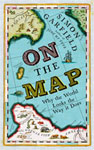
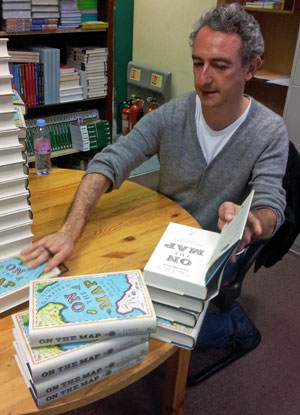
This is according to cartography enthusiast and author Simon Garfield, who visited Stanfords to sign copies of his new book On The Map; a work that explores maps’ influence in our understanding of the world.

“I think there’s a greater appreciation of the beauty of maps; a nostalgia for the way antique maps look,” he says. “And not just maps that you hang on the wall. There’s a line in the book about Stanfords, where you can buy pencils with antique maps wrapped around them. You can’t use them as maps, but they’re beautiful things to have.”

While the significance of paper maps as primary navigation tools has eroded, Garfield believes that a great love exists for old-style maps and traditional cartography. “People are absolutely devoted to them,” he explains, “not only because they help you find your way but because they’re very beautiful things.

“Cartography is a great British tradition – while the French invented nation mapping, the Ordnance Surveys are hugely important and significant in this country. The Brits have mapmaking in their hearts.”

The renewed appetite for analogue maps isn’t solely concerned with reminiscing about mapmaking’s golden age, though. Another trend emerging is the growing popularity of hand-drawn maps, which has given cartography a distinct human touch – an antidote to the uniformity of one-size-fits-all digital maps.

“I love the idea of personalising maps,” Garfield says, “There’s a whole artistic side, Grayson Perry being the leading light in terms of using maps to express his autobiography and to make political points.”

Among the Turner Prize-winning artist’s recent works is his Map of Truths and Beliefs, a large tapestry exhibited opposite a hand-crafted 1800 map based on Pilgrim’s Progress from the British Museum’s archives.

Fascinatingly, creating and utilising paper maps could be good for our brains – or so suggests Professor Richard Dawkins, who’s argued that the development of maps may have played a more important role in the evolution of the human brain than the development of language.

Antique maps“Maps enabled us to make the transition from the rest of the apes – if you wanted teamwork when you went out to kill an elk, that was the way you did it,” Garfield says. “You didn’t explain it in terms of language or latitude and longitude – you drew a map in the dust or on the cave wall.”

So will an over-reliance on digital maps negatively affect our brains?

“There’s no doubt that our spatial ability is being radically slimmed down because of digital maps,” the author explains. “You look at the experiments with London cab drivers and their ability to store the A to Z in their minds – this ability will eventually be eroded in line with the idea that the hippocampus expanded to accommodate this additional information.

“This won’t just happen to cab drivers using sat navs, but to us all. If we lose the ability to unfold a big map and look at a direction 10 miles ahead or 50 miles around – and all we’re doing is looking at 100 yards ahead on our phone – that’s really going to have an effect on our map-reading skills going forward. I think it’s a real loss and something that hasn’t been fully appreciated.”

Despite this likely side effect of digital cartography, Garfield reserves praise for Google Maps – particularly in the wake of the Apple Maps debacle.

“We take the mickey a bit out of Google Maps and its ubiquity, but I think we’ve only come to realise how great it is when people ‘upgraded’ to Apple Maps. It was extraordinary how they got it so wrong – I had a look today on my phone and I was surprised how difficult it is to use. It makes you think how much Google got right.”

The author’s own journey with maps began during his London schooldays and the iconic Tube Map. Despite travelling only one stop on the Underground each morning and afternoon, the young Garfield knew there was the potential to explore the whole of London and its suburbs.

Antique maps“It’s a bizarre thing to say you could fantasise going to Edgware or the end of the Piccadilly line,” he says, “and I began collecting the free maps that were occasionally updated – this is where it all started.

“Every day you’d see this map – it was the first one I was aware of, though I didn’t realise the significance of the Beck map, or rather the fact it was a diagram rather than a map.”

He added that his interest has always been in the stories behind maps, rather than cartography per se, and it was this passion that sparked the idea for On The Map.

“You couldn’t do anything like a definitive history of cartography so I had to be very selective, but there were certain things I needed to include.

“I wanted to go back to the Great Library of Alexandria to explore what humans knew about the world and how that was laid down in literary atlas form, and how the early maps developed and came alive again at the beginning of the Renaissance. That was the beginning, and I knew where I wanted to end – the Googleplex.

“On the Map is an accessible book for people who aren’t map experts but who want to read a new, visual account of the world’s history.”

Simon Garfield On The Mao

< Click on the book to buy a signed copy of Simon Garfield’s On The Map!

The Top 5 Words and Phrases to Learn Before Trekking in Nepal

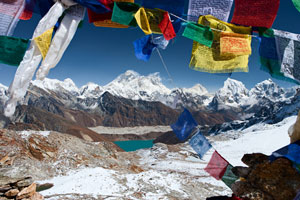
Nepal Mount Everest

Seasoned traveller Paul Darlow reveals his top five useful words and phrases while trekking in Nepal.

If you’re going trekking along one of the main routes in Nepal like Everest, Annapurna or Langtang, the good news is that you don’t have to know a word of the Nepali language – many locals along these routes speak remarkably good English.

However, my most memorable experiences in Nepal were only accessible because I had learned a few words of the language. Because most tourists don’t bother to learn any Nepali, those who make the effort get rewarded many times over. Continue reading The Top 5 Words and Phrases to Learn Before Trekking in Nepal

Working Holidays in South America: Top Tips

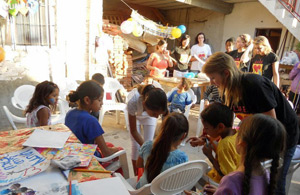
Buenos Aires volunteeringPoi-Yun Wan, who has taught English as a foreign language in South Korea and South America, reveals her top tips for overseas working holidays.

Machu Picchu, Iguazu Falls, the Amazon Rainforest… home to some of the most historical and breathtaking sights in the world, what’s not to like about South America?

Here you’ll find people from all walks of life taking gap years, studying or even working and volunteering. This method of working while on holiday is becoming a popular choice among visitors and is commonly known as ‘voluntourism’. For many (including myself), a working holiday really can be the icing on the cake to an overseas adventure.

Types of work

Unless you’re talking about certain professions such as medicine and nursing, volunteering doesn’t necessarily require individuals to have extensive experience and skills in the field they want to work in. Dedication and passion is usually more important when it comes to volunteering.

Some examples of voluntary work in South America include:

Teaching English

You don’t need to be a qualified teacher to teach English – you just need bags of patience, confidence, energy and a good sense of humour! Countries such as Bolivia and Peru welcome English teacher volunteers as many families can’t afford to pay for lessons.

Top tip: Schools don’t usually require you to plan lessons but do some homework and research lesson plans online beforehand, because chances are you’ll be faced with 20 to 30 kids per class.

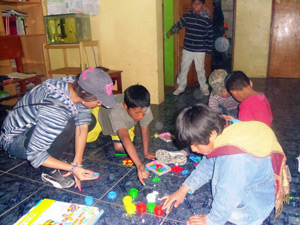
Cusco orphanageWorking in an orphanage

Many orphanages allow volunteers to live and work with the children – you may be required to pay a small fee for your stay. You’ll be playing, eating meals, sharing chores and even reading bedtime stories with the kids and although this can be a rewarding experience, it can also be a demanding role, so be prepared to expect the unexpected!

Top tip: Bring plenty of ideas and games to entertain the children during your stay.

Building shelters

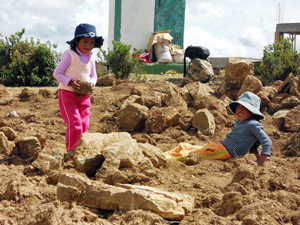
Volunteers can help to build shelter in areas where frequent landslides and heavy rainfall causes destruction to houses and schools. Projects require groups of volunteers to complete the task but the duration time can depend on each individual.

Top tip: Make sure you are physically fit to take part because heavy lifting may be required.

Other voluntary work

Volunteers can also choose to work in soup kitchens, gardening, farming and sea turtle projects among many others. Often, visitors may find they are spoiled for choice!

Girls BoliviaTo pay or not to pay?

From experience, it’s probably best to search for voluntary work when you get to your chosen destination. It may sound daunting to go with no solid plans but South America is a popular location among tourists, so you’re guaranteed to meet people who can point you in the right direction.

For those who prefer to work on a scheduled timetable, there are agencies that specialise in working holiday packages. The advantage of going through agencies is that everything can be organised for you, from a voluntary placement to a hotel room.

The downside of going through agencies is the fees; volunteers can find themselves out of pocket if they’re not careful. Take time to shop around for the best deals and search reviews on agencies before you book anything.

Good to know

As the vast majority of South Americans speak Spanish, it’s ideal to learn some local lingo before you volunteer. The locals always appreciate visitors making an effort to learn their language.

Although South America is a popular destination for holidaymakers, crime rates are still a problem in certain areas, so be extra vigilant of your belongings and don’t attract too much attention by wearing jewellery and other flashy items.

For more information on living and working abroad, check out the following publications:

Top 5 Half Term Family Walks in and Around London

Half term is nearly upon us, and with this autumn’s mid-term break occurring at some point between 20th October and 4th November, now’s the time to start planning a day out with the family.

Rather than an obligatory trip to a theme park, an expensive overseas break or a low-key few hours in the park, why not organise a day the whole family can enjoy? There’s no more exciting destination than London and its surroundings – and as you’ll discover, there’s more natural beauty in this part of the south-east than you might expect. Continue reading Top 5 Half Term Family Walks in and Around London

An Indian Adventure: Travelling With My Mum

Varanasi ghats

What’s it like to go on holiday with your mum? Charlie Gilbert travelled to northern India with his to find out.

Destination: northern India. Travel companion: my mum. Why India? Why my mum? Well, my granny was born and schooled on the subcontinent, so the pair of us wanted to explore our recent family ancestry first-hand. Thanks to a well-timed grouping of bank holidays, we jumped on a plane to Delhi to begin our adventure.

Now, I’m quite an unlucky traveller. During my last few holidays I’ve missed flights, been robbed by child gangsters and snowed in at train stations. Last time I was in India, I was hospitalised for five days with amoebic dysentery and run over by a motorbike. It’s fair to say my mum was a little nervous before any butter chicken had graced her palate.

Delhi

First stop Delhi, a somewhat curious city. Curious because the Indian capital has a remarkable ability to function on a day-to-day basis despite the relentless mayhem of energy-sapping heat, traffic horns, scam artists, lung-clogging pollution and a superbug-infested water supply (which, fortunately, has long since cleared up). It’s genuinely fascinating, but after two days the insides of your nasal passages turn black, you can drink a two-litre bottle of water in five seconds without your thirst being quenched and, most infuriatingly, you begin to lose faith in humanity. But that’s what India does to you – by the time you crawl into your hotel bed that night, you’re already reminiscing about how fantastic the day was.

Taj Mahal

Agra

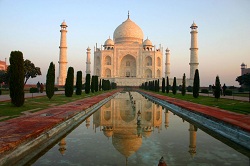
Armed with an India travel guide, it was onwards to Agra, which is essentially a miniature, industrial version of Delhi – but one that’s home to the world’s most impressive building. The Taj Mahal is an architectural marvel – tear-inducing, almost. It’s just a shame its interior is a bit smelly. After being moved by watching the early-morning sun reflect off centuries-old translucent marble adorned with Mughal scripture, I found myself sniffing the air and grimacing as I walked closer to the building. After taking a few steps back and whipping out the camera, normal service was resumed. Phewff.

A train journey

Our adventure began in earnest on the overnight train to Varanasi. If you’re not familiar with Indian trains, they usually have the following classes:

  • Chair car: Avoid like the plague unless you like sitting on upright slatted benches for 13 hours and have a perverse attraction to insomnia.
  • Sleeper class: Where passengers are presented with a plastic padded horizontal bench and a curtain. It sounds basic, but it’s remarkably comfortable – and one of those genuine ‘travel experiences’.
  • AC 2-tier: The same as sleeper, but with more bedding and thicker curtains.
  • AC 3-tier: Identical to AC-2 but with one more person squeezed in per berth – something of a lottery, let me tell you.
  • First class: Which essentially involves being locked inside a moving box with two strangers, one of whom will most likely have a snoring problem that urgently requires the attention of an ear, nose and throat specialist. Unless you know the people you’re sharing a compartment with, I’d avoid.

We chose AC 2-tier – my mum wasn’t too impressed with the on-board facilities and was gripped by an unwelcome bout of claustrophobia. Being a gentleman, I let her have the bottom bunk – the one with the window and enough space to accommodate an average-sized badger set.

The upper bunk was so close to the train’s roof that I couldn’t sit up without banging my head on the grilled metal air conditioning vent. Using all the common sense I could muster, I decided to lie down. I was immediately transfixed by a big red handle on the end of a short chain, which dangled invitingly close to my right hand. Above it were the words ‘Pull to stop train. Penalty for use without reasonable and sufficient cause – fine of up to Rs. 1000 and/or imprisonment up to one year’.

Pulling this handle seriously tempted me – it would have generated enough excitement to justify a £15 fine, but I didn’t fancy being harangued by my fellow passengers or spending 12 months wasting away in an Indian prison cell with curried lentils as my only company.

After dilly-dallying for longer than I should have, I realised the train had been moving for 20 minutes and that I had no idea which way it was travelling. I glanced down at the bottom bunk – the curtains were closed and my mum was asleep. It was the same story over at the adjacent bunks. I spent the next 13 hours wondering whether my head was following my backside, or my backside following my head.

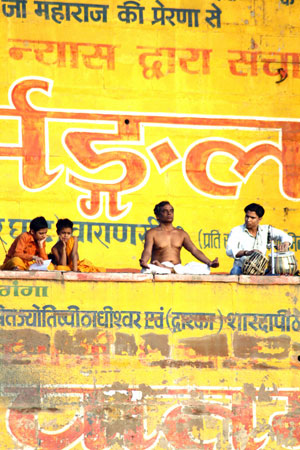
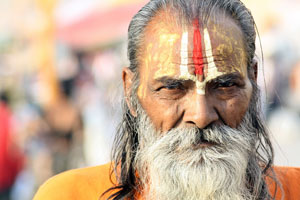
Sadhu Varanasi

Varanasi

I had heard mixed reviews of Varanasi from friends of mine who had already visited. On the one hand, it was India’s oldest and holiest city, crammed full of temples, the Ghats, the River Ganga and bucket loads of religious and spiritual significance. On the other, it was an over-populated sprawl of decrepit buildings – its growth has been unstoppable, and the intensity of an around-the-clock sensory assault coupled with an unforgiving climate has driven tourists to more peaceful surroundings after only a few hours. Just as well my mum decided to book a five-night stay, then.

This is the city my great-great grandparents are from. Wilmot Charles Dover – easily the most handsome man who ever lived in Varanasi, then Benares – and his wife, Alice Maud, resided in a bungalow complex in the city until the late 40s. My granny, whose parents’ wedding reception was held there, remembers almost everything about it – from the mango tree at the front to the well at the back, even sleeping outside on the veranda when it got a bit hot at night. Armed with a few old photographs and a trusty Varanasi street map, my mum and I decided to pay the bungalow a visit – the first members of our family to do so in 60-odd years.

We were welcomed by the Guptas, the bungalow’s residents, with open arms. A family of 14, they told us the history of the house and we in turn showed them our old photographs. It was all rather pleasant – we were treated to a huge, all-you-can eat meal and a grand tour of the complex, which by Indian standards is pretty bloomin’ big. With a little help, we subsequently tracked down Wilmot’s grave, unmarked apart from a number ’46’ and covered in scrub and ants. It was a genuinely moving moment and felt like quite an achievement. I may have even hugged my mum, but I can’t remember.

Nainital Lake

Nainital

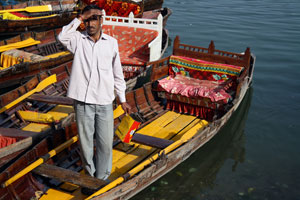
From Varanasi we returned to Delhi and headed north-east to Nainital, a picturesque hill station in the Himalayan foothills and the town where my granny went to school. This was the ‘holiday’ part of the trip. Up in the mountains it’s a much cooler 25 degrees, which basically means you can go out and have a nice time without fear of melting into a large puddle.

It was here where I met the Indian Mr Burns – his appearance and gait unquestionably similar to that of Springfield Nuclear Power Plant’s owner. He was fascinated by two things in particular: British coins and William and Kate’s royal wedding. His enthusiasm for both was insatiable and he couldn’t be calmed down – every time I opened my mouth to speak he looked at me like an eight year-old boy about to receive a Lego pirate ship for his birthday.

“You have English coin?!”

“Um, let me check. Yep, um, only about 20p though, sorry.”

“Wow! I shall keep this and treasure it! You have more?!”

I replied in the negative and his face dropped. “You sure, maybe check again?!”

Return to Delhi

A remarkably uneventful return train journey from Kathgodam back to the Indian capital signalled the end of our journey. Apparently the crew from the BBC’s Who Do You Think You Are lost the tape, so you’ll have to settle for this blog. Sorry about that.

Recommended reading

  • Great Indian Railway Atlas: An excellent record of the Indian rail network, and very useful when you make up in the middle of your sleeper train journey wondering where you are.
  • Lonely Planet Rajasthan, Delhi & Agra: A succinct, detailed guide to the most popular northern India destinations – an absolute must.
  • Uttarakhand Road Guide: While in Nainital, this state map was vital when planning days out in the Himalayan mountain region of Uttarakhand.

Ireland Holidays: Top 5 Autumn Tips

Seasoned Ireland traveller Ian John reveals his top five Emerald Isle autumn holiday tips.

Ireland is a destination that remains forever etched into the minds of those who visit. Whether you’re exploring the quaint market towns and rugged beauty of the west coast or experiencing the thriving Dublin scene as part of a weekend away, the Emerald Isle offers something enticing yet beguiling – and visiting out of season may be the best way to enjoy its boundless attractions.

Autumn is a fantastic time to visit Ireland as its rich, verdant countryside slowly changes hue from a lush green into a rich tapestry of browns, yellows, reds and oranges. With a large number of festivals and other events through October to December, Ireland autumn travel offers any visitor a memorable trip. Outlined below are our five top tips for an autumnal excursion to remember: Continue reading Ireland Holidays: Top 5 Autumn Tips

Shanghai City Guide: A Westerner's Perspective

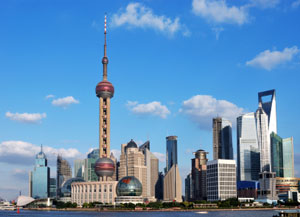
Shanghai skylineShanghai-based freelance journalist Tim Neesham gives a westerner’s perspective on living in one of the world’s most forward-thinking yet enigmatic cities.

I am standing on the platform as a Shanghai metro train gently rolls into the station. Elbows cocked, knees bent, I prepare myself for the inevitable battle that accompanies the boarding of every train. The doors open and I make my move, but like a salmon fighting its way upstream, progress is minimal, perhaps even backward.

The next thing I know I am facing the wrong direction and the train is gradually departing the station. I am still on the platform. I may as well have my pants around my ankles for good measure. Punk’d, merked, served, whatever – I’ve been had.

And such is life when 23 million people are all seemingly battling for the one empty seat. Snooze you lose, dog eat dog – figuratively speaking of course – all the old cliches come to mind. Shanghai is not just bustling, it’s booming, at times frantic; the fastest growing metropolis the modern world has ever seen.

The very name conjures up images of 19th century opium dens, porcelain poster girls and preposterous propaganda, but in reality the Shanghai of today is a cosmopolitan cocktail of forward movement, exploration and bucket loads of new money.

In 1990, the area of Pudong was little more than a swamp. Within 15 years it’s transformed into the oft-filmed and photographed Shanghai we recognise today. Skyscrapers which at one time were the largest in the world are now home to central offices for many of the world’s largest corporations. It even has its very own stock exchange. All have helped mould Shanghai into what is arguably the most influential financial centre of what is indisputably the world’s fastest-growing economy.

Shanghai MetroModern Shanghai is a unique mix of colonial architecture and 21st century Oriental innovation. Indeed, at times wandering through the area the foreigners know as the French Concession it’s easy to forget you’re even in China at all. As the name suggests, it’s perhaps more akin to a strolling down a Provencal boulevard. However, a quick duck down a side street or into the subway quickly reminds me that I’m far from home, far from western customs and traditions.

But as a westerner here, the creature comforts come thick and fast – bars that sell decent beer on draught, restaurants offering reasonably inexpensive pizza and takeaways that will deliver more or less anything to your door at more or less whatever time you choose.

Public drinking for example, although perhaps frowned upon or at the very least greeted with confused regard, is still perfectly legal and the whisper of the smoking ban remains exactly such.

The western bubble has expanded to the point that a real connection with Chinese culture is no longer a necessity. Locals view us with a certain wary curiosity, as one might look at an unexploded incendiary device.

This lax – some may even say liberal – attitude to the infusion of western culture combined with a reasonably fertile foreign employment market has seen expat numbers soar in recent years, but the division between foreigners and locals remains tangible.

French Concession ShanghaiThat said, if ever there was a place to epitomise where east meets west, where old grapples with new and innovation struggles to overcome tradition, then it is Shanghai. A fascinating city of startling contrasts, Shanghai’s biggest obstacle may yet turn out to be those who continue to sculpt it and drive it forward. Without the Chinese, Shanghai would be nothing like what it is, yet the speed at which it continues to develop is destined to leave many people far behind. It’s no secret that the labourers who work so hard to build the skyscrapers will probably never get the chance to actually set foot inside them.

Never ashamed to destroy or exploit images of cultural heritage in the name of progress, Shanghai follows the modern Chinese model that moving forward is of far greater importance than preserving what has already been.

Human nature has thus far shown that radical change takes time, but time is the one thing the Shanghainese are not willing to waste.

Want to discover more about Shanghai? Try one of these Shanghai travel guides and maps:

Cricket on Everest: Alan Curr's World Record-Setting Himalayan Adventure

Cricket on EverestFour years ago, Alan Curr was a man on a mission. His goal? To play the world’s highest ever game of cricket on the slopes of Mount Everest. A plan that started over a beer quickly turned into record-setting adventure…

In 2006, Alan Curr’s friend Richard Kirtley completed the Everest Base Camp trek. Coming from a cricket family – his cousin played for England – he noticed a frozen lake bed during the climb and immediately visualised the world’s highest game of cricket. On his return, he pitched his thoughts to Alan.

“I loved the idea, and by 2008 we had put it out to as many people as we could, with the idea of starting in April 2009,” Alan explained.

Despite the eccentricity of the itinerary, the pair attracted an impressive 85 applicants, much to their surprise.

“It was a really mixed bag; generally we had a group of people in their 20s who wanted to go out and do something interesting. We took 50 people in total, many of whom didn’t know each other beforehand.

“Our youngest was 23; the oldest 37 or 38. We had guys who are married – one whose wife was pregnant, another who changed the date of his wedding. We had nine girls, insurance workers, teachers, and a number who were made redundant during the preparation.”

A key part of the group, Alan said, were the ‘trektators’ – girls who completed the trek but didn’t take part in the game, who he described as “the best fundraisers of the lot”.

After 18 months’ planning with Richard and Gareth Wesley, another friend – which included sponsorship deals with Nokia and Qatar Airlines – the party of 50 was ready to travel to Nepal to begin their Everest ascent, but things hadn’t all been plain sailing.

Cricket on Everest book“When we started, Nepal was still a monarchy. It only became a democracy in 2008,” Alan added. “Myself and Richard went there in the winter of 2008-09 to meet ministers and begin laying the foundations for the trip – we were coming up against a fair amount of opposition, and we were worried about being denied access.”

Fortunately, permission was eventually granted – but the pair decided to keep their bureaucratic wrangling from the rest of the group, just in case it affected morale during the build up.

While completing an Everest Base Camp trek is an achievement in itself, Alan said he didn’t want the focus to detract from the task at hand: a fully-recognised, Guinness World Records-approved cricket match.

“We had to take up our own pitch, we all wore helmets and we used proper bats and balls,” Alan explained.

“We had coloured uniforms made up by one of our sponsors, which all needed to be carried up. On top of that, we had to measure out the outfield and put up a scoreboard.

“Because we were worried that not everyone would make it, we took playing squads of 15 – four people from each side had to be left out on match day, which added incentive and motivation in the build up to make sure people contributed.”

When it came to picking the teams, Alan said it was a fine balance between making them competitive and trying to ensure tensions didn’t boil over. Two brothers were part of the group, and they were put on separate sides to ensure that competitive edge.

“We played a 20-20 match, which was the shortest we could do to constitute a match. Any longer would have been really hard work – the guys were struggling bowling and fielding because it was so competitive. It ended up being 120-odd against 130-odd, which made it more legitimate rather than a damp squib.”

But Alan was worried that the match might never go ahead – when the teams arrived, the weather was beautiful and clear. But on matchday, he woke up to a ground covered in mist. Fortunately, it cleared by 08:30 – just 45 minutes before the match’s scheduled start.

The game attracted a fair amount of media attention, with the 50-strong group accompanied on the climb by an ITV journalist, who sent back daily reports to London Tonight.

Cricket on EverestWhat became officially the world’s highest cricket match raised approximately £100,000 for charity, which was split between the Himalayan Trust and the Lord’s Taverners. All the group’s cricket equipment was donated on their Everest descent.

So what does Alan make of his achievement?

“What I liked about the cricket idea is that it’s such a hospitable game, quaint in nature, and we took it to the most inhospitable place we could think of,” he said.

“We were in the shadow of Everest with landslides happening and yaks running around. The grey shale landscape looked like the moon.

“What I want Cricket on Everest to show people is that anyone can do something like this. We decided to take an idea, run with it and make it happen.”

Alan will be appearing at Stanfords Covent Garden on Thursday 18th October at 18:30 to talk about his world record-setting achievement. Please see our events page for more information.

You can buy Cricket on Everest by clicking here.
Shandur: The World's Highest Polo Match

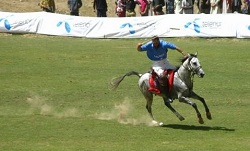
Shandur Polo FestivalPaul Darlow visited the Shandur Polo Festival, the scene of the world’s highest polo match, where he experienced “legendary” Pakistani hospitality and a familiar match-day atmosphere.

Shandur Polo Festival has been held annually in Pakistan since 1936. Every year the top polo teams from Gilgit travel there to pitch themselves against their opponents from Chitral. At an altitude of 3,700 m, the Shandur plateau is claimed to be the highest polo ground in the world – sadly, it’s not unknown for horses to perish from over-exertion at such altitude.

Until a few years ago there was no road to Shandur, meaning that people walked (or rode on horseback), often for days on end, to get there. Now though there is a road the whole way from Gilgit to Chitral via Shandur, so most people take the bus. Most people, that is, apart from mad travellers…

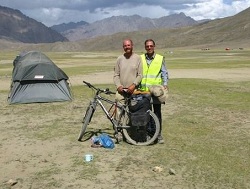
Two weeks before the festival was due to begin I was in Gilgit chatting to other travellers about their plans. Attending the polo festival was top of everyone’s list, but no-one really knew what to do beforehand. While skimming through a Pakistan guidebook one guy noticed that by combining a few trekking routes through the Karakoram Mountains, it might be possible to go almost the entire 220 km from Gilgit to Shandur on foot. Checking the route on our Pakistan maps it looked like an adventure not to be missed, so the following day we booked a jeep to take us to the trail-head, and off we went.

For the next few days we trekked through the most breathtakingly beautiful scenery you can imagine – animals grazed on emerald green pastures situated next to azure lakes, eagles soared past snow-capped peaks, and glaciers tumbled down from seemingly every mountain.

The only other people we met were goat and yak herders who spent their days looking after their animals, and who lived in primitive wood structures. Food was a few essentials that we carried with us together with whatever we could lay our hands on en route: wild rhubarb gathered from the hillsides plus bread, cheese and yoghurt purchased from the herders.

En route we were invited to stay for four nights with a family in the village of Pakora, where days were spent swimming in streams and strolling around the apricot groves munching on fresh fruit. Evenings were spent eating, singing, dancing and playing cards. Among travellers, the hospitality of the Pakistani people is legendary because of numerous acts of kindness such as this.

As for the polo festival, apart from the fact that women and children were segregated from the men it wasn’t that dissimilar from, say, watching a game of rugby at Twickenham. Of course there was no beer on offer and no pies available, but the intensity of the action, the engagement of the audience and the general atmosphere was strangely familiar.

The other main difference I suppose was the fact that the final match was delayed for around an hour while we waited for the VIP to arrive in his military helicopter, who managed to spook all the horses by buzzing the pitch on arrival. You don’t often get that at Twickenham.

Paul Darlow manages Nepal Trekking Holidays, a travel blog dedicated to walking holidays in Nepal.

If you’ve been inspired by his experiences, you may be interested in one of these Nepal travel guides and maps: