Half term is nearly upon us, and with this autumn’s mid-term break occurring at some point between 20th October and 4th November, now’s the time to start planning a day out with the family.
Rather than an obligatory trip to a theme park, an expensive overseas break or a low-key few hours in the park, why not organise a day the whole family can enjoy? There’s no more exciting destination than London and its surroundings – and as you’ll discover, there’s more natural beauty in this part of the south-east than you might expect.
Here are our top five half term walking destinations in and around the capital:
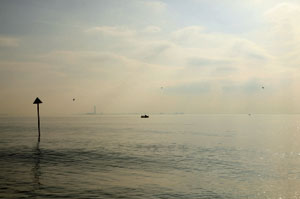 1. The Thames Estuary
Just 30 miles east of London, the mighty Thames widens to a vast estuary en route to the North Sea. Over the last three decades the estuary has become among the planet’s least-polluted metropolitan tideways, which means it’s an excellent place to spot wildlife.
Aside from the numerous sea bass, Dover sole and seals that swim its waters, the Thames estuary’s mud flats attract migrant bird populations thanks to their status as a perfect breeding ground, while its surrounding greenery is a haven for bumblebees and other rare invertebrates.
This marriage of landscape and wildlife makes it the perfect location for family walks – while not an official route, the Thames Estuary Trail can be roamed from Foulness through Tilbury and onwards to the Isle of Sheppey.
On the Essex side of the estuary are plethora of tributaries, creeks and salt mashes – many of which have played an important role in the development of the area.
> Discover more of the Thames Estuary with Discovering Britain’s ‘Neither land nor sea’ walk
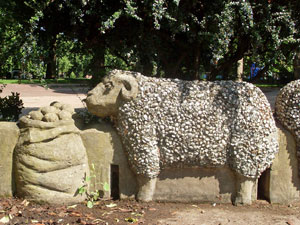 2. Hackney
This inner London borough might not seem the obvious location for a family walk, but Hackney has transformed itself into one of the capital’s greenest, family-friendly places. A different world from the gleaming skyscrapers of central London – yet just minutes away by bus or train – Hackney’s green urban spaces just beg to be explored on foot.
With more green space than any other inner London borough, Hackney’s parks and greens are home to house sparrows, bats and the Black Poplar – the UK’s rarest native tree.
The borough’s residents have adopted a mantra of biodiversity over the past few years, and their efforts have been rewarded by the fact that 24 of its green spaces are designated as sites important for nature conservation, while 15 of its parks have been awarded with a Green Flag.
Hackney Council, meanwhile, is aiming to establish 10 wildflower meadows by the end of 2012. While being a welcome colourful addition to the borough, they’ll also be used to attract greater numbers of butterflies and bees.
> Experience the best of Hackney’s greenery with Discovering Britain’s ‘Bees, berries and beans’ walk
 3. Bexley
Just 13 miles from central London, Bexley is one of the capital’s undiscovered gems. Located on the banks of the River Cray, the town is home to the Green Chain Walk – a network of 300 green spaces that accommodate a footpath 40 miles long.
One of the most popular routes is the Cray Riverway, which starts at North Cray and finishes as Bexley’s Hall Place, where the river merges with the Shuttle, a smaller tributary. From here, the Cray can be navigated northwards towards Crayford Marshes and the Thames.
The town itself may have been swallowed by London’s urban sprawl, but its historic position as the last village on the edge of the capital means it’s maintained its own character. Indeed, Bexley’s origins can be traced back to the 1086 Domesday survey, when Bexlea was recorded as having a modest 41 inhabitants who tended to 100 pigs.
> Discover more of Bexley’s heritage with Discovering Britain’s ‘The last village’ walk
 4. Deptford
Victorian reformist Charles Booth put this south-east London district on the map, quite literally, with his innovative ‘poverty maps’ in 1902. His research, which charted Deptford’s affluence or lack of, saw him walk the town’s streets extensively from 1899 – his findings later gave Deptford the nickname District 45.
The district is steeped in history – Charles Dickens’ Great Expectations opens here, Sir Francis Drake was knighted by Queen Elizabeth I at Deptford Docks, and Captain Bligh sailed on the soon-to-be-mutinied Bounty en route to Tahiti in 1789. Fast forward 150 years to the Second World War, when German rocket attacks devastated much of Deptford – something some of the older locals still remember.
Deptford may live in the shadow of Greenwich, its more illustrious neighbour, but the area has played an equally important role in London’s history thanks to its working neighbourhood alongside the King Henry VIII-established docks.
> Explore Deptford through the ages with Discovering Britain’s District 45 walk
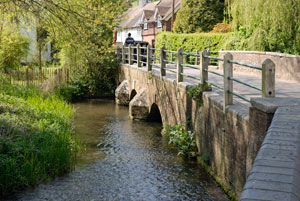 5. Darent Valley
Stretching from the banks of the River Thames to the Greensand Hills above Sevenoaks, the Darent Valley – which has inspired artists of the ilk of Samuel Parker – is one of Kent’s hidden treasures.
Passing through the county’s Area of Outstanding Natural Beauty, the Darent Valley Path comprises a wonderful network of footpaths – from challenging climbs on the Downs to gentle strolls between country pubs.
Aside from the picturesque surroundings, Darent Valley is one of Kent’s most important heritage destinations. Roman villas and Norman castles are located here, while grand stately homes can be discovered along the route.
The Romans were attracted to Darent Valley’s fertile soils, and the land still plays an important role in the area’s agriculture. In the Second World War, meanwhile, the valley’s slopes and rivers helped produce food for much of the nation.
> Discover the Darent Valley with Discovering Britain’s ‘From hops to lavender’ walk
These walks are just a small selection created by the Royal Geographical Society. Its Discovering Britain project aims to create 100 new walks around Britain that tell the story of our rural and urban landscapes.