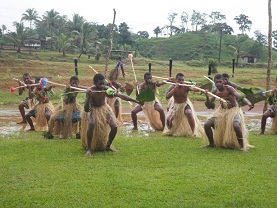
Mark volunteered as a community teacher in Fiji

FijiNestled away in the heart of the Pacific Ocean, straddling 180° longitude the Fiji islands are about as far away from England as you can get. For me that was as good a reason as any for choosing to apply to volunteer in Fiji, but the opportunity to gain worthwhile experience both in a working and cultural capacity also appealed. If you add to that the lush green landscape, the hot tropical climate and the welcoming friendly nature of the people there really isn’t a better place to spend a few months or more.

My placement was based in the interior of the main island of Viti Levuin an area lacking in any of the development and infrastructure seen in the tourist areas. I was working in a small secondary school with about 120 students aged between 13 – 19. The school itself is a community school owned and run by the 4 local tribes from the surrounding villages, which is also where the students come from. About 40 of the students were boarders whilst the rest would travel daily to school. My role in the school varied from teaching PE, music and art, to assisting with their English, to teaching Maths and Physics. There weren’t many subjects that I didn’t end up teaching at one point or another, and I was repeatedly thanked and told they don’t know how they would have coped without me. There was so much variety in the work I did during my placement; I went from teaching students how to play cricket, to reading music, to solving simultaneous equations. My work was not just restricted to the classroom; I was also involved in helping students train for the schools athletics competition, and trying to teach them the piano. Rest assured there is plenty of work for you to get stuck into.

Living in the middle of the Fijian jungle is obviously a bit of a shock at first, but you very quickly adjust. We were lucky enough to have regular electricity but the water supply was limited to a couple of hours a day which is obviously very different to the situation at home, where water is just something you take for granted. However the friendliness of the local community makes it very easy to adjust and cope with living in such a different environment so far away form home. Fijiis often called one of the friendliest countries in the world and it’s easy to see why. Everywhere I went people would greet me, and everyone within a 20 km radius seemed to know exactly who I was, which was probably because I was the onlykavalagi(European) around.

Whilst my weekdays would be spent living and working in the school, during the weekend I would usually stay in one of the surrounding villages. This could be a ten minute bus ride away, or if not on the main road, a two hour walk. It’s only really in the village that you get to experience the traditional Fijian way of life, but it’s also here that you will feel most at home. The way I was accepted into a family’s home and treated as one of their own was truly humbling. While in the village we might go to the farm to pull somecassava(a root crop) in the morning, or go fishing in the river to catch our food for lunch. The afternoon would be spent resting then maybe playing rugby or volleyball before bathing in the river. Rugby, especially sevens, is the national game of Fiji and games of “touch” are frequent. Anyone can join in no matter your age or ability so you can find yourself sometimes playing with about 30 people crammed into a space barely big enough for 10, but that is, as they say, the Fijian way.

Food is naturally a bit different from back home but one thing’s for certain there is always lots of it. The Fijians have a pretty big appetite so there is little chance of going hungry during your time here, and they will routinely tell you to “kana vakalevu”(eat plenty).Cassava,daloand the ubiquitousrourouare the staples of the village diet but there is also plenty of fish, prawns, chicken and other meat on occasion. The other ever-present in village life isYaqona(Kava), an important ceremonial and social drink, and you come to love the sound of the clang of metal in the evening as theyaqonais pounded.

Some of the many memories of my time in Fiji were:

  • Jumping off the many waterfalls that are tucked away in Fiji’s interior.
  • Exploring the local Wailotua cave, very big and full of cannibal history.
  • Going fishing armed only with a spear, much more fun than using a rod.
  • Watching Fiji win the Gold Coast sevens.
  • The whole village was in one small house crowded round the only TV, passionately cheering their team on.
  • Holding my first proper conversation entirely in Fijian without needing to speak any English.
  • Visiting the island of Taveuni, the garden island of Fiji.

I’ve learned so much by living and working in Fiji for 11 months, the type of education I could never have hoped to have back home and it has certainly made me think much more about what’s truly important in life. You come to appreciate the importance of community and sharing and realise just how materialistic our society is back home. Everywhere you go you are met by smiling faces and you can’t walk past anyone’s house without them calling to you to come and drink tea. Leaving the community and leaving Fiji was very hard and I was tempted to extend my placement for a second time. My initial placement was for 7 months but I was enjoying myself so much that I asked if I could extend until the end of the year. Fortunately Lattitude and their representatives in Fiji were extremely helpful and understanding and facilitated this for me with the minimum of fuss I’m already planning my return and when I do go back I know it will feel just like returning home.
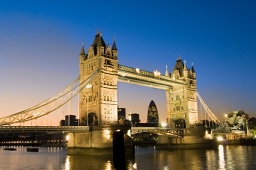
Visit London

London - Tower BridgeFrom the delights of its parks and canals and the River Thames to its atmospheric markets and varied shops, museums and galleries, London has so much to offer tourists and locals alike. Try one of our staff recommendations:
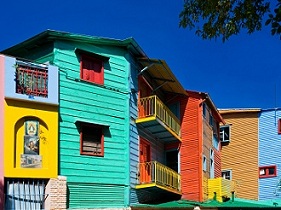
1. Covent Garden & Theatre Land- Visit the atmospheric Covent Garden Piazza and surrounding cobble-stoned streets for some of the best shopping in London. Walk to the nearby Trafalgar Square, St Martin-in-the-Fields church, the National Gallery and British Museum. In the evening, dine in the vibrant restaurants of London’s Chinatown before an evening performance at the Royal Opera House or one of the many West End Theatres. Continue reading Visit London

Holiday Reading for a Trip to Latin America

Buenos AiresOne of the great pleasures of going on holidays is having the time to indulge in some holiday reading. A good book helps pass the time on long journeys and is an enjoyable way to brush up on your knowledge of the history, geography and culture of the country to which you are travelling. With its deep historical and cultural roots, Latin American literature offers a wealth of knowledge to readers whilst immersing the reader in rich storylines that capture the beauty of the Latin American landscape. Here are 5 of our favourites:
Lost World by Patricia Melo

Former contract killer and fugitive, Máiquel, sets out on a journey to avenge his ex-girlfriend’s betrayal after she left him for another man ten years previously taking his only daughter. A dark tale of revenge, the pursuit of his family takes him through Brazil and Bolivia exposing the reality of the Brazilian underworld.

The Motorcycle Diaries by Ernesto ‘Che’ Guevara

Written eight years before the Cuban revolution, The Motorcycle Diaries is the story of two men, twenty-three-year-old Che Guevara and thirty-year-old Alberto Granado and their adventures as they set out to discover South America on a motorcycle. Although the whole world would soon know his name, Che’s diaries are full of drama, unexpected events and comedy typical of a road trip across South America.

The Fruit Palace by Charles Nicholl

Set in early 80’s Columbia, Nicholl sets out in search of ‘the great cocaine story’. This true story begins at the Fruit Palace, a gloomy café that doubles as a meeting point for dodgy dealings. Informative and well-written, Nicholl’s vivid descriptions of the landscape and people bring Columbia to life for the reader.

Death In the Andes by Mario Vargas Llosa

After the mysterious disappearance of three men from an isolated community in the Peruvian Andes, soldiers Lituma and Tomás are sent to the town to protect its people from the Shining Path guerrillas who are suspected to be responsible. The narrative is fragmented into two stories; their investigation of the disappearances in the town and the story of Thomasito’s love for a prostitute called Mercedes creating a powerful and captivating tale. Striking descriptions of contemporary Peru offer the reader a panoramic view of Peruvian society reflecting on its historical and political roots.

Tequila Oil by Hugh Thomson

Tequila Oil is an account of Thomson’s fascinating adventures getting lost in Mexico and his discovery of a side of Mexican life rarely seen by holiday makers. Both informative and enthralling, Thomson’s journey reveals a deeper insight into Mexican culture and history venturing into the jungles of Yucatan where he encounters the Maya. Upon his return some years later, Thomson has a greater understanding of the history of Mexico exploring recent archaeological revelations about the Maya and Aztecs.

Author: Clodagh O’ Brien

Browse our Collection of Maps and Guides for South America

Rachael’s Charity trek to Machu Picchu in aid of Barts and the London Charity

Machu PicchuRachael Gurney is facing the challenge of a lifetime as she prepares to trek up Machu Picchu in the Peruvian Andes.
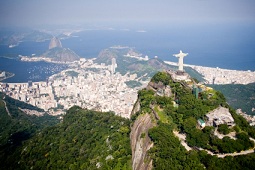
I’m usually seen wearing high heels and tottering into chic bars, but on 29th September I will be heading to Peru. There I’m going to swop my heels for walking boots and attempt a Charity Challenge four day trek to the top of the sacred site of Machu Picchu. The aim of this is to raise money for the Cancer Centre at Barts Hospital in London.

I rarely exercise but have started doing core exercises, going on timed walks and walking up hills – which made me ache for three days! The altitude in the Andes may also be a problem, which is why I’ve begun training already. In April I shall go to Wales for the weekend for some hill-walking practice up Snowdon.

The hard work will all be worth it if I succeed in raising £4000 for the Cancer Centre at Barts Hospital. A close friend, Samantha, was successfully treated there for Acute Myeloid Leukaemia, which is one of the reasons why I have chosen this charity to support.

I want to do this trek as a way of giving something back to the centre which looked after Sam so well.

The second reason that I’ve decided to do this trek is in memory of my father. He died at the early age of fifty eight from cancer and was an important influence on my life.

He installed my love of travelling and discovering new peoples and cultures, so much so that I wrote a book about my experiences.

I want to help be able to help the Cancer Centre in the care it gives to patients and the research which is done.

On a personal level this is a huge physical challenge. Some years ago, I was diagnosed with an extremely virulent Reactive Arthritis. The result of this was that for many months I could only walk a short distance with the aid of crutches. At times I wasn’t sure whether I’d be able to walk again, let alone trek up a mountain, at altitude, in The Andes! I still have bad days, but am hoping that the early training will make me stronger. I’ve visited many countries over the years, from Colombia to Jordan but have always wanted to go to Peru, and by trekking up Machu Picchu and raising money this seems the perfect way.

I’ve started fundraising already as I need to raise 80% of the money by mid-July. As well as setting up a Justgiving page, Sam and I have had an initial event at the Cocktail Club in Covent Garden (that’s us in the photo). The event raised money through selling raffle tickets and by the bar donating a percentage of the money made from the sales of the (specially designed with a Peruvian feel) cocktails, to the cause.

People have already been very generous and I have made £645 so far. Every little helps if it can help fight this terrible disease.

If you would like to sponsor me you can do this by visiting my online fundraising page on www.justgiving.com/Rachael-Gurney1.

If you’d like more info, or have any tips on training or fundraising it would be great to hear from you. You can email me on [email protected] or find me on facebook.

If you’re interested in my book have a look on www.authorhouse.co.uk/Bookstore

‘With the help of charitable donations the Cancer Centre at Barts Hospital helps provide state of the art facilities and equipment; supports cutting-edge research and innovations in treatments and ensures the best possible standards for patients, staff and local communities. The hospitals still rely on the generosity of donors and volunteering from people in our diverse local communities and from those further afield. The Charity’s vital work cannot continue without the help of people like you.’

For further information about the Cancer Centre please visit www.bartsandthelondon.nhs.uk

Author: Rachael Gurney

Plan your trip to Peru and Machu Picchu with our collection of maps and guides >

Rio Carnival: History, Parades, Safety and Travel

Rio de JanerioThink Rio de Janeiro Carnival and you think costumes, dancing, rhythmic melodies, celebration and revelry. Since 1723 people have celebrated carnival in their own way, but now millions of people flock to the Rio Carnival to Samba the week away in their best sparkly attire. It’s the biggest carnival in the world and the week-long festival is televised globally too, so make sure to book your Rio Carnival accommodation as early as possible. The Carnival has a rich history and today’s parades, apart from being a huge amount of fun, are also seriously competitive with Samba schools nationwide competing for that number one spot. Continue reading Rio Carnival: History, Parades, Safety and Travel
A Beginners’ Guide to Surfing in Australia and Where to get the Best Waves

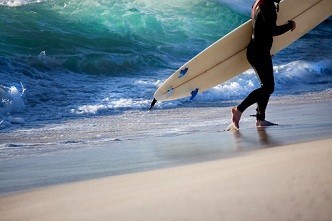
SurfingAussies and surfing go together like beads on a bleach-blonde dreadlock, so if you want to master the art of riding the waves, you’re in the right country. Don’t know where to start? No worries! Oz has thousands of surf beaches, each with a school attached with instructors well-versed in getting people of all ages and fitness levels confidant on a surfboard. Continue reading A Beginners’ Guide to Surfing in Australia and Where to get the Best Waves

Culinary Delights of Asia

Asian DishA journey to Asia is not only a linguistic and geographical adventure but a gastronomic one as well. Boasting budget rates for accommodation and plenty of cheap food, travellers can spend years touring in Asia. The diversity of Asian culinary treats speaks to the variety of cultural heritages. Each country has its national dish, and each dish is different from the last in taste, structure and history. This is a short outline of some of the most popular Asian delights we know.
Japan: The flagship dish is that seaweed rice roll of seafood that we know globally as sushi. It might surprise you to learn that sushi originated not in Japan, but Southeast Asia. It began as a sour-tasting roll of fish that was fermented by a chemical reaction with the rice. Today it is a fresh roll of seaweed, rice and fish that’s eaten directly. There’s more to learn at the Japanese Food Culture Association.

Vietnam: The Vietnamese rice noodle soup known as Pho is that country’s national food icon. It is brewed with basil, mint, lime and beef. Unlike neighboring cuisines, this dish originated in Hanoi in the 20th century as a way to satisfy both Vietnamese and French palettes.

Cambodia: Loc Lac is one of the most loved dishes, which actually comes from the Vietnamese version of the same. It consists of cubes of meat stir fried with red onions. It’s served over a delicate bed of lettuce tomatoes and cucumbers, and a lime juice is poured over it.

Indonesia: Goreng is a delicious dish that evolved out of China’s chow mein. It is similar in that it has thin yellow noodles that are fried together with garlic, shallots and meat, but it is different in that it does not use pork, reflection the country’s Muslim roots.

Thailand: Pad Thai, literally meaning “fried Thai style” has spread across the globe, bringing those succulent rice noodles to mouths everywhere. The dish has existed since antiquity, but the 1930s Thai Prime Minister Luang Phibunsongkhram made it popular through his rice education campaigns. It is made of rice noodles, egg, tamarind and fish sauce, and chili pepper. Often it is crowned with crushed peanuts.

Malaysia: Chinese and Malay culinary cultures melded and created for the world a delectable dish called Laksa. It is a spicy soup made of rice noodles that expresses itself in two principal ways; the more sour asam laksa fish soup, and the coconut curry laksa soup.

China: Peking Duck takes its name from Beijing’s once westernized pronunciation of Peking. If you enjoy roast duck, this is a Chinese dish that will have your mouth watering. The Peking duck is slaughtered, skinned, soaked in boiling water and glazed with maltose syrup. Then it is roasted until the skin is thin and crisp. The duck is normally served with sweet bean sauce.

Hong Kong: Popularized throughout the world, Hong Kong’s “dim sum” refers to the way a meal is served; in small portions oftentimes delivered around a restaurant on carts. The tradition stems from the needs of travelers along the Silk Road to relax with tea and food. Today, you’ll find food including meat, hot buns, dumplings and vegetables served as dim sum.

Korea: Perhaps what speaks more to your appetite is barbeque. Korea’s national dish is called bulgogi. It is a grilled meat, which can be beef, pork or chicken, which is marinated in a delicious sauce of soy, garlic, sesame oil and sugar. The dish has been around for centuries.

Philippines: The Philippines adores her Sinigang stew. It is a savory froth of fish sauce, onion, siling mahaba and tomato. The base of the stew is tamarind, and its flavor is more often than not beef. It has a sour twinge to it, which makes it unique and delicious. Any way you swing it in Asia, you’re going to taste things you’ve never tasted before, and you’ll love it.

Everything You Need to Know About Spending a Year in Australia

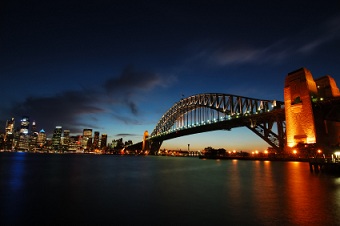
Sydney Harbour BridgeAustralia is a great place to spend an extended amount of time abroad, what with its amazing beaches, superb nightlife and great accommodation options. A full year in Australia is a great idea, but keep in mind that costs can be high so cooking food from the supermarket rather than eating out and looking for great travel deals should become second nature to keep costs down. Because the country can be a bit on the expensive side, so you might consider working while you spend your year abroad. All the information you need to you’ll find here.

Visas Continue reading Everything You Need to Know About Spending a Year in Australia

Getmapping's groundbreaking project

GetmappingNot since William the Conqueror recorded England in the Domesday Book has there ever been such a record of the country. A record that is so detailed as to show every road, every house, and every tree – the first ever complete and continuous colour aerial photographic record.

To set about the collection of such a data set is no ordinary task. The flight planning alone was groundbreaking in its enormity. Four specially modified aircraft are on constant standby waiting clear weather and Air Traffic control permission, each one fitted with a large format forward motion compensating camera. To date over 800 hours of flying have been completed using some 54km of film!

Not content with simply photographing the whole country, Getmapping have used the Global Positioning Satellite (GPS) network to give them the accuracy to overlap each image by 60%. This process results in the production of stereo pairs of photographs, needed for certain types of photogrammetry and 3D viewing.

With the photography in the can, Getmapping then undertook to digitise and geo-correct the image, a process that removes all optical distortion from the images and ensures a perfect match to conventional mapping. To date some 200,000 man-hours have been invested in the project, resulting in a data set of over 20 terabytes. But a data set of this size brings its own problems. To understand the size, perhaps one should imagine that if one byte of information weighed a gram, then 20 terabytes would be equivalent to 8 fully loaded super tankers!

With these technical processes complete, there are of course the aesthetic issues to address, not least of which is ensuring a constant colour balance across the entire country. With the data collected over an extended period this is no mean feat but with the wonders of modern technology and the expertise of the Getmapping team the results are truly amazing. As you look through the pages of “England, the photographic atlas” you move seamlessly across the country from major city to secluded beauty spot, you trace journeys you have taken, and see the effect mankind has had on our landscape. You see the country as never before.

12 Hours in Manhattan

New YorkFor most people, the city of New York is one of the major destinations in the US, but for some reasons I was never particularly drawn to it. Still, as it was on our way back to Boston, we decided to give it a go.

We spent the night in one of the countless and totally indistinguishable suburbs of the great city. Here, it makes sense to point out that such suburbs are home to the majority of the metropolitan New York population. All the hippies and cool folk of Greenwich Village, East Village and SoHo are actually far less representative New Yorkers than people working in McDonald in Bronx or driving delivery vans on the New Jersey side of the Hudson River. Anyway, we had only one day and decided to get the most out of it.

It was Sunday morning, about 9am, when our frenetic 12 hours in Manhattan began. We entered the island of Manhattan via George Washington Bridge which is located at its northern end. To be honest, it is a far less spectacular approach than some of the others, but it didn’t really matter as we quickly made our way towards one of the highlights of the city, the Central Park. Well, to be honest, it wasn’t really that quick at all because we had to park our car first. And it is not an easy task in NYC, even on a Sunday morning. Anyway, we finally managed to squeeze it into one of the smallest and most claustrophobic underground parking garages I have ever seen in my life. However, located on 96th street, it was just minutes from the park. But before we managed to reach the park, we unexpectedly got caught right in the middle of a street party. The road was closed to traffic and, even early in the morning, full of people enjoying themselves. I later learned that it was probably the Annual Upper Broadway Autumn Festival. Or maybe not? It doesn’t really matter; it was fun.

Finally we reached Central Park. Here I, must admit that I absolutely love it. I find this perfectly rectangular bit of tamed nature, located right in the middle of one of the most densely populated cities on earth, absolutely fascinating. Whenever I looked at the map of Manhattan I always wanted to visit it.

Covering 843 acres (341ha) of almost entirely landscaped land, it was designed by the renowned landscape architect, Frederick Law Olmsted. If you ask me, he did an amazingly good job. The park looks really natural in its appearance and it is much more heavily wooded than, for example, Hyde Park in London. In places it might sometimes be possible to forget that you are really in the middle of a teeming metropolis. But on Sunday, around 11am, the whole park was full of people and you would know you were in the city. They were jogging, cycling, rollerblading, skateboarding or just walking with or without dogs. It seemed to me that New Yorkers are quite an active bunch of people.

We leisurely crossed the park, stopping here and there to admire some of its quirky monuments, like for example Alice in Wonderland or Polish King Jagiello. Finally, we reached the Columbus Circus in the south-western corner of the park. Here you can see a sharp contrast between the greenery of the park and the concrete, steel and glass jungle of Midtown Manhattan, which is one of the densest and tallest parts of the city. In this part of town you can also find such architectural icons as the Empire State Building, the Chrysler Building and the Rockefeller Centre. I would love to visit all of them, but unfortunately we only had time for a quick lunch in the slick and modern Time Warner Centre, before continuing in our quest south.

Another iconic stop in Midtown was Times Square. It is so well known that there is not much point to write about it. I can only say that it did confirm all my preconceptions. It is crazy busy, noisy, bright, and colourful, somehow seducing you like a brash city girl. For anyone familiar with London, comparisons with Piccadilly Circus are unavoidable. Yet, Times Square feels busier and noisier. Its massive screens and neons are larger and brighter than the ones in London and there are many more of them. It is simply bigger and louder, like many things in America.

From the full-on extravaganza of the Times Square we kept walking south, sometimes on Broadway, sometimes venturing into some small side streets of Greenwich Village or East Village. In the 1960s, these neighbourhoods were the real bohemian heart of the cultural life of New York. They are now almost totally gentrified and horribly expensive places to live, but it is still nice to walk their relatively quiet streets and admire the well-preserved buildings. Also here, at the corner of 12th Street and Broadway, is located my favourite shop in New York, the Strand Bookstore. One of the largest second-hand bookstores in the world, it claims to have 18 miles of new, used and rare books. It is also an incredibly messy and fascinating place where chaos seems to be the rule. I could have spent hours there, but unfortunately it was already late afternoon so we kept going south, all the way to the World Trade Centre site. At the time of our visit it was one huge building site and the scars of the attacks were still visible.

As I was travelling with a person who is mildly obsessed about all things Irish we couldn’t skip the Irish Hunger Memorial. Located on the banks of the Hudson River, near the Battery Park City, it is an interestingly landscaped plot, which utilizes stones, soil, and native vegetation brought in from the western coast of Ireland and contains stones from all of the different counties of Ireland. From the nearby esplanade you can get a clear, even if a bit distant, view of one of the New York City landmarks, the Statue of Liberty. It was just before sunset, so the view we got was especially spectacular.

By the time we got to the famous Brooklyn Bridge it was already dark, so we only had enough time to reach its midpoint before returning to Manhattan. This iconic bridge offers great views from its centerline walkway located above the traffic. In my opinion, it is well worth visiting, but you have to take to account the fact that I am a bridge and road-enthusiast.

The last places we visited in New York were the neighbouring Chinatown and Little Italy. Nowadays, Little Italy is really little and is getting smaller by the year. By contrast, the Chinatown is growing and gradually taking over the streets once inhabited by the Italians. They were busy and booming places, even on a late Sunday evening. In fact, the Feast of San Gennaro celebrations were going on that evening and it was impossible really to know where Little Italy ended and where Chinatown began. We had a really good evening wandering among the stalls and sampling some delicious Italian-American food before settling for some Chinese takeaway.

It was about 9pm and we had by now been exploring Manhattan for about 12 hours. We were dog-tired and it was time to head back to our car. As it was well over 10 miles away, we had the chance of using the world-famous New York subway system, which offers fast trains and even air conditioning. As a Londoner, used to small, slow and hot trains, I got seriously jealous.

We finally left Manhattan, probably at about 10 or 11 pm, just after nearly crashing into some dodgy characters in northern Harlem and our day in NYC ended.

It was a crazy, hectic day and that’s probably why I enjoyed it so much. Of course, it is impossible to visit NYC in one day, this is just a silly and stupid idea, but even a few hours can give you a taste of what to expect when you come back later for longer. Because you will come back, and so will I.

By: Gregor Swiderek

Plan your trip to New York with Stanfords, click here to see our selection of New York maps and travel guides

Browse our collection of maps, guides and travel literature:
> USA travel guides
> USA road maps and atlases
> Travel literature inspired by the USA