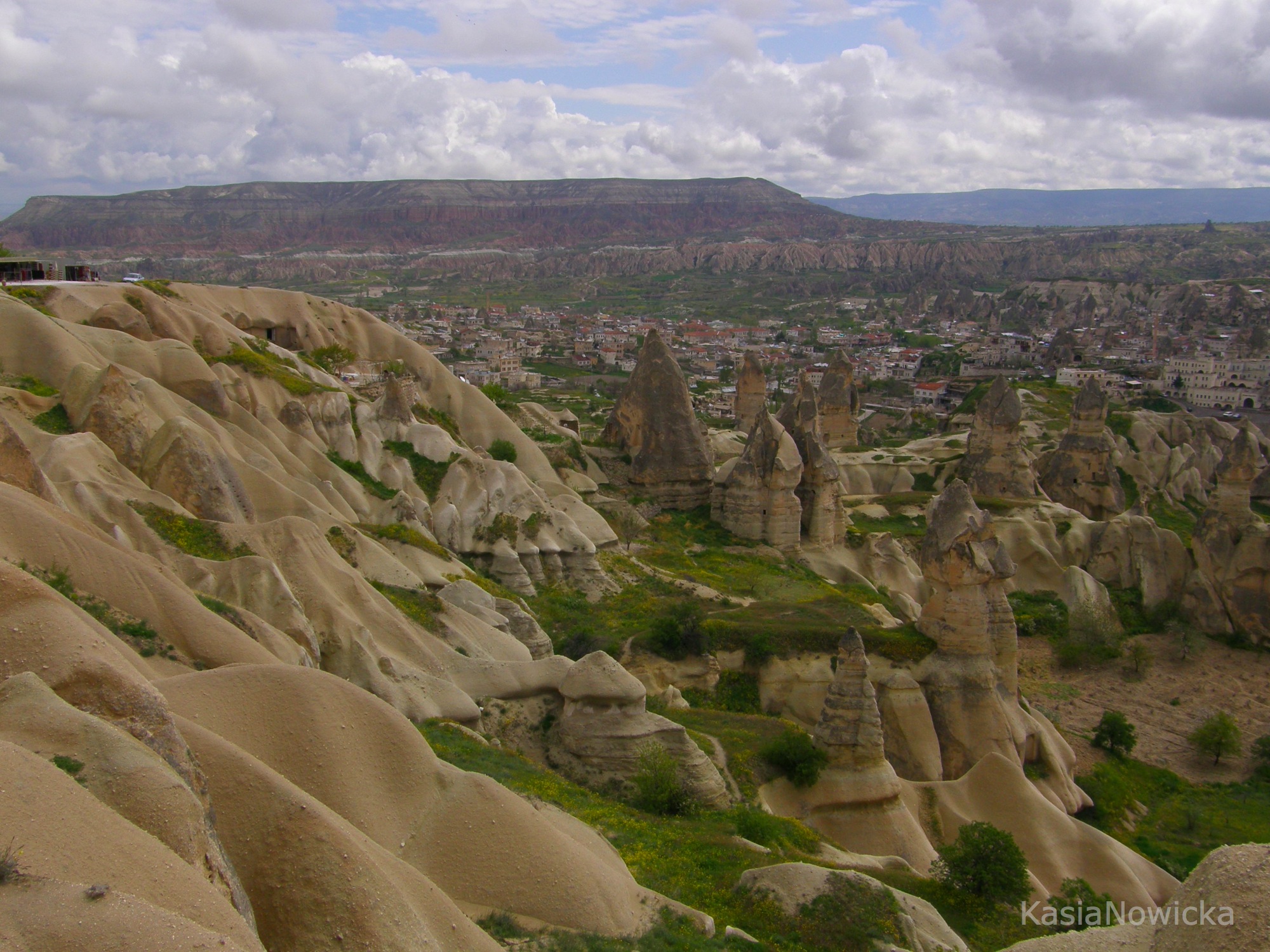
 Kasia Nowicka visits Cappodocia, an area of natural wonders in the Central Anatolian region ofTurkey.
Going to Turkey for the first time, my priority was to explore Istanbul. But luckily my fellow travellers were looking beyond that city and decided to go to Cappadocia – the land of wonders. Trusting my friends’ instinct, we eagerly bought return tickets for a night coach heading to the heart of Anatolia.
Now, you might ask why not the train? Well, that’s just the way it is – when in Turkey, travel by coach. In fact, there are two reasons: first – the train tickets are cheaper indeed, but the journey might take four times as long as the coach; second – the road system is much better developed than the railways, and frankly, the tarmac is in superb condition ensuring a smooth journey. Besides, who would give up a trip by coach that is almost comparable to the Orient Express? The passengers are very well looked after, and despite travelling at night the coach attendant makes sure you eat and drink well and your hands are refreshed every couple of hours. Apart from sampling a variety of Turkish cakes, we were introduced to an exceptional invention specially made, it seemed, for coaches. It was a long sachet, the type of 3-in-1 coffee, that was both a tea bag and a stirrer at the same time.
 Enough about the journey, after eleven hours drive we arrived early on a chilly and damp morning at Goreme, longing for a hot breakfast and a stretch on a bed. Our host – an absolutely lovely, sincere and genuine elderly man who runs his family business with a little help of his hot-air-ballon-business-occupied son and his stunningly gorgeous daughter-in-law. It was a simple establishment but extremely welcoming. Emre, the host, after asking what we would like for breakfast, got on his motorbike to get fresh ingredients for menemen – a type of omelet with garlic, hot green peppers and tomatoes baked in a clay pot. That was served with soft and fragrant Turkish bread and a glass of instant coffee. I must admit that was the best breakfast of my life.
Despite the tiredness, we ventured into town in search of ‘tourist attractions’. Despite its location and beauty, Goreme seemed to be a calm and quiet place. The many houses were nicely displayed at the foot of the surrounding hills. Our first stop was supposed to be an open air museum, but we got distracted by the intricate beauty of locally produced ceramics. Each plate and vase displayed a legacy of this such far but such close culture. The owner soon noticed our enthusiasm and invited us inside. No, not to talk us into a purchase but to show the premises of his workshop and tell us a little about his work. We saw a few masterpieces but I was mainly struck by the eyes of the master. His big dark eyes were inhabited by deep melancholy that immediately reminded me of the term ‘huzun’ Orhan Pamuk uses in one of his books. It turned out later that this sort of melancholic gaze would accompany me for the rest of the trip.
 Before we managed to get to the open air museum, a monastery with cave churches, we couldn’t resist but pop into a cave cafe. It was a rainy and chilly day and we were definitely in need of tea and something sugary. My choice was Kemal Pasha (not to be confused with Mustafa Kemal Pasha) – a dessert that tastes heavenly. A few baked balls of dough soaked in sugary syrup washed down with Turkish tea drank from an ever so delicate tulip-shaped glass improved my mood no end. I was ready to face the enemy – the unpleasant weather in the open air museum. The museum was great, but the tastes, views and smells of that day will stay with me longer.
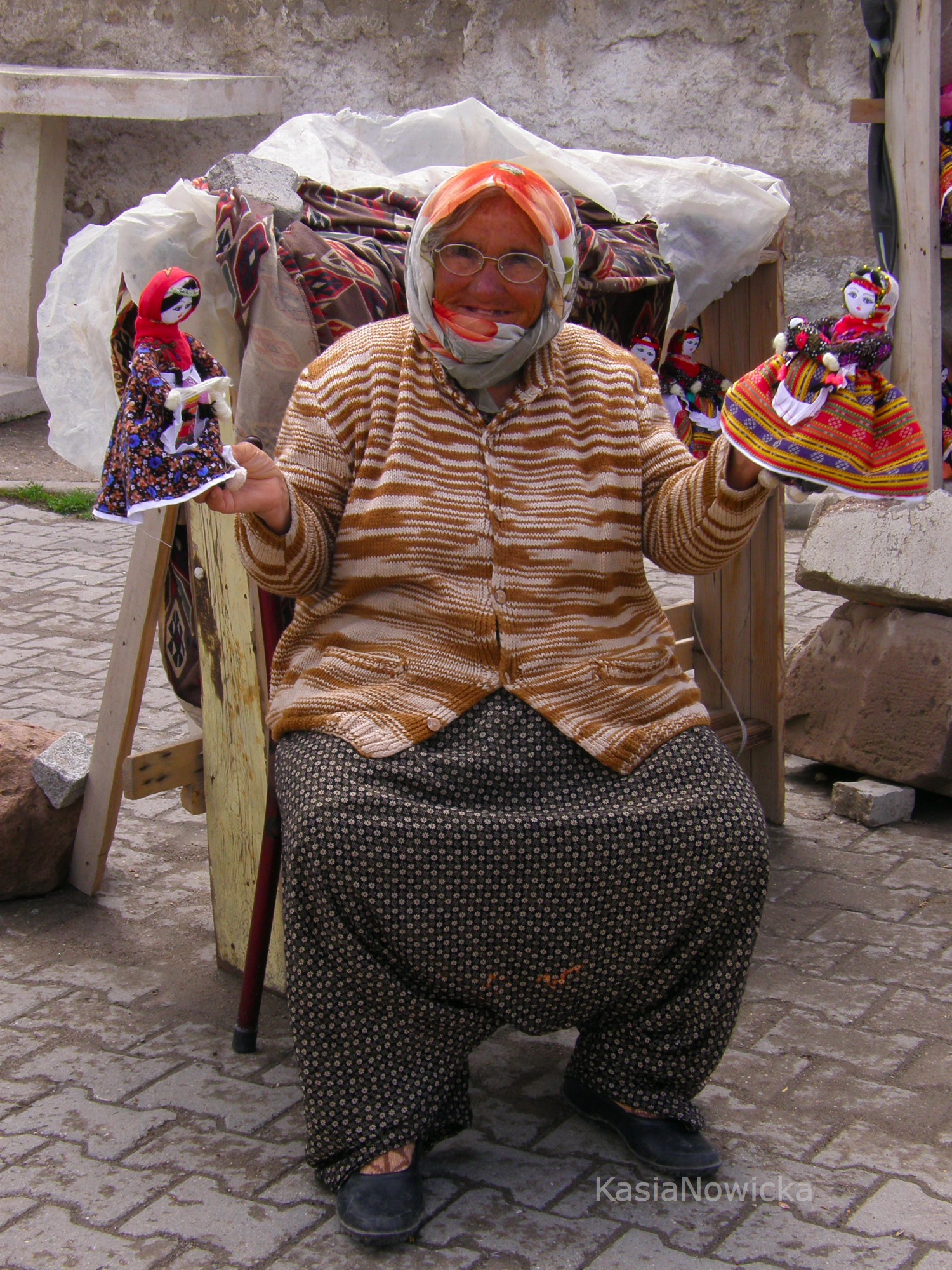
The next day was a time for an escapade to underground cities scattered around the region. We took up an offer from a tour company for a very reasonable price as the owner was a friend of our host, Emre. The day started on a more positive note but dark clouds were looming in the distance. When we arrived at the Dirinkuyu Underground City we just managed to escape the rain. Walking through the labyrinth of corridors, the guide familiarised us with the history of the place, including the fact that it could shelter around 20,000 people at a time. Leaving the underground city, the sun welcomed us radiantly as well as several local women trying to sell us hand-made cloth dolls. They were shouting 10 lira, then 5 lira, and when there was still no interest, they lowered the price to 1 lira. I wanted to buy one just to support these clearly very poor women, but my reason was telling me that I didn’t need a doll. Now my heart is saying that I should have got one, to support them and have a fabulous and original souvenir.
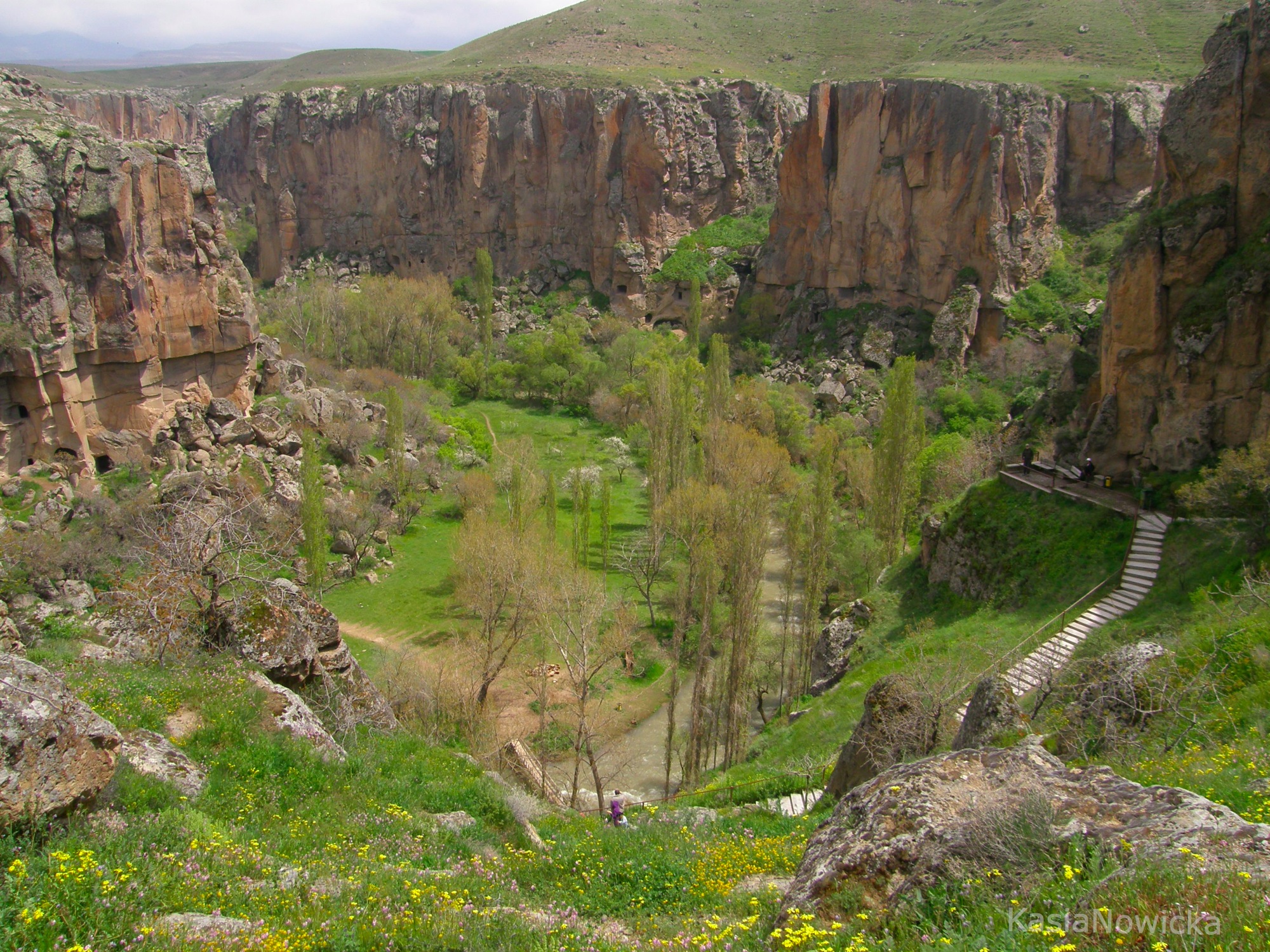
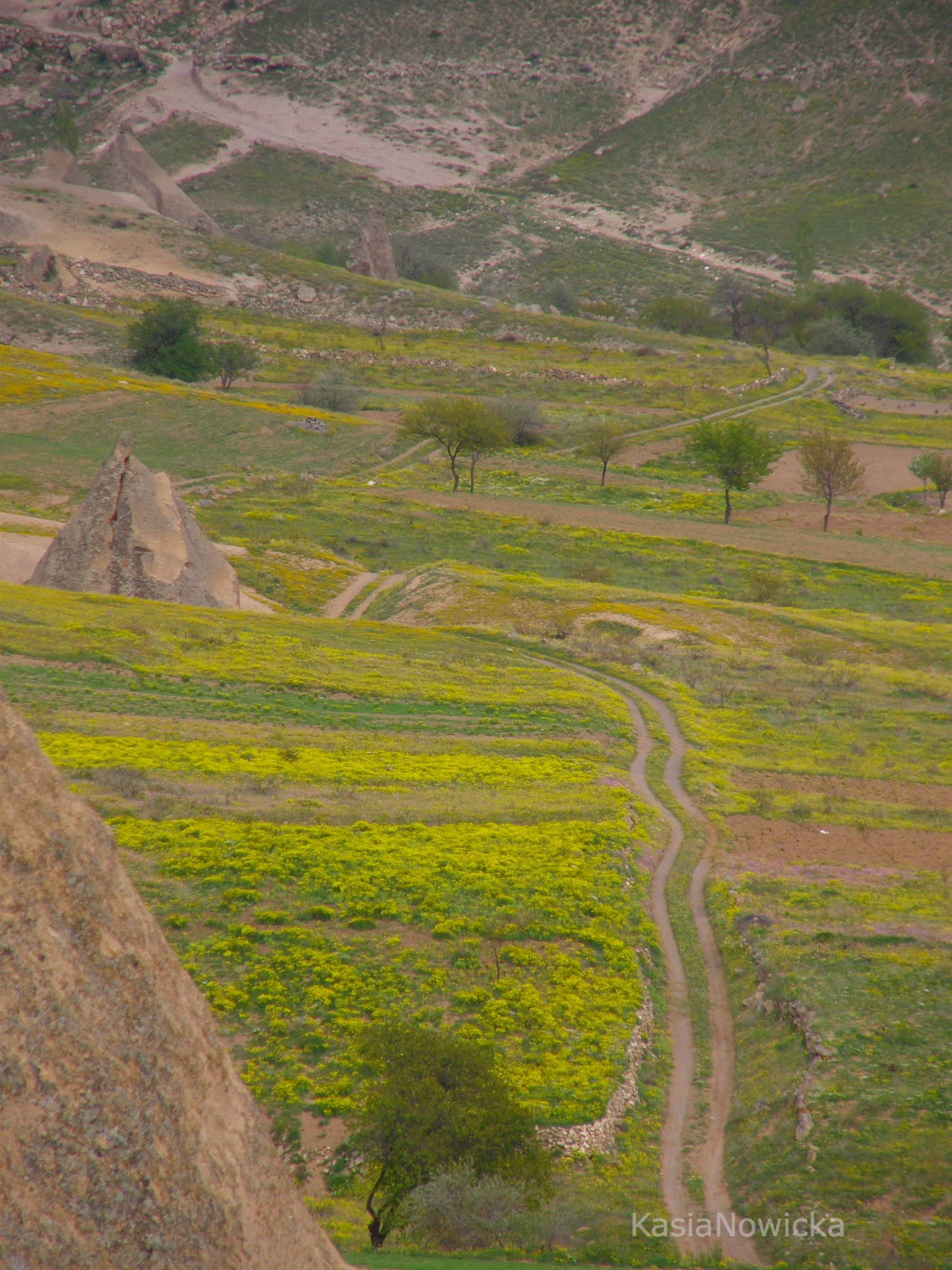 The rest of the day was glorious; weather and sightseeing wise. Ihlara valley was next on the itinerary and it struck us with its beauty. It is the most well known out of Cappadocia valleys, and no wonder. Greeting the two playful donkeys on our trek we reconnected with nature. Another valley we had a chance to look at from above was the Pigeon Valley dotted with man-made caves. It was the highlight of the day for me, especially when our guide explained the controversy over the use of the caves. They have been used by people for centuries, but now UNESCO claims that people should stay away from them as they are pigeons’ habitat. And then I saw melancholy in the guide’s eyes. They were looking glazed over at the fatherland; the voice expressed injustice while uttering the words: “…as if people were not important”.
Leaving Cappadocia I was not ready to say good-bye. I will definitely return, at least to buy my doll souvenir.
 Maybe it wasn’t an obvious choice of first destination for a couple of first time travellers who like their home comforts, but actually Kolkata was not the terrifying culture shock people warned us about. Yes, we walked out of the airport to find a road made virtually uncrossable by unpredictable yellow taxis; we took said taxi in a seat-clutching ride across town seeing people cycling with boxes of chillies on their heads and live chickens tied to their handlebars; we were greeted in the streets by mothers begging for milk powder and packs of yellow dogs and men sleeping on the pavements. Yes, it was a million miles away, but amid this melee of people and smells and confusion, we found a city of incredibly beautiful buildings and parks, some of the best street food of the trip, and so many smiling faces: a girl who taught us Indian classical dancing in the Victoria Memorial gardens, a couple of street kids who we shared a lassi with, parents and children shaking ours hands at a Kali festival we happened to catch.
 It wasn’t just that Kolkata allowed us to jump into another culture headfirst, it also allowed us to meet other travellers, get advice, make plans. There is definitely a district for travellers, and lucky for us, most of them had been around for a while. Trains were all explained, haggling (although we never really mastered that), the head wobble. We ended up travelling with a guy we met on the first day for three weeks. Really (and I hate to admit it) it does help to have a man around in India. They just get more respect. Annoying but true.
 From Kolkata it was an overnight train to Darjeeling. The trains are really something. The queues for the tickets are utterly bewildering, but as long as you stand your ground as aggressively as everyone else pushes it shouldn’t take too long! The train itself is the best place to meet people. There’s always one man who takes charge of the conversation. Warning- he is usually the one that snores the loudest. You can buy everything under the sun. On that first train journey we counted 33 items that you could purchase, including yo-yo, statues of Ganesh, and nail clippers. Continue reading India: From Kolkata to Varanasi
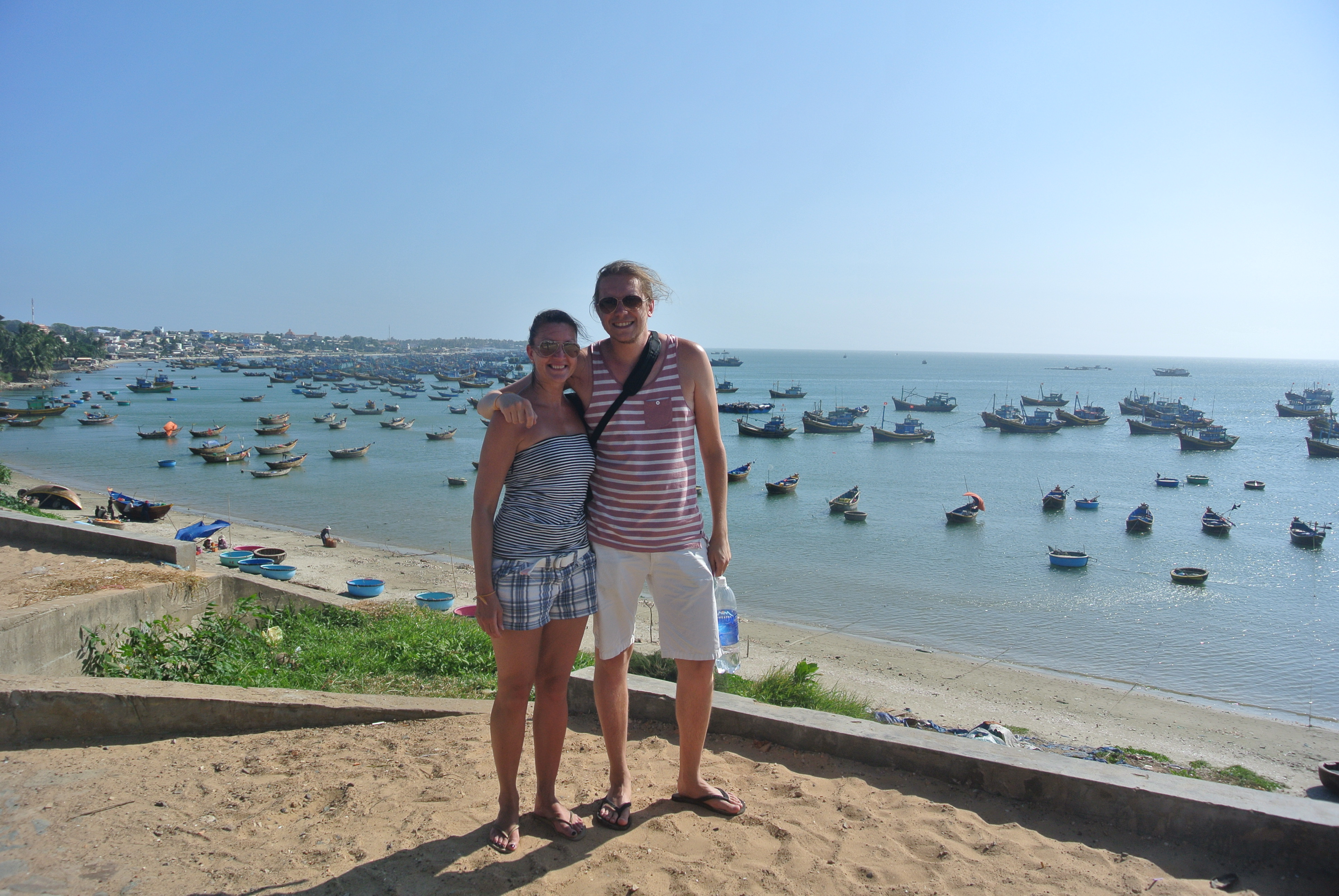 The 5-hour bus journey up the east coast of Vietnam from Saigon was packed full of near misses, a distinct lack of seats, and a police pullover. The driver appeared to be more focused on speaking on his mobile than the safety of the passengers and we could both see the headlines about two British backpackers being involved in a road accident. After what could only be described as the worst travel experience of both our lives, we finally arrived at the Zenora Beach Resort, Mui Ne.
 Debbie Valentine explores the cultural side of the sunny island of Malta.
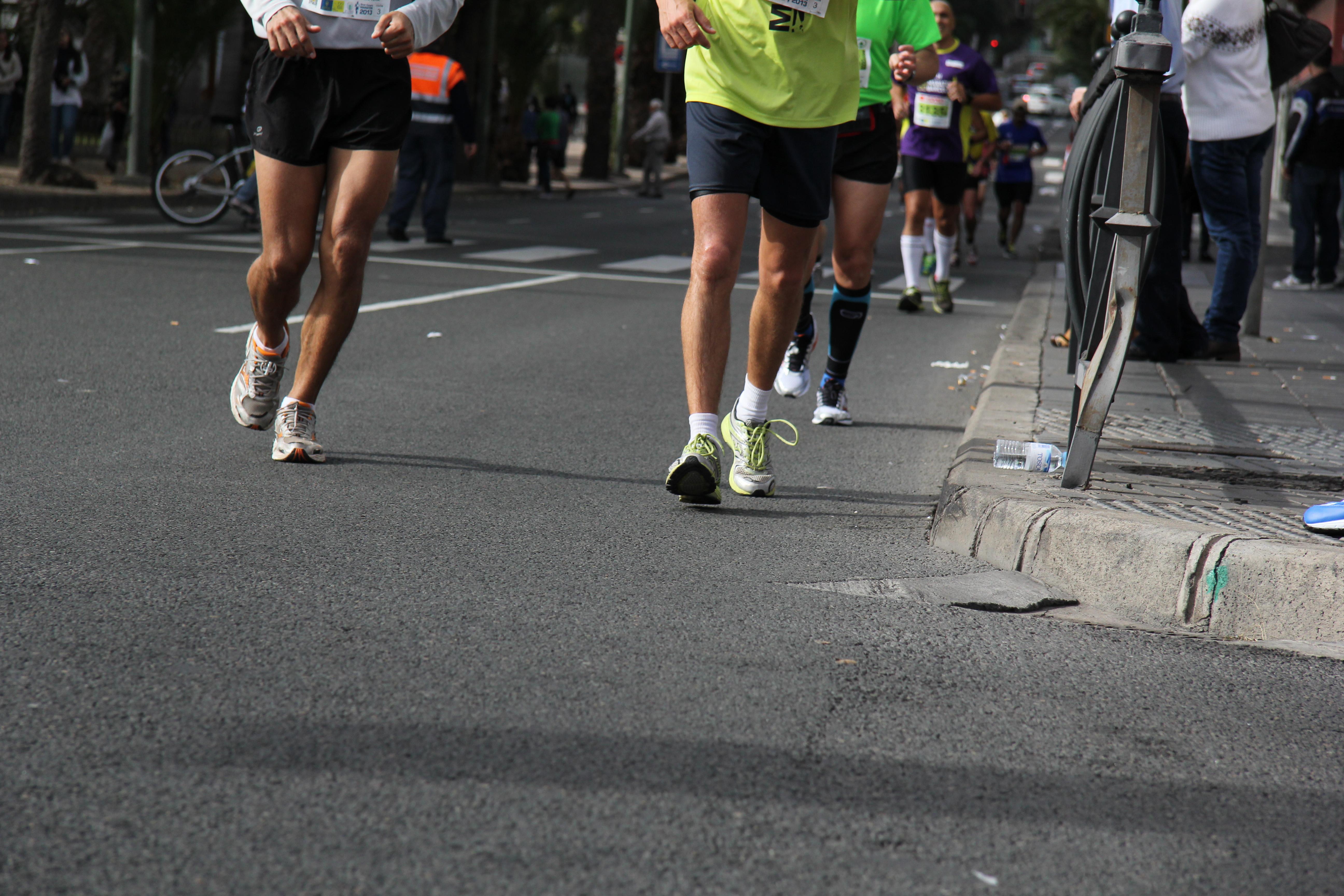 With the London marathon approaching on Sunday,
 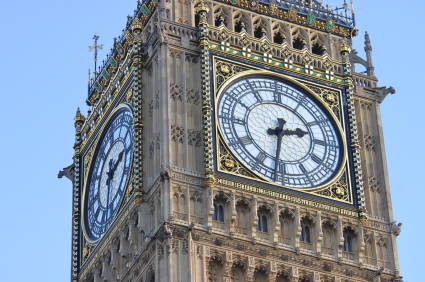 A couple of weeks later, Disley finished and presented a course design that edged along the Thames and only closed two bridges. The course was approved by police and the tourist board was very pleased with it because it displayed many London sights including Cutty Sark, Tower Bridge, the Docks, The Embankment, Big Ben and Buckingham Palace.
 All of these are FREE: