by Gregor Swiderek
 Last time I was writing about the excellent (if a bit geeky) maps produced by the USGS. However great its series are, they might be a bit too “raw” for casual users and, most importantly, unlike OS Explorer they don’t mark walking trails (this should change with the new editions where adding trails is planned, at least in areas administered by the Bureau of Land Management, Forrest Service and National Park Service). Some old 1:24,000 quadrangles show paths but they don’t indicate if there is a right of way along it. And we all know about US gun laws.
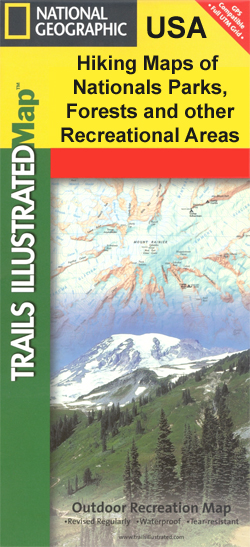
For trails you need the Trails Illustrated maps produced by the National Geographic. These are excellent walking maps with full topographic content but also marking trails, campgrounds, visitor centres, even toilets. They are also printed on waterproof plastic. Unfortunately they only cover national parks and some of the most popular national forests.
For National Forests not covered by the Trails Illustrated maps there is usually the possibility of obtaining maps produced by The United States Forest Service. Most of these maps are at a scale of 1:126,720 and many others are at scales such as 1:63,360, etc. These maps are famous for showing the numerous Forest Service back-country roads and they provide forest-wide information on attractions, facilities and services. However it is worth mentioning that many of those maps (especially the smaller scale ones) lack contour lines.
 Interestingly USDA Forest Service is also producing its own series of 1:24,000 quadrangles, called FS Topo. They are broadly similar to the US Topo series but they don’t contain the orthophoto image layer. Their advantage is that, unlike the US Topo series (at least so far), they do show trails as well as numbers for the forest roads. They can be downloaded for free as a Geo-enabled PDF file from the Forest Service website.
Now, a few words about road maps and general maps in America. There is of course a huge choice of road maps for the whole USA, its regions, states or even particular counties. There are so many of them that it is actually pointless to even try to list them here. Especially as most of them are quite average, nothing really to shout about.
One company worth mentioning is Rand McNally which publishes road atlases for the whole country, road maps for each state and city maps. It is one of the most well-known and oldest map makers in America. It produced its first map in 1872, it was published in its Railroad Guide. The first Rand McNally road map was published in 1904 and in 1917 the company was the first major publisher to embrace a system of numbered highways. In addition to creating maps with numbered roads, Rand McNally also erected many of the actual roadside highway signs. This system was subsequently adopted by state and federal highway authorities. So the pedigree is there, but its maps are no more or less accurate than any others.
 Some of my favourite road map publishers are GTR Mapping and Benchmark Maps. Both companies specialize in mapping western United States, in fact they don’t venture into the eastern half of the country at all. The best aspect of their maps is the fact that unlike most of the road maps in America they do show some topographic and landscape information.
For those for whom the road maps are not enough but who don’t want to embrace the slightly geeky world of the USGS maps there is one more option. Maine-based DeLorme produces a series of Recreational Atlases & Gazetteers for all the states. These excellent atlases feature detailed topographic maps for the entire state in handy atlas form. Each atlas features the most up-to-date road information for the state, from interstate highways to dirt logging roads (including names of the smallest lanes and numbers of the forest roads). The maps also show an abundance of geographic features and landmarks, information on places to go and things to do, all cross-referenced to the map. The scales vary depending on the state. For some of the smallest ones (likeConnecticutorRhode Island) it can be as large as 1:65,000 but most of the states fall into the 1:150,000 – 1:250,000 category. I love using them even if I don’t need all the detail they provide.
So this is US mapping in a nutshell.
All the maps I’ve mentioned can be purchased in Stanfords.
If you have any more questions feel free to email Stanfords or pop in into our London store and look for me in the basement.
Browse our full range of US Road Maps here>
 Ireland, the emerald isle, one of the most popular tourist destinations in the world. After trying to organize a tour of it on a couple of separate occasions I finally succeeded just a few months ago.
 We started our trip in a car rental office in a suburb of Dublin. Nothing exciting or worth really writing about but in no time we were crossing the middle of the country on one of the new and empty Irish motorways. It was the first big surprise. Being used to busy British roads I just couldn’t believe how empty a major highway can be. There were quite long moments on our way to Cork when we couldn’t see a single car in front or behind us. Pure joy to drive.
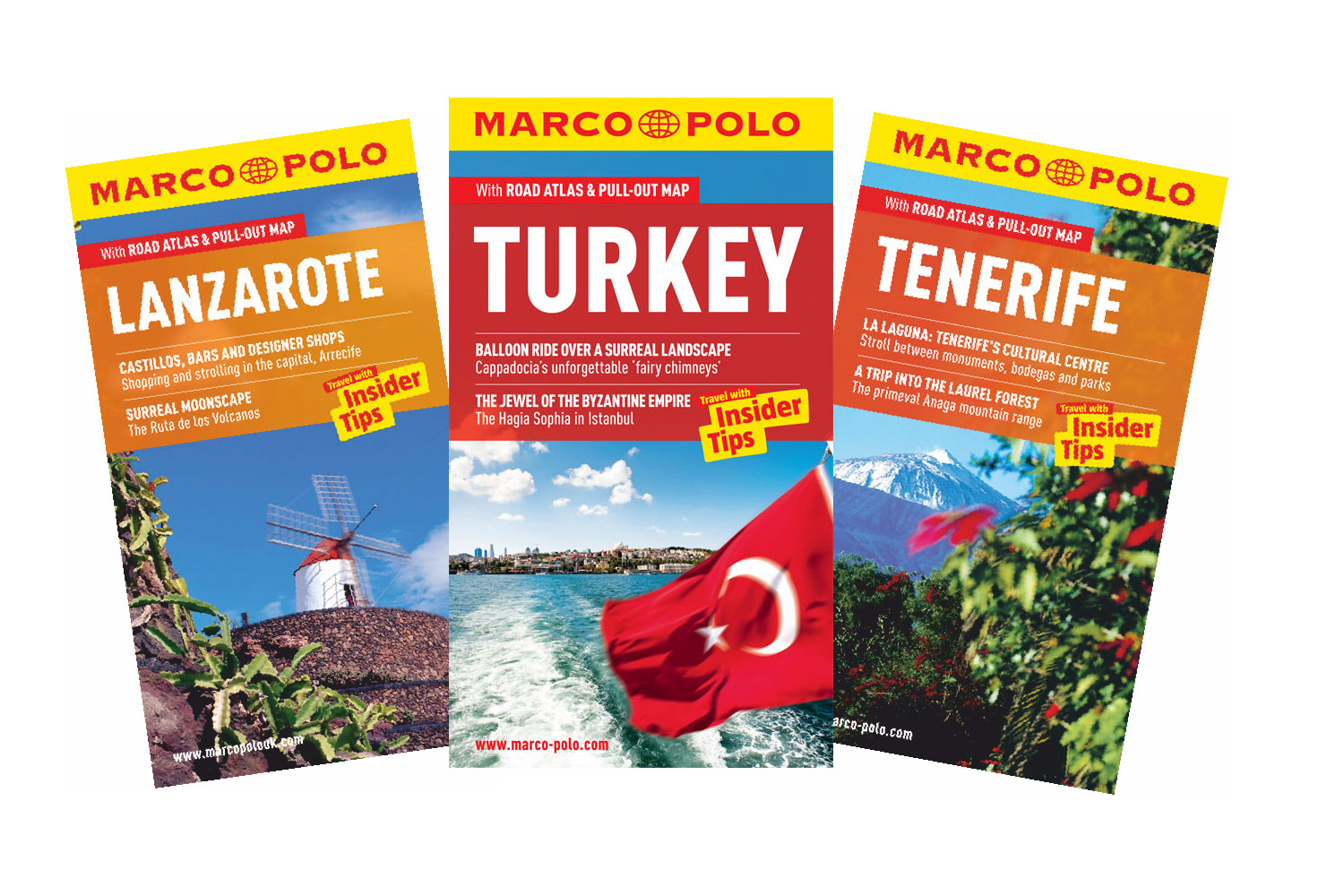 With the holiday planning season firmly underway, we’ve teamed up with Marco Polo to offer 10 lucky holidaymakers a set of 3 guidebooks to Lanzarote, Turkey and Tenerife!
 The second part of our Montenegro trip was almost entirely devoted to the coastal landmarks. But first of all, we were desperate to plunge ourselves in refreshing water and get a bit of a tan. Once we found ourselves by the sea in a town called Petrovac, it turned out that the coast was so popular with the locals that finding accommodation, a room at a guesthouse, was a challenge. Each of the four of us set on a journey knocking on peoples doors (in this sort of places virtually everyone offers rooms to get some extra cash), just to find that they were fully booked. After about an hour of research, one of us returned with good news – there was a track.
 It quickly turned out that we did not need to go back to the town to enjoy the beach; there was a small local one nearby. Happily, we set off with our beach gear. Even though the walk took us about 15 minutes it allowed us to familiarize ourselves with the vicinity and with the way people lived there. And it was not a posh part of the world. The path was dusty, along which modest housing or even shacks baked in the scorching sunlight. Litter scattered around, a barking dog in the distance, a lost hen looking for some lucky grain. Silence; not even one person around. It must have been that time of day, when all the locals made good use of the lazy weather at the beach. When we emerged from the arid and barren landscape, a complete change of scene welcomed us at the fresh and lively beach. Bunches of boys were jumping into the water from the rocks, children were splashing around, the bars and eateries enjoyed a good crowd of thirsty and hungry locals.
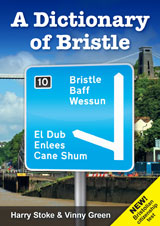 On 4th July our Bristol store will be celebrating Independent Booksellers week with two unique events. In the morning come see
  The most immediate thing on my mind as the plane touched down at Iman Khomeini International Airport was at what point were the other women on the flight going to don their hejab? The plane taxied to the gate and stopped. Only then did women start casually flinging on headscarves and coats. I did likewise but already felt both self-conscious and an amateur in the art of keeping a headscarf in place…
 I needn’t have worried, of course, because after a few hours in Tehran it was clear that hejab was about as loosely observed by some as it could be given the circumstances – coats barely covering backsides; scarves so far back on heads that I wondered if it really counted as wearing one (and how did they keep them in position anyway?); women wore make-up; coats and headscarves were colourful; couples held hands, and things seemed relatively relaxed.
 We had just a day in Delhi. Both of us live London so we weren’t particularly excited by big cities and I left with no great fondness of the place. This was down to a couple of factors. First, many Delhi hotels have bedbugs and ours was no exception. They appeared when it was too late to find somewhere better so it was an itchy night. Second, we had not toughened up and could not say no to a taxi tour of the city. We handed over money for the day and got taken to the best sights. The Red Fort was nice, and I particularly liked the squirrels that live there. They take nuts right from your hand. The place where Gandhi was assassinated would have been more interesting if we had known what it was: our guide did not think to tell us. In fact he was much more interested in taking us to shops. They have these bazaars, you see, where you are sold carpets and sarees and scarves and statues and jewellery and… and the taxi drivers get commission for taking us there. When we said we didn’t want to go to another shop, he got all grumpy and wouldn’t take us anywhere else. He wasn’t our friend.
 The next day was the must see of India. Agra and the Taj Mahal. You must get sick of hearing it but people do not exaggerate about the Taj: it is simply breath-taking. It is a perfectly symmetrical, glowing white structure that seems to grow suddenly, halfway through the elegant gardens. A trusty audio tour give you the whole romantic story about a mourning husband who lost the love of his life. It is interesting that his is the bigger tomb though.
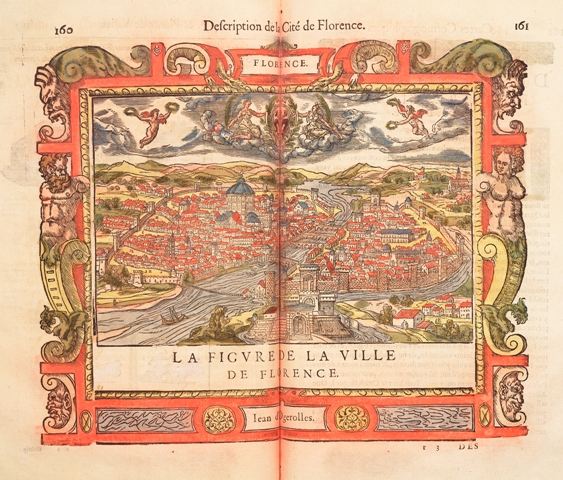 But city maps are almost as old as the city itself – and for much of history, they were not designed to help people find their way around. Prior to the Industrial Revolution, few cities were large enough to make that necessary. Despite its accuracy, the great marble map that hung in the Forum in Rome was not intended as a guide for visitors (they would have had to climb a ladder to read its upper portions) but to proclaim the imperial city’s prosperity and power.