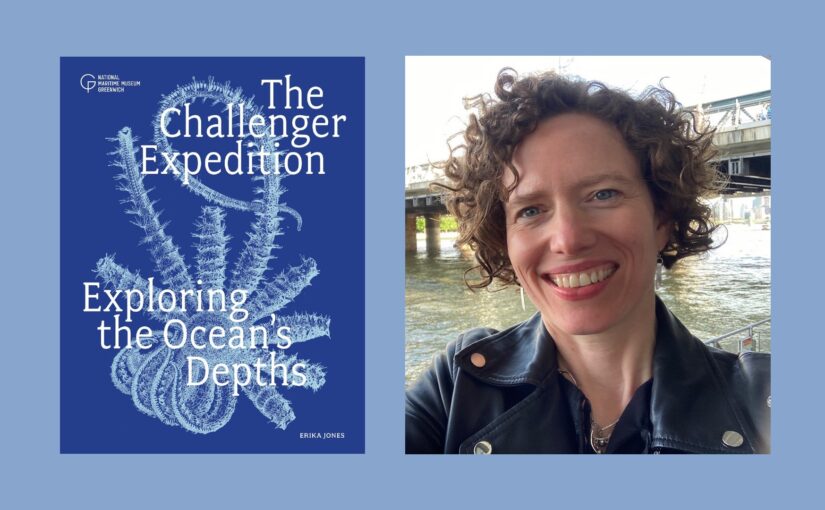
This article is an edited introduction from The Challenger Expedition: Exploring the Ocean’s Depths by Dr Erika Jones, Curator of Navigation at Royal Museums Greenwich.
The book was published to mark the 150th anniversary of the expedition’s launch.
On the 21 December 1872, HMS Challenger set sail from Portsmouth, England, to begin a global voyage of deep-sea exploration. A landmark endeavour, the findings and the legacy shaped the development of ocean science as we know it and are still influential in our understanding of the planet today.
With technological and scientific developments of the time, supported by extensive international cooperation and a team of research and naval officers, the expedition was part of the concerted nineteenth-century drive to map the ocean floors and search for life in the abyss.
When the ship returned to Britain in 1876, the scientific team on board had amassed the then largest collection of examples of life from the deep sea. Over the next two decades, a global network of researchers prepared the results for publication culminating in a series of works that is considered the intellectual foundation of modern oceanography.
© National Maritime Museum, Greenwich, London
On Board HMS Challenger
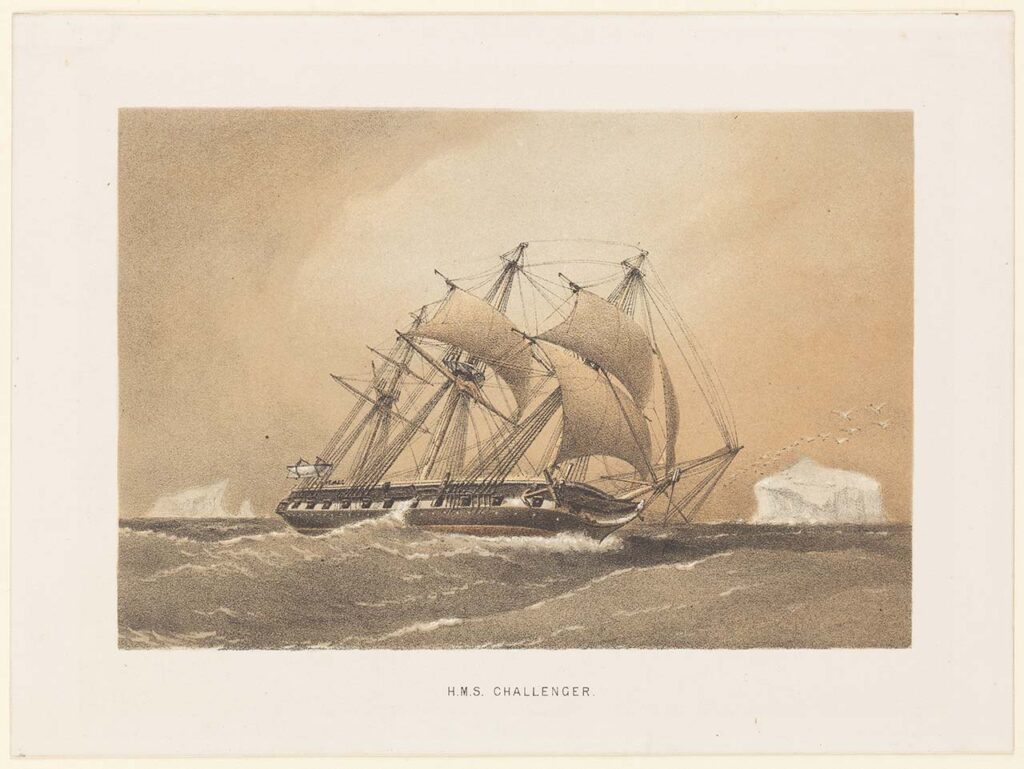
HMS Challenger took its name from the Royal Navy vessel, which had undertaken a 14-year service as a warship before being specially converted for the expedition’s purpose.
Challenger departed Sheerness on the north Kent coast on 7 December 1872, under the command of Captain George Strong Nares to explore the physical, chemical and biological characteristics of the deep sea.
© National Maritime Museum, Greenwich, London
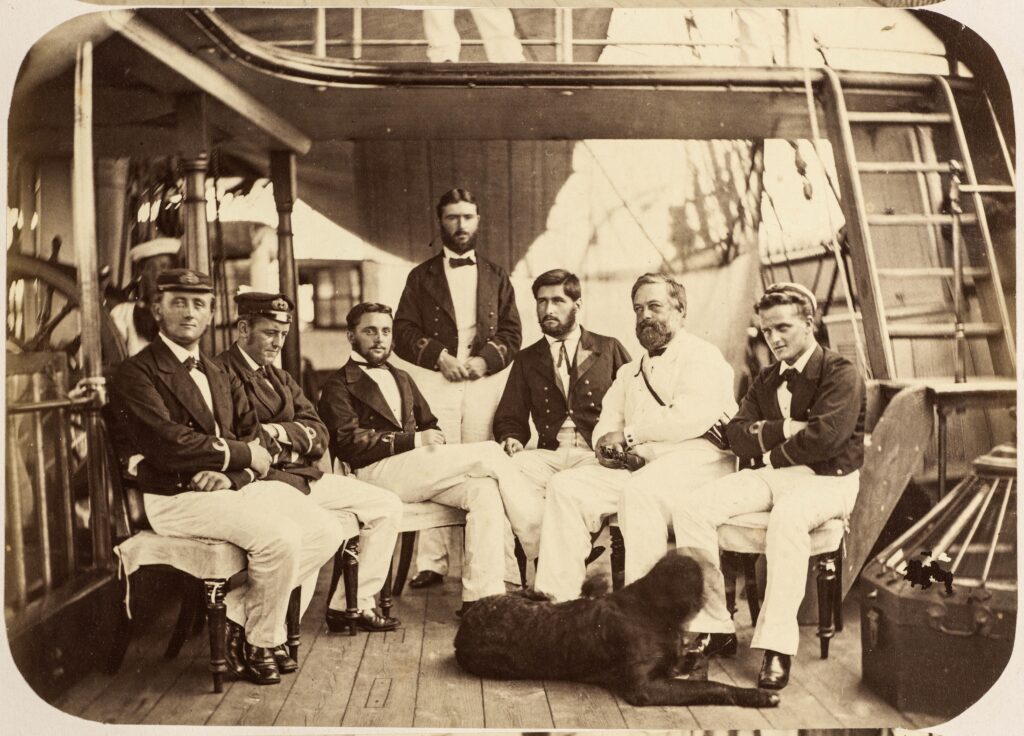
In addition to the ship’s company of almost 250 sailors, engineers, carpenters, marines and officers, there was a six-person civilian scientific team led by Charles Wyville Thomson, a Scottish naturalist determined to prove that life existed in the deepest parts of the ocean.
“We are to visit in succession almost every navigable part of the globe, making a complete circuit of the world and discovering no end of curious and scientific things.”
– Navigating Sub-Lieutenant Herbert Swire
The Voyage
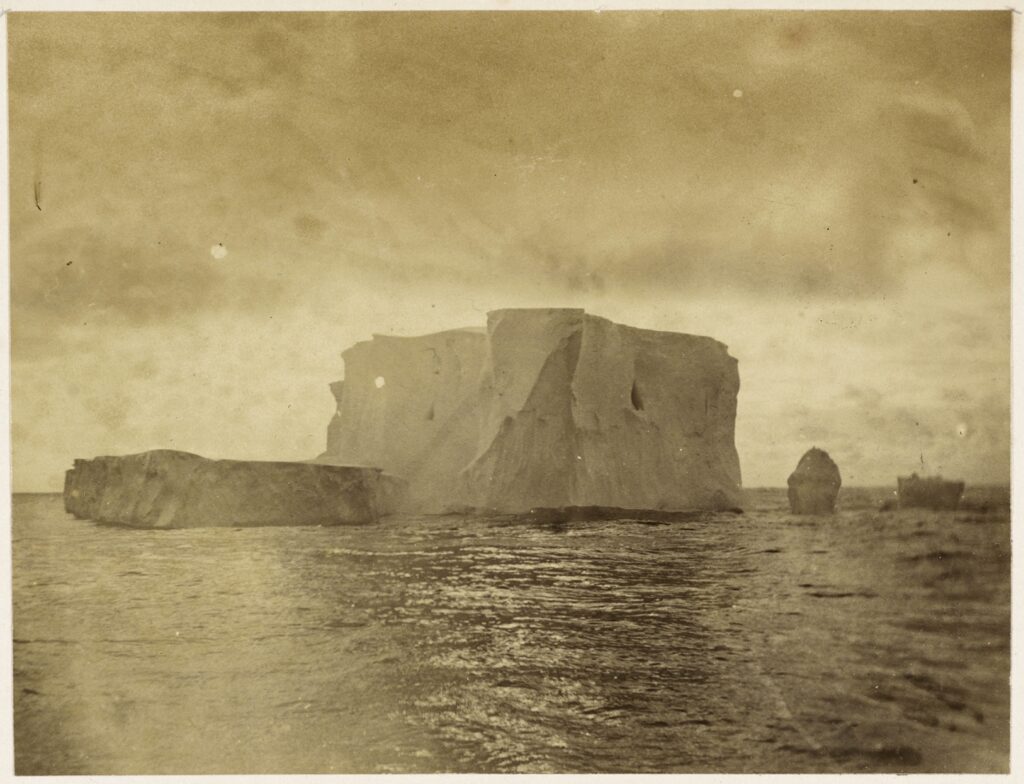
Over three and a half years, Challenger’s circumnavigation encompassed some 68,890 nautical miles (127,580 km) across the Pacific, Atlantic and Southern Oceans, and traversed the Antarctic Circle. During the voyage, the expedition carried out oceanographic experiments at 504 stations, observing currents, water temperatures, weather and surface ocean conditions.
© National Maritime Museum, Greenwich, London
Along its route, the expedition performed 374 deep-sea soundings, took 255 observations of water temperature, successfully deployed the dredge at 111 stations and completed 129 trawls. Water samples, marine plants and animals, sea-floor deposits and rocks brought up from the deep were carefully preserved on board the ship and sent to Britain for later study.
Between 1880 and 1895, with additional funding from the government, Thomson, and later John Murray, published the Report on the Scientific Results of the Voyage of H.M.S. Challenger During the Years 1873–76 as a 50-volume series from offices in Edinburgh.
Over 75 authors from Britain, Europe and the United States were involved in analysing the specimens and data amassed by Challenger and writing the reports. Enriched with information gathered by subsequent voyages, at its completion the Challenger Report formed a comprehensive study of Earth’s largest and most complicated biosphere. The publication included aspects of marine biology, physics, chemistry and geology, branches of knowledge that would come together to define oceanography as a new scientific field.
The ocean floor beyond the continental shelf was shown not to be a featureless expanse, as many had previously assumed, but instead was characterised by underwater mountain ranges, abyssal trenches and extended plains. The ocean itself consisted of warm and cold water zones, a finding that added to the understanding of ocean currents and the distribution of marine life.
Although Challenger’s chemist John Young Buchanan debunked the theory of primordial ooze, the investigation of the sea floor led to Murray’s discovery of extra-terrestrial particles (‘cosmic spherules’) in deep-sea sediments. In addition, almost 5,000 new species were found and described, proving that life did exist in the deepest parts of the world’s oceans.
By the end of the voyage, the Challenger Expedition had assembled the largest assortment of deep-sea animals to date. The collection proved the abundance and variety of marine life throughout the oceans. The expedition’s readings, measurements and records also created a valuable historical benchmark that climate change scientists still refer to today.
The legacy of HMS Challenger
Challenger was a trailblazer and our capacity for understanding the ocean has since been extended by technological advances. Researchers now deploy submersibles, sonar, high-tech buoys and remotely operated vehicles to probe deep-sea environments. Over the past decade, high-resolution underwater video cameras have enabled scientists and the public to view marine life as never before.
As we strive to understand our blue planet, a more inclusive history of ocean science is relevant to how the ocean is studied today. Everywhere Challenger travelled, the expedition acquired knowledge from those who lived in tandem with the sea or along the coast. The innovations and practices of Indigenous Peoples and local communities are of fundamental importance in informing strategies for conservation and sustainable, equitable use of marine resources and are increasingly recognised as such.
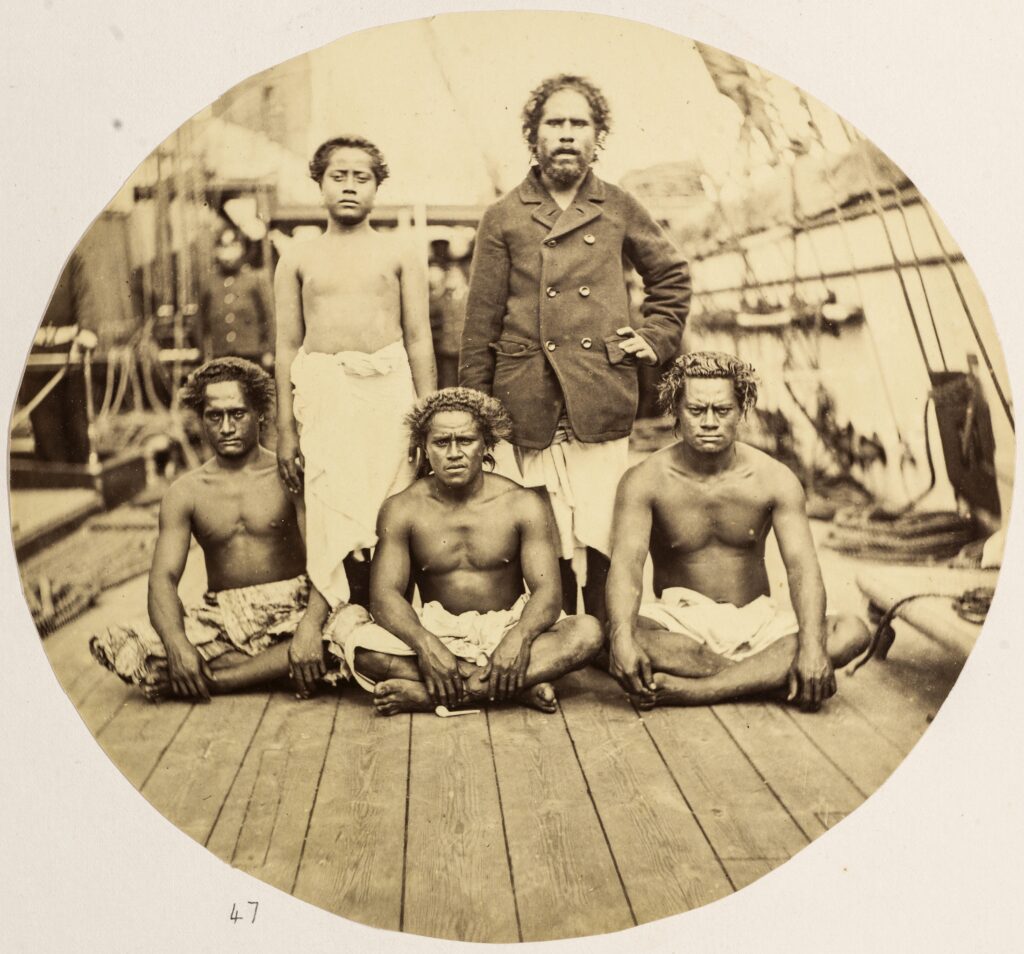
© National Maritime Museum, Greenwich, London
We have reached a crucial moment in our history. The unprecedented decline of biodiversity and marine habitats, caused by growing pressures from human activity, pollution and climate change, has become the most pressing environmental concern of our time. Whole ecosystems are on the verge of destruction.
Never before have we had such an appreciation for and insight into the bounty of life and mosaic of forces that constitute the ocean, a realm once beyond human observation. Today, our greatest challenge is to act upon this knowledge – to support the critical efforts being made to protect the vast ocean ecosystem and ensure the future well-being of humanity and all life on Earth.
The Challenger Expedition: Exploring the Ocean’s Depths by Dr Erika Jones is available now for £25.
All images are © National Maritime Museum, Greenwich, London.
www.rmg.co.uk

Join us Thursday 24th November 2022 at 7pm as Dr Erika Jones comes to Stanfords to talk about her new book.
More information and tickets available HERE.
Dr Erika Jones will be on Radio 4 on Thursday 24th November at 9am: BBC Radio 4 – In Our Time, The Challenger Expedition 1872-1876