AND THE ANSWER IS……
by Janice Booth
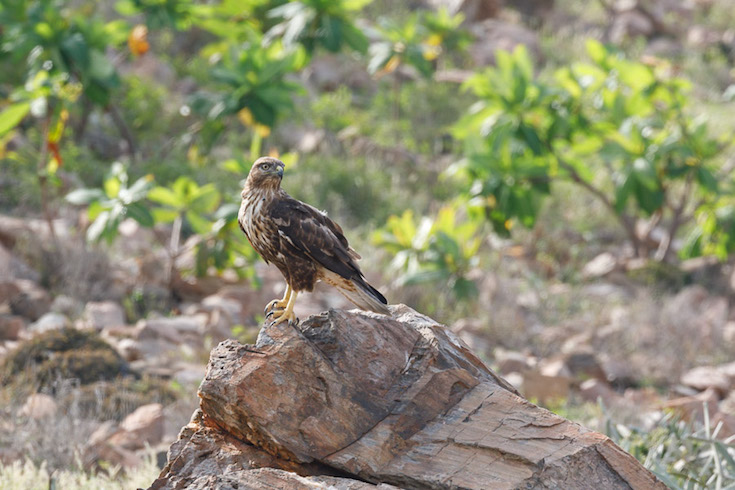
It’s a Pub Quiz-setter’s dream. Which Middle-Eastern island’s endemic buzzard flew into the Guinness Book of Records in 2010? Which Arabian island did Britain try to buy for 10,000 dollars in 1834? Which island is sometimes known as the ‘Galapagos of the Indian Ocean’? Where can you play a traditional game named Algashal that resembles fivestones or jacks? Answers: Socotra, Socotra, Socotra and (surprise!) Socotra.
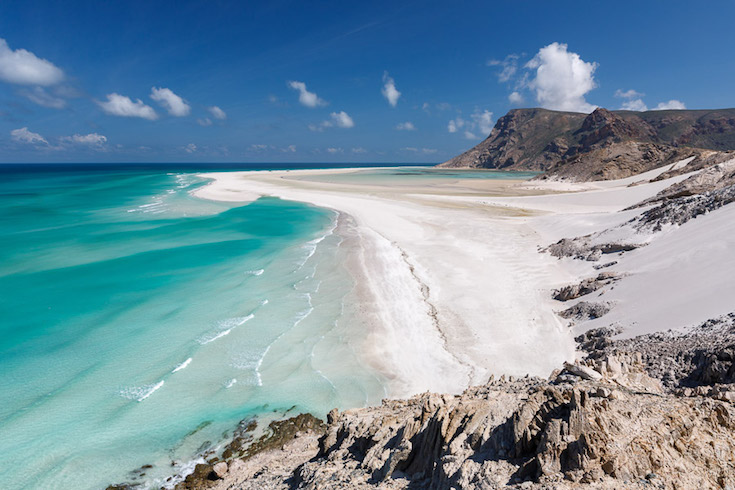
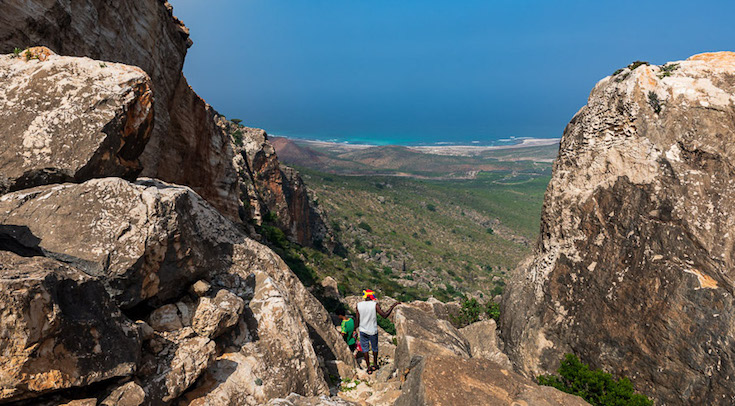
With its northern shore in the Arabian Sea and its southern beaches in the Indian Ocean, it is the largest by far of the four islands that form the Socotra Archipelago. Administered by Yemen, which is 380km away to its north, its nearest mainland neighbour is the tip of the Horn of Africa. Although at around 135km long and 42km wide it’s barely larger than Cornwall, the craggy mountains in its centre rise almost 1,500 metres, and massive, silver-white sand dunes over 300 metres high lean like weary giants against its coastal cliffs.
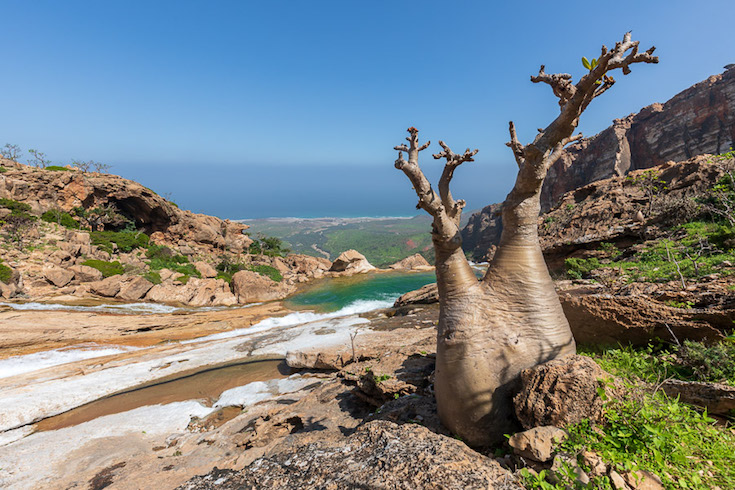
This physically small surface area somehow transforms itself, tardis-like, to give a feeling of wide-open space, crammed with variety. A day’s whistle-stop driving, twisty and bone-shaking, will show you superb sandy beaches, scrubby desert browsed by camels, date plantations, grassy plateaux where Bedouin herd their ever-hungry goats, dizzyingly steep ravines, freshwater streams and deep inland pools – and of course the startling, ancient, often ungainly, otherworldly tree species that are so characteristic of this remote place. Dragon’s blood trees (Dracaena cinnabari), traditionally born from either the blood of a dragon killed in combat with an elephant or the blood of two brothers who fought each other to the death, stand watch over the hillsides like giant old-fashioned darning mushrooms, while obesely plump bottle trees (literally, Adenium obesum) assume ridiculously human poses. The resin of the frankincense trees, said two thousand years ago to have ‘perfumed the bath-houses of Rome’, is still in international demand, for use in health, wellbeing and aromatherapy products. An even older species, the cucumber tree, is thought to have been on the island since it broke away from the mainland many million years ago.
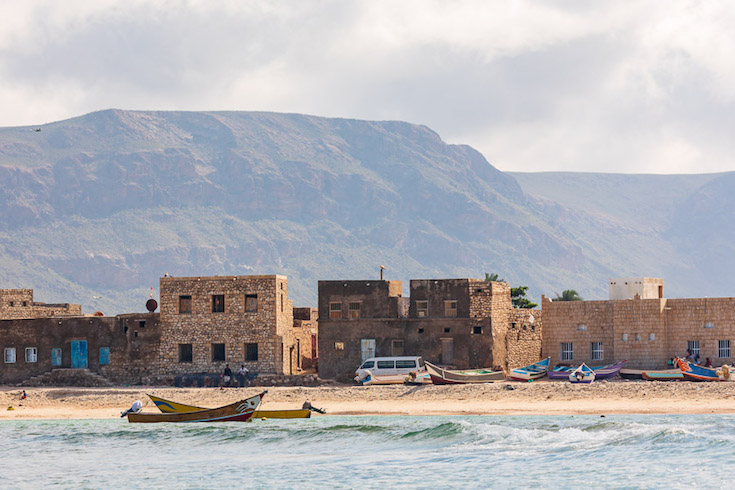
No wonder the Socotra Archipelago was listed as a UNESCO World Heritage Site in 2008, for its unique biodiversity: an estimated 307 plant species are endemic (found nowhere else), as are 11 of the bird species, 90% of the reptiles and about 60% of the spiders.
So much to absorb, and a persistent distraction is the absolute beauty of the place. The views – the sea, the landscapes, the colours – always take centre stage. When we (a group of nine) turned a corner of rock and saw Detwah lagoon shimmering below us, we all succumbed to the cliché of ‘stopping in our tracks and gasping’. On a bouncy boat-trip to the picture-perfect beach of Shu’ab, the sea was so blue that its colour reflected on the breasts of white seabirds skimming above the water; for a moment we thought they were some strange new species. Bold pink freshwater crabs explored our toes as we paddled in a wadi stream. And viewed from Arher’s giant sand dunes, at night, the sea turned a vivid electric blue from bioluminescence. Magic!
It’s like nowhere else, and really does have to be seen to be believed – as well as being excellent for quizzes.
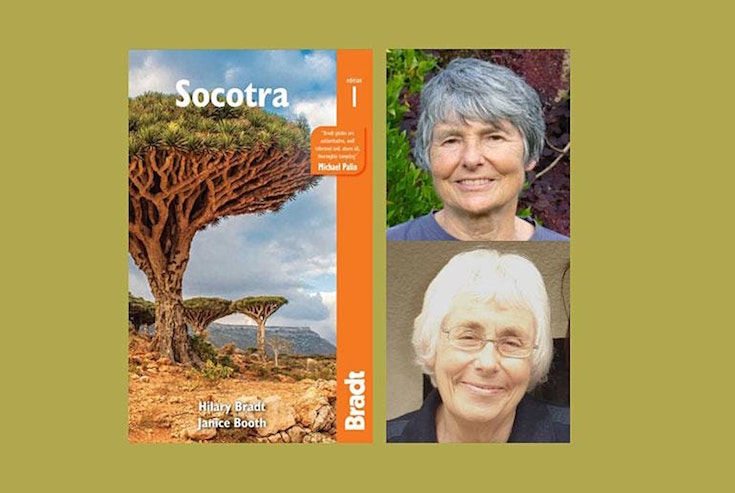
The Socotra Bradt Guide is available to buy here.
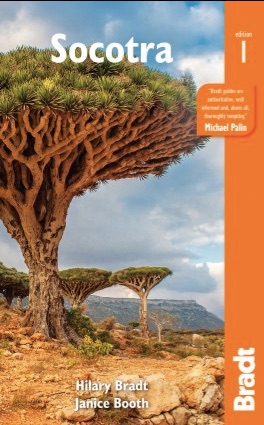
Join us on Tuesday 3rd November for an evening of superb photography and surprising facts as the authors of the Socotra Bradt Guide, Hilary Bradt and Janice Booth talk about their experiences on this island.
Tickets available here.