Working in China: Top 5 Customs to Learn

Working in ChinaTim Neesham, who’s spent the last 18 months living and working in Shanghai, reveals his top five customs to learn ahead of emigrating to the next world superpower.

As more and more western-educated Chinese return to the motherland, the opportunities for expats considering a move to the Far East are changing. Rumour has it that so-called ‘expat packages’ are on the way out as the newly-developed China focuses more on employing from within.

So what could this mean for westerners looking to relocate to the world’s most populous nation? Could the influx of Chinese employees in western companies lead to more western employees in Chinese companies? Here are a few customs to become familiar with should that be the case:

1. Guanxi 关系

Probably the most difficult Chinese custom for westerners to understand, guanxi, literally translated, refers to a person’s relationships, both personal and professional. However, as a concept guanxi is perhaps best translated as ‘saving face’. It’s decided by things such as age and rank and is the notion of maintaining the view by which others see and judge you; it forms a significant part in many aspects of Chinese culture.

There exists a very strict chain of command in the Chinese workplace and any attempt to circumvent the chain and talk directly to a boss or senior staff member, thus ignoring guanxi, is not only viewed as gross misconduct, but also a blatant show of disrespect to your superiors and can be punishable by termination of contract.

It can be particularly frustrating when, as a subordinate employee, you are made to take the fall for something that was quite obviously not your fault in order that the senior staff are not seen to lose face.

2. Communication

Communication in a Chinese company is a totally different animal to that in the west and often ties in with guanxi, as both are largely to do with how colleagues interact among themselves.

For example, the western cliché of the chat by the water cooler doesn’t really apply; in fact office banter in general is more or less non-existent and any attempt to initiate it is often greeted with furrowed brows. It is also not uncommon for colleagues sitting side by side to communicate with each other on a computer – normally via an IM service – rather than actually talking.

In cases of communication, being the foreigner has its advantages as we are more or less left alone to do whatever it is our colleagues think we do. However, this causes a lack of direction, constructive criticism, praise or advice which can sometimes leave you feeling a little isolated.

3. Medical

For many of us the idea of undergoing a medical before starting an office job seems a trifle excessive, but in China you don’t get a choice. Essentially the employer is simply looking for any infectious diseases and the like, which I suppose is fair enough.

But this medical reminded me more of something between an Easter egg hunt and one of those adventure puzzle books for kids, except in this case all the explorers were confused-looking foreigners wandering around desperately trying to understand what was going on. Solve the riddle, go to room 205; don’t solve the riddle, go back to room 201 – but instead of Easter eggs it was needles, weird looking X-rays and an ultrasound!

The Chinese often claim to have invented things long before western nations. To us, the X-ray machine was pioneered by Wilhelm Rontgen in the late 19th century; judging by the looks of the medical centre’s radiology department however, the Chinese may actually have a point.

4. Idiosyncrasies

A multitude of quirky habits operate in a Chinese office situation, such as everyone eating lunch at their desk or fines for not closing the office door in the proper manner. However, my personal favourite is nap time. As soon as the allocated lunch period is over – for the record, what time you eat lunch is not up for debate – someone comes along, turns the office lights off and everyone goes to sleep for an hour. It’s just like being back in nursery school.

It may also be tradition not to wear outdoor shoes in the workplace, which means removing them at the door and replacing them with ‘slippers’. This was particularly interesting on the day of my interview as I was unaware of the rule and thus arrived at the office, suited and booted, only to be told I had to remove my shoes. I asked them what I was supposed to wear, they looked puzzled and finally found the only spare pair of ‘slippers’ that was knocking around, which happened to be a pair of size four pink flip flops. Together with a grey suit it really looked rather fetching.

5. Hidden extras

In June 2012, the Chinese government imposed a new law aimed at stemming the flow of foreigners coming to work in China. It stated that any foreigner seeking employment within the country would have to return to their home country first to pick up the working visa, at their own expense.

This combined with the cost of the visa (£66), the medical (£58) and the residence permit required to live and work legally within China (£40) can add up to some costly start-up expenses.

On the bright side, it’s rumoured that the new Chinese government, which assumed power in mid-November, will take countermeasures to further open the country up to foreign investment and therefore relax the newly tightened immigration employment laws.

Want to find out more about living and working in China? Discover our range of China living and working guides:

Dubrovnik: A Wanderer's Paradise

Dubrovnik cityscapeCaroline Sandes continues her Balkans adventure in Dubrovnik, exploring the city’s old town, staying in rather questionable accommodation and meeting a lost puppy.

Dubrovnik is, of course, beautiful in a sort of quaint, picturesque fashion. The historic old town with its trademark red-tiled roofs is contained within its city walls, keeping it apart from the more modern town that sprawls around it. It sits on the edge of the Adriatic, and for the couple of days I was there the sea was doing what it is known best for here, radiating blueness with rippling waves twinkling in the sun. Continue reading Dubrovnik: A Wanderer's Paradise

Christmas Holiday Reading: Our Top 5 Tips

With holiday season fast approaching, we reveal our top five Christmas reading recommendations:

A Street Cat Named Bob1. A Street Cat Named Bob, James Bowen

Back in 2007, recovering drug addict James Bowen arrived at his Tottenham home to find a stray ginger cat on his doorstep. The author, who makes his living busking on the streets of Covent Garden and Islington, didn’t fancy looking after the ginger tom – by his own admission it was enough of a challenge looking after himself. But it soon became apparent that the moggie, which Bowen christened Bob, wasn’t any old cat – intelligent, loving and loyal, the pair quickly bonded and became inseparable. And rather than being a burden, Bob provided the encouragement and incentive James needed to stay clean.

A Street Cat Named Bob is Bowen’s heart-warming account of his five years and counting with Bob, who regularly accompanies him busking in central London and Angel. Not everything has been plain sailing for the pair – they’ve been separated twice and had to contend with yobbish drunks – but they’re now a regular sight on the streets of Covent Garden, with Bob – ever the crowd pleaser – providing the purrfect accompaniment to Bowen’s rock covers.

Above all, this is story of hope and a tribute to people’s bonds to their cats, even if this pair’s relationship doesn’t begin on the most conventional of footings.

> Buy A Street Cat Named Bob!

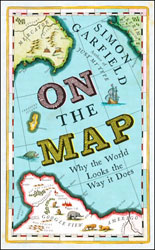
On The Map2. On The Map, Simon Garfield

Simon Garfield’s tribute to the map is one of the most lucid and accessible histories of cartography ever written, and almost certainly the most fun. He begins the journey in Egypt at the time of Claudius Ptolemy and his celebrated Geographia – a collection of what was known about the world’s geography in the second century, and a work that inspired generations of geographers and cartographers – before moving onto the discovery of the New World and the planet according to Gerardus Mercator, the Flemish cartographer whose 1569 projection of the planet is still widely used.

Garfield later brings the reader bang up to date with the development of the sat nav and the goings-on at California’s Googleplex, interspersed by visits to Hereford during the city’s Mappa Mundi crisis in the late 1980s, and a revealing insight into the life of Phyllis Pearsall, the woman responsible for the first London A-Z in the 1930s.

This breadth of cartographic history – and a visit or two to Stanfords’ Long Acre store – has allowed Garfield to take an objective view on the future of maps. Has the Apple Maps debacle encouraged a renewed appetite for paper maps? Or is it time for traditional cartographers to surrender to the digital mapping revolution?

> Buy On The Map!

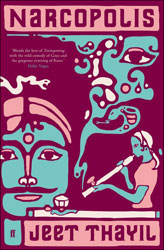
Narcopolis3. Narcopolis, Jeet Thayil

Shortlisted for the 2012 Man Booker Prize, Jeet Thayil’s first novel is set in the squalor of 1970s Bombay – a city of gangsters, drug users and petty criminals. At the novel’s centre is Dimple, a eunuch who prepares pipes at Rashid’s, a notorious opium den. Her father figure is Mr Lee, a Chinese soldier who’s left the motherland in search of a better life. Thayil delves deep into the characters’ lives; his hallucinatory account of their personalities, ambitions and goals occasionally poetic. We’re also introduced to Rumi, an under-the-thumb husband with a penchant for drugs and violence, who’s forced to choose between rehab and prison – or in his words, “dying or death”.

All the while, Thayil uses his poetic proficiency to present a rich, vivid picture of Bombay’s underworld – a city that has since transformed into the subcontinent’s economic powerhouse. But in Narcopolis the gleaming high-rises are years away – instead the population have to contend with grinding poverty and the terrifying Pathar Maar, the stone killer, who ruthlessly slaughters his seemingly random victims under the cover of darkness.

Thayil certainly knows what he’s writing about – he’s quoted as saying that almost two decades of his life were lost to addiction. But his real-life experiences and poetic talent has resulted in arguably the most impressive debut novel of the year.

> Buy Narcopolis!

Into The Silence4. Into the Silence: The Great War, Mallory and the Conquest of Everest, Wade Davis

In 1924, an expeditionary team headed by George Mallory attempted to climb Everest. Britain was reeling from the effects of the First World War, and there was a hope that scaling the world’s highest peak would hand a much-needed boost to the nation’s psyche.

It was to be the most challenging of expeditions – one in which the climbers suffered from frostbite and sunstroke at the same time, and in which the team’s Tibetan hosts couldn’t understand the point of climbing Everest for climbing’s sake – after all, the mountain was of huge spiritual significance and apparently capable of throwing them off the edge.

Sadly, it was to be a journey shrouded in mystery, for nobody knows if Mallory or Sandy Irvine, a fellow climber, made it. But rather than asking if Mallory and Irvine reached the summit, Into the Silence – the winner of this year’s Samuel Johnson Prize for Non-Fiction – contemplates what encouraged the pair to keep climbing on the day they lost their lives, when they must have known the perils that lay ahead.

Harking back to the Great War and its effects, Wade’s epic book – based on years of research – explains how Mallory and his disappearance became representative of the millions who died on the Western Front between 1914 and 1918, only a few years after Captain Scott and his companions lost their lives in the Antarctic.

> Buy Into the Silence!

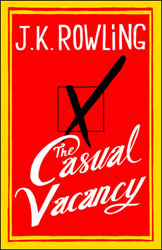
The Casual Vacancy5. The Casual Vacancy, JK Rowling

Forget any links to Harry Potter – this is JK Rowling’s first novel for adults, complete with swearing, sex and drugs. The setting, too, couldn’t be further removed – wave goodbye to Hogwarts and say hello to the quaint town of Pagford’s hosting of a small-scale parish council election.

But behind Pagford’s prettiness – it’s home to an ancient abbey and a cobbled market square – is a population at war with itself: rich versus poor, wives versus husbands, pupils (who, incidentally, get up to things Harry and co wouldn’t have dreamed of) versus teachers and teenagers versus parents. Things are bubbling up, but a catalyst is needed to make things bubble over. Step forward Barry Fairbrother, the book’s hero, who suddenly drops dead in the golf club car park. His departure leaves a ‘casual vacancy’ on the parish council; one that threatens to be taken over by the forces of darkness.

Dark it may be, but The Casual Vacancy is also funny – particularly when the passionate election campaign begins in earnest.

> Buy the Casual Vacancy!

Top 10 Christmas Gifts for Him

With the festive shopping season in full swing, we delve into the Stanfords online Christmas store to reveal our top 10 Christmas gift ideas for him:

World Map Hip Flask

1. World Map Hip Flask

There comes a time in a man’s life when having a meaningful hip flask becomes important. Effectively a rite of passage, a well-made, attractive hip flask is something to be treasured, loved and utilised on brisk country walks, football away days or long train journeys – no matter the choice of tipple contained within. Few can compete with the attractiveness of the World Map Hip Flask and its colourful, postal-themed map of the world. Featuring a captive screw top, the flask is presented in an equally-appealing branded box: the perfect gift for the discerning gentleman this Christmas.

> Buy the World Map Hip Flask! Continue reading Top 10 Christmas Gifts for Him

Christmas in Cumbria: Top 6 Events

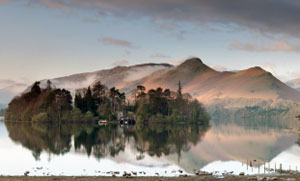
Lake DistrictCumbria enthusiast Ian John looks ahead to the county’s festive-themed events.

The Lakeland fells have an irresistible allure during the winter. Whether it’s a dusting of snow giving the landscape an undeniable festive feel, or enjoying the quieter season hunkering around a warming drink in one of the region’s many excellent coffee shops, there are plenty of winter-friendly attractions to attract festive holidaymakers.

Visiting at this time of the year can give even the most experienced Cumbrian visitor a new perspective of what makes this beautiful part of north-west England so special. In addition to the great winter walks, there are many Christmas-themed celebrations – making a trip at this time of year unforgettable. Here are some of Cumbria’s Christmas highlights:

1. Santa Cruise & Evening Christmas Parade

Sat 24th November, 10:00 – 20:00 at Bowness on Windermere. £11 adults, £6.50 children.

Travel on Lake Windermere from Bowness and meet fellow passengers Beatrix Potter and Peter Rabbit on your trip to see Santa! Each child will get to meet Father Christmas and receive a special gift while Beatrix Potter reads A Winters Tale to all aboard. The day finishes with a carol concert, winter lights parade, mince pies, mulled wine in Queens Park and a huge fireworks display.

> Discover more with Walks Around Windermere and Kendal

2. Santa’s Grotto

Each weekend until Sun 16th December, then from Thurs 20th until Mon 24th December inclusive at Carlisle Tourist Information Centre. £3.50 per child.

Santa returns to Carlisle in his specially-made grotto, meeting children to hear their Christmas wishes! Each child will receive a specially-wrapped gift from Father Christmas.

> Follow Father Christmas with the Santa Map

3. Victorian Tours at Muncaster Castle

9th, 16th, 21st, 27th and 28th December – pre-booking advised. Adults £6.50, children £3.50.

Enjoy this fantastic old castle illuminated and decorated for Christmas on a guided tour taken by servants in period costume and in character. Learn more about the history of the castle and its owner, the sleeping Lord Muncaster, while enjoying a glass of mulled wine and mince pie.

> Discover more Lake District gems with Time Out

4. The Santa Express

Weekends of 1st and 2nd, 8th and 9th, 15th and 16th December, plus Thurs 20th to Sun 23rd December at Ravenglass and Eskdale Railway – pre-booking advised.

Book your tickets on the magical Santa Express to meet Father Christmas and discover his beautiful grotto. Set in the beautiful Eskdale region, this is a hugely popular narrow gauge railway event – pre-booking early is wise if you plan to make the trip. 

> Spruce up your festive greetings with the Cavallini Santa Christmas Mailing Set

5. A Magical Winter Wonderland at Walby Farm Park

Every weekend from Sat 1st until Sun 23rd Dec, plus Fri 21st Dec 10:00 until 18:00. Adults £6.95, children £4.50.

Bring the magic of the Nativity to life at Walby Farm Park, where a team of actors include plenty of real life animals to bring to life the Christmas story for children like never before. Each day sees several Nativity plays, carol services, ‘snowtime’ and the chance to enjoy all the farm’s other animals, as well as a chance to visit Santa in his grotto.

> Discover the animals that shouldn’t be friends but are this Christmas

6. Christmas International Market

Wed 5th to Sun 9th December, Carlisle City Centre.

If you enjoy a spot of Christmas shopping then Carlisle’s Christmas International Market is well worth a visit. Each year the market boasts a large number of Christmas-themed stalls, from as far afield as Thailand, India, South Africa, France, Spain and Germany – all selling a number of festive gift ideas from around the world. 

Of course, if you’re in the Lake District then walking is always a great option and a Christmas amble around the country is well worth the effort. Tarn Hows by Coniston offers easy walking for the family as you can drive to the top – then it’s just a short walk along a circular pathway to stunning views of the region. Other great winter walks to consider include Ruskin’s View in Kirby Lonsdale, Holme Fell in Coniston and High Dam in Windermere.

> Explore the Lake District with the AA’s set of 30 short walks cards

Want to discover more of Cumbria and the Lake District? Browse our range of Lake District maps and travel guides.

Top 5 Grand Canyon Hikes

Grand CanyonUS travel enthusiast James Hetherington describes his five favourite Grand Canyon hikes.

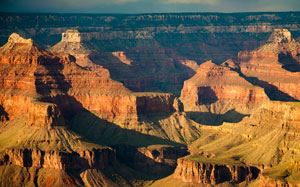
The Grand Canyon: the product of hundreds of millions of years of geological transformations, culminating in the creation of one of the greatest natural wonders in the world (and one visited by five million people per year). Few people are aware of the sheer size of its national park, which occupies an area more than 434 kilometres long; approximately twice the length of Wales. Here, we take a look at some of the national park’s most tantalising hiking routes, from those suitable for beginners to challenges suited to the more serious hiker: Continue reading Top 5 Grand Canyon Hikes

Gangnam Style: The District Behind the Smash Hit

Gangnam Style SeoulIt’s easy to forget that the ‘Gangnam’ in PSY’s viral internet hit is a place, too. Poi-Yun Wan takes a closer look at the ‘Mayfair of Seoul’.

Unless you’ve been living under a rock for the past few weeks, you’re probably familiar with the frustratingly-catchy beat of PSY’s international hit, Gangnam Style. Like it or not, the Korean rapper’s ‘horse-galloping’ dance moves have become etched into our memories.

Ridiculous dancing aside, the tune has achieved two rather impressive feats: it’s entered the Guinness Book of World Records as the most-liked YouTube video ever, and it’s the first Korean track to reach number one not just in the UK, but in more than 30 countries around the world.

Listen to PSY’s lyrics and he’s clearly poking fun at Gangnam, an upmarket district in Seoul. Or more specifically, its residents. Outside of South Korea though, the area is largely unknown – so what exactly is all the fuss about?

Well, Gangnam wasn’t always a place of wealth and revelry. As recently as the 70s it was a district of relative obscurity occupied by farmers, who later sold their land to make way for new developments. Fast forward 40 years and voilà, welcome to South Korea’s Beverly Hills.

Step inside Gangnam today and expect to be surrounded by people dressed in branded clothing, socialites carrying designer bags worth an average South Korean’s monthly salary, chauffeurs escorting the rich around town in exclusive cars, and people with so much bling they would glow even if there was a power cut…

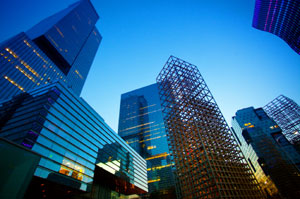
But it’s not just the residents of Gangnam that are well suited and booted – the buildings and attractions belonging to the area also play their part in adding to the decadence associated with the neighbourhood. Aside from the impressive Bongeun Temple, which is well worth a visit, the area is defined by gleaming high-rises and bright lights. Those wanting to see a more genuine side of Seoul will need to cross the river.

The regional headquarters of some of the biggest names in the business world, including Google, are based in the swanky Teheranno Street. The district is also a haven for shopoholics with an ample range of outlets located on the streets of Apujeong to Cheongdam-Dong and in the famous COEX Mall, the biggest underground shopping centre in Asia.

Of course, Gangnam wouldn’t be without the ‘style’ if not for the rows of designer shops beckoning punters in. Lavish boutiques line the streets of Garosugil coupled with an abundance of luxurious coffee shops, because drinking coffee, especially expensive coffee, is another way the rich showcase their wealth. But designer attire outside, you might just spot the odd t-shirt featuring a certain rapper.

The streets of Gangnam are lined with classy nightclubs. Famous DJs flock here to entertain the young and rich as they party, or indeed ‘gallop’, through the night. Besides being a haven of wealth, Gangnam receives publicity from annual festivals such as the Gangnam Fashion Festival. The subway stations and nearby attractions of the neighbourhood, meanwhile, featured in The Bourne Legacy starring Jeremy Renner and Rachel Weisz.

So there you have it – regardless of whether you’re taking PSY’s digs at Seoul’s wealthiest district with a pinch of salt or trying to erase the embarrassing image of the prime minister attempting the ‘horsey’ dance from your mind, Gangnam’s residents are probably sitting comfortably in their luxury cars and sipping a cup of deluxe coffee while soaking up all the fame and glory.

> Learn more about the South Korean capital with our range of Seoul travel guides and maps.

Eastern Turkey: 'Another World' From the Package Resorts

Diana Darke StanfordsEastern Turkey, “another world” inside the Turkey of Istanbul and package holiday resorts, is an area travellers are beginning to stand up and take notice of. And if Joanna Lumley is planning a visit, it must be worthy of exploration.
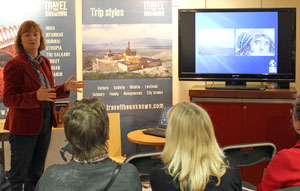
This is the message of Bradt guide author Diana Darke, who said during a talk at Stanfords that more interest is being generated in this part of the world that’s long been neglected by travellers, in part thanks to laying claim to being the birthplace of religion.

“It’s astonishing what’s happened there over the last 20 years – Eastern Turkey has really lifted itself up, which is testament to the country’s stability,” Diana explained. “Turkey’s economy has steadily grown, so it’s got money to invest into tourism. This is something you really notice with the food, for example, which was nothing to write home about two decades ago. Now it’s possible to try gourmet dishes at restaurants at the top of Mesopotamia in the desert – all of which are made locally. It’s certainly not the place it used to be.”

But what about safety in a region that hasn’t enjoyed the most peaceful of reputations? “If you look at Foreign Office travel advice it starts off by describing Turkey as a stable democracy,” the travel author said. “The only areas it says you shouldn’t travel to are a handful of provinces where, in all honesty, no tourists would go anyway because there’s absolutely nothing to see there.”

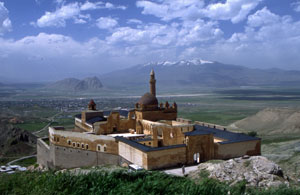
Ishak Pasa Palace

What’s exciting is just how much there is to see, which is why a national newspaper is planning to run a special Eastern Turkey feature in the coming weeks, and why Lumley and her film crew are travelling there to make a documentary on Mount Ararat and its associations with the story of Noah’s Ark.

“That will bring a lot of interest to this part of the world,” Diana added. “We all know Istanbul and the holiday resorts – that’s what most people think of when you say ‘I’m going to Turkey’, but in practice 70 per cent of the country is from Ankara eastwards – it’s like a country within a country, which is why it merits an entire book.

“It’s effectively another world – one that most people in Istanbul and the western part of the country haven’t been to, let alone travellers from overseas. Indeed, some Turkish people freely admit they think of it as another country. What people discover when they do go there though is that it’s incredibly easy to travel around, the people are friendly and that there’s so much to discover.”

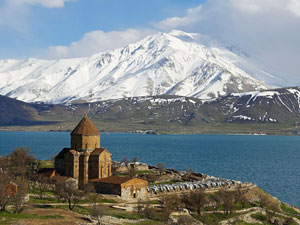
One of Eastern Turkey’s highlights is Lake Van, the country’s largest body of water and among the biggest endoheric lakes in the world. A saline soda lake, it receives water from the many small streams descending from nearby mountains – and despite sub-zero temperatures in winter, its saltiness means the vast majority of water doesn’t freeze.

Lake Van“It’s an extraordinary, surreal lake,” Diana said. “It has an almost ethereal quality to it – there’s something about the colour of the water and its texture, which feels like silk. When you swim in it your skin is so smooth and silky. The water has a particular alkaline composition to it, so fishing boats often trail dirty laundry behind them and the lake acts as a huge washing machine, making the clothes fragrant and soft.
“Lake Van is huge – seven times the size of Lake Geneva, but no matter where you are on the lake you experience its extraordinary quality. The surrounding area is completely undeveloped – there are only two hotels on its shores, one in the north and one in the south.”

While the lake is spectacular in itself, it’s surrounded by a ring of volcanoes, some of which can be conquered on one-day expeditions. Diana has trekked to the summit of Nemrut – not to be confused with the mountain of the same name – to the north-west of the lake. At its summit is a large caldera and two crater lakes – one hot and one cold, and it’s possible to swim in both.

Aside from its impressive landscape, Eastern Turkey has a fascinating cultural history. And according to Diana, the Anatolia region contains “the origins of so much of our western civilization”, despite the fact that many won’t have heard of its ancient peoples.

“Eastern Turkey is the great early mountain culture, where the Ancient Egyptians and Mesopotamia are the acknowledged first great river valley cultures,” Diana explained. “It’s a little-known fact that Hittite is the earliest-known example of an Indo-European language, from which a number of our languages have descended from.

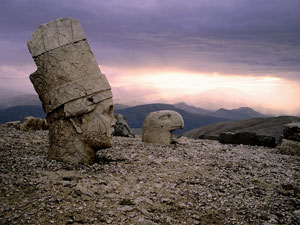
Mount Nemrut Statues“The region is home to some extraordinary cultures, most of which we are probably unfamiliar with like the Commagene Dynasty, whose power-crazed King Antiochus I Theos built a sanctuary at the summit of Mount Nemrut, the highest peak in his kingdom at 2,000 metres. It’s unlike anything else in any other part of the world, and the king’s statue, which he made sure was surrounded by gods, often gets chosen for front covers of Eastern Turkey travel guides.”

Another cultural highlight is Gobekli Tepe, where German and Turkish archaeologists have been excavating since 1994. “It dates from 9,000 BC, making it the world’s oldest temple, established 2,000 years earlier than the world’s first city,” Diana said.

“This is completely turning everything upside down about how we thought human society evolved. We understood that hunter gatherers settled in cities and then built temples – what Gobekli Tepe shows is that hunter gatherers built a place to worship before moving to the city. It’s safe to say that religion began in Eastern Turkey. Even today, there are more churches and monasteries there than there are in Istanbul and the western part of the country.”

Diana Darke was speaking on behalf of Travel the Unknown, which is based at our Long Acre store’s themed area for the duration of November. Find out more about their talks by visiting our events page.

Europe's Top 5 Christmas Markets

Tempted by a festive visit to one of the continent’s revered Christmas markets? Let Alice Bzowska be your guide to five of the best.

Originating in Germany in the late middle ages, the ‘Christkindlmarkt’ has grown in popularity over the centuries and has spread further afield to the places that take Christmas seriously. Festive spirits soar with carol singers providing a jovial backdrop among the gingerbread-house huts, decorated in fairy lights and tinsel and dotted with snow. Continue reading Europe's Top 5 Christmas Markets