 Tim Neesham, who’s spent the last 18 months living and working in Shanghai, reveals his top five customs to learn ahead of emigrating to the next world superpower.
As more and more western-educated Chinese return to the motherland, the opportunities for expats considering a move to the Far East are changing. Rumour has it that so-called ‘expat packages’ are on the way out as the newly-developed China focuses more on employing from within.
So what could this mean for westerners looking to relocate to the world’s most populous nation? Could the influx of Chinese employees in western companies lead to more western employees in Chinese companies? Here are a few customs to become familiar with should that be the case:
1. Guanxi 关系
Probably the most difficult Chinese custom for westerners to understand, guanxi, literally translated, refers to a person’s relationships, both personal and professional. However, as a concept guanxi is perhaps best translated as ‘saving face’. It’s decided by things such as age and rank and is the notion of maintaining the view by which others see and judge you; it forms a significant part in many aspects of Chinese culture.
There exists a very strict chain of command in the Chinese workplace and any attempt to circumvent the chain and talk directly to a boss or senior staff member, thus ignoring guanxi, is not only viewed as gross misconduct, but also a blatant show of disrespect to your superiors and can be punishable by termination of contract.
It can be particularly frustrating when, as a subordinate employee, you are made to take the fall for something that was quite obviously not your fault in order that the senior staff are not seen to lose face.
2. Communication
Communication in a Chinese company is a totally different animal to that in the west and often ties in with guanxi, as both are largely to do with how colleagues interact among themselves.
For example, the western cliché of the chat by the water cooler doesn’t really apply; in fact office banter in general is more or less non-existent and any attempt to initiate it is often greeted with furrowed brows. It is also not uncommon for colleagues sitting side by side to communicate with each other on a computer – normally via an IM service – rather than actually talking.
In cases of communication, being the foreigner has its advantages as we are more or less left alone to do whatever it is our colleagues think we do. However, this causes a lack of direction, constructive criticism, praise or advice which can sometimes leave you feeling a little isolated.
3. Medical
For many of us the idea of undergoing a medical before starting an office job seems a trifle excessive, but in China you don’t get a choice. Essentially the employer is simply looking for any infectious diseases and the like, which I suppose is fair enough.
But this medical reminded me more of something between an Easter egg hunt and one of those adventure puzzle books for kids, except in this case all the explorers were confused-looking foreigners wandering around desperately trying to understand what was going on. Solve the riddle, go to room 205; don’t solve the riddle, go back to room 201 – but instead of Easter eggs it was needles, weird looking X-rays and an ultrasound!
The Chinese often claim to have invented things long before western nations. To us, the X-ray machine was pioneered by Wilhelm Rontgen in the late 19th century; judging by the looks of the medical centre’s radiology department however, the Chinese may actually have a point.
4. Idiosyncrasies
A multitude of quirky habits operate in a Chinese office situation, such as everyone eating lunch at their desk or fines for not closing the office door in the proper manner. However, my personal favourite is nap time. As soon as the allocated lunch period is over – for the record, what time you eat lunch is not up for debate – someone comes along, turns the office lights off and everyone goes to sleep for an hour. It’s just like being back in nursery school.
It may also be tradition not to wear outdoor shoes in the workplace, which means removing them at the door and replacing them with ‘slippers’. This was particularly interesting on the day of my interview as I was unaware of the rule and thus arrived at the office, suited and booted, only to be told I had to remove my shoes. I asked them what I was supposed to wear, they looked puzzled and finally found the only spare pair of ‘slippers’ that was knocking around, which happened to be a pair of size four pink flip flops. Together with a grey suit it really looked rather fetching.
5. Hidden extras
In June 2012, the Chinese government imposed a new law aimed at stemming the flow of foreigners coming to work in China. It stated that any foreigner seeking employment within the country would have to return to their home country first to pick up the working visa, at their own expense.
This combined with the cost of the visa (£66), the medical (£58) and the residence permit required to live and work legally within China (£40) can add up to some costly start-up expenses.
On the bright side, it’s rumoured that the new Chinese government, which assumed power in mid-November, will take countermeasures to further open the country up to foreign investment and therefore relax the newly tightened immigration employment laws.
Want to find out more about living and working in China? Discover our range of China living and working guides:







 Eastern Turkey, “another world” inside the Turkey of Istanbul and package holiday resorts, is an area travellers are beginning to stand up and take notice of. And if Joanna Lumley is planning a visit, it must be worthy of exploration.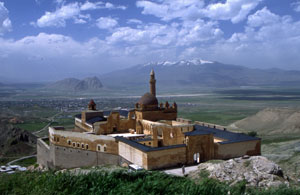
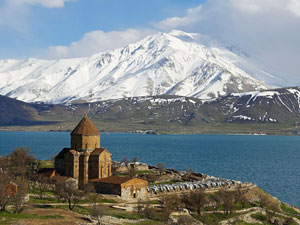 “It’s an extraordinary, surreal lake,” Diana said. “It has an almost ethereal quality to it – there’s something about the colour of the water and its texture, which feels like silk. When you swim in it your skin is so smooth and silky. The water has a particular alkaline composition to it, so fishing boats often trail dirty laundry behind them and the lake acts as a huge washing machine, making the clothes fragrant and soft.
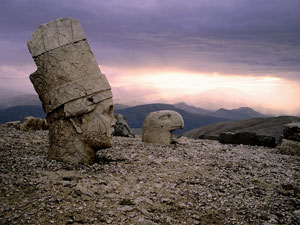 “The region is home to some extraordinary cultures, most of which we are probably unfamiliar with like the Commagene Dynasty, whose power-crazed King Antiochus I Theos built a sanctuary at the summit of Mount Nemrut, the highest peak in his kingdom at 2,000 metres. It’s unlike anything else in any other part of the world, and the king’s statue, which he made sure was surrounded by gods, often gets chosen for front covers of Eastern