The Gorillas Have Landed

With Maporilla due to settle into her new home in the coming days, we thought we’d look back at Bristol Zoo’s Wow! Gorillas public art project with the help of photographer Clive Minnitt.

Clive has published The Gorillas Have Landed – a collection of images showcasing the 61 life-size ceramic gorillas displayed across Bristol during summer 2011, including Rebecca Howard’s map-adorned creation – soon to be based at St Monica’s Trust after being displayed at Stanfords.

Available at our Bristol store for £9.99, five per cent of the book’s profits are being donated to Bristol Zoo’s gorilla conservation project, while a further five per pent is going to the Bristol Royal Hospital for Children.

Here’s a selection of Clive’s photographs – aside from the Stanfords-commissioned Maporilla (thanks to Kevin Leighton for this image), how many of the five can you name? Continue reading The Gorillas Have Landed

Win an iPad Mini!

Win an iPad Mini

This competition is now closed.

We’re delighted to welcome back Travel The Unknown and sister brand Trip Feast to our Covent Garden store’s themed area for the duration of January – and to celebrate, we’re giving away another iPad Mini!

The independent tour operators, which previously graced Stanfords in November, specialise in eco-friendly itineraries for smaller groups to destinations including India, Burma, Colombia, Lebanon, Jordan, Eastern Turkey, the Balkans, Mexico and Iran – as well as a range of culinary trips across Asia, Europe, Africa, Latin America and the Middle East.

Compact, durable and reliable, the new version of the iPad is perfect for every type of traveller. To be in with a chance of winning, simply complete the form below!

Lonely Planet-recommended Travel The Unknown will offer Stanfords’ visitors expert travel advice to some of the planet’s unspoiled hideaways until 31st January, while Trip Feast will provide information on cultural tours with a culinary twist.

Pay them a visit at our London store and start planning your next getaway! Continue reading Win an iPad Mini!

New York State: The Other NY

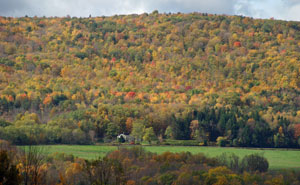
New York State coloursGregor Swiderek explores the other New York – New York State – and discovers a land of mountains, forests and lakes.

Hear the words ‘New York’ and what springs to mind? Gleaming skyscrapers? Yellow cabs? A buoyant nightlife? Probably. But let’s look at another New York – New York State. Sure, it’s home to all the Big Apple’s iconic attractions, but there’s also the ‘upstate’ region where forests, mountains, lakes, small towns and industrial heritage are the norm.

And that’s where I entered the state. Not via one of the bustling airports or traffic-choked highways of NYC, but by crossing a small bridge from Vermont across Lake Champlain. You could say it was the proverbial middle of nowhere; farms on the Vermont side of the water and forested mountains on the New York side. It was getting dark, fog had started wrapping the hills and the entire landscape was as rural as you can get.

My first stop was the town of Ticonderoga. Surprisingly, the chain hotels were all full but they directed me towards some older independent motels. The one I finally stayed at looked like it was straight from the 50s judging by its look and décor, but its owner was super-friendly. The Wi-Fi didn’t work but he was so apologetic that I just couldn’t go anywhere else. And I got a discount.

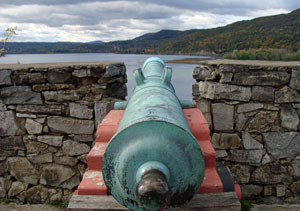
Fort Ticonderoga GunThe next day the sun was shining and I hit the streets of Ticonderoga early; or rather one short main street, just a few blocks and two sets of traffic lights. But that was enough to have a good local luncheonette where I treated myself to a truly awesome breakfast, after which I was ready to visit the main reason I was in this neck of the woods: Fort Ticonderoga.

Built by the French between 1754 and 1757, it was of strategic importance during the 18th century colonial conflicts between Britain and France. It again played a role during the American Revolutionary War as it controlled an important route between the Hudson River Valley and the Saint Lawrence River Valley.

Picturesquely located on a peninsula at a narrows near the southern end of Lake Champlain, the fort is nowadays lovingly restored (or rather reconstructed – not much is left of the original fort after it quickly fell into ruin after the Revolutionary War). Luckily it was acquired by the Pell family who started its reconstruction in 1909, making it one of the oldest preservation projects in North America. Nowadays you can wander around the fort by yourself or join one of the tours led by the period-dressed guides. I would recommend the second option as these guys are really knowledgeable but also have a good sense of humour – they also offer musket firing and other presentations.

The best way to appreciate the layout of the fort is to look at it from the nearby Mount Defiance – just a 10 to 15-minute drive away, but get a leaflet with precise directions from the museum store as it can be a tricky route. Don’t be put off when the road gets rough – it is steep, narrow and full of potholes but the view from the top is amazing. You can clearly see the fort as well as big swaths of Lake Champlain, the Green Mountains in Vermont and the Adirondacks in New York.

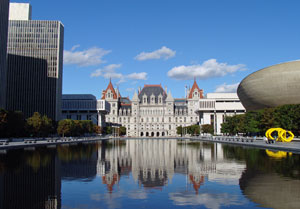
From Ticonderoga I headed south to Albany, the capital of the Empire State. That’s correct; it’s not the Big Apple. There are different explanations why this is the case (and I’m not sure which one is correct), but it doesn’t really matter. What does is the fact that Albany is a rather unique place. For a start, the state capitol has a bit of an unusual shape as it lacks a dome. Apparently there were plans for one, and even a tower, but during 32 years of construction it was discovered that the weight of the building was causing it to shift downhill, resulting in some fractures. So, no dome then. In effect the building looks like an oversized château from the Loire Valley, kind of out of place in upstate New York.

New York CapitolIf the capitol is a bit incongruous then its surroundings are absolutely bizarre. The Empire State Plaza is a complex of state government buildings located immediately south and south-west of the capitol. Built between 1959 and 1976, it was the brainchild of Governor Nelson Rockefeller – and it’s huge, consisting of various marble and steel buildings set around a row of three reflective pools. On the west side there is a row of four identical, so-called Agency towers, each 23 storeys tall. On the east side there is the 44-floor Erastus Corning Tower and The Egg performing arts venue, named for its shape (you’ll know why once you see it). On the south end (opposite to the capitol) there is the Cultural Education Center, which looks so weird that it’s hard to describe in a few words. It is also big, with 1.5 million sq ft of floor space.

To be honest the whole complex looks and feels massively oversized for a city the size of Albany. But it’s also absolutely fascinating and photogenic, especially on a sunny day. The best way to fully appreciate it, and to get an understanding of its layout, is to visit the viewing deck on the 42nd floor of the Corning Tower (which happens to be the tallest building in New York State outside NYC). From there you will be able to see all the government buildings located around the reflecting pool as well as the rest of the city (which feels dwarfed by the complex). Then there is the Hudson River and endless mountains and forest surrounding the city, stretching far into the horizon.

Albany is an easy place to visit. You can leave your car in one of the vast parking lots underneath the Empire Plaza, which are connected to the underground walkways connecting all the buildings. For anyone interested in grandiose architecture, Albany is a must-visit destination – together with cities like Brasilia or Canberra, it is one of the largest purpose-built government complexes in the world. Some compare it to buildings constructed by Fascist governments and criticise its size and cost (approximately $2 billion, and 9,000 people were displaced during its construction). There is no denying, however, that it is a unique and well-worth-visiting place.

From Albany I headed west towards the Finger Lakes region in the centre of New York state. On my way I stopped for a night in Binghamton where, by coincidence, I also stayed five years ago on my previous trip to this part of the world. It is one of those nondescript towns where I usually end up staying in cheap chain motels and eat in one of the countless fast food joints on the strip malls that stretch for miles and miles. They are not highlights of any trip, but I have seen similar towns across America and I’ve grown to like them. I can’t explain why but I find them strangely fascinating with their grittiness and anonymity. They all look the same; it doesn’t matter if they are in Michigan, Colorado or Kentucky. This is where everyone minds their own business and you can easily blend in. By and large no-one sees you as a tourist; they don’t visit places like Binghamton, but I would say that this is the real face of America rather than beaches of Santa Monica, the theme parks of Orlando or the boutiques of NYC.

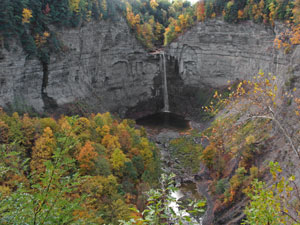
Taughannock FallsAfter Binghamton everywhere looks beautiful and fascinating, but Fingers Lakes is genuinely interesting. My time was limited so I only chose one destination to visit: Taughannock Falls State Park. Beautifully located on the banks of Lake Cayuga it’s home to one of the tallest single-drop waterfalls east of the Rocky Mountains. Its main cataract drops 66 metres, which is a full 10 metres higher than the mighty Niagara. You can hike to its base at the bottom of a long and narrow gorge (with walls reaching 120 metres tall), or you can take the rim trails that offer great views from the top of the falls. In other words, this small state park is a real gem. In fact, I suspect that in many countries in Europe it would be designated a national park.

This was the turning point of my journey. From Taughannock Falls I started heading back east, ultimately all the way to the hustle and bustle of the Big Apple. But that was still hundreds of miles away and for now I was simply enjoying a peaceful drive across the New York countryside.

I would recommend upstate New York to anyone visiting north-eastern USA. Even if you mainly come for the highlights of NYC, it is well worth sparing a day or two to tour this fascinating region.

> Discover more with our range of New York State travel guides and maps.

Indian Railways: A Window to the Subcontinent

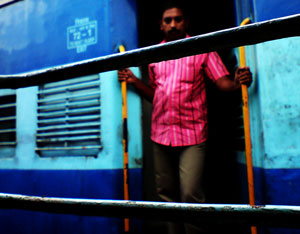
Indian railwayTravel blogger Aditya Akhauri explains how the railway has become a microcosm of Indian society.

When the British started their Indian railways project in 1853, their intention was to have a means to transport troops, supplies and goods as a means of controlling the country’s political and economic landscape. However, what they didn’t envisage was that if they were able to use the railways to move around swiftly, so too could the Indians. Soon, the huge flow of people across different regions led to the unification of the country – and ultimately the end of the British Raj.

Interesting history apart, the Indian railways today are a network of 65,000 km and more than 7,500 stations. They are the veins that run through Continue reading Indian Railways: A Window to the Subcontinent

New Year's Eve: Our Favourite Destinations

With four days to go until New Year’s Eve, we spoke to bloggers and travel industry experts to find out the best places to welcome in 2013.

Budapest New Year's EveAlice Bzowska: Budapest

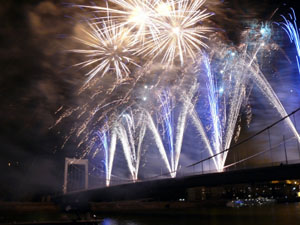
Hungarians take New Year’s Eve seriously and it should come as no surprise that one of the most exciting places to celebrate the end of one year and the start of another is in the capital city of Budapest.

Szilveszter, as it’s known to the locals, comes in the form of anything from swanky fancy dress balls to dinner on the Danube River with traditional folk dances and live gypsy music.

Partying in one of the many charming and cobbled squares is a great way to welcome in the New Year, and one of the most exciting of these is Vorosmarty Square. Winter parties in this stunning square speckled with snow are already in full force a couple of weeks before the first day of January, with merriments beginning before Christmas.

The special three-day celebration for New Year’s Eve starts on 30th December and includes an eclectic mixture of theatre performances and live music from bands from all over the world, as well as an art and crafts fair with handmade trinkets.

No New Year’s celebration is complete without sampling some of the local food, and Budapest has some scrumptious dishes, from traditional roast pork to a hearty lentil soup. Many revellers taste the regional delicacy in one of Budapest’s restaurants before pouring out onto the streets to continue partying it up!

With streets packed full of people of all ages singing, throwing confetti and blowing on paper horns, the excitement is electrifying, making Budapest one of the best European cities in which to celebrate New Year’s Eve.

> Explore the Hungarian capital with our Budapest travel guides and maps

Amsterdam New Year's EveCharlie Gilbert: Amsterdam

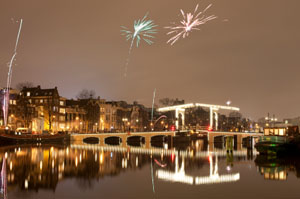
Away from the coffee shops and the Red Light District, Amsterdam has one of the best nightlife scenes on the continent, and at no time is this better showcased than New Year’s Eve.

One of the biggest events is Heineken Music Hall’s TIKTAK New Year’s Eve – an electro, dubstep and house party that’ll still be in full swing at half five in the morning. But top of my recommendations is Dazzleville, a one-night New Year’s Eve festival featuring 45 DJs on seven stages and boats at NDSM-Wharf. Just about every music taste is catered for (my thing is roots reggae and dub, a genre that receives a dedicated yurt), and at the stroke of midnight a large wooden beast is burned, which has something to do with Chinese astrology.

For something more family-friendly, I’d suggest heading to the official celebrations in Oosterdok, with the iconic Nemo science centre, VOC Ship and Scheepvaartmuseum forming an impressive backdrop to what’s become a legendary fireworks display. This year looks set to be the biggest yet with Amsterdam celebrating a number of milestones next year: its canals will be 400 years old, the Rijksmuseum will reopen after a major renovation and the Artis Zoo – easily the best zoo I’ve been to – will celebrate its 175th anniversary.

Remember to wrap up warm – Amsterdam in mid-winter can get pretty chilly (so cold in fact that the canal’s freeze solid and ice skating usurps cycling as the preferred method of getting around).

> Discover more of Mokum with our Amsterdam street maps and travel guides

Las Vegas New Year's EveLauren Holden: Las Vegas

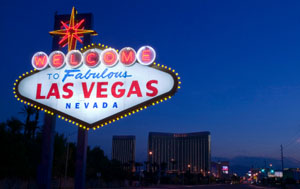
Owing to its bright lights and entertainment factor, grim and dreary Blackpool has earned the title of the ‘Vegas of the north’. But I know where I’d rather see in the New Year. Here’s a clue: it doesn’t begin with B. There’s a reason the celebs roll into Sin City year after year, and it’s not for candy floss and Kiss Me Quick hats. True, it’s tacky, but it really is a playground for adults. Want a night to remember? You’ve picked the right place. From dazzling fireworks lighting up the famous strip to poolside parties and top shows featuring big name acts, counting down to midnight in one of the world’s most unique holiday destinations certainly beats spending the night downing shots in another dodgy UK club. And don’t get me started on the gambling. If you’re heading to Vegas, you’ve got to have a go.

> Learn more about Las Vegas with our range of travel guides and maps

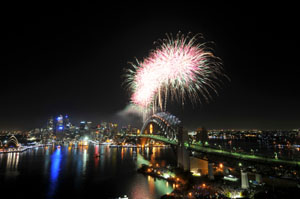
Sydney New Year's EveJayne Gorman: Sydney

The best New Year’s Eve I’ve ever experienced was in Sydney, Australia. Perhaps due to the temperate climate and dazzling sunshine, NYE in Sydney is as much about the daytime activities as it is the night.

We were up and out by 8am to reserve our space on the harbour, picnic rug and snacks spilling out from our shopping bags. During the days leading up to the event the council had been giving out maps in the city listing the best viewing points for the famous fireworks, so we already knew where we were heading. We guarded our small spot of grass all day, enjoying champagne and snacks from the onsite food vans, and when the first round of fireworks went off at 9pm I couldn’t imagine them getting any better at midnight. But they did. The theme that year was ‘Time of Your Life’ – it certainly was.

Jayne is an award-winning travel blogger who manages 40before30.com.

> Explore the best of Sydney with our range of travel guides and maps

Iceland New Year's EveRobin Wild: Reykjavik

Seeing in the New Year is a particular cause for celebration for Reykjavik’s locals, especially near Hallgrimskirkja. Icelandic law states that all fireworks and the sale of fireworks is illegal – but only until 30th December. As a result, every New Year’s Eve the city is lit up with fireworks displays!

Robin is an adventure specialist at My Adventure Store.

> Reveal the best of Reykjavik with our range of maps and travel guides

Rahul Aggarwal: North-east India

North-east India is a remarkable place to spend New Year’s Eve – particularly the state of Meghalaya, known as ‘the Scotland of the east’. Among my favourite destinations is Shillong, the state capital, where the locals put on quite a spectacle where archery is concerned. It’s here that the NYE celebrations are centred, though festivities are relatively low-key and relaxed, which are part of their appeal. Other highlights include driving through a landscape dominated by waterfalls to Cherrapunjee, the wettest place on Earth, and visiting the Sacred Forest of Mawphlang.

Rahul is a director at off-the-beaten track tour operator Travel The Unknown.

> Be inspired by north-east India with our range of travel guides and maps

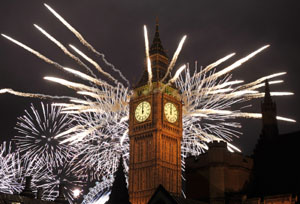
London New Year's EveLondon

The capital’s official New Year’s Eve celebrations will culminate with a spectacular fireworks display in front of the London Eye. But where to get the best view? And what else is happening in London?

Caroline Sandes: I’d recommend avoiding the Millennium Bridge, which spans the river between St Paul’s Cathedral and the Tate Modern. While you’d perhaps think you’d get a great view of the fireworks at midnight, the bend in the river and the tall buildings between the bridge and the Eye – from where the fireworks are set off – means you can barely see anything!

Olivia Haughton:Street Feast London in the heart of Shoreditch promises a great evening at any time of year, but it will undoubtedly be even better on New Year’s Eve. With traders serving food from all over the world, it has a real international flavour.

> Discover the best of the capital on NYE with our range of London street maps and travel guides

Europe's Top 5 Value Ski Resorts

It’s time to get the skis out. Snow has been falling across Europe’s mountain resorts, resulting in ideal deep snow conditions usually reserved for the end of January. But with ski holiday prices at the big five – Austria, France, Germany, Italy and Switzerland – notoriously expensive, which is the best-value resort to head to?

We take a detailed look at five of the best European ski resorts as named in the Post Office Travel Money Ski Resort Report, which revealed that it’s not just snow falling at the continent’s mountains – prices are too, especially in Italy.
Livigno ski1. Livigno, Italy

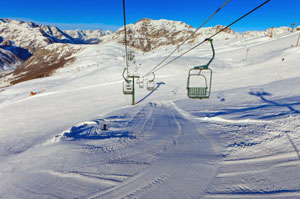
Located on the Swiss border, this central Alpine resort offers fantastic ski and snowboard slopes for people of all abilities. Spread over four villages, Livigno is Europe’s highest permanently-inhabited resort at almost 6,000ft.

There are 110km of slopes to explore, with the longest stretching for approximately 7km. Most are beginner and intermediate-friendly, though there 13km of pistes for more experiences skiers and snowboarders.

Part of Livigno’s appeal is its tax-free status – Italian VAT is not paid here – which has encouraged 250 duty-free outlets to set up shop at the resort. And while prices have historically been kept relatively low, they’re approximately 10 per cent lower still this year.

According to the Post Office, the cost of equipment hire, ski passes, ski lessons, meals and drinks comes to £361.85 per person, making it the fourth-cheapest ski resort in Europe.

How to get there: Fly to either Milan or Zurich (both are about 200km away) and transfer via train, bus or hire car.
When to go: Late November to early May.

> Discover more with KOMPASS-Verlag’s Bormio-Livigno map
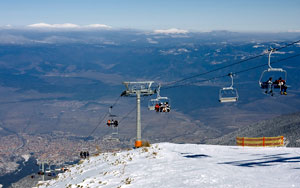
Bansko ski2. Bansko, Bulgaria

Eastern European resorts are famously cheap, but they have suffered a poor reputation thanks to rickety ski lifts and a lack of facilities. Fortunately, neither is the case at Bansko – a resort boasting modern lifts and first-rate hotels.

Located in the scenic Pirin National Park, Bansko offers excellent accommodation, fast lifts and an interesting town to explore. But most important are its slopes – considered the best and certainly the longest in Bulgaria, they’ve hosted Super-G and World Cup Women’s downhill races; testament to the resort’s facilities and credibility. While the most challenging slopes will be a doddle for experts, there is some excellent tree skiing and opportunities to go off-piste with an instructor.

Snow reliability and management is excellent in Bansko by Bulgarian standards, with the north-facing slopes resulting in favourable conditions throughout the season.

Central to the resort’s appeal are its prices – according to the Post Office, prices per person for the purchases mentioned above came to £264.52, making it the cheapest ski resort in Europe.

How to get there: Fly to Sofia (160km away) or Plovdiv (180 km) and transfer via car or private transfer. While the train journey to Bansko from Sofia is worth it for the views, it does take seven hours – twice as long as travelling by road.
When to go: Mid December to mid April.

> Discover more with Domino’s Bansko (with ski routes) map
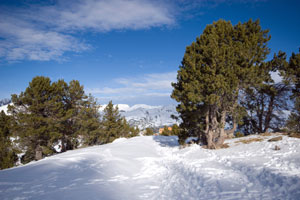
Soldeu ski3. Soldeu, Andorra

Located 1.5km from Soldeu is the small village of El Tarter, home to one of Europe’s most respected ski schools. If you’re skiing with the family, this is one of the best resorts to head to – not only will the kids be taught by some of the best instructors around (there are 200 speaking a multitude of languages), a ski holiday here won’t cost an arm and a leg.

Soldeu and El Tarter are home to 16 family-friendly hotels and 75 rental apartments, all within easy reach of the resort’s 86km of trails (spread over 52 runs, the longest of which, Gall de Bosc, stretches for 8.2km). All slopes are accessed via a gondola or chairlift.

According to the Post Office, a stay in Soldeu this winter is a whopping 18 per cent cheaper than last year, costing a relatively modest £1,121.14 for a family of four – less than £3 pricier than the Slovenian resort of Kranjska Gora, one of the cheapest in Europe.

How to get there: Fly to Carcassonne, Barcelona, Girona, Reus or Toulouse and transfer via car, shared airport transfer or private transfer.
When to go: Mid December to mid April.

> Discover more with IGN’s St Gaudens-Andorra map
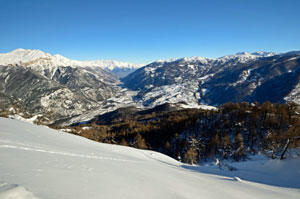
Sestriere ski4. Sestriere, Italy

The second Italian destination to make the top five list, Sestriere, which hosted the World Alpine Championships in 1997, is described by the Post Office as “the bargain choice” among the country’s world-class ski resorts.

Here, the cost of equipment hire, ski passes, ski lessons, meals and drinks comes to £418.85 per person – 73 per cent cheaper than the £725.73 you can expect to pay at Zermatt in Switzerland. So what do you get for your money?

Well, some of the most reliable snow in the Alps (Sestriere is located in the Vialettea region on the French border) and challenging-to-advanced slopes for starters. There’s access to 400km of slopes spread over 146 runs in the Milky Way region, the longest of which stretches for 5km.

Because Sestriere is a purpose-built result, it’s geared up perfectly for skiers and snowboarders. There are almost 3,500 beds to choose from in various accommodation types, while the 40 shops, 30 bars and dozens of restaurants keep visitors entertained.

How to get there: Six airports are relatively close by, but the closest is Turin (90km to the east). From here, it’s a 1hr 40min train journey to Oulx, where buses operate to the heart of Sestriere.
When to go: Mid December to mid April.

> Discover more with IGC’s Sestriere – Claviere – Prali map
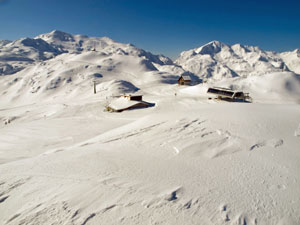
Slovenia ski5. Kranjska Gora, Slovenia

Among the best ski resorts for beginners and young families, Kranjska Gora – located in the Zgornjesavska Valley section of the Julian Alps – also happens to one of the best value.

Not far from the Austrian and Italian borders, Kranjska Gora boasts inescapable Alpine charm and excellent accommodation options, with nine hotels and a plethora of apartments to choose from. Its well-groomed runs stretch for over 30km on the north-facing section of Mount Vitranc, with visitors having the opportunity to try night skiing.

Part of the destination’s appeal is that holidaymakers aren’t limited to a single resort – the more adventurous can head to nearby Planica, a location famed for its ski jumping (the first ski jumping hill was constructed here in 1930; the location of the first jump over 200m in 1994).

According to the Post Office, Kranjska Gora is this winter’s second-cheapest continental ski resort, with the average cost of the above purchases coming to £324.56.

How to get there: Fly to Ljubljana, which is 66km away (a 45-minute drive). Alternatively, fly to Klagenfurt in Austria or Trieste in Italy.
When to go: Mid December to late March.

> Discover more with the Triglav National Park map

Top 5 Watery Walks This Christmas

Tomorrow marks the start of the Christmas holidays, and with a few days to go until the festivities begin in earnest, now’s the time to plan the obligatory family walk. Here’s our top five water-themed suggestions to inspire a festive amble in the English countryside:

Marlow winter1. Marlow

This Buckinghamshire town has the enviable location of being more or less equidistant from London and Oxford, located right on the banks of the River Thames. This is where England’s longest river is at its prettiest, gently flowing through Marlow’s impressive Georgian splendour and under its Grade I-listed suspension bridge, which dates back to 1832. Best explored on a crisp winter’s morning when the frost is beginning to thaw, the beauty of Marlow and the Thames is encapsulated at Higginson Park, which borders the High Street and the riverbank. On the western edge of the park is a designated wetland area; the perfect spot to watch ducks, swans and other waterfowl. You may even be lucky enough to spot a water vole!

> Discover more of Marlow with Discovering Britain’s ‘Tales of a riverbank’ walk

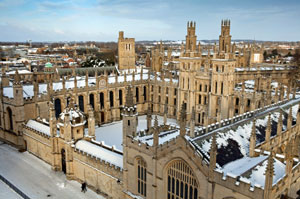
All Souls College Oxford2. Oxford

Approximately 30 miles upstream from Marlow is Oxford, a city famous for its university and riverside location. But relatively few people know that the city of gleaming spires is built on a series of islands, with Oxford also accommodating the River Cherwell, a waterway that joins the Thames south of the city centre. Interestingly, most locals refer to their stretch of the Thames as the Isis, particularly among Oxford’s rowing community (cartographers of old have suggested the Thames should only be referred to as such downstream of Dorchester-on-Thames, where the smaller River Thame and Isis meet). Oxford and its riverbanks are super pedestrian friendly – families can walk in the footsteps of Lewis Carroll from Folly Bridge or explore Bodleian Library, Christ Church and New College – locations from the Harry Potter series of books and films.

> Explore Oxford’s waterways with Discovering Britain’s ‘City of streams and spires’ walk

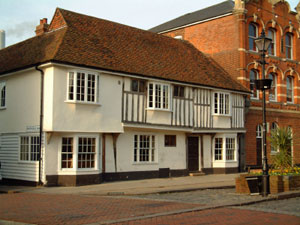
Faversham house3. Faversham

Established on Faversham Creek, this Kent market town’s history can only be described as explosive – after all, it was here that England’s explosives industry was born. Faversham is also at the heart of the country’s hop-growing trade, with its Shepherd Neame Brewery claiming to be the oldest brewery in the world; its roots traceable to 1698. Closer to the town centre is a collection of wonderfully-preserved original medieval houses, particularly along Abbey Street, where its buildings were saved from destruction as recently as 1958. Faversham can be easily explored on foot – from its impressive Victorian station it’s a short stroll to the medieval centre and onwards to the empty expanses of Kent marshland – the inspiration behind Charles Dickens’ Great Expectations.

> Find out more about Faversham with Discovering Britain’s ‘Boats, bangs, bricks and beer’ walk

Leamington Spa4. Leamington Spa

Royal Leamington Spa, to give it its full title, is named after the River Leam – and close to here in 1814 the famous Royal Pump Rooms and Baths were opened. They quickly grew in popularity, with the salty spa water said to cure everything from rheumatism to gout, and to accommodate the new wave of wealthy visitors numerous Georgian townhouses were constructed. It was so loved by the well-to-do crowd that Queen Victoria felt compelled to grant it a Royal prefix in 1838, and indeed she visited the town herself, both as a princess and later as queen. Intersected by the River Leam, its floodplain is adorned by a number of picturesque open spaces and pleasure gardens for Georgian and Victorian ladies and gentlemen, all of which are perfect for exploring.

> Learn more about Leamington Spa with Discovering Britain’s ‘Taking the waters’ walk

Bradford on Avon5. Avon Valley

Aside from its natural beauty, the Avon Valley’s claim to fame is that four types of ground transport can be found there: canal, river, rail and road (the Kennet and Avon Canal is part of the through route between Bristol and London; the Avon Valley Railway attracts 80,000 visitors per year on a three-mile heritage route from Bitton Station, with special Santa routes operating over the festive period). A perfect stop-off on an Avon Valley walk is the village of Saltford, where you can sup a hard-earned glass of mulled wine in one of its four cosy pubs. There’s also a number of old buildings to explore, from the 18th century Old Brass Mill, which is Grade II listed, to Saltford Manor House – England’s oldest continuously-occupied house, dating from 1160.

> Amble along the Avon Valley with Discovering Britain’s ‘Connecting cities’ walk

These walks are just a small selection created by the Royal Geographical Society. Its Discovering Britain project aims to create 100 new walks around Britain that tell the story of our rural and urban landscapes.

A Journey Through Maine

Maine New England HigwayIn his quest to complete The Lower 48, Gregor Swiderek arrived in Maine and discovered a state of pine trees, fishing villages and lighthouses.

Almost exactly five years after my first visit to New England, I landed in Boston again. Logan Airport hadn’t changed at all so I experienced a strange feeling of déjà vu. Fortunately, it quickly ended when I got my rental car and drove straight towards the beautiful state of Maine.

Why Maine? Well, it was one of the last two states among the lower 48 I hadn’t visited yet. More importantly, it’s also the state with the lowest population density east of the Mississippi, and one of the most heavily forested and wildest corners of the eastern United States (it’s called the Pine Tree State for a reason). Add a jagged coastline full of bays, rocky headlands and lighthouses, many wild rivers and lakes, small fishing towns and some of the oldest settlements in the US, and you have a recipe for a truly great holiday.

But I started my tour from the least wild southern section. My first proper stops (not counting the cheap motel on the New Hampshire border) were the lighthouses around Portland. I was heading towards the Portland Head Light (according to Maine travel guides one of the most accessible and convenient to visit lighthouses) when, totally accidentally, I came across two lighthouses at Cape Elizabeth. At first I thought I was in the right place but then one of the locals told me that Portland Head was actually located a couple more miles along the road. In the end it didn’t really matter as all three photogenic lighthouses are scenically located along the short stretch of coast. Portland Head is apparently one of the most photographed lighthouses in the world, while those at Cape Elizabeth are portrayed in several of Edward Hopper’s paintings.

Portland Head LighthousePortland itself is the largest ‘metropolis’ in Maine – a term that’s something of an exaggeration in this case. Sure, its metropolitan area is home to a third of the state population but it is still less than a half a million souls, and fewer than 70,000 of them live in the city proper. There is a nice walkable downtown, offering some good shopping, eating and drinking options but, to be brutally honest, it will never be a major attraction of New England.

Acadia National Park, on the other hand, is one of the gems of this region. Located about 160 miles north of Portland, it’s the only national park in New England. You can drive there in 3.5 hours or you can stop in countless gentrified, touristy towns and villages along the coast – in which case it might take you a week. I chose the fast straight route as I was eager to hit the trail.

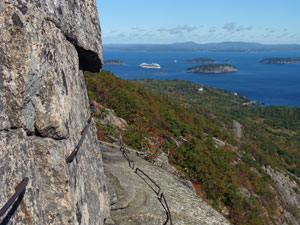
The first hike I chose is called the Precipice Trail and it’s more of a climb than simply a hike. There is even a warning notice at the beginning saying a ‘non technical climbing route’ rather than a hiking trail. Whatever you call it, it is a great fun. In fact, it is one of the best trails I have done in many years. It ascends only about 300 metres but it often does it via a near vertical route, especially near the top. As I said, it is great fun but not for the faint-hearted nor those scared of heights. In many places you will scale exposed rock faces, traverse narrow ledges (luckily with the help of metal bars in the most challenging spots) or climb metal steps fixed to the vertical cliff faces. It definitely shouldn’t be tackled in bad weather or taken lightly. What it does offer, apart from thrill and adrenaline rush, is absolutely amazing views along the way and from the top. For me it is out there, together with Angels Landing trail in Zion NP and Orla Perc trail in the Polish High Tatras, with my best outdoor experiences.

Precipice TrailAfter the climb I chilled out by simply catching some sun and getting lazy on the rocky coast of the Acadia, which is scenic, rough and beautiful.

Acadia NP is very varied and has a lot to offer. Apart from the hikes there are also great cycling routes, running mostly along the car-free carriage roads which you can also tour by the horse carriage instead of bicycle if you are feeling lazy. There are also lakes, woodlands and even a sandy beach. It is a really great national park, especially during the peak foliage season.

My time in Acadia was limited but I couldn’t leave before getting to the highest point in the park, the 470 metres-tall Cadillac Mountain. Apparently, it is also the tallest spot on the whole Atlantic coast of the US. Fortunately for those short of time, and for lazy folks as well, you can drive right to the top of it. It might be sort of cheating but the amazing panorama from the top will kill your guilt in no time.

Driving from the south to the park you will encounter many B&Bs, good restaurants, art galleries and other businesses clearly geared towards the rich folks from Boston or New York City. North of the Acadia the coast of Maine turns much wilder. Gone are the gentrified cute towns and villages as well as (more importantly) most of the cars – especially the slow-moving ones with the Massachusetts and New York plates. This is the coast of hard-working fishing communities, down to earth locals driving pick-up trucks, gas stations selling hunting gear and lobster along the fuel and even some blue collar industrial towns like Bath with its shipyards building destroyers for the US Navy. And crucially, it’s also the land of wide and empty roads running along the coast.

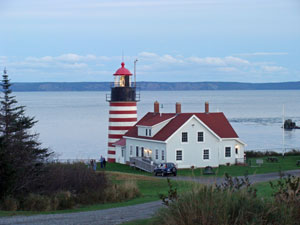
West Quoddy HeadBeing a geographer I couldn’t resist the pull of West Quoddy Head which is the easternmost point in the US mainland as well as the closet place to Europe (and Africa) in the contiguous 50 states. There is a lighthouse (one of only two in the US painted, like in Canada, in red and white stripes to be more visible in snowy conditions), but apart from that there is not much else to see or do. It didn’t matter. I just like such extreme points where you are aware of your location on the map. Usually you can look towards the distant horizon and imagine far lands on the other side of the ocean. A bit disappointingly, from West Quoddy Head you can’t stare towards the horizon as, just off the coast, there is an island blocking any romantic vistas. But that’s Canada, so it didn’t spoil my experience too much. I was still standing on the easternmost bit of Yankee soil.

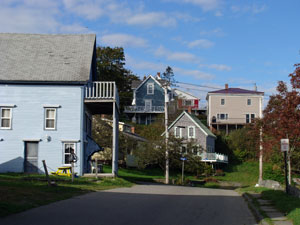
Accordingly I spent the night in the easternmost town of the US, Lubec (incorporated in 1811). With a population of less than 1,400 it was a small place indeed but luckily it still had a decent motel. It was one of the small privately-run establishments which you can find all across America in places too small, or too out of the way, for the big corporate chain hotels. I could skip mentioning it altogether if not for the absolutely fantastic home-baked blueberry muffins for breakfast.

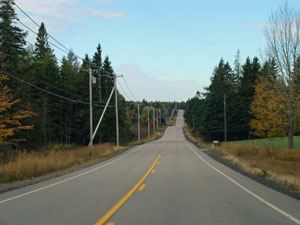
LubecObviously there was only one way from Lubec: west. This time I skipped the coast and headed inland towards the capital of Maine, Augusta. If the coastal road was already quiet it was still nothing comparing to the emptiness of inland Maine. It was almost four hours of relaxing driving, especially as the two-lane highways cutting through the endless forests were practically deserted. But even the interstate highway from Bangor to Augusta was one of the emptiest motorways I have ever driven.

Augusta is a small place but after wandering in the under-populated east of the state for a while it felt much bigger than it actually is. However, the Maine State House was a let-down. It was one of the least impressive state capitals I have seen so far; and believe me, I have visited a fair share of them. But still, I couldn’t resist even just a brief visit inside.

From Augusta I headed towards the next state, New Hampshire, where I arrived in no time via some small local roads for which my map reading skills were really helpful, as New England doesn’t really follow a grid system like other parts of the US do. No, I still don’t use sat-navs. They dumb the journey down and I’m also too stingy to pay for their rental. Besides, map reading is fun (even if you have to do it on a steering wheel) and I wouldn’t change it to listening some annoying voice leading you like a child; no way.

I might have visited Maine just because it was on my list of not yet visited states but I’m glad I did. It is a truly fascinating place and I can recommend it to anyone who likes travelling on the slightly more wild and unusual side.

> Discover more of Maine with our range of New England maps and travel guides.

Five Ways to Get to Know Minangkabau

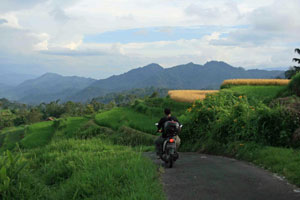
Minangkabau CountrysideVenetia Rainey spent a week getting to know the Minangkabau people, an indigenous group based in the Minangkabau Highlands of West Sumatra, Indonesia.

The world’s largest matriarchy is surprisingly elusive.

After a bit of research online, I was convinced that this Indonesian female-ruled society would instantly become apparent, yet by the end of a week spent exploring the picturesque highlands of West Sumatra, I felt as if I had barely scratched the surface. Continue reading Five Ways to Get to Know Minangkabau