 Venetia Rainey spent a week getting to know the Minangkabau people, an indigenous group based in the Minangkabau Highlands of West Sumatra, Indonesia.
The world’s largest matriarchy is surprisingly elusive.
After a bit of research online, I was convinced that this Indonesian female-ruled society would instantly become apparent, yet by the end of a week spent exploring the picturesque highlands of West Sumatra, I felt as if I had barely scratched the surface.
So for those who want the inside track on getting to know the Minangkabau, here are five must-dos.
1. Padang cuisine
Named after the region’s capital, Padang food is famous throughout south-east Asia for being downright delicious. Instead of menus, waiters bring a variety of small dishes to choose from, including tender fillets of fish, vegetable stews, fried chicken and the main event, beef rendang. Cooked in coconut milk and spices for several hours, rendang consists of dark brown hunks of meat that waver between spicy and salty, but are always mouth-wateringly moreish.
If you’re in Padang try Pagi Sore on Jalan Pondok, while in Bukittingi the undisputed king of Padang food is Selamat on Jalan Ahmad Yani.
 2. Minangkabau ‘Village’
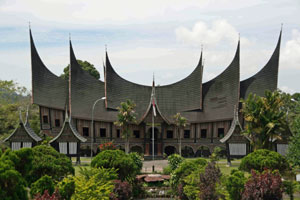
For some background reading, you can’t do better than the Minangkabau ‘Village’ situated between Padang and Bukittingi. It’s less a village and more a museum/library, but the main building is a stunning (and enormous) example of traditional Minangkabau architecture. The distinctive roof, with its soaring pointed tips, is supposed to mimic buffalo horns and serve as an indication of the resident family’s wealth.
Some people believe the roofs also symbolise protection against the tribe’s enemies, due to a popular legend about the Minangkabau winning a buffalo fight against an aggressive Javanese king. This is how they gained their name, which means ‘the victorious buffalo’.
The walls are lined with photos and cabinets of photos from decades ago and this is one of the few places you can get in-depth English information on the Minangkabau, making it easy to lose a few hours here.
3. A very modern woman
For a chat with a modern Minangkabau woman, it’s time to grab a coffee. Umul Khaia runs her own women-only business producing organic luwak coffee in the village of Batang Palupah, just outside Bukittingi. Most people come through to see the world’s largest flower, the Rafflesia, but Umul has her own claim to fame: she is the only female owner of a coffee business in the whole of Indonesia.
She’s a devout Muslim, unapologetically single and proud of her traditional heritage, making her a perfect example of the complex and evolving identity of Minangkabau women. Further, her coffee is made from undigested coffee beans found in the droppings of civets (a sort of wild cat), making her tiny outpost worth a visit in its own right.
4. The plate dance
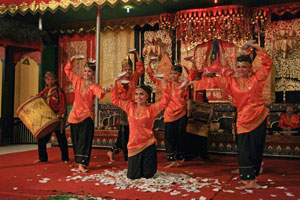
If you time it right, you’ll be in Bukittingi on Sunday evening, when Medan Nan Balinduang puts on a programme of traditional Minangkabau dance. Ten different dances are performed by young locals in colourful authentic costumes, with explanations of the dances given periodically. The final performance sees the dancers jump up and down on broken shards of china and glass, an expression of gratitude to God normally expressed at harvest time. Accompanying music consists of singing, bamboo flutes and talempong gong-chimes, making for an atmospheric night.
As seeing an actual Minangkabau wedding is fairly rare, this is an excellent insight into the elaborate rituals involved in the tribe’s ceremonies.
5. The real Minangkabau village
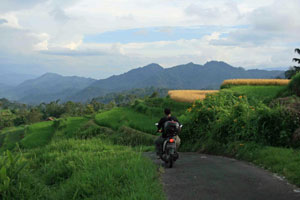
Finish off your trip by renting a motorcycle/car and driving past endless undulating paddy fields to find the oldest house in the region’s oldest village, Pariangan. This is traditional Minangkabau architecture at its best and all in a wonderfully bucolic setting. It’s also home to the president of the all the Minangkabau people.
Pop into the small, very friendly museum to dress up in traditional Minangkabau wedding outfits and learn about the history of the village. Just outside you can admire the clan’s ancient meeting spot with its stone chairs sunk into the ground.
> Discover more of West Sumatra with IMTB Sumatra Map or the Nelles Verlag Sumatra Map.
> Explore more of Indonesia with our range of travel guides and maps.