Linz, Austria

Austria’s third largest city, Linz, is set to become big, as, along with Vilnius in Lithuania, it was 2009’s European Capital of Culture.

Linz sits astride the Danube river in Upper Austria, towards the Czech Republic border, and roughly halfway between Salzburg and Vienna. Long over-shadowed by its more traditional big sisters, Linz was overdue recognition as a tourist destination.

With a thriving economy, a diverse cultural scene, and over 60% of the city made up of green spaces, the quality of life here is high, making it perfect for a weekend break or stopover on a tour of Austria.

From its Baroque architecture and its medieval city centre, to its buzzing arts scene, Linz has plenty to explore…

Top 5 sights and attractions

Pick up the Linz City Ticket if you plan to see lots of sights, as it offers savings on entrance fees to 12 of the city’s attractions.

The City Centre

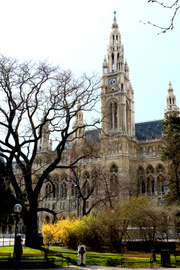
Wander round Linz’s compact old city centre and you’ll come across Baroque buildings, intriguing museums, arcaded courtyards, rococo churches and the stunning neo-gothic cathedral, to name but a few attractions. The main square is Austria’s largest medieval square and is the heart of the city, with its pavement cafes and street performers.

Lentos Art Museum   Lentos Museum on the Danube River, Linz, Austria

This glass-and-steel architectural landmark, designed by Zurich architects Weber & Hofer, showcases a world-class collection of contemporary art including works by Warhol, Schiele, Klimt and Kokoshka.

Danube Park

The city’s main green space, by the river and containing modern sculptures and well-tended gardens.

Ars Electronica Centre

‘The museum of the future’ is an interactive media arts centre where you can experience anything from diving into the depths of the Danube to flying above the city.

Postlingerberg

Hike, or ride the world’s steepest mountain railway up to this peak (537m) for the views over Linz, or to explore a grotto of Grimm’s fairytale characters at the summit.


Top events in Linz

Pflasterspektakel – International Street Art Festival – is one of the summer highlights that turns the entire city centre into a stage for street art.

Ars Electronica holds an annual media art festival in early September.

Brucknerfest – Classics with a Difference musical festival in Donau Park, during September-October. And the huge open-air event Klangwolke (‘Sound Cloud’) follows.


Did you know..?

Baroque architecture, Linz, AustriaHistorical former residents include astronomer Johannes Kepler, composer Anton Bruckner and poet Adalbert Stifter, while Mozart’s Linzer Symphony has immortalised the name of the town in which it was composed.

Don’t forget to sample some Linzer Torte (the distinctive brown crust tart filled with red fruit jam) in its hometown!


Where to stay

There is variety of accommodation for all budgets – from traditional pensions to boutique hotels, take your pick from a good guidebook.

How to get there

Hourly Intercity and Eurocity trains connect to Salzburg and Vienna, and from there to all major European capitals. Plan your journey on www.seat61.com and www.oebb.at/en – Austrian national rail’s website.

The Blue Danube Airport is easily accessible by bus or shuttle from the city. Ryanair flies to Linz from London Stansted. Other airlines fly to Vienna or Munich with connecting flights to Linz, or you can easily drive or take the train between these cities.

Resources

Planning a trip to Linz, or want to find out more about the city? Here at Stanfords we stock the only English-language guide to the city currently available – the Linz-Donau Travel Guide and Lonely Planet’s Austria have sections covering Linz, and you can plan other trips in the country. For a good, clear street plan, use Freytag & Berndt’s Linz map.

Author: Rachel Ricks

USA – Sierra Nevada

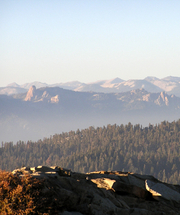
California’s Sierra Nevada is one of my favourite mountain ranges. They rise abruptly from a flat valley at sea level to 14,500 feet in a matter of miles. It is one of the most dramatic mountain ranges and only a few mountain roads cross them.

I had the chance to spend a few months in Sequoia National Forest while working at a mountain camp for families. Sequoia National Forest borders the famous Sequoia National Park and shares the same amazing landscape and nature. Our camp was set at the elevation of 7,500ft, and to get there I had to go to Fresno first.

Fresno is a major city in the Central Californian Valley. It is an amazingly unremarkable place. My Californian friends were saying that it is one of the most boring places in the whole California; I think they were right. The city is in the centre of a massive area of intensive agriculture on irrigated land and that’s about it. If that wasn’t enough to send you in another direction, it also has a very unpleasant climate – days with temperatures over 40°C are very common in the summer. It is good only as a shopping base for supplies. Driving Towards Fresno, Central Californian Valley. Photo: Gregor Swiderek

But after half-an-hour’s drive west on Hwy 180, the landscape changes dramatically. The road starts a steep and curvy climb which lasts another hour before reaching the elevation of the camp. While driving you can see the changes of climate and vegetation, as well as the altitude. On the valley floor apart from the lush greenery of irrigated land there is only semi desert vegetation and dry grass. Later comes brush with juniper and Pinyon pine. At the elevations between 4,500 and 6,500ft there is a zone where the giant sequoias grow. But they grow in isolated groves far from the main road; instead you see mostly Ponderosa Pine. Finally, the dominant vegetation at the elevation of our camp was a variety of the evergreen coniferous forests with Lodgepole Pine, Red Fir and Mountain Hemlock. It is a very nice environment indeed.

At this high elevation, the climate was much more pleasant than in Fresno; it was still warm but not too hot. It was also a dry (for the first two and a half months there was no single drop of rain) – it is the perfect place for a vacation camp.

Entering Giant Sequoia National Monument. Photo: Gregor Swiderek The institution of the summer camp is well established in the USA. Every year millions of kids go for week or two to spend some time in the natural environment – most of the camps are located in the mountains, forests or by lakes. Our camp was a bit unusual because it was designed for kids as well as their parents. The idea is that while kids are playing supervised under the instructors, parents have time to relax. Of course they can join in with play and activities if they wish. Most of the families spent one week at the camp each summer and some of these families come back year after year, and some of the parents have been here as kids.

The camp is great fun – there are plenty of activities – horse riding, mountain biking, archery, wave boarding on the small lake, a barbeque almost every day, astronomy classes after dark or singing around a giant camp fire. But probably the best activities (and one of the most popular) are excursions involving interesting hikes. Usually such a trip involves an off-road drive (which is usually fun in itself) to the remote trailhead and then hiking. We had good experienced guides who could explain to us all the local ecology and geography. One of the best excursions was a trip to the isolated sequoia grove: Redwood Mountain Grove. It involved a long bumpy drive and a few miles’ trek. But the reward was a forest of giant sequoias – not a one tree, not two, but a whole forest. It looked more magical than scenery from the Lord of the Rings. Because of the isolation it was completely empty; there wasn’t a single tourist apart from us. You can of course find easily accessible sequoias next to the main roads but they are usually lonely trees, fenced off and surrounded by busloads of tourists.

Another great option is to go on some of the longer hikes above the tree line, especially the trek from Lodgepole Village area to Heather and Emerald lakes, which offers great views and at the end you can rest on the banks of a clean alpine lake. On the way you can branch off and instead of the lakes go to the top of Alta Peak (11,204ft) but this option requires good legs and a lot of stamina. A bit less challenging is a hike to the top of Mitchell Peak (10,365ft). The view from the top is great but the hike itself is a bit boring compared to the Alta Peak ascent or the Emerald Lake hike.

Buck Rock Fire Lookout. Photo: Gregor Swiderek A great way to explore Sequoia National Forest is riding mountain bikes (note that they are prohibited in the neighbouring national parks). One of the best excursions I did was a trip to the Buck Rock fire lookout. It was a very slow and tiring climb using narrow back roads; at this elevation mountain biking (and any physical activity in fact) is much more difficult than at sea level.

However, there was a reward at the end – the fire lookout is perched at the top of rock pinnacle and offers an amazing view from its 8,500ft elevation. It is understandable because its purpose is to provide an observation platform for the forest officials who look for early signs of forest fires. It is a small building (maybe 10ft sq) with a bed, radio and basic supplies. To get there you have to climb 172 steel steps attached to the rock. It is a basic and lonely place to work but what a view it offers; I would work for free just to be able to stay there.

The way back from the fire lookout is much easier than climbing up there. It is a fast and adrenalin-pumping downhill ride on wide gravel forest roads. And what a ride it is. I can’t remember much of the scenery because I was too busy braking and generally trying to stay alive – great fun for those who are not scared of speed.

You can’t miss horse riding – it is, after all, a quintessential part of the American West experience. And apart from that, it is simply great fun to visit an area on horseback. Of course during the three months’ stay at the camp we visited all the touristy highlights too. Such as the General Sherman or General Grant trees – both are absolutely gigantic sequoias, some say they are the biggest living things on the planet. There is also the famous drive-through fallen sequoia (Tunnel Log) or the old house made inside of the log of another fallen sequoia (Tharp’s Log), all easily accessible off the Hwy 180.

If you don’t want to go off the main road to fire lookouts, I recommend a visit to the Moro Rock. It is a granite pinnacle next to the main highway and offers a great view. You just need to do a short (but quite steep, with 400 steps) climb from the parking lot.

Sunset over the Sierra Nevada. Photo: Gregor Swiderek It was really one of my best summer vacations. I was there to work but in such a place work and play blend together easily. For example, staff dines together with the guests, and we could also take part in all the activities in our off-duty time. Most of the staff members were students of Californian colleges or foreigners attending various student programs (like me). We lived in wooden cabins between the trees, not far from the guests’ area (but far enough to have some sort of privacy). The food was good, the weather even better – almost paradise. But the best part of the camp was an open-air Jacuzzi. Especially after dark (when all the kids went to bed) with a view of the stars and a drink in your hand, it was an ultimate experience – the best after a whole day spent hiking, biking or horse riding. Highly recommended. Sierra Nevada should be on the list of things to see for everyone who is going to visit California. For me it is actually the best part of this remarkable state.

I recommend Lonely Planet’s guide to Yosemite, Sequoia & Kings Canyon National Parks, the Sequoia & Kings Canyon Outdoor Recreation Map by National Geographic and Kings Canyon High Country Trail Map, by Tom Harrison Maps. The Moon Handbook to Northern California covers the area as well.

Author: Gregor Swiderek

Browse our collection of maps, guides and travel literature:
> USA travel guides
> USA road maps and atlases
> Travel literature inspired by the USA

What Stephen Fry Did & Saw In America

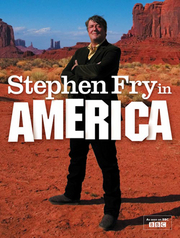
Stephen Fry, the much-loved comedian, actor and writer, embarked on an epic journey across the USA for his TV series and book – Stephen Fry in America.

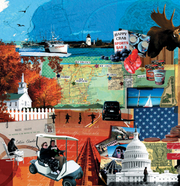
Visiting each of America’s 50 states, Fry sets out to discover how such a huge diversity of people, cultures, languages, beliefs and landscapes combine to create such a remarkable nation. Here is his list of some of the things he got up to in the US…

1. Lobster fishing in Maine.

2. Electioneering with Mitt Romney for the New Hampshire primaries.

3. Went to a real witches’ ball at Salem, Massachusetts, on Halloween.

4. Sailed an Admiral Cup winning yacht in Rhode Island.

5. Went down into a nuclear submarine in Connecticut.

6. Mixed my own Ben and Jerry’s flavour in Vermont.

7. Hung out with ancient toothless wise guys from the old days in the borough of Queen’s, New York; drove Sting down Broadway.

8. Learned to deal Blackjack in the Trump Taj Mahal casino in Atlantic City, New Jersey.

9. Zoomed round Washington DC in a Segway.

10. Went to the Veteran’s Day ceremony in Arlington, Virginia with VP Dick Cheney.

11. Sold a thoroughbred yearling and got insanely ratted in a bourbon distillery in Kentucky.

Stephen Fry Lobster Fishing
Stephen Fry lobster fishing in Maine, USA. Copyright: Stephen Fry and West Park Pictures Ltd 2008
12. Picked with Bluegrass hillbillies and found myself in a garden full of dead bodies in Tennessee. Was appointed an official duckmaster in Memphis, an honour I share with Kevin Bacon and Oprah Winfrey.

13. Went ballooning over the Smoky Mountains in North Carolina.

14. Went to a gay bar in Georgia and watched a drag act … “Honey, there’s more of us than you’d believe.”

15. Watched a college football game in Alabama that was bigger than the FA Cup final. 100,000 in the stadium, two hundred thousand crowded outside it.

16. Sat in court in Montgomery as families pleaded for their children’s parole.

17. Swam with dolphins and danced with snowbirds in Florida.

18. Marched with the Zulus on Mardi Gras in New Orleans, was blessed at a voodoo ceremony (or possibly cursed). Witnessed the horrors of Hurricane Katrina in the Lower Ninth Ward.

19. Went oystering down in the gulf of Mexico and farmed with murderers and lifers at the Angola state penitentiary in the rest of Louisiana.

20. Canoed along the Mississippi in Arkansas.

21. Sat and talked about the blues with Morgan Freeman in Clarksdale, Mississippi.

22. Hung out in the ice and snow amongst the homeless in St Louis, Missouri.

23. Had my brain examined by a Maharishi psychologist at the Maharishi University in Iowa. Went nuts trying to find alcohol in Vedic City, Iowa, a city founded by followers of the Maharishi.

24. Rode with the fire brigade in Elkhart, Indiana. Looked a dick in the uniform. Breathing apparatus got stuck on me.

25. Rode a Model T-Ford around Henry Ford’s Greenfield Village, Michigan.

26. Discovered the South Side of Chicago with blues legend Buddy Guy.

27. Cast and buffed and dipped and polished a genuine Oscar at the factory where they are made in Chicago.

28. Milked sheep in Wisconsin and was pulled in an Amish sled.

29. Went ice-fishing in Minnesota and caught a fish.

30. Strode around with Ted Turner on his Montana ranch and inspected his herd of buffalo.

31. Helicoptered over the Canadian border with the National Border Patrol.

32. Poured water over Idaho to demonstrate the nature of the continental divide.

33. Was pulled by huskies in Wyoming.

34. Ate German food at a diner in Bismarck, North Dakota.

35. Stayed on the Lakota Sioux reservation in South Dakota and drummed with the young braves.

36. Went trucking in Nebraska.

37. Went down a missile bunker in Kansas.

38. To a rodeo in Oklahoma.

39. Attended an Indian Pow Pow in Denver and caused an explosion on the slopes at Aspen, Colorado.

40. Drove along the Rio Grande with Border Patrol in El Paso, Texas and watched Mexicans trying to smuggle themselves over the border.

41. In New Mexico went to Los Alamos where the first Atom bomb was made; ballooned along a canyon and went inside an earth ship.

42. Barbecued with the Navajo deep inside Monument Valley and had a Navajo weaving lesson.

43. In Nevada played a spy game in Las Vegas and found myself in a legal brothel outside Reno talking to well breasted women.

44. Flew in a WW2 B17 bomber from Phoenix to Tucson, Arizona and played a scene in a western in the old Tucson studios. Got shot. Death scene lasted 12 minutes, nearly a Tucson record. Beaten by Deforest Kelley, later Dr McCoy, in a B western.

45. Drank wine in California’s Napa Valley, chewed the fat with Jony Ive, designer of the iMac, iPod and iPhone. Shot a .44 magnum in Ukiah, California, guest of the sheriff.

46. Raided a marijuana farm in Mendocino County.

47. Camped out in a place known to be frequented by Big Foot, the Sasquatch in Grant’s Pass, Oregon.

48. Swam with sea otters and seals in Seattle, Washington. Said goodbye to the taxi.


Buy your copy of Stephen Fry in America
49. Went fishing in and looking for bears in Kodiak, Alaska. Went north to the Arctic Circle and skidoo-ed with some Eskimos.

50. Went to an observatory in the tallest mountain in the world in Hawaii. Canoed like in the title sequence of Hawaii 5 O. Flew over lava field and watched new bits of America, five acres a week, being made as the molten lava hit the sea. Swam with sharks, flew a microlite around the islands.

And more, so so so much more you wouldn’t believe.

Get your copy of Stephen Fry in America.

Images: Copyright: Stephen Fry and West Park Pictures Ltd 2008; photographs by Vanda Vucicevic; map and artwork collages West Park Pictures and Sarah Hanson 2008

Author: Stephen Fry

Browse our collection of maps, guides and travel literature:
> USA travel guides
> USA road maps and atlases
> Travel literature inspired by the USA

Stephen Fry in America – The Introduction

Here, Stephen Fry gives us an entertaining introduction to the motives behind his exploration of America for his latest TV series and book – Stephen Fry in America.

I was so nearly an American. It was that close. In the mid-1950s my father was offered a job at Princeton University – something to do with the emerging science of semiconductors. One of the reasons he turned it down was that he didn’t think he liked the idea of his children growing up as Americans. I was born, therefore, not in NJ but in NW3.

I was ten when my mother made me a present of this momentous information. The very second she did so, Steve was born.

Steve looked exactly like me, same height, weight and hair colour. In fact, until we opened our mouths, it was almost impossible to distinguish one from the other. Steve’s voice had the clear, penetrating, high-up-in-the-head twang of American. He called Mummy ‘Mom’, he used words like ‘swell’, ‘cute’ and ‘darn’. There were detectable differences in behaviour too. He spread jam (which he called jelly) on his (smooth, not crunchy) peanut butter sandwiches, he wore jeans, t-shirts and basketball sneakers rather than grey shorts, Airtex shirts and black plimsolls. He had far more money for sweets, which he called candy, than Stephen ever did. Steve was confident almost to the point of rudeness, unlike Stephen who veered unconvincingly between shyness and showing off. If I am honest I have to confess that Stephen was slightly afraid of Steve.

As they grew up, the pair continued to live their separate, unconnected lives. Stephen developed a mania for listening to records of old music hall and radio comedy stars, watching cricket, reading poetry and novels, becoming hooked on Keats and Dickens, Sherlock Holmes and P G Wodehouse and riding around the countryside on a moped. Steve listened to blues and rock and roll, had all of Bob Dylan’s albums, collected baseball cards, went to movie theatres three times a week and drove his own car.

Stephen still thinks about Steve and wonders how he is getting along these days. After all, the two of them are genetically identical. It is only natural to speculate on the fate of a long-lost identical twin. Has he grown even plumper than Stephen or does he work out in the gym? Is he in the TV and movie business too? Does he write? Is he ‘quintessentially American’ the way Stephen is often charged with being ‘quintessentially English’?

All these questions are intriguing but impossible to settle. If you are British, dear reader, then I dare say you too might have been born American had your ancestral circumstances veered a little in their course. What is your long-lost nonexistent identical twin up to?

Most people who are obsessed by America are fascinated by the physical – the cars, the music, the movies, the clothes, the gadgets, the sport, the cities, the landscape and the landmarks. I am interested in all of those, of course I am, but I (perhaps because of my father’s decision) am interested in something more. I have always wanted to get right under the skin of American life. To know what it really is to be American, to have grown up and been schooled as an American; to work and play as an American; to romance, labour, succeed, fail, feud, fight, vote, shop, drift, dream and drop out as an American; to grow ill and grow old as an American.
Stephen Fry eating lobster in Maine, USA

For years then, I have harboured deep within me the desire to make a series of documentary films about ‘the real’ America. Not the usual road movies in a Mustang and certainly not the kind of films where minority maniacs are trapped into making exhibitions of themselves. It is easy enough to find Americans to sneer at if you look hard enough, just as it is easy to find ludicrous and lunatic Britons to sneer at. Without the intention of fawning and flattering then, I did want to make an honest film about America, an unashamed love letter to its physical beauty and a film that allowed Americans to reveal themselves in all their variety.

Anti-Americanism is said to be on the rise around the world. Obviously this has more to do with American foreign policy than Americans as people. In a democracy however, you can’t quite divorce populace from policy. Like any kind of racism there are the full-frontal and the casual kinds.

I have often felt a hot flare of shame inside me when I listen to my fellow Britons casually jeering at the perceived depth of American ignorance, American crassness, American isolationism, American materialism, American lack of irony and American vulgarity. Aside from the sheer rudeness of such open and unapologetic mockery, it seems to me to reveal very little about America and a great deal about the rather feeble need of some Britons to feel superior. Alright, they seem to be saying, we no longer have an Empire, power, prestige or respect in the world, but we do have ‘taste’ and ‘subtlety’ and ‘broad general knowledge’, unlike those poor Yanks. What silly, self-deluding rubbish! What small-minded stupidity! Such Britons hug themselves with the thought that they are more cosmopolitan and sophisticated than Americans because they think they know more about geography and world culture, as if firstly being cosmopolitan and sophisticated can be scored in a quiz and as if secondly (and much more importantly) being cosmopolitan and sophisticated is in any way desirable or admirable to begin with. Sophistication is not a moral quality, nor is it (unless one is mad) a criterion by which one would choose one’s friends. Why do we like people? Because they are knowledgeable, cosmopolitan and sophisticated? No, because they are charming, kind, considerate, exciting to be with, amusing… there is a long list, but knowing what the capital of Kazakhstan is will not be on it. Unless, as I repeat, you are mad.

The truth is, we are offended by the clear fact that so many Americans know and care so very little about us. How dare they not know who our Prime Minister is, or be so indifferent as to believe that Wales is an island off the coast of Scotland? We are quite literally not on the map as far as they are concerned and that hurts. They can get along without us, it seems, a lot better than we can get along without them and how can that not be galling to our pride? Thus we (or some of us) react with the superiority and conceit characteristic of people who have been made to feel deeply inferior.

I do not believe, incidentally, that most Britons are anti-American, far from it. Many are as fascinated in a positive way by the United States as I am, and if their pride needs to be salvaged by a little affectionate banter then I suppose it does little harm.

So I wanted to make an American series which was not about how amusingly un-ironic and ignorant Americans are, nor about religious nuts and gun-toting militiamen, but one which tried to penetrate everyday American life at many levels and across the whole United States. What sort of a design should such a series have? What sort of a structure and itinerary? It is a big country the United States and surely …

The United States! America’s full name held the clue all along, for America, it has often been said, is not one country, but fifty. If I wanted to avoid all the clichés, all the cheap shots and stereotypes and really see what America was, then why not make a series about those fifty countries, the actual states themselves? It is all very well to talk about living and dying, hoping and dreaming, loving and loathing ‘as an American’, but what does that mean when America is divided into such distinct and diverse parcels? To live and die as a Floridian is surely very different from living and dying as a Minnesotan? The experience of hoping and dreaming as an Arizonan cannot have much in common with that of hoping and dreaming as a Rhode Islander, can it?

So, to film in every state. I had a structure and a purpose. It suddenly seemed so obvious and so natural that I was amazed no British television company had ever done it before. But how would I get about? I often drive around in a London taxi. The traditional black cab is good and roomy for filming in and perhaps the sight of one braving the canyons, deserts and interstate highways of America could become a happy signature image for the whole journey. A black cab it would be.

There is no right tempo for a project like this. The whole thing could be achieved in two weeks by someone who just wanted to tick off the states like a train-spotter, or it could be done over the course of years, with great time and attention given to the almost infinite social, political, cultural and physical nuances of each state. The pace at which my taxi and I zipped along provided me not with definitive portraits but with multiple snapshots of experience, which I hope when taken together will cause a bigger picture of the country and its fifty constituent parts to emerge.

Between these pages I have been more anxious to convey the experience than to interpret it – in other words, while this is a book about a journey, it does not presume to draw conclusions. I would not dare to suggest that my trip, though as exhausting and exhaustive as we could make it, has granted me a definitive insight into so complex and gigantic a nation as America, nor even a definitive insight into each state. I do hope however, that it will communicate the scale of the nation, the diversity, depth of identity and wealth of pride that prevails in every one of its fifty distinct states. I hope too that it will fill in some gaps for those of you, who – like me – might have been rather unsure where Wisconsin, say, or Nebraska exactly fitted on the map, who wanted to know a little more about the Deep South, the Heartland, New England, the Pacific Northwest, the Delta and the Great Lakes, the Rocky and the Smoky Mountains, the wide Mississippi and High Plains and the people who live out their lives in these remarkable places. You can, of course, use this book as a quick reference when you need to remind yourself where Vermont is, or what the state capital of Kansas might be and you can try your hand at the two little quizzes I have included. If you use a gentle pencil to fill in your answers, then others can have a go too…

Having said that this book presumes to draw no conclusions, I will offer this: the overwhelming majority of Americans I met on my journey were kind, courteous, honourable and hospitable beyond expectation. Such striking levels of warmth, politeness and consideration were encountered not just in those I was meeting for on-camera interview; they were to be found in the ordinary Americans I met in the filling-stations, restaurants, hotels and shops too.

If I were to run out of petrol in the middle of the night I would feel more confident about knocking on the door of an American home than one in any other country I know – including my own. The friendly welcome, the generosity, the helpfulness of Americans – especially, I ought to say, in the South and Midwest – is as good a reason to visit as the scenery. Yes, Americans are terrible drivers (endlessly weaving between lanes while on the phone, bullying their way through if they drive a big vehicle, no waves of thanks or acknowledgement, no letting other cars into traffic), yes they have no idea what cheese or bread can be and yes, strip malls, TV commercials and talk radio are gratingly dreadful. But weighing the good, the kind, the original, the enchanting, the breathtaking, the hilarious and the lovable against the bad, the cruel, the banal, the ugly, the crass, the silly and the monstrous, I see the scales coming down towards the good every time.

If you are an American you will, I hope, accept my apologies for such statements of the obvious, such errors of fact and judgment, such generalisations and misapprehensions as will be painfully evident to you, privileged as you are with that almost unconscious knowledge and instinctive understanding of your native state and nation that comes with citizenship. Human nature, after all, dictates that you turn straight to the entry in this book that covers your own state and you will doubtless find that your home town has been ignored and that I have passed over all the ingredients you regard as essential in the make-up, character and identity of your state and this might poison your mind against my judgement, My eyes, those of an outsider looking in, are bound to miss and to misinterpret. As it happens, I enjoy reading impressions of Britain written by visitors to our shores, the mistakes and misreadings only add to the pleasure and often make me think about my country in new ways, so perhaps my sweeping inaccuracies and dumb failures to grasp the essentials can be taken in that light, as revealing rather than obscuring. Sometimes the spectator sees more of the game. In any event, few if any Americans I met in my travels had ever visited all fifty states, or anything close to that number, so perhaps even you will find something new here.

There is one phrase I probably heard more than any other on my travels: “Only in America!”

If you were to hear a Briton say “Tch! only in Britain, eh?” it would probably refer to something that was either predictable, miserable, oppressive, dull, bureaucratic, queuey, damp, spoil-sporty or incompetent – or a mixture of all of those. ‘Only in America!’ on the other hand, always refers to something shocking, amazing, eccentric, wild, weird or unpredictable. Americans are constantly being surprised by their own country. Britons are constantly having their worst fears confirmed about theirs. This seems to be one of the major differences between us.

We began filming the series in Maine in late September 2007 and finished in Hawaii in the first week of May, 2008.

At 6.45am on my very first morning I was sitting in the WaCo Diner, which styles itself ‘America’s east-most dining-room’. Marvelle prepared a Seafood Scramble for me while her colleague Darna replenished my coffee cup for the third time. Endless free refilling or ‘bottomless coffee’ as they call it is the norm in diners all across the United States. How outraged Americans are when they come to Europe and find themselves charged for each cup. Anyway, the television at the end of the counter was running a commercial for a local telecoms company. And that is where I heard a refrain that, mutatis mutandis, followed me over the next eight months as I travelled from sea to shining sea: ‘In Maine we don’t always follow the rules. We sometimes make our own. In Maine we think different.’

Those words, surely somewhat overblown in the context of a television advertisement for a local phone network, confirmed my suspicions about American statal pride. ‘We think different in Tennessee’, ‘South Dakotans march to a different drum’, ‘We don’t follow the pack in New Mexico’, ‘I guess you can call us Missourians mavericks’… and so on.

We all like to think ourselves different, ‘I’m unconventional like everybody else,’ as Wilde once almost said, but it seems particularly important to Americans to remind themselves of their separateness, their uniqueness, their rebel spirit and they do it, not so much as a nation, but state by state.

And which of the states is my personal favourite? I have been asked that a great deal and I have yet to come up with a smart, snappy answer. A combination of Montana, northern California, Arizona, Maine and Alaska would be pretty impressive. But I have left out Utah, Wyoming and Massachusetts and where are Vermont and Kentucky? Am I saying I didn’t like Pennsylvania and South Carolina? Oh dear. Without the loyalty that comes from being actually born in one of the states it seems impossible to choose between them. I could live in most of them perfectly happily. Living the life I do, I would have to make my choice according to conveniences like proximity to a major American city. Thus to have Chicago, Boston, New Orleans, San Francisco or New York within reach would tilt the balance away from Montana, Arizona and Maine, for example. Yet I could live happily in any of those three if I were to retire from the kind of work that makes access to a large urban centre necessary.

As the taxi and I travelled around America I pictured myself in an adobe on the edges of the Saguaro Park outside Tucson, Arizona, in an artfully luxurious beachfront shack on the New England coast, in a Colorado condo in the shadow of the Rockies, in an Italianate villa in the Napa Valley, in a gracious antebellum residence in the lowlands of South Carolina, in a modern glass-fronted creation built into the hillside overlooking Puget Sound in Seattle, Washington, in a Ted Turner-style ranch house in Montana, in an elegant townhouse in a historic square in Savannah, Georgia or in a traditional clapboard, clinker-built home with a view over Chesapeake Bay, Maryland. Any one of those would suit me fine.

Damn, I was lucky to be able to do what I did. I hope you find in the pages to come information and experience which will encourage you to think again about America. Maybe you will even consider following in my tyre-treads on your own trip of a lifetime. Take your own cheese.

Epilogue

Fifty states. Fifty cultures, societies, accents, cuisines, landscapes and more. I shall never be able to think of America in quite the same way again. I cannot claim to have done more than scratch the surface of this enormous land, but the scope of my adventures and the variety of people I have met have convinced me that it is almost as meaningless to call someone American without specifying their state as it is to call them European without specifying their country. The great metropolitan areas stand on their own as unique entities, but journeying through the rest of the United States I found that statehood mattered and that locality and terror, as the French would say, seared its brand into everything and everyone.

I loved America before this trip and I love it now more than ever. The obvious characteristics that we celebrate and bemoan – the brashness, the vulgarity, the worship of money, the gun obsession, the distressing religiosity, the ignorance of the rest of the world, the deafness to linguistic nuance, the lack of banter, the whining self-regard, the blame culture, the junk food and the strip malls – yes, these are all to be found, but alongside we encounter the hope, the self-belief, the optimism, the warmth, consideration, kindness, sharpness of wits, will power, pride, wry self-awareness, independence, openness, generosity and charm. There is nothing you and I can observe about America that most Americans haven’t observed for themselves. I met very few fools on my travels, save perhaps the British I encountered who thought themselves naturally superior: I still shiver with embarrassment at the memory of their imbecile arrogance. America is not perfect, and I do not love Britain any less for loving America more. As all travellers know, the experience of a foreign country teaches you about your own.

See Stephen Fry’s list of things he did in America.

Get your copy of Stephen Fry in America.

Images: Copyright: Stephen Fry and West Park Pictures Ltd 2008; photographs by Vanda Vucicevic.

Author: Stephen Fry

Browse our collection of maps, guides and travel literature:
> USA travel guides
> USA road maps and atlases
> Travel literature inspired by the USA
England – Cotswolds

The CotswoldsI was feeling frazzled and needed a quick, late-summer break, somewhere non-taxing and easy on the eye. Flicking through my England guidebook, the page fell open on the Cotswolds, and I only needed to see the words ‘lush rolling hills and picture-postcard villages’ to book a hire car and start packing my rucksack.

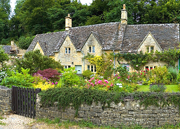
An easy two-hour drive from central London and we were sweeping into the heart of the Cotswolds. Our first stop had to be one of the most famous, and most visited of the villages: Bourton-on-the-Water. Several low bridges cross the shallow river that runs through the centre of the village, earning it the imaginative nickname: the ‘Venice of the Cotswolds’. We spent a happy morning taking photos of the picturesque river, its bridges, and the honey-hued cottages too cute to be true that line every street.

We didn’t think it could get more picture-perfect until we reached the nearby villages of Upper and Lower Slaughter. Their gruesome-sounding names belie a gorgeous pair of settlements crammed with chocolate-box cottages with rambling roses round the doorways, trickling streams and attractive churches, all with a backdrop of sheep-dotted hills.

We had brought along an impressive picnic, some of which was even in a traditional wicker hamper, so we decided we needed a great spot with a viewpoint deserving of such a feast. We headed to Broadway, from where you can walk up to its hilltop 18th century gothic tower and enjoy views over rolling meadows to no less than 13 counties – according to our leaflet. Surely there’s no better viewpoint in the Cotswolds, we thought.

After parking the car in Broadway, we loaded ourselves up with the hamper, cool box, rucksack and several blankets. I spotted the tower on top of the hill above the village; the leaflet described it as a 40-minute walk. Easy, we thought, as we headed in the general direction of the tower. However, it disappeared alarmingly quickly from sight, so we waylaid the next passer-by for directions. Luckily he was a local, and he confidently pointed us down to the end of the village’s main street. It sounded straightforward.

We reached the end of the village, and followed the only footpath we could see. Through a sewer works and passing under a major road, we headed up a very steep hill, which felt perpendicular with our baggage. And yet there was still no sign of the tower. After not very long, we collapsed with hunger in a field, which although had lovely views, we were surrounded by cow pats, and some spooky-looking horses kept eyeing us up. We quickly wolfed down some sandwiches before making a swift descent back to the car, giving up on the tower altogether.

Driving back along the main road, we saw signs pointing off to Broadway Tower. Sure enough, we could drive straight up to park just a short distance from it. At least we got those sweeping views in the end.

When I go back to the Cotswolds, which I hope is soon, I’m going to avoid picnicking in cow pats again and will take the appropriate Ordnance Survey maps. We used the Lonely Planet guide to England, with a good section on the Cotswolds.

Read Laurie Lee’s classic Cider with Rosie for a real feeling of life in the Cotswolds in the early 20th century.

Browse our whole collection of maps and guides to The Cotswolds

Browse our collection of maps & guides:
> England travel guides
> England road maps and atlases
> Travel literature inspired by England

Author: Rachel Ricks

England – Essex

Essex

I know a place that’s the best spot in Britain to avoid the rain, find unspoilt sandy beaches, eat freshly caught oysters, and walk through scenery unchanged since the early 19th century. Why, it’s beautiful Essex of course.

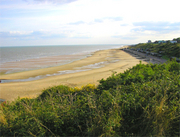
For starters, believe it or not, Essex has one of the longest coastlines in England at no less than 300 miles. And in most places it’s actually rather attractive. You don’t get any of those nasty uncomfortable stones of Brighton beach, instead there is sand – yes, soft, golden, glorious sandy sand. You can sink your toes, build castles, dig out boats, bury dad… Continue reading England – Essex

Baarle-Nassau

First of all, before I’m found out by some obvious blunder, let me confess. I have never been to the two places I intend to write about now. Somehow during my nine years living and working in Amsterdam, I never got round to going there. Terrible lack of curiosity, I know! I’m simply hoping that without any articles about Belgium or the Netherlands in our “We’ve been there” section, this piece will get accepted for inclusion there.

I learned about Baarle-Nassau and Baarle-Herzog by accident. A customer in the Amsterdam shop where I worked left a Dutch survey map lying around and before putting it away, intrigued by some of the markings, I had a quick look at it. And that’s how I discovered one of those curious leftovers from Europe’s complicated history – Belgian enclaves in the Netherlands, with Dutch enclaves inside them! Unlike enclaves in other parts of the continent – Campione or Livia (Llivia) – this one is not just a bit of Belgium stuck inside its neighbour but… I think Wikipedia can say it better than I can: Continue reading Baarle-Nassau

The Lecrin Valley, Andalusia

For my holiday, I travelled back in time. Or at least, that’s how it felt. I stayed in a whitewashed village in Spain where mules laden with panniers plod the narrow lanes; men sit in doorways weaving basketware, while women in black dresses sweep the paths outside their homes.

Best of all, there are no tourists…well, hardly any.

We had rented a house in Albuñuelas – a gorge-side village at the very end of the road in the Lecrin Valley, Andalusia. This valley is situated opposite the Alpujarras, 20 minutes off the motorway between Granada and the coast, but feels a million miles – and years – away. The crowds have yet to stray across here, but the scenery is just as stunning and the villages just as dazzling white as those in the Alpujarras. In fact, although we set off on this holiday specifically to trek in the Sierra Nevada and wander through the honeypot villages of Bubion, Campiliera, Trevelez and so on, we never set foot in any of them. For, you see, there was something about Albuñuelas that made it very hard to leave, and it wasn’t just the rudimentary and winding road that is its only access route.

Albunuelas Village
Albuñuelas dates back to Moorish times – the name derives from Arab for abundance – and was on the route of Arab traders such as Leon the African and Al Idrisi, the famous early geographer. As recently as early last century, the village was accessed by nothing more than a mule track. Most of the streets within the village are too narrow, steep and zig-zaggy for modes of transport other than mules, so these are still used by the farm workers to transport their produce. We got very excited whenever we heard the clip-clopping of hooves in the street below and would rush to the balcony to watch this pastoral sight with glee.

Many of the village houses remain in the traditional layout, with the lower ground floor used as animal stables, and the families’ living quarters on the upper floors, with miradors (open-fronted rooms, or balconies) on the top floors used for hanging chillies and hams to dry in the air.

We learnt quickly to communicate in basic Spanish, and despite our stumbling grasp of the language, the villagers waited patiently as we stuttered out words – we even managed, “I have enjoyed myself very much!” after one particular bar visit.

As this is one of the few remaining areas of Spain where the tradition of receiving the tapas free still holds strong, we fell only too easily into the custom of cerveza (beer) and tapas at the village bars. We found it hard to stop drinking when such delights as chorizo, garlic potatoes, spinach omelette, ham and bread, fresh olives, or black pudding would appear with each round.

Mule On Gr7 Walk From SaleresThere is an abundance of walks from Albuñuelas and the long-distance GR7 trail makes its way straight through the village on the way to Istanbul or Algeciras – depending on which way you’re heading. We joined a short section of it from the village of Saleres back to Albuñuelas at the end of a circular walk. It looked as though no-one had walked it for a long time as the path was hard to decipher at points, overgrown almost entirely with tall grasses and weeds, we were concerned we were in fact following a dried-up stream on many occasions.

Following the River Santo, the path passes impressive Aloe Vera plants, whose soothing juice the locals discovered long before the beauty industry did. Thinking we might be lost forever in the foliage, all of a sudden we were walking on concrete and were immediately in one of Albuñuelas’ lanes.

Our house was situated in the lower barrio (quarter) of the village, and within moments of our doorstep, we could stand on the side of the gorge surrounded by orange and lemon trees and massive flowering cacti, with nothing to hear but trickling acueqias (water channels to the farms) and enthusiastic birdsong.

The views from here are spectacular, bordered by the Sierra de Albuñuelas (where fugitives lived after the Spanish Civil War) and the Sierra de Guajar, with vistas of the first high peaks of the Sierra Nevada.

It is easy to walk up onto the ridge above the village where parvas (large circular stones used for threshing flour) lay, only recently abandoned for more up-to-date techniques.

Our last day came round all too quickly of course, and we were reluctant to leave this little spot of unspoilt Spain, and return to the clamour of modern-day life.

The Michelin Costa del Sol 1:200 000 map (124 Zoom) was perfect for all our driving needs, from negotiating the slip roads of Malaga airport and Granada, to motorways and to the winding mountain roads. It covers from Gibraltar to Almeria and from the coast up to Granada.

The 50K Military Topographic Survey Map of Durcal Sheet reference: 19-43 has the best coverage of the Lecrin Valley of any map currently printed.

The Cicerone Walking the GR7 in Andalucia guide includes the route of the GR7 through Albunuelas and the rest of the Lecrin Valley, with a brief guide to the village’s amenities and sights.

Just come into stock while I was writing, East of Malaga by David Baird includes Albuñuelas and other towns in the Lecrin Valley in this ‘essential’ guide to the Axarquía and Costa Tropical.

Perfect holiday reading for a stay in Andalusia, I read Tales of the Alhambra by Washington Irvine, Laurie Lee’s admirable As I Walked Out One Midsummer Morning and Gerald Brenan’s fascinating South From Granada, and for lighter reading, all three of Chris Stewart’s amusing biographical tales.

Author: Rachel Ricks

Turkey – Istanbul

A well-travelled friend of mine, who has lived and worked in places where most of us have, at best, spent a few days visiting their famous sights and, if lucky, had a memorable meal or two, thinks that there are just seven great cities in the world. To put them in an alphabetical order: Athens, Cairo, Istanbul, London, New York, Paris and Rome. I don’t need to ask him why those seven, I know exactly what he means, and if you put them in geographical, or, better still, historical order it’s obvious what guides him in his choices.

By my criteria there are only three: Paris and New York, with London at the top of this very short list. The other four may have been great once, not so very long ago given their history, but have lost at least one of the ingredients which made them so. Perhaps I should not comment about Rome – I’m yet to visit the Eternal City.

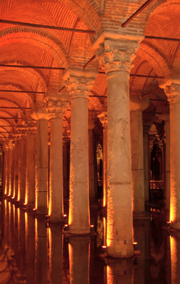
A few months ago, revisiting Istanbul after a break of some 30 years, it was still just as fascinating as I found it on my first visit there. Is there any other city in the world with such magnificent topography? So much water, so many hills, so much sky pierced by the minarets. Aghia Sophia was just as stunning, the Basilica Cistern just as atmospheric and I did not really mind the new arrangements there, the mosaics and frescoes at the Chora Church just as “jaw-dropping” as the guidebooks tell us – the carpet-sellers just as annoying, the hills along the Bosphorus slowly disappearing under the urban sprawl, and the new (to me at least) Galata Bridge simply dreadful.

Descending from the Galata Tower towards the Golden Horn we came across a small church, like many other Latin churches separated from the street by a walled courtyard. The church itself was closed and we were too sleepy after a good lunch to investigate how to get inside. The walls of the courtyard were interesting enough; tombstones, with descriptions in florid Italian, recalled Istanbul’s once thriving Genoese community. Like many other “foreigners” they were, apparently, driven out of the city by punitive taxation imposed on non-Turkish inhabitants after World War I – a very mild form of ethnic cleansing by other standards, I suppose.

Now you know why I put London at the top of my list.

As luck would have it, most of our street plans of Istanbul were being reprinted, so we used the Geocenter one. It’s what is now regarded as an old-fashioned street plan – all the sights are there, of course, but not specially highlighted as on more tourist-oriented plans. It proved an excellent choice and heroically withstood endless re-folding without any damage. Had it been available at the time, I would have probably been tempted by the Borch map of Istanbul.

For guides, we used both Lonely Planet’s guide to Istanbul and the Istanbul section of the Rough Guide to Turkey, occasionally also dipping into Time Out Istanbul. Spoilt for choice we are in Stanfords.

Author: Malgorzata Ross

Browse all our maps and guides to Turkey here >

Austria, Vienna

ViennaGuide books and maps are, of course, necessary if we are to get the best from our holidays. They tell us what to see and how to get there, and if we buy them early enough they can also help us choose a good hotel in a convenient location.

The best ones do provide information on a wide range of places to see, even if some guides limit their contents to the most obvious and invariably overcrowded ones. But returning from holidays it’s nice to bring back memories of places which, whilst not in the “must-see” league, speak more to us than the better known or historically and artistically more important sights. Here are my three from Vienna.

Beethoven’s house
On Mölker Bastei, perched high up above the western part of the Ring is Pasqualatihaus, one the houses where Beethoven used to live. One of several houses, because the great composer was not the easiest of tenants and frequently had to change his lodgings; he tallied up over 30 addresses in his 35 years in Vienna. Apparently cleanliness was not one of his strong points – one cannot somehow imagine a sonata in B-flat, op. whatever, “The Fairy Liquid”.

The little museum on the top floor of the house is nothing special – a piano, reproductions of some scores and letters, a few pictures, and equipment to listen to some recordings. The museum is nowhere near as interesting as the Beethovenhaus in Bonn, with its collection of the composer’s gigantic hearing aids. But two of the symphonies and a piano concerto were composed here, and that’s quite enough for me to make the place a shrine.

The house has obviously been renovated several times, but the staircase still retains its old atmosphere. One can easily imagine the great man thundering down allegro con brio, or even con fuoco, and then lumbering up the stairs back to his hovel, now only andante sostenuto.

Stalin’s Obelisk
When, after 10 years of tortuous peace negotiations, the Soviet Union finally signed the Austrian State Treaty, withdrawing from its zone of occupation and Vienna to allow the country become independent on 15th May 1955, the main condition was, of course, Austria’s political neutrality between the two Cold War blocks. But further down the list, in not-so-small print was a clause ensuring proper upkeep of monuments to the conquering Red Army.

Less than a year later, at the 20th Congress of the Communist Party of the Soviet Union, Nikita Khrushchev denounced Stalin’s dictatorship and his personality cult and soon after Uncle Joe was kicked out of the mausoleum on Red Square. His statues came tumbling down and his name was quickly erased from street names and various dedications (I witnessed much of it myself in Warsaw). But, in the now neutral Vienna, Слава Великому Сталину continued to be proclaimed in shining gold letters.

The neutrality may have vanished with Austria’s accession to the European Union, but the Russian Heroes’ Monument on Schwarzenberg Platz is still well maintained. Whilst I struggled with the Cyrillic letters to read Stalin’s proclamation to his victorious troops (the language is easy for a Pole, but the alphabet has always defeated me!), a young Russian couple visited the site; beaming with pride, yet clearly able to see the irony of it all.

Franz Joseph’s ginkgos
There must be something in Vienna’s climate or its soil which makes them particularly good for ginkgos. There’s a lovely, large one in the Rathaus Park between the Ring and the Town Hall. But the best ones are in the Burggarten. They must have been planted there when the park was still a private garden of the imperial palace of Hofburg. If you are in Vienna in the autumn, the best time for a holiday in central Europe, go and see them after a visit to the Albertina or to the palace itself. The largest one is right in the centre of the park, between the Mozart monument and the Palm House, standing at that time of the year in the middle of an amazing carpet of bright yellow leaves.

Oh, and if you want a tip where to find something more tangible to bring back with you, try the pottery shop on the northern side of Weihburggasse, between Kärtner Straße and the Franziskaner Platz. If you come back with one of those large central European tiled stoves, £2,500 or more a piece if not quite so many pounds in weight, I’ll be really envious.

During my visit I used the Borch street plan of Vienna and the Rough Guide to Vienna.

Maps and Guide books for Vienna

Author: Malgorzata Ross