An Indian Adventure: Travelling With My Mum

Varanasi ghats

What’s it like to go on holiday with your mum? Charlie Gilbert travelled to northern India with his to find out.

Destination: northern India. Travel companion: my mum. Why India? Why my mum? Well, my granny was born and schooled on the subcontinent, so the pair of us wanted to explore our recent family ancestry first-hand. Thanks to a well-timed grouping of bank holidays, we jumped on a plane to Delhi to begin our adventure.

Now, I’m quite an unlucky traveller. During my last few holidays I’ve missed flights, been robbed by child gangsters and snowed in at train stations. Last time I was in India, I was hospitalised for five days with amoebic dysentery and run over by a motorbike. It’s fair to say my mum was a little nervous before any butter chicken had graced her palate.

Delhi

First stop Delhi, a somewhat curious city. Curious because the Indian capital has a remarkable ability to function on a day-to-day basis despite the relentless mayhem of energy-sapping heat, traffic horns, scam artists, lung-clogging pollution and a superbug-infested water supply (which, fortunately, has long since cleared up). It’s genuinely fascinating, but after two days the insides of your nasal passages turn black, you can drink a two-litre bottle of water in five seconds without your thirst being quenched and, most infuriatingly, you begin to lose faith in humanity. But that’s what India does to you – by the time you crawl into your hotel bed that night, you’re already reminiscing about how fantastic the day was.
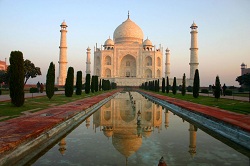
Taj Mahal

Agra

Armed with an India travel guide, it was onwards to Agra, which is essentially a miniature, industrial version of Delhi – but one that’s home to the world’s most impressive building. The Taj Mahal is an architectural marvel – tear-inducing, almost. It’s just a shame its interior is a bit smelly. After being moved by watching the early-morning sun reflect off centuries-old translucent marble adorned with Mughal scripture, I found myself sniffing the air and grimacing as I walked closer to the building. After taking a few steps back and whipping out the camera, normal service was resumed. Phewff.

A train journey

Our adventure began in earnest on the overnight train to Varanasi. If you’re not familiar with Indian trains, they usually have the following classes:

  • Chair car: Avoid like the plague unless you like sitting on upright slatted benches for 13 hours and have a perverse attraction to insomnia.
  • Sleeper class: Where passengers are presented with a plastic padded horizontal bench and a curtain. It sounds basic, but it’s remarkably comfortable – and one of those genuine ‘travel experiences’.
  • AC 2-tier: The same as sleeper, but with more bedding and thicker curtains.
  • AC 3-tier: Identical to AC-2 but with one more person squeezed in per berth – something of a lottery, let me tell you.
  • First class: Which essentially involves being locked inside a moving box with two strangers, one of whom will most likely have a snoring problem that urgently requires the attention of an ear, nose and throat specialist. Unless you know the people you’re sharing a compartment with, I’d avoid.

We chose AC 2-tier – my mum wasn’t too impressed with the on-board facilities and was gripped by an unwelcome bout of claustrophobia. Being a gentleman, I let her have the bottom bunk – the one with the window and enough space to accommodate an average-sized badger set.

The upper bunk was so close to the train’s roof that I couldn’t sit up without banging my head on the grilled metal air conditioning vent. Using all the common sense I could muster, I decided to lie down. I was immediately transfixed by a big red handle on the end of a short chain, which dangled invitingly close to my right hand. Above it were the words ‘Pull to stop train. Penalty for use without reasonable and sufficient cause – fine of up to Rs. 1000 and/or imprisonment up to one year’.

Pulling this handle seriously tempted me – it would have generated enough excitement to justify a £15 fine, but I didn’t fancy being harangued by my fellow passengers or spending 12 months wasting away in an Indian prison cell with curried lentils as my only company.

After dilly-dallying for longer than I should have, I realised the train had been moving for 20 minutes and that I had no idea which way it was travelling. I glanced down at the bottom bunk – the curtains were closed and my mum was asleep. It was the same story over at the adjacent bunks. I spent the next 13 hours wondering whether my head was following my backside, or my backside following my head.
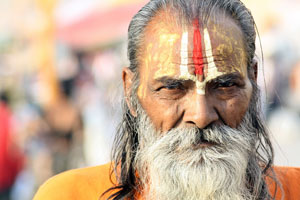
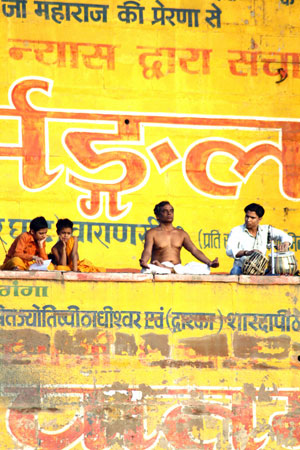
Sadhu Varanasi

Varanasi

I had heard mixed reviews of Varanasi from friends of mine who had already visited. On the one hand, it was India’s oldest and holiest city, crammed full of temples, the Ghats, the River Ganga and bucket loads of religious and spiritual significance. On the other, it was an over-populated sprawl of decrepit buildings – its growth has been unstoppable, and the intensity of an around-the-clock sensory assault coupled with an unforgiving climate has driven tourists to more peaceful surroundings after only a few hours. Just as well my mum decided to book a five-night stay, then.

This is the city my great-great grandparents are from. Wilmot Charles Dover – easily the most handsome man who ever lived in Varanasi, then Benares – and his wife, Alice Maud, resided in a bungalow complex in the city until the late 40s. My granny, whose parents’ wedding reception was held there, remembers almost everything about it – from the mango tree at the front to the well at the back, even sleeping outside on the veranda when it got a bit hot at night. Armed with a few old photographs and a trusty Varanasi street map, my mum and I decided to pay the bungalow a visit – the first members of our family to do so in 60-odd years.

We were welcomed by the Guptas, the bungalow’s residents, with open arms. A family of 14, they told us the history of the house and we in turn showed them our old photographs. It was all rather pleasant – we were treated to a huge, all-you-can eat meal and a grand tour of the complex, which by Indian standards is pretty bloomin’ big. With a little help, we subsequently tracked down Wilmot’s grave, unmarked apart from a number ’46’ and covered in scrub and ants. It was a genuinely moving moment and felt like quite an achievement. I may have even hugged my mum, but I can’t remember.
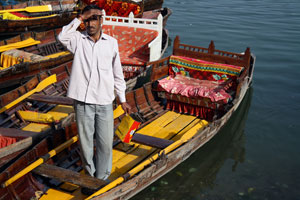
Nainital Lake

Nainital

From Varanasi we returned to Delhi and headed north-east to Nainital, a picturesque hill station in the Himalayan foothills and the town where my granny went to school. This was the ‘holiday’ part of the trip. Up in the mountains it’s a much cooler 25 degrees, which basically means you can go out and have a nice time without fear of melting into a large puddle.

It was here where I met the Indian Mr Burns – his appearance and gait unquestionably similar to that of Springfield Nuclear Power Plant’s owner. He was fascinated by two things in particular: British coins and William and Kate’s royal wedding. His enthusiasm for both was insatiable and he couldn’t be calmed down – every time I opened my mouth to speak he looked at me like an eight year-old boy about to receive a Lego pirate ship for his birthday.

“You have English coin?!”

“Um, let me check. Yep, um, only about 20p though, sorry.”

“Wow! I shall keep this and treasure it! You have more?!”

I replied in the negative and his face dropped. “You sure, maybe check again?!”

Return to Delhi

A remarkably uneventful return train journey from Kathgodam back to the Indian capital signalled the end of our journey. Apparently the crew from the BBC’s Who Do You Think You Are lost the tape, so you’ll have to settle for this blog. Sorry about that.

Recommended reading

  • Great Indian Railway Atlas: An excellent record of the Indian rail network, and very useful when you make up in the middle of your sleeper train journey wondering where you are.
  • Lonely Planet Rajasthan, Delhi & Agra: A succinct, detailed guide to the most popular northern India destinations – an absolute must.
  • Uttarakhand Road Guide: While in Nainital, this state map was vital when planning days out in the Himalayan mountain region of Uttarakhand.

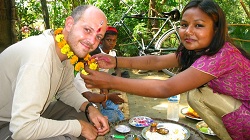
Nepal 'Reaffirms My Golden Travel Rule'

After experiencing Nepali hospitality first hand, Paul Darlow’s first rule of travel – go slowly and talk to as many people as you can – was reaffirmed.

Nepali hospitality

Nepali hospitality

During one of my first visits to Nepal, I was looking around the Monkey Temple in Kathmandu. As I sat on a stone step contemplating what little I had learned about Buddhism, I saw out of the corner of my eye a Nepali man feeding a chapatti to a dog. Something told me to go over and talk to him.

Binod was his name. His mother having died when he was young, he was pushed out of his village to go to Kathmandu and look for work at the age of 12. Now in his late 20s, he ran a souvenir stall.

After chatting for a couple of hours, Binod invited me back to his house.  After an evening of buffalo curry and rakshi (the local alcoholic tipple) I was far too drunk to walk back to my guest house, so Binod offered me his bed while he took the floor.

The next morning, both of us feeling slightly worse for wear, Binod explained that an important festival was approaching and that he was going to travel to a small village where his wife and newborn baby were staying at her parents’ house. He invited me to join him – and so I found myself riding on the roof of a bus along the road to Chitwan, every now and then having to climb back inside the bus before the police checkpoints.

Nepali village life

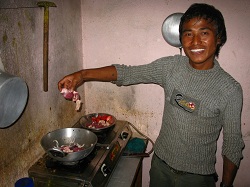
Nepali cooking

The family we stayed with consisted of 12 people, and between them they had two one-storey, one-room houses made of mud, wood and straw. One of the buildings was about two metres by three metres; the other maybe five metres by two metres. There was one bed, no running water and no electricity. Food was cooked over an open wood fire.

After introductions and small talk, preparations for the following day’s festival commenced – yak dung mixed with mud was applied to the outsides of the houses to make them look smart, and marigolds were picked to make flour garlands while Binod and I went fishing. Unfortunately, the only fish we managed to catch were small water snails known as ‘gunghi’, so we also went and bought a chicken which was quickly dispatched, prepared and cooked.

That night, despite my reservations, Binod and I were allocated the only bed in the house. Everyone else (all 12 of them including the grandmother and two newborn babies) had to make do with the floor.

As I was falling asleep, the women gathered together at the firepit and started cooking chapatis for the next day. I think I finally drifted off to sleep at about three o’clock with the smells of cooking and the gentle chatter of Nepali women floating around me.

The Bhai Tika Festival

The next day was the Bhai Tika Festival.

‘Bhai’ means ‘brother’ in Nepali, although not necessarily in a blood-relative sense.

Each man took turns to sit on the floor as the woman selected to act as his sister for the ceremony said a few words while making a tika on our foreheads, placing a garland of flowers around our necks, and presenting us with a plate of food, a bottle of rakshi and some small gifts.

Over the next few hours the food was eaten, the rakshi drunk, and my golden rule about travelling was reaffirmed – go slowly and talk to as many people as you can, for it’s the people you remember long after you’ve left the place.

Paul Darlow manages Nepal Trekking Holidays, a travel blog dedicated to walking holidays in Nepal.

If you’ve been inspired by his experiences, you may be interested in one of these Nepal travel guides and maps:
> Nepal tear-resistant road map
> Nepal: Schneider Trekking Maps
> Lonely Planet Nepal

Mostar: A City Restored

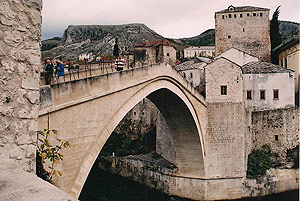
Mostar, home to the Old Bridge – one of Bosnia and Herzegovina’s most famous landmarks – has had a turbulent recent history. While the city has been beautifully restored since the end of the war in 1995, Caroline Sandes discovers that it hasn’t forgotten about the events of the early-to-mid 90s.

Mostar - Bosnia i HerzegovinaMostar, synonymous with that beautiful bridge, the Stari Most, was high on my list of places I wanted to visit – but at the same time I wasn’t looking forward to it. The Balkan wars may have come to an end in the mid 90s, but Mostar in 2010 was still very much under repair. Ruins of any period, modern to ancient, fascinate me but the ruins of a comparatively recent war have not yet had the tragedy weathered away.

The bus journey from Sarajevo to Mostar, once the rain had lifted, was lovely. The road twisted and turned through wooded and rocky gorges, the trees in various shades of autumnal colours, before settling into a more gentle route. Continue reading Mostar: A City Restored

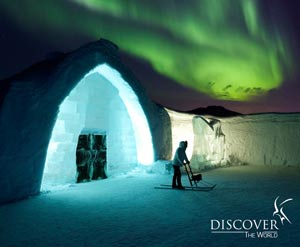
WIN a Holiday to the ICEHOTEL in Swedish Lapland

ICEHOTEL Swedish Lapland

*This competition is now closed.*

Searching for the Northern Lights? Discover the World can help you find them!

We are delighted to announce that Discover the World will be in our themed area at our Covent Garden store from 1st-30th September to help you discover the best places to see the northern lights. With over 30 years experience creating tailor-made holidays, today they are one of the UK’s leading specialist tour operators.

This coming season coincides with the peak of the ‘Solar Max’ meaning displays of the northern lights are expected to be more spectacular than ever, to celebrate this Discover the World are giving away a fabulous holiday for two to the ICEHOTEL and Abisko in Sweden. Continue reading WIN a Holiday to the ICEHOTEL in Swedish Lapland

Win an Olympus TOUGH Digital Camera

Olympus Camera

*This competition is now closed.*

We’re giving away an amazing Olympus TOUGH TG-1 digital camera worth over £350 in association with Lonely Planet.

To enter simply complete the form below

Second prize is either a Lonely Planet City guidebook or the Lonely Planet guide to Travel Photography. Good luck! Continue reading Win an Olympus TOUGH Digital Camera

Top 5 European City Breaks

Paris

Paris

The magical city of Paris leaves a lasting impression on visitors. Often described as the most romantic city in the world, it’s hard not to fall in love with its breath taking architecture, bohemian cafes, trendy bars and finest cuisine. Visit the iconic Eiffel Tower and famous Mussee du Louvre or simply wander the streets of the cosmopolitan capital soaking up the atmosphere.

> Browse our collection of travel guides and maps to Paris  Continue reading Top 5 European City Breaks

Another Side to the US's East Coast

C-130 Hercules

When one mentions the East Coast of the US most people think of big cities like Boston, NYC, Philly and Washington DC or other busy places like Atlantic City or Cape Cod. But there is also another side to this region; small quiet towns, rural roads, dunes and lighthouses. And that’s where I was heading.

My adventure really started when I entered the state of Delaware, just 25 miles south of Philadelphia. Why did I come here in the first place? Well, in the last few years I’ve been trying to visit every single state of the US and Delaware was one of the few left on my list of unvisited ones. With another box ticked I started thinking, what on earth can I see now that I’m here? Let’s be honest, Delaware doesn’t really sound like the most exciting of destinations. So I checked myself into some random motel, bought a few beers and started browsing tourist brochures and maps. It was then that I realized that I was only a few miles away from the Dover Air Force base and its Air Mobility Command Museum. And that was where I headed for the following morning.

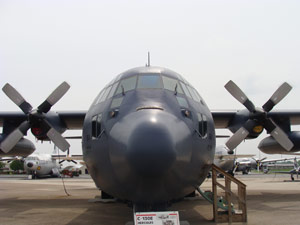
Boy, I really hit the jackpot as this is one of the best museums I have ever visited. It has a large collection of fully restored cargo and tanker aircraft, among them such beauties as the C-130 Hercules, C-141 Starlifter, KC-135E Stratotanker and even the B-17 Flying Fortress. What is the best thing is the fact that you can actually get inside some of the planes, for example the Hercules and Starlifter are both open to visitors. In the Hercules you can even get inside the cockpit! Wow! I had bucket-loads of fun out there and would recommend this place to anyone even remotely interested in aviation. And all this for free. Can you imagine? One word of warning, a visit here will make you feel and behave like you are small boy (or girl) again.

Chesapeake Bay Bridge-Tunnel

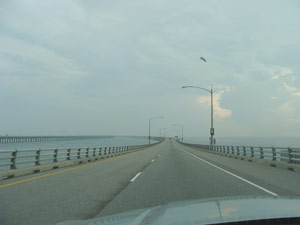
From Dover I drove south through the 270 km long Delmarva peninsula. Its name comes from the first letters of Delaware, Maryland and Virginia which all occupy parts of it. As I was getting further south across the flat landscape it was getting more and more rural. At the tip of the peninsula is located one of the greatest engineering marvels in the US, the Chesapeake Bay Bridge-Tunnel, a 37km long system of low bridges, tunnels, artificial islands and causeways. It is fun to drive, especially around sunset when the views are breathtaking. In some moments you can feel as if you are driving on the sea itself.

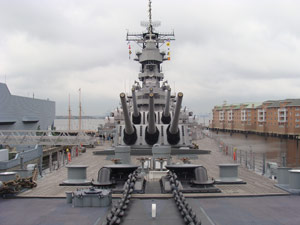
Across the bridge I entered the region of Hampton Roads, also called Tidewater, which includes a dozen or so cities, the biggest of them being Norfolk and Virginia Beach. It is a real suburban mess with potholed narrow highways choked full of traffic. Not fun at all. Still, the beaches are nice and there are some attractions. One of them, which I can definitely recommend, is the maritime-oriented science centre and museum, Nauticus. It is full of modern hands-on exhibits but the best part of it is the Iowa-class USS Wisconsin, one of the biggest battleships ever built. She served in WWII, the Korean War and the Gulf War and she is a real photogenic beauty. You can explore its deck through a self-guided tour but also ask questions of one of the volunteers on board as they are retired navy themselves and can share their stories.

Iowa-class USS Wisconsin

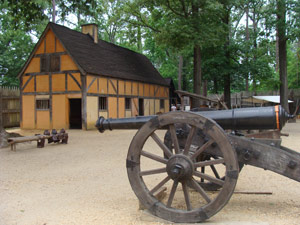
From Norfolk I headed 50 miles north to Jamestown. To get there I had to battle crazy busy suburban traffic, but it was well worth it. Jamestown is, in a way, a birthplace of America as we know it. Established in 1607, by the Virginia Company of London, it was the first permanent English settlement in North America. Nowadays there are actually two sites worth visiting there. First of them is Historic Jamestowne which is managed by the National Park Service and covers the location of the original Fort James. Here you can see archaeological remains of the original fort as well as a 17th century church tower and the site of the 17th century town. Thousands of artefacts found during the excavations are displayed in the museum on site, called Archearium. The second major attraction here is Jamestown Settlement which is actually a reconstruction of the original settlement. Located a few miles from the original site, it is a living history museum where costumed actors play roles of settlers and Indians. So you can join the town meeting or watch settlers cooking, firing muskets, blacksmithing, woodworking etc. Outside the fort you can also board replicas of the three ships which brought the colonists. What is really striking is how small the vessels are. It is hard to imagine how people survived the long transatlantic journey on these tiny wooden boats. Each boat is manned so you can ask “the captain” questions. Apparently, these boats are also fully functional and still do sail occasionally. I had a lot of fun in Jamestown as Americans are really good at organizing places like this. It is no coincidence that Hollywood and so much of the other entertainment industries are in the US; they just know how to have fun. And make money out of it.

Historic Jamestowne

From the Chesapeake region I continued further south into North Carolina. I got lost trying to avoid toll roads but I eventually made it to the Outer Banks, also known as OBX (don’t they love abbreviations out there?). The Outer Banks are a 320 km long chain of narrow barrier islands which cover most of the North Carolina coastline. It is a major tourist area but I was lucky enough to be there before the main season so it all felt positively windswept and wild. It was actually literally windswept as it was a windy, even stormy, day during my visit there. But I’m not complaining at all. In fact that’s precisely the way I like it. The beaches were empty (save for a few brave kite-surfers and fishermen), the waves were amazing and the air was crisp and salty.

After entering the Banks at the town of Kitty Hawk, towards their northern end, I headed south towards Cape Hatteras. While looking for accommodation, I accidentally ended up in the small town of Manteo, located on Roanoke Island, where the famous Lost Colony was located. Established in 1585 the colony of 108 disappeared before more settlers arrived in 1590. It is still a mystery as to what happened to them. There are a few theories but no conclusive evidence. Nowadays Manteo is a nice and quiet town of about 1000 souls.

Further south the Outer Banks get wilder and wilder, with only one road, the NC Hwy 12, to choose from. Low sand dunes border the highway in many places and on windy days sand is blown onto the road. It looks quite spectacular but it is a constant danger as well as a headache for the highway maintenance crews who have to clear it, sometimes daily. Long stretches of this part of the Banks are protected by Cape Hatteras National Seashore and Pea Island National Wildlife Refuge which means that beaches are wild and all the development is contained in a few relatively small communities. One of them is lovely Buxton, a small unincorporated place dominated by the Cape Hatteras Lighthouse, which at a height of 64m is the tallest lighthouse in America. Due to erosion it was relocated 870m inland in 1999 but views from the top are still spectacular.

Smallest bookshops in the world

Further south is another unincorporated community, Hatteras, where I found probably one of the smallest bookshops in the world. It resembles a cross between a garage, a beach shack and a garden shed but the staff was very friendly and they have a good selection of local titles. Great shop.

Even further south the road eventually ends and to continue the journey one has to take the ferry. I was tempted to board it and visit the remote Ocracoke Island but by then time was becoming an issue, so I had to turn back north and then head back into the mainland.

I think the Mid-coast of America is much more interesting than many people think. Because it was the first area to be settled by Europeans there are plenty of sites associated with the early colonial history. But it is also a relatively wild and sparsely populated region, especially compared to the megalopolis further north. If you add the military heritage and hardware on display it definitely makes a quirky and fascinating holiday destination.

Browse our collection of maps, guides and travel literature:
> USA travel guides
> USA road maps and atlases
> Travel literature inspired by the USA

Author: Gregor Swiderek

Blogger of the Month: Jayne Gorman from 40before30.com

Meet Jayne

How did you first get involved with travel blogging?

I’ve started describing myself as the ‘accidental blogger’ because when I started out I honestly had no idea what I was doing, I didn’t even know what a blogger was. I was working in international events and visiting some obscure and fascinating places like Xiamen in China. A friend suggested I chronicle my travels in a blog instead of emailing friends and family separately, so I logged onto blogger and started writing.  Mainly for my mum!

Where did the concept for 40 before 30 come from?

After I started my blog I found other bloggers began to read it and leave helpful comments. I begun reading their blogs and learning a little bit more about how it works. I wanted my blog to have a name that people could remember but also wanted to set myself a challenge around which to frame the articles. I worked out that I had already blogged about 20 countries and decided to attempt to cover another 40 before my 30th birthday. The name 40 before 30 stuck.

What advice do you have for people that want to start their own travel blog?

After trying several I would recommend WordPress as a blogging platform, its easy to use, flexible and reliable. If you start on WordPress it saves a lot of hassle transferring to it at a later date – I would know! When it comes to content I would say always remember to be yourself. Write as if you are talking to a friend, the more personal the blog the better. That’s the style I enjoy reading anyway.

How do you drive readers to your blog?

Twitter is a major source of traffic and new followers for my blog but most traffic comes from Google. A good grasp of basic SEO (search engine optimisation) principals will stand you in good stead.

What are the 3 most important things you take on a trip?

A notebook and pen – I never travel without a Moleskine; it looks intelligent and never runs out of batteries!

My iPhone – for all the tweeting, four squaring and intagramming needs

And a good book – or two. I’m not a fan of e-readers, I prefer a book you can hold, smell (love the smell of fresh pages) and treasure forever.

What is the strangest thing you have ever eaten on your travels?

I refrained from eating guinea pig in Peru – it wasn’t the most appetising looking thing, lying on it’s back, sizzling on the grill with legs in the air. But I tried both kangaroo and camel on the barbie in Australia and found them surprisingly tasty.

What’s your favourite place you have visited on your travels?

Without a doubt – India. It’s an intense experience but the food, people and clash of cultures are mesmerising and I can’t wait to go back.

How do you decide where to visit next?

I love to visit new destinations and tick them off my challenge but I also love revisiting old favourites too. For my summer holiday I’m going back to the Greek Islands, which is where we holidayed every year with my parents when we were children. I’m taking my boyfriend who has never been so it will be like seeing it for the first time again through his eyes.

What is the best thing about being a travel blogger?

Combining my twin passions of travel and writing and getting to meet many people who feel the same.

Are there any negative aspects of the job?

The worst part is probably missing out on major events in your friends and family’s lives because you are not in the country. I make conscious efforts to get around to seeing everyone whenever I am at home – and to put the iPhone away for the duration of the visit!

Read more about Jayne’s travels at 40before30.com.

Top 5 UK Travel Trips

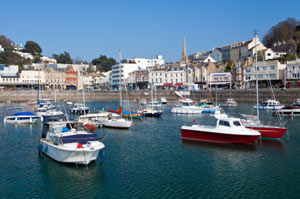
Torquay

With the summer weather finally upon us, it’s the perfect time to getaway in the UK. Our top 5 UK Summer destinations for 2012 are; Cornwall, Devon, Yorkshire, the Cotswolds and Bristol.

Cornwall

Experience the beauty of Cornwall with it’s rugged coastline, quaint harbour villages and stunning beaches and sandy coves just waiting to be explored. Famous for its surfing and home some of the best beaches in the UK, Cornwall is the perfect place to escape to for a relaxing weekend. Continue reading Top 5 UK Travel Trips