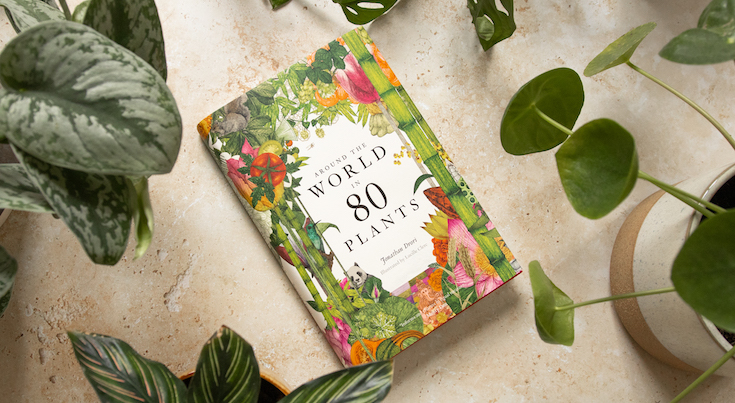
In his follow-up to the bestselling Around the World in 80 Trees, Jonathan Drori takes another trip across the globe, bringing to life the science of plants by revealing how their worlds are intricately entwined with our own history, culture and folklore. From the seemingly familiar tomato and dandelion to the eerie mandrake and Spanish ‘moss’ of Louisiana, each of these stories is full of surprises. Some have a troubling past, while others have ignited human creativity or enabled whole civilizations to flourish. With a colourful cast of characters all brought to life by illustrator Lucille Clerc, Around the World in 80 Plants is a botanical journey of beauty and brilliance.
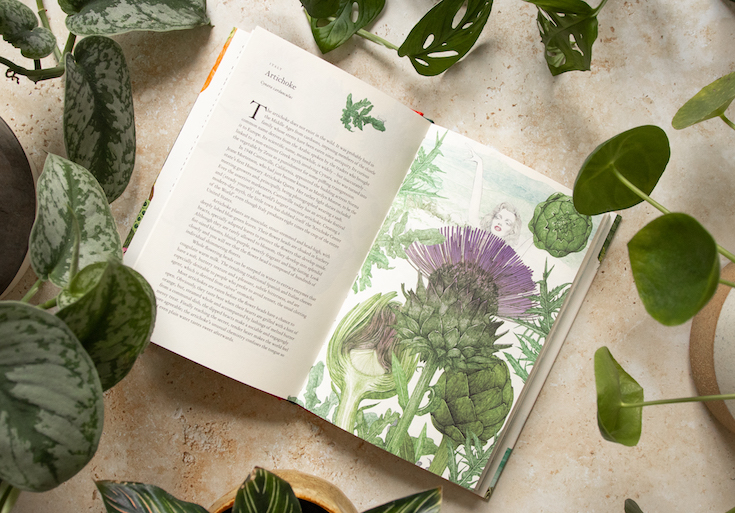
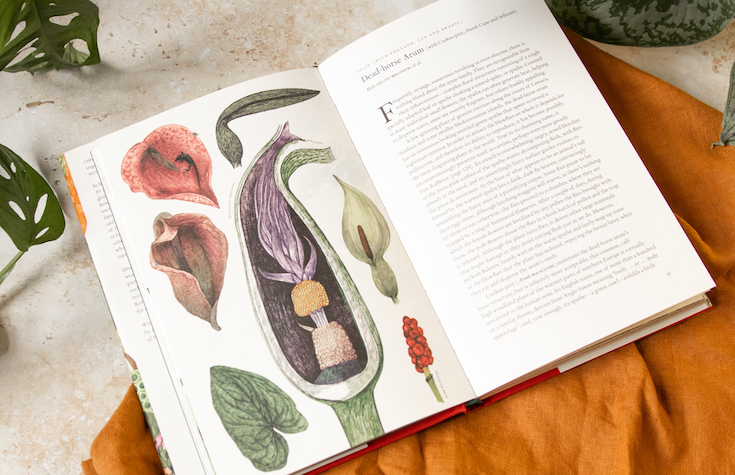
Here Jonathan Drori gives us an insight into a few of the plants that feature in his book:
-by Jonathan Drori
I’ve loved travelling, as a backpacker, then as a documentary film maker, and more recently on various plant- and seed-collecting expeditions with Kew Gardens. I also enjoy the anticipation of trips, looking for inspiration and hunting down maps and guides – Stanford’s is great for that – and ahem, the thrill of getting my jabs. But lockdown has been a cotton-wool bubble and made me think about strong flavours and the plants that beguile our senses.
Hot milk and honey with a good scrape of nutmeg is as comforting as it sounds but nations once went to war for it. Nutmeg trees bear hundreds of fruit – they look like small yellow apples and inside, the familiar seeds are surrounded by a fiery red lacy ‘aril’, which is the spice called mace. Keeping the source secret for hundreds of years, Arab traders brought nutmeg to Europe in mediaeval times, where it enlivened dull food of course, but was also used as an amulet. In 1510, Leonardo da Vinci popped one on his list of things to take on a trip to Padua, along with spectacles, a penknife and a skull. At the time, nutmeg had only one source – a few islands in what is now, Indonesia. For a hundred and fifty years, the French, Dutch and English fought for control of the lucrative monopoly. In 1667, the British finally gave up their claim to the nutmeg island of Run, in exchange for a handy Dutch outpost all the way over in North America, called Manhattan. Even when the French finally smuggled nutmeg seeds to Mauritius in 1770, breaking the Dutch monopoly, nutmeg remained an expensive luxury; European gentlemen often carried in their pockets elaborate and precious nutmeg graters with a special compartment for the nut itself.
Not so long ago, all our drugs came directly from plants. Before modern anaesthetics, people were willing to try almost anything for pain-relief. In the Mediterranean, the fruit of the mandrake, mixed with wine, was used at least since Roman times and right up to the 19th century. Mandrake and its more familiar siblings – tomato, potato and deadly nightshade – are members of the feisty Solanum family, most of which are poisonous, at least in part. Mandrake contains a cocktail of mind-altering drugs and since its roots can sometimes look a little like a person, they took on supernatural associations. They were said to shriek when they were removed from the ground – a scream so shocking that it could kill. This may have been a rumour, intentionally started, to discourage the temptation of stealing such an important and valuable plant.
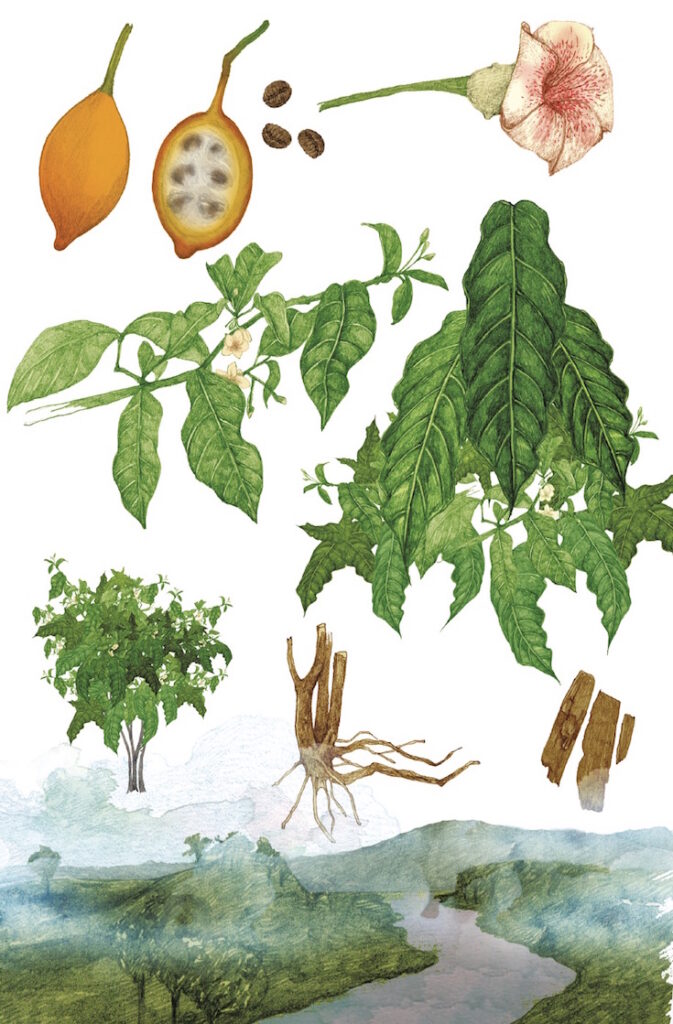
In in West Africa, in Gabon and Cameroon, the Bwiti cult is a compelling blend of Catholicism and indigenous religious belief. Followers use a shrub called iboga for initiation rites into adulthood. The oval orange fruit look appealing, but it is the stems and roots that are used to make a decoction which puts users in a dream-like state for a day or so. The effects of drugs can be different depending on who’s taking them and where they are (think about wine at a family meal vs post-match blokey beers). In the context of Bwiti culture, iboga-users report communing with their ancestors, and feeling themselves to be embedded dreamily between family generations. In Europe and the United States, iboga is being investigated as the source of one of the most promising drugs to help heroin addicts wean themselves off their addiction.
Pineapples were first brought to Britain from the Caribbean, and finally planted and coaxed into fruiting in glasshouses in the 18th century. They were so expensive that only the absolute elite would dream of eating them. Instead, they were often rented-out for the evening to be taken to parties as a charming, and doubtless very cool, accessory. But by the beginning of the 19th century, well before the era of mass imports, the English essayist, Charles Lamb had tried the rare fruit. “Pineapple is too ravishing for mortal taste”, he wrote. “It woundeth and exoriateth the lips… like lovers kisses, she biteth… she is a pleasure bordering on pain.” If it was locally grown, Lamb’s pineapple was possibly unripe, or perhaps this is just the kind of thing he enjoyed.
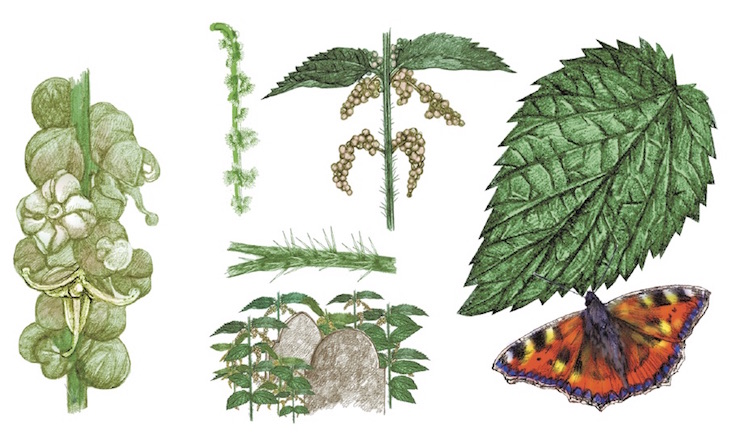
And talking of the pleasure of a little pain, while you and I have learned to avoid nettles, Roman soldiers stationed to guard Hadrian’s wall – surely one of the worst postings in their Empire – positively sought them out. They amused themselves and perhaps fooled their frozen bodies into warmth with a practice known as urtication – flagellating each other with nettles. The plants have evolved with those minuscule hypodermics to deter herbivores and in so doing, provide shelter for the larvae of some our loveliest butterflies. Nowadays, participants in the annual nettle eating championships, which could honestly only be in England, have learned to roll the leaves before chewing, to break the tiny hairs that would otherwise squirt poison into their mouths. You might regard this as madness, but human beings from every culture have always sought plants that offer extreme sensations, or alter our minds, pushing the boundaries of our senses to augment the variety that is the spice of life.

Around the World in 80 Plants is available to buy here
Watch a video of Jonathan Drori introducing Around the World in 80 Plants: