 The shortlist for the Thwaites Wainwright Prize for Nature and Travel Writing 2014 has been revealed today at London Book Fair.
About the prize:
The Thwaites Wainwright Prize can be narrative or illustrative non-fiction and is open to writers from all over the world, but their resulting books must be focused on the British Countryside. The prize will be awarded to the work which best reflects The Wainwright Society’s core values of inspiring people to explore the outdoors, whilst engendering a love of landscape and respect for nature. A £5,000 prize fund will be presented to the winning book.
We look forward to welcoming the authors to our Long Acre store this evening for the launch party!
The Shortlist for the Thwaites Wainwright Prize is as follows:
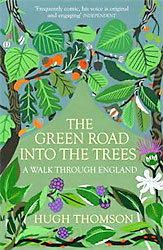 The Green Road Into the Trees by Hugh Thomson
Hugh Thomson takes a 400-mile journey across England from coast to coast – one that takes in ancient landscapes, abandoned tracks and drovers’ roads. Some are overgrown and almost completely obscured by brambles and weeds, but these old trails can still be found and navigated by locals who know where to look. In The Green Road Into The Trees, Hugh reveals how older, almost-forgotten cultures have more of an influence than we may have otherwise thought – with intriguing discoveries about the Vikings, Saxons and Celts yet to receive nationwide attention.
 Badgerlands by Patrick Barkham
 The Old Ways by Robert Macfarlane
In “The Old Ways” Robert Macfarlane sets off from his Cambridge home to follow the ancient tracks, holloways, drove – roads and sea paths that form part of a vast network of routes criss-crossing the British landscape and its waters, and connecting them to the continents beyond. The result is an immersive, enthralling exploration of the ghosts and voices that haunt old paths, of the stories our tracks keep and tell, of pilgrimage and ritual, and of songlines and their singers. Above all this is a book about people and place: about walking as a reconnoitre inwards, and the subtle ways in which we are shaped by the landscapes through which we move.
Told in Macfarlane’s distinctive and celebrated voice, the book folds together natural history, cartography, geology, archaeology and literature. His tracks take him from the chalk downs of England to the bird-islands of the Scottish northwest, and from the disputed territories of Palestine to the sacred landscapes of Spain and the Himalayas. Along the way he walks stride for stride with a 5000-year-old man near Liverpool, follows the ‘deadliest path in Britain’, sails an open boat out into the Atlantic at night, and crosses paths with walkers of many kinds – wanderers, wayfarers, pilgrims, guides, shamans, poets, trespassers and devouts. He discovers that paths offer not just means of traversing space, but also of feeling, knowing and thinking. The old ways lead us unexpectedly to the new, and the voyage out is always a voyage inwards.
 Under Another Sky by Charlotte Higgins
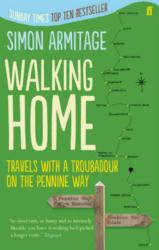 Walking Home by Simon Armitage
In summer 2010 Simon Armitage decided to walk the Pennine Way. The challenging 256-mile route is usually approached from south to north, from Edale in the Peak District to Kirk Yetholm, the other side of the Scottish border. He resolved to tackle it the other way round: through beautiful and bleak terrain, across lonely fells and into the howling wind, he would be walking home, towards the Yorkshire village where he was born. Travelling as a ‘modern troubadour’ without a penny in his pocket, he stopped along the way to give poetry readings in village halls, churches, pubs and living rooms. His audiences varied from the passionate to the indifferent, and his readings were accompanied by the clacking of pool balls, the drumming of rain and the bleating of sheep. “Walking Home” describes this extraordinary, yet ordinary, journey. It’s a story about Britain’s remote and overlooked interior – the wildness of its landscape and the generosity of the locals who sustained him on his journey. It’s about facing emotional and physical challenges, and sometimes overcoming them. It’s nature writing, but with people at its heart. Contemplative, moving and droll, it is a unique narrative from one of our most beloved writers.
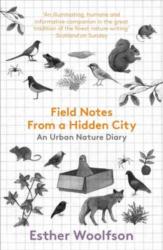 Field Notes from a City by Esther Woolfson
Against the background of austere and beautiful Aberdeen, Woolfson observes the seasons, the streets and the quiet places of her city over the course of a year. She considers the geographic, atmospheric and environmental elements which bring diverse life forms together in close proximity, and in absorbing prose writes of the animals among us: the birds, the rats and squirrels, the spiders and the insects. Her close examination of the natural world leads her to question our prevailing attitudes to urban and non-urban wildlife, and to look again at the values we place on the lives of individual species.
wainwrightprize.com or follow on twitter @wainwrightprize