
Fresh from Walking the Nile – Levison Wood regaled us with stories of extreme mental and physical endurance – not least unwittingly eating rat, and mistaking maggots for rice… Continue reading Levison Wood on Walking the Nile

Simon Reeve surrounded by a Sacred River of fans!
Simon Reeve is spoiling us with no less than four appearances at Stanfords Travel Writers Festival. That’s one a day for the numerically challenged amongst you. The TV presenter and New York Times Bestselling Author will be in conversation alternately with Paul Goldstein and Paul Blezard. Continue reading Simon Reeve surrounded by a Sacred River of fans!
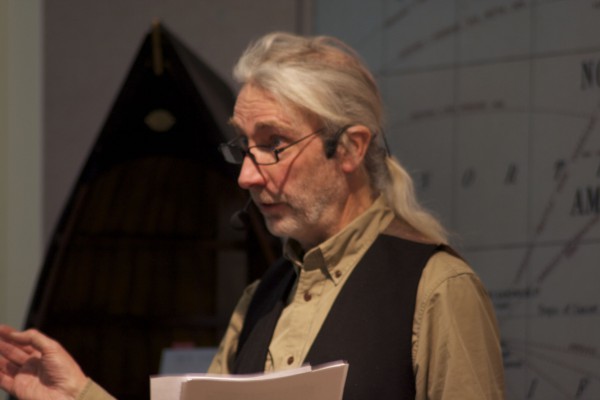
Ten Million Aliens (and Simon Barnes)
We were initially a bit concerned how we were going to fit Simon Barnes and his Ten Million Aliens in for the day’s second event. Turns out it was a hilarious misunderstanding on our part.

Talking Trains: Monisha Rajesh and Julian Holland
To kick things off, Monisha Rajesh, author of Around India in 80 Trains, and Julian Holland, author of Railway Days Out are talking trains – comparing their top three rail journeys in the UK and India. Continue reading Talking Trains: Monisha Rajesh and Julian Holland
Wainwright Prize Longlist in Pictures
We’re not saying you should ever judge a book by its cover – but here are some of the beautifully designed jackets for the books making this year’s Wainwright Prize longlist.
The longlist in full
Britannia Obscura: Mapping Hidden Britain by Joanne Parker (Vintage, Penguin Random House)
Claxton: Field Notes from a Small Planet by Mark Cocker (Vintage, Penguin Random House)
Counting Sheep by Philip Walling (Profile)
H is for Hawk by Helen Macdonald (Vintage, Penguin Random House)
Meadowland by John Lewis-Stempel (Transworld Publishers)
On Silbury Hill by Adam Thorpe (Little Toller Books)
Rising Ground: A Search for the Spirit of Place by Philip Marsden (Granta Publications)
Running Free: A Runner’s Journey Back to Nature by Richard Askwith (Vintage/Yellow Jersey, Penguin Random House)
The Ash Tree by Oliver Rackham (Little Toller Books)
The Moor by William Atkins (Faber & Faber)
The Walker’s Guide to Outdoor Clues and Signs by Tristan Gooley (Hodder & Stoughton)
Walking Home by Clare Balding (Penguin Books)
The shortlist will be announced on 26th March and the winner will be announced at a ceremony on 22nd April.
Preview: Stanfords Travel Writers Festival

The very first Stanfords Travel Writers Festival gets underway at Destinations: The Holiday & Travel Show, at Olympia in London THIS THURSDAY! Here’s a quick run down of what you can expect from each day’s events.
Thursday 29th January

To kick things off, Monisha Rajesh, author of Around India in 80 Trains, and Julian Holland, author of Railway Days Out will be talking trains – comparing their top three rail journeys in the UK and India. Bring your own coal for added authenticity.
Our auditorium seats 200 – so we were initially a bit concerned how we were going to fit Simon Barnes and his Ten Million Aliens in for the day’s second event. Turns out it was a hilarious misunderstanding on our part. You can catch Simon as he celebrates the diverse marvels of this incredible planet we live on – and the wondrous things that unite us all – at midday.
Simon Reeve is spoiling us with no less than four appearances at Stanfords Travel Writers Festival. That’s one a day for the numerically challenged amongst you. The TV presenter and New York Times Bestselling Author will be in conversation alternately with Paul Goldstein and Paul Blezard. We mean alternately as in one day with Paul Goldstein, next with Paul Blezard and so on. We weren’t explaining how conversations work. Anyway – don’t miss Mr Reeve!
Fresh (we hope) from his adventures Walking The Nile, which concluded on Channel 4 this Sunday, Levison Wood will be entertaining audiences with tales of the extreme conditions he battled against to become the first person to walk the length of the Nile. Lev is one of a handful of writers appearing at the festival who are described on promotional material as simply “(Name), Explorer” – which we think is quite possibly the coolest job title in the world, with the exception of perhaps “Party King”. Though Lev was greeted in the final episode of the TV show as “The Great Traveller”, which may well win.
From Channel 4 to Radio 4 at 3pm as Stephen Moss, producer and author, shares a tweet or two from the popular series Tweet of the Day, and lets us in on a few secrets he and the team learned about the songs, calls and habits of some of our favourite birds.
Day one closes in style with poet Simon Armitage on his time as a modern travelling troubadour, Walking Home along the- 256-mile route from Kirk Yetholm, over the Scottish border, to Edale in the Peak District. Experienced walkers amongst you will note that this opposite of the direction most tackle it; as Simon discovers, there’s a reason for this consensus…
Friday 30th January
Historical novelist Ben Kane opens up Thursday’s proceedings with a talk about his walk from Capua to Rome – in full Roman uniform – for the charities Combat Stress and Médecins Sans Frontières. Will he choose to dress up for the occasion? We’ll have to wait and see.
Despite his name and being born in Cardiff, Griff Rhys Jones is worried he’s Insufficiently Welsh, having grown up in the home counties. Join him at midday as he takes us on a journey through “the land of my aunties” on a mission to rediscover his Welshness. Bring your own cockles.
After Simon Reeve talks to Paul Blezard about his latest adventures, Kenton Cool will ascend the Stanfords Travel Writers Festival Stage to talk about his (presumably far more difficult) ascent of Everest. Although he’s climbed it eleven times, so for him it’s pretty easy. Actually Kenton will be speaking about his next big adventure – The Himalayan Trilogy – of which Everest is just the jumping off point. Not literally.
Merde is a dirty word, and Stephen Clarke knows it. Well, all French people and most GCSE French students know it. But Clarke has emerged from the merde a bestselling author and graduated to 1000 Years of Annoying the French. He’ll be talking about his books, including his latest one Dirty Bertie, and his life in France. He promises to keep it (mostly) clean.
When we booked Hilary Bradt, founder of the much loved publisher of Bradt guides, we thought we’d got ourselves a safe and reliable pair of hands for the last slot on Friday. Then we hear that she and Bradt MD Adrian Phillips plan to discuss being irresponsible travellers. Surely there must be some mistake? Join them as they share true stories from The Irresponsible Traveller: Tales of Scrapes & Narrow Escapes and Hilary’s own travel tales which are apparently “too entertainingly shameful to put into print.” What have we let ourselves in for?
Saturday 31st January

Pioneer of the renascent natural navigation movement, Tristan Gooley will be on hand at 11am to show us how keeping your head when all others are losing theirs in maps can help you find the clues and signs to get you back on track. Be sure to follow the actual signs for Stanfords Travel Writers Festival to get a seat in the auditorium in the first place.
Frank Gardner and Kate Adie are united not only by their illustrious careers as two of the BBC’s top journalists, but also by their love of travel and the Middle East in particular. Don’t miss this rare chance to hear them discuss their careers, current affairs and travel stories.
Guess who’s back at 1pm? Yes, it’s Simon Reeve – are we good to you or what? – who will be in conversation with Paul Goldstein about his latest series Sacred Rivers and lots more.
Next, our long distance pedal panel take to the stage. Oli Broom, Tim Moore, Hannah Reynolds and William Fotheringham have between them cycled the distance from Earth to Mars. Probably. Come along to find out why getting saddle sore is worth it.
Times journalist Tom Chesshyre chairs what promises to be a lively conversation between Harry Bucknall, Like a Tramp, Like a Pilgrim, and Nick Hunt, Walking the Woods & Water. Bucknall and Hunt will regale all with tales from their respective roads on foot to St Peter’s Basilica and Istanbul, and perhaps do a little slapstick routine to end. Sorry – Bucknall and Hunt puts us in mind of a Victorian music hall act, or even a pair of notorious outlaws. There won’t be any slapstick, still less any outlawing, but we’re sure there’ll be lots of laughs and passionate travel story telling.
Tristram Hunt MP will round off our Saturday by taking a look at the Ten Cities That Made an Empire. The empire in question being the British Empire which Hunt brings to life with vivid stories of the most important cities which shaped its influence, and legacy.
Sunday 1st February
Our Slow Travel Panel is the perfect way to start a lazy Sunday morning. Grab a cuppa, and perhaps a bacon sarnie or equivalent, and settle in to watch Tom Chesshyre, Ed Gillespie and David Reynolds, with Bradt MD Adrian Phillips, as they explain how all the best journeys are to be slowly savoured.
Next up is the inspirational story of Rob and Paul Forkan – the founders of Gandys and the Orphans for Orphans movement. After losing their parents in the Boxing Day tsunami of 2004, Rob and Paul decided to make a change – using sales of their uniquely designed flip flops to fund aid and education projects for fellow orphans. Don’t miss this event.

Simon Reeve sits down with Paul Blezard for the last time at midday. If you’ve missed out on previous days make sure you’re first in line on Sunday to hear Simon talk about his travels in more than 110 countries.
Not content with being a former Welsh international rugby player, Richard Parks has proven himself to be one of the most remarkable extreme adventurers in the world – always looking for a new record breaking challenge to tackle. If you’ve seen any of his Channel 5 show, or read his book Beyond the Horizon, you’ll know the kind of thing we mean. The man is almost certainly super human.
Chris Stewart – founder of the rock band Genesis – is on hand at 3pm not to talk music but rather his life on a remote mountain farm in Andalucia, as told in his latest book Last Days of the Bus Club. Think more “tapas” than “tempo”.
And finally – as all good things must come to an end – Tom Chesshyre will lift the curtain on the real Maldives. Tom’s book – Gatecrashing Paradise – sees him going off the beaten, or indeed even existing, track in search of the truth behind the tourist brochure facade.
We’ll be blogging and posting recordings of all the events live each day – so check back for more.
There’s still time to get your FREE tickets – using code SCB here
Pamukkale – Turkey’s Cotton Castle
By Alice Bzowska
A soaring mountain that seemed to gently brush the edges of the wispy clouds loomed over the horizon as I drove through the Denizli Province located in South West Turkey last week. “Is that snow?” I thought to myself, ignoring the 30 degree Celsius heat that was relentless even with the windows down blowing my hair all over the place. As I stepped out onto the road leading up to this incredibly striking structure of natural beauty, it occurred to me that what appeared to be snow couldn’t possibly be in these sizzling temperatures, and as I walked up to the entrance of Pamukkale, I knew that this hidden gem of the ancient Ottoman empire was going to be a unique and surreal experience as the white mass steadily grew nearer.

A UNESCO World Heritage site and translated from Turkish into ‘Cotton Castle’, Pamukkale is the entrance to the ancient Roman and Byzantine city of Hierapolis, and is a limestone travertine with steamy thermal pools lining the pathway up to the city. I had never heard of it until a few days before visiting, and once I began to step through Pamukkale, struck by the uniqueness all around me, I was unsure as to why this remarkable place was virtually unknown to me previously.
Before stepping away from the gravel path and onto the cotton-like mass of white, it is required for everyone to take off their shoes and socks, which made the experience all the more enjoyable. Off came the Converse, and although I was nervous at first that the ground may be scorching from the searing sun, it had a surprisingly soft and cool touch, and made me want to leave the shoes off for longer than I probably should have. With a mixture of steamy pools and fresher, cooler ones which were a welcome relief in the heat, it was a natural impulse to dip my toes (or most of my leg) in the dusty calcium carbonate pools, and I felt that visiting Pamukkale was wonderful for being an interactive and immersive experience instead of one where you just stand back and admire, however great the view really was.

Higher and higher I walked on the delicate, creamy surface, making sure I took time to peer out at the vast landscape of south western Turkey stretching across the River Menderes Valley. Once the edges of the snowy ground were in sight and I had walked up over 500 feet, I was allowed to (reluctantly) slip my shoes back on and explore the crumbling grandeur of Hierapolis.
Hierapolis sits atop the white limestone mass of Pamukkale and forms part of the UNESCO World Heritage Site. Located on hot springs which have been enjoyed as a spa for over 2000 years, the ancient city is home to an impressive theatre, majestic thoroughfares, arches and gates and other relics. After the refreshing experience of walking through the Cotton Castle, exploring Hierapolis was entirely different, and the abandoned and discarded feel to the city as well as the relative lack of tourists enabled the sensation that I was discovering these ruins as if for the first time.

Once I had wandered through Hierapolis, soaking up the breath-taking beauty of my surroundings, it was time to take off my white Converse again which unsurprisingly didn’t look white anymore against the marble-like surface of the limestone at Pamukkale, and head back down. The descent didn’t take as long as going up since I didn’t feel inclined to dip my feet into every infinity-like pool I passed, but I still appreciated where I was. “How is it I hadn’t heard of it before?” I thought to myself over and over again, as I was reminded of my trip to the popular Salt Flats of Uyuni in Bolivia which are slightly similar in appearance to the Cotton Castle but entirely different by experience.
To walk bare foot on a unique and slightly surreal, not to mention outstandingly beautiful natural structure is the only way to appreciate this gleaming travertine. Turkey is famed for its succulent kebabs, sweet Turkish delight, opulent mosques and intricate carpets which you will see plenty of on any trip to the country, but no trip is complete without a visit to the truly awe-inspiring white heaven of Pamukkale.
Lighthouses of Wales
By Brian Finch
We went to Wales with an Italian friend, over the August Bank Holiday weekend, to look at lighthouses. I am not sure I ever imagined writing a sentence like that but lighthouses do have a particularly interesting characteristic: they are usually located in spectacular locations because, as a result of their purpose, you will find them on rugged sea coasts.
We drove from London on a Friday evening, stopped overnight outside Newport, and drove on another three hours the following morning to the Dale Peninsular near Milford Haven. Apparently this area at the far southern tip Wales is called ‘Little England Beyond Wales’ because the population has not been Welsh speaking for hundreds of years, possibly because of settlement by Flemish or Viking peoples. Despite being very close to a heavily industrialised area the views are magnificent and even the refinery chimneys of Milford Haven to the east are elegant in the distance.
For guidebooks, we used ‘Lighthouses of Wales’ which, for lighthouse enthusiasts, is just one in a series covering the UK, and also one of the ‘The Pembrokeshire Coastal Path’ series.
We dumped our gear at a superb guesthouse, Allenbrook, in the centre of the village of Dale and took advantage of a bright sunny day to head straight out in the afternoon for a 6 mile walk around the peninsular with the objective of St Anne’s Lighthouse, near the half way point of the journey. Given another day there we would have taken the walk north up the coast. Dale itself is set in an attractive bay and, as demonstrated by the presence of a castle, was once an important place. Today it is a small village and watersport centre.
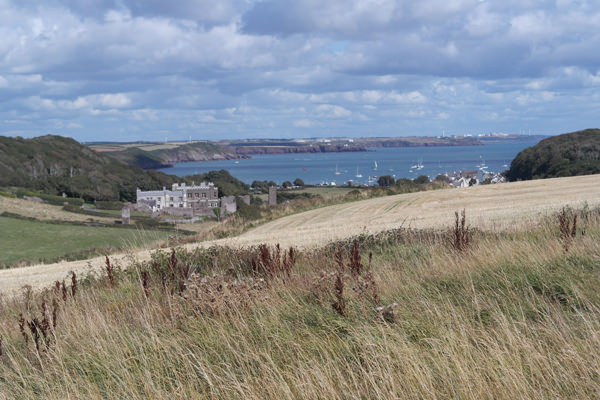
The coast, with its brightly coloured red rocks, indicates the high iron content and references the mining heritage of Wales. Just offshore you can see two small islands, Stokholm and Skomer, but a trip to their lighthouses was out of the question due to lack of time but also the absence of a regular boat service. I understand that it is possible to arrange trips, though.
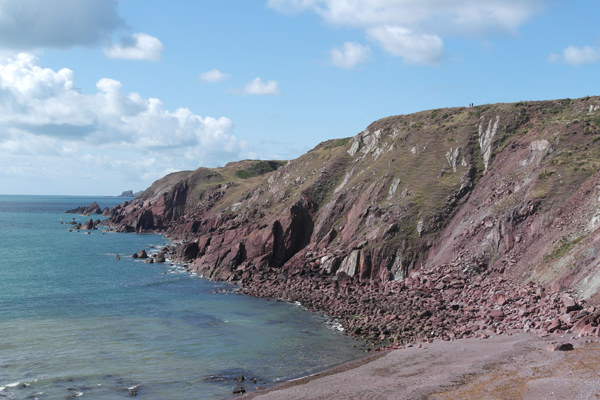
A fairly easy walk past some cattle and pretty white ponies grazing on the path took us to St Anne’s Point where the lighthouse buildings have been converted into holiday cottages. It turns out that all lighthouses are automatic nowadays and no longer need a resident team to look after them.
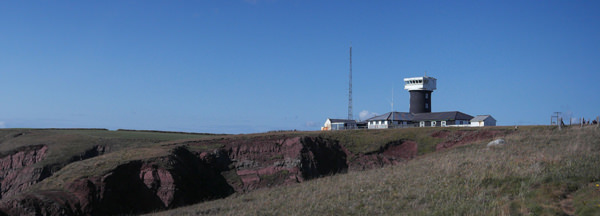
Beyond the lighthouse we came to the small cove where the Duke of Richmond aka Shakespeare’s Bolingbroke landed on 7th August 1485, going on to fight King Richard III at Bosworth Field just three weeks later, emerging as victor and with a new name as King Henry VII. It really is a strange feeling to look at the stones underfoot and think that a man stepped there one day who went on to conquer a kingdom, transform the legal system of the country and father another man who would break with Rome and destroy the medieval church system. Quite appropriately we passed, on our way home from this trip, the skeletal remains of Tintern Abbey in the Forest of Dean, which was demolished by agents of that King Henry VIII.
In the meantime, further around the coast of the peninsular we passed a soaring modern shipping beacon that uses radio rather than light to alert shipping and finally we returned to Dale for a well earned dinner at The Griffin, a local pub restaurant that boasts the distinction of having its very own local fisherman to supply it. That’s one way to guarantee fresh fish.
The next morning we set off down the coast for the Mumbles, just outside Swansea, which is a pretty seafront resort area close to the City. We were too pressed for time to spend be able to spend much of it looking around and had to focus on our objective, though the pier right next to the lighthouse is certainly worth a stroll. There are restaurants around the entrance to the pier but a rather better one next to the nearby carpark.
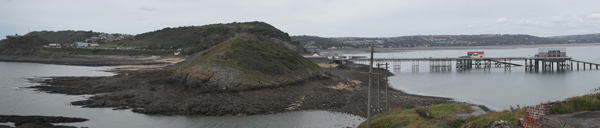
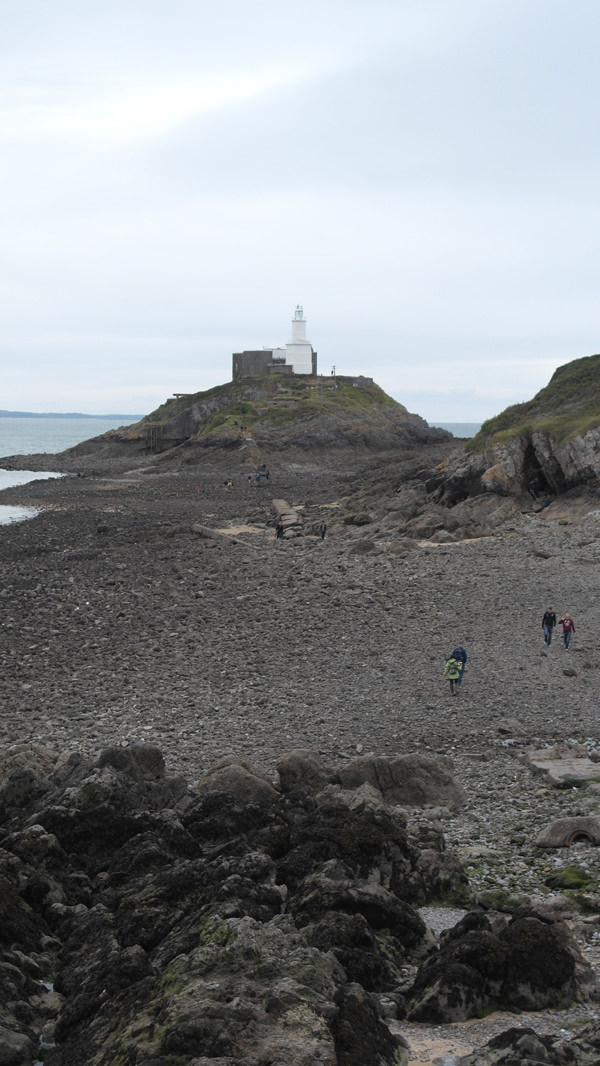
At low tide you can pick your way across to the rocks to the lighthouse, which is worth it for the view back to the pier, which also houses lifeboats and their launch ramps. Whilst looking the other way across the rocks you have the lighthouse, which is not a particularly beautiful building but is certainly in a striking location. There are clearly visible remains of a causeway that once linked the light to the mainland but its stones, scattered by the winter seas, now make the walk harder, having once made it easier.
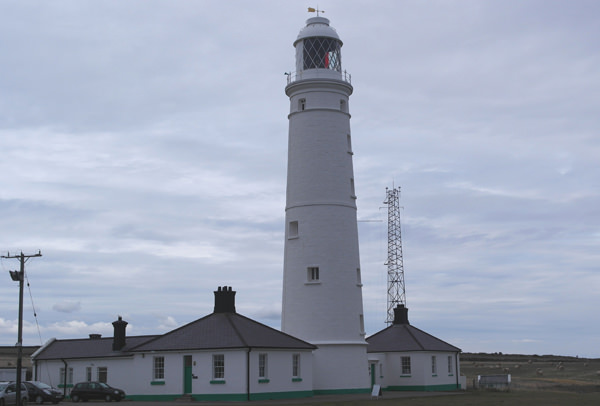
And so onward to our final lighthouse at Nash Point, the other side of Swansea. Down some narrow roads past residential areas you emerge into countryside and then suddenly out to the cliff top for a view of a classic looking lighthouse. We also arrived just as the huge foghorns at this site were being tested. A surprisingly large car park probably caters for walkers as well as pilgrims like us and is graced with a small café which provided well-timed and excellent Welsh Cakes together with a welcome cup of tea. On summer Sundays the lighthouse building is open to the public and we met a pair of lighthouse-men on site, climbed the tower, inspected the lamp and looked out to sea through binoculars, in the approved professional manner.
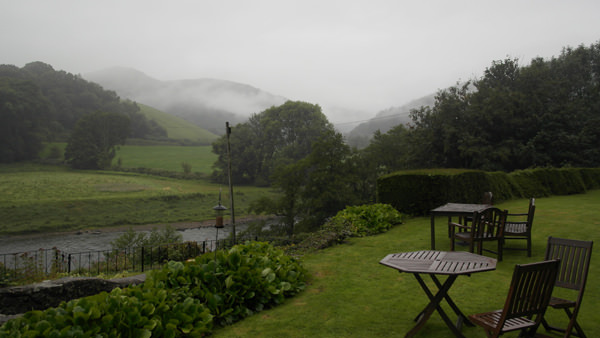
And finally, back to overnight at a guesthouse near Tintern, in the Forest of Dean, overlooking the river Wye.
London through and through: Pearly Kings and Queens – Where do they come from and where are they today?
By Richard Slater, photographer and author of People In London
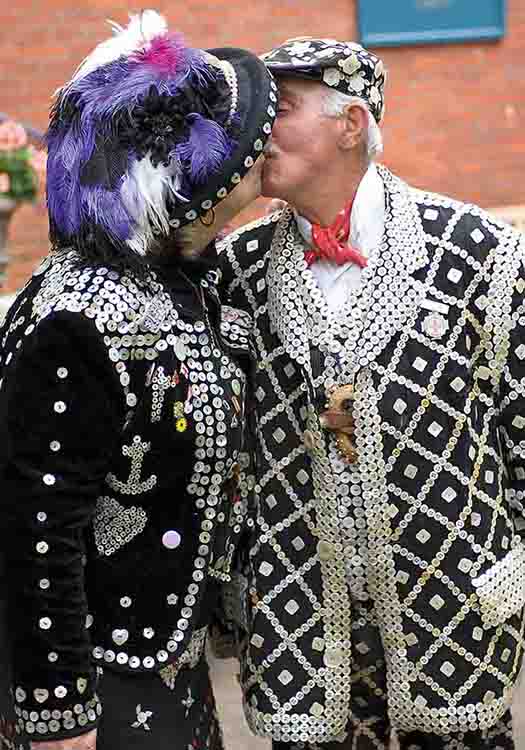
The Pearly tradition started among the costermongers – the original barrow-boys – of London’s fruit and vegetable markets. An orphan called Henry Croft who worked as a sweeper in the markets adopted a fashion among the costermongers and took it to new extremes. The flash boys sewed smoke pearl buttons down the seams of their bell-bottom trousers and on their jackets, waistcoats and caps. Henry used the same smoke pearl buttons but he didn’t limit himself to the seams. He smothered his clothes in them.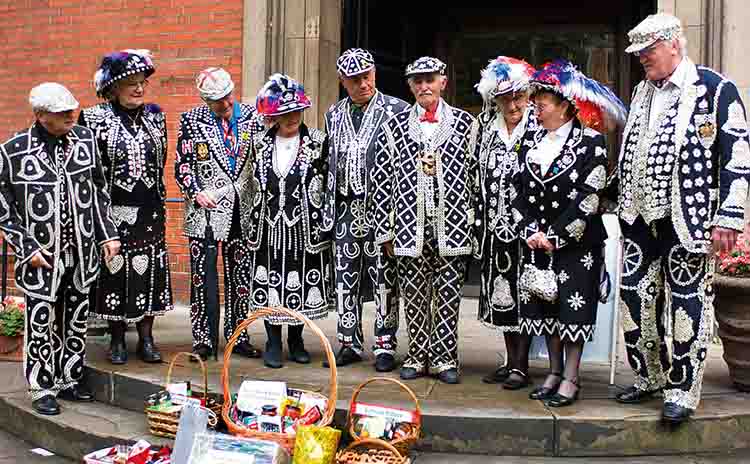
But not because he wanted to show off. Henry had also noticed a very attractive characteristic among the costermongers. They looked after anyone in their community who was ill or fell on hard times. And Henry wanted to raise money to do good too. He thought that people would notice him if he wore a suit that was covered in smoke pearl buttons and that they’d be more likely to open their wallets and purses. And he was right. Soon he became well known for his charity work.
Henry’s friends among the costermongers decided to follow his example and raise money for charity in the same way. Before long, there were twenty-eight Pearly families. It was all very territorial. Each London borough had a family and there was one for Westminster and one for the City too.
The tradition of the smoke pearl buttons lives on today. Twenty-first century Pearly Kings and Queens may not be pushing barrows round Covent Garden but they do still spend a huge amount of time raising money for good causes. You see them doing this all over London.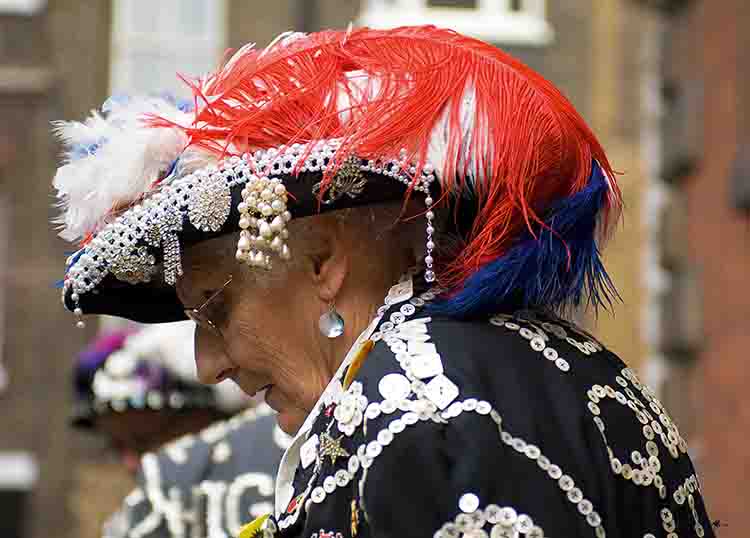
But if you want to see a large group of Pearlies together, go to St. Paul’s Church in Covent Garden on the second Sunday of October (12th October this year). They gather from all over London for the Harvest Festival service in the church, which is also known as the Actors’ Church because of its long association with the theatre community.
Pearly Kings and Queens have a long and close association with the church and with Covent Garden too. The portico at the rear of the church features in the first act of Shaw’s Pygmalion (and therefore also of My Fair Lady). Anyone who’s seen Pygmalion or My Fair Lady will know that Pearly Kings and Queens appear in the market scenes.
Charles Darwin’s House
By Gregor Swiderek
London with its long and rich history has so much to offer. There are world class museums (like the Tate, British Museum, Natural History Museum, V&A and many others) as well as historical monuments (the likes of the Tower of London, Westminster Abbey or St. Paul’s Cathedral being only a few examples). Then, there is all the buzz of one of the most energetic and attractive cities on earth. Think of Soho, Camden, Piccadilly, Shoreditch, Greenwich and many other tourists’ hotspots. But there is also another, less known and quieter, side of London.
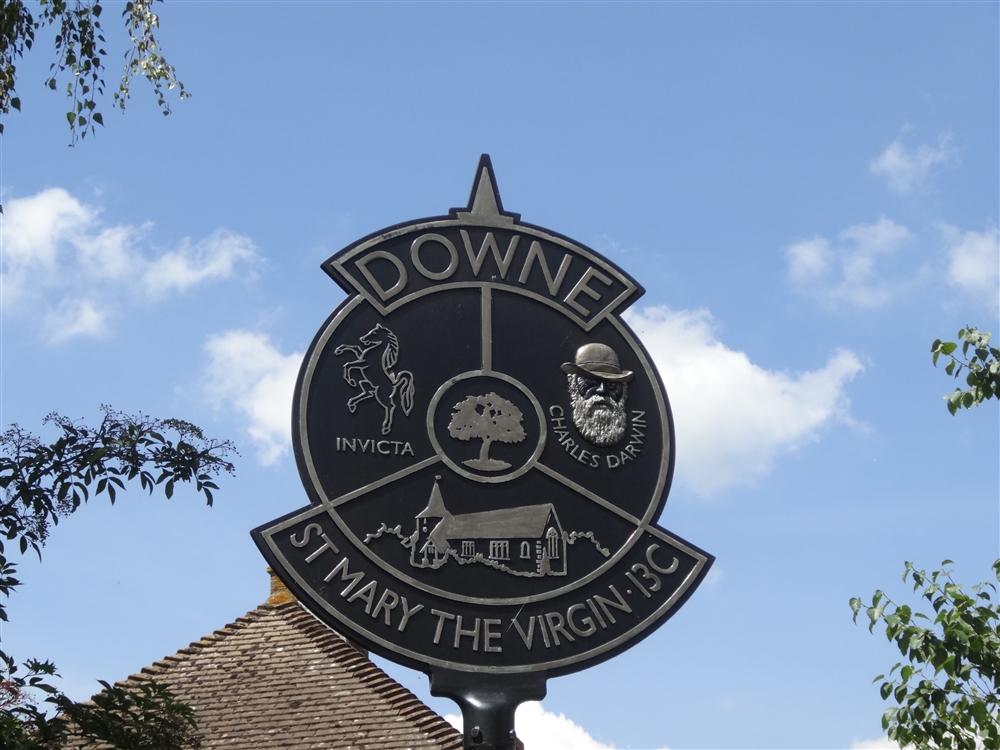
Located just 14 miles south east of Charing Cross, the village of Downe is as different from central London as you can only imagine. But however rural it might feel, being part of the London borough of Bromley (even if only just), it is technically still part of Greater London. Its biggest attraction is of course Down House, home of Charles Darwin.
I was thinking about visiting the place for quite a while and finally, on a glorious July day, we decided to go. We chose to take the train to Hayes, where the line from Charing Cross ends, and then walk to the village.
Hayes is one of the many distant and anonymous suburbs of London, and it could be anywhere in the UK. From Hayes station it is about 4 to 5 miles to Down House (yes Down house is spelled differently to the village). Continue reading Charles Darwin’s House